Why do influencer dramas hook us harder than Bollywood gossip in today’s age and time?

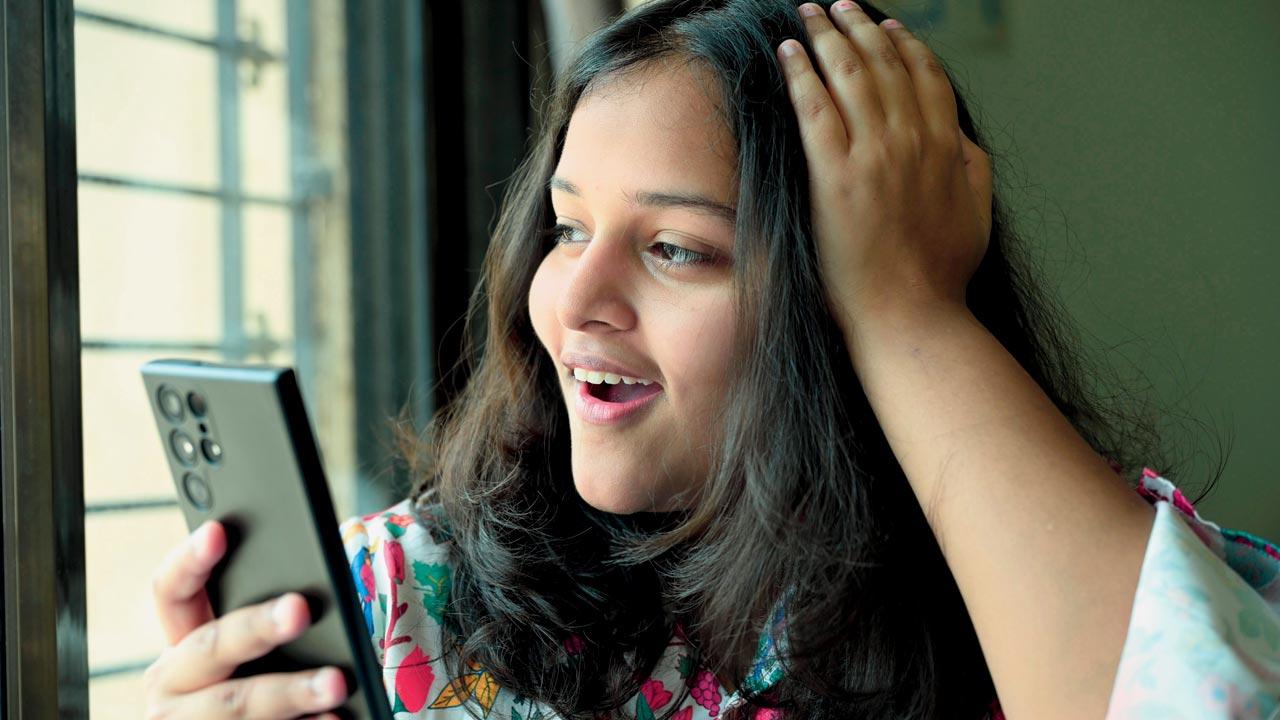
“It feels like being part of a celebrity’s life,” says Yumi Bindal, a consumer and follower of influencer gossip. Pic/Kirti Surve Parade
It started with a cryptic Instagram story, then a snarky comment on a reel. Within hours, the Apoorva Makhija aka Rebel Kid controversy had spiralled into the Internet’s favourite spectator sport. Twitter threads dissected timestamps, explainer accounts uploaded 10-minute recaps with screenshots, and videos explaining the gossip called tea channels went into overdrive on Youtube. In WhatsApp groups and Instagram DMs, audiences swapped notes like detectives piecing together a case file. To the discerning Instagram user, it might look like digital noise. But for the scrollers, it felt like the latest season of Bigg Boss where the house was Instagram, and every scroll revealed a fresh twist.
Why are we so obsessed with the lives of influencers? Why does a feud between two creators command more attention than a celebrity’s perfectly PR-trained red carpet walk? The answer lies in the ecosystem we’ve built online: gossip is entertainment, influencers are the new reality stars, and tea channels are our narrators in this chaotic theatre.
If influencer drama is the show, then explainer channels are the recaps we can’t skip. Take Jeevika Singh, a 35-year-old creator, whose Instagram page thrives on stitching together the chaos of internet spats. “People neither have the time nor the patience to watch 30 stories and endless lives,” she laughs. “They want the gist, the context, and most importantly, the receipts. [evidence]”
Jeevika Singh, a 35 year old running a tea channel, explains, “They want the gist, the context, and most importantly, the receipts.” Pic/Nishad Alam
Her work resembles a digital newsroom, part gossip column ,and part forensic analysis. When a feud erupts, Singh combs through screenshots, DMs, old collaborations, and even deleted posts to reconstruct a storyline that makes sense. “The biggest challenge is accuracy and to see if it has any authenticity,” she says. “I never portray personal bias or comment on the drama unless someone has said something horrible. ”
For audiences, these explainers aren’t simply about gossip. They create a running narrative, turning the randomness of Internet fights into binge-worthy arcs. Who unfollowed whom? Who threw shade first? Each feud becomes a “season,” each reconciliation a “plot twist.” In a way, explainers like Singh transform influencer culture into something bigger: a reality show without a set, where fans don’t just watch, but actively discuss, debate, and speculate, keeping the drama alive long after the original story has expired.
However, a feed is never simply a feed for influencers. In their eyes, it is nothing smaller than a stage. Taneesha Mirwani, an Instagram influencer with over 5 lakh followers, says that deciding what to post isn’t about hard boundaries but about instinct. “It’s less about practically segregating and more about what feels correct,” she explains. “The Internet is good at building a community. When I see things about my personal life get more affected than the content, I take a step back and set boundaries to take control of my life.”
Weathering controversies herself, Taneesha Mirwani comments, “I realised there are bigger problems in the world for unnecessary hate.”
As for audiences obsessing over influencer fallouts, Mirwani doesn’t mince words: “I think it is very parasocial. Anyone who is very obsessed with another person’s life; it is unhealthy. I’m not trying to blame anyone because it is the culture the Internet creates. But it is also temporary and will blow over in a week.” When drama does hit, the results are double-edged. “It will give you temporary success but it won’t build you a community of your own,” she reflects. “There are more comments and likes, not necessarily positively, but the numbers go up. Personally I don’t want to attract that kind of virality, which is why I think community building is more important now than ever before.”
Rajvee Gandhi, a 26-year-old fashion influencer with more than ten lakh followers, takes a different approach. For her, the line between personal and professional is clear. “Honestly, I am a very balanced person. My feed is clean. I keep my private life private. I’ve never shared something that is not professional for my profile,” she says. “As an influencer, you are either giving them drama or content.” That doesn’t mean the pressure disappears. In fact, Gandhi admits it’s always there. “There is constant pressure but you have to have that urge and zeal to be creative and share whatever you find fun and different.”
She sees the audience’s obsession with influencer friendships and fallouts as simply an online version of Bollywood gossip. “It’s very much similar to the obsession with Bollywood — the hot couple of the town. We are all curious to understand why and what. The same thing is happening online too,” she says. “Somewhere if I am sharing my relationship with you about the good ‘lala land’ things, then once it’s done and dusted, the audience expects you to update about that too. Since you shared the good things, they also expect you to share everything else about it.”And while she admits controversy boosts numbers, Gandhi is pragmatic: “I’m sure it helps with engagement a lot. Somewhere I feel that controversy helps with engagement. Even Bollywood celebs are turning into influencers and creative zones. They are out there for the people to consume content.”
The recent controversy between Apoorva Makhija aka Rebel Kid, her ex-boyfriend Utsav and Sufi Motiwala created a huge buzz on the Internet. (in order) Pic/Instagram@the.rebel.kid , Pic/Ashish Raje and Pic/Instagram@utsavdahiya
Audiences like Harriett Dior [name changed] dive into influencer drama for more than background noise — it’s knowledge too. “I’m interested in seeing how they lead the lives I would want to lead. As for influencer drama like Rebel Kid, it is also a great way to have an icebreaker conversation with a stranger,” he laughs. “When everybody around you is talking, it turns into not missing out on the pop culture references.” What keeps him hooked isn’t just the feud itself, but the way the Internet turns it into a collective spectacle. On Reddit threads, strangers decode posts like the FBI; on Instagram, users stitch clips with running commentary; memes spin out within hours. Gossip here is as participatory as it is passive. Everyone has a hot take, and private arguments transform into very public performances.
Instagram aficionado and consumer of such gossip, Yumi Bindal echoes the sentiment, but from a softer place. “It feels like being part of a celebrity’s life,” she says. “They’re not unreachable. They share their rooms, their meals, their bad moods. So when a fight breaks out, it feels like it’s happening in your own friend circle.” For her, daily interactions including the likes, comments, and Q&As create the illusion of intimacy. Unlike film stars glimpsed only on premiers and red carpets, influencers appear in pajamas, in traffic, or mid-breakdown. That messiness feels real.
Why does this matter? Because relatability sharpens the drama. Celebrity gossip is glossy, PR-filtered, and at arm’s length. Influencer feuds, by contrast, feel raw and unmediated, unfolding in real time on feeds we check every morning. Their accessibility makes audiences emotionally invested. A spat between two creators feels like a storyline we’re part of.
“We are all curious to understand why and what,” Rajvee Gandhi, an Instagram influencer, explains why the Internet is so obsessed with influencers now. Pic/Rajvee Gandhi
Scroll through your feed long enough, and you’ll see it: “normal” is out, “cringe” is in. The everyday content that once made influencers relatable from selfies, morning routines, hauls, everything now feels stale. Mirwani, however, is unfazed. “I don’t think it’s true,” she says. “Whether you try to pose or keep it real, it is cringe. Someone or the other will feel that about your content no matter how you present it. I do what I feel like doing.”
Gandhi calls this constant push to stand out as a creator, to feeling like a moving target. “Originality is everything,” she says. “But the irony is, once something works, it instantly becomes a trend. And then if you do it, people say you’re not original anymore.” That tightrope extends to drama too. Gandhi points out that while controversies fuel visibility, they can also cheapen an influencer’s image. “Sometimes even silence gets interpreted as shade,” she says.
This cultural shift reflects a wider fatigue with polished celebrity culture. “Audiences, connect more to the drama created by influencers now, numbed by Bollywood’s manicured red-carpet shots and scripted interviews,” says Bindal. So if celebrity drama is scripted cinema, influencer drama is the reality TV of our scrolling lives. And maybe that’s why we can’t look away. As Dior puts it, “Who doesn’t like a good fight?
We all love drama whether we admit it or not.”
Mirroring what’s on screen
Dr Sanjay Kumawat. Pic/Fortis Hospital
Just how Bollywood lives back in the ‘90s was a craze, Dr Sanjay Kumawat, Consultant Psychiatrist at Fortis Hospital in Mulund, explains that the Internet has become a more digitalised version through blogs and Youtube presentations. Online audiences get validation from influencers when they relate to them which also leads to the undesired flak influencers receive. “When fans see influencers get everything that they wanted, it churns up negative emotions. The content then reflects their [fans] upsets, frustrations and fulfillment of dreams. The person is then obsessed with the charm of that personality on the screen,” he says. However, influencers have a hard time appeasing their followers with fresher and newer content. “When an influencer gets dragged into a controversy, there is a breach of trust between the fans and the influencer. This breach then presents itself as a comment, hate remark or a dislike,” Dr Kumawat explains. These actions may boomerang to the influencer too when they try to respond to the negativity. “The only way to handle this is to practise separation with the fan following. Screen detoxing is very important.”
Subscribe today by clicking the link and stay updated with the latest news!" Click here!