


On one side, Indore went through a water contamination outbreak last month. On the other, premium water brands are sprouting one after the other. There are also a few good Samaritans who are trying to bridge the gap. The business of water is fraught with challenges and ethical questions
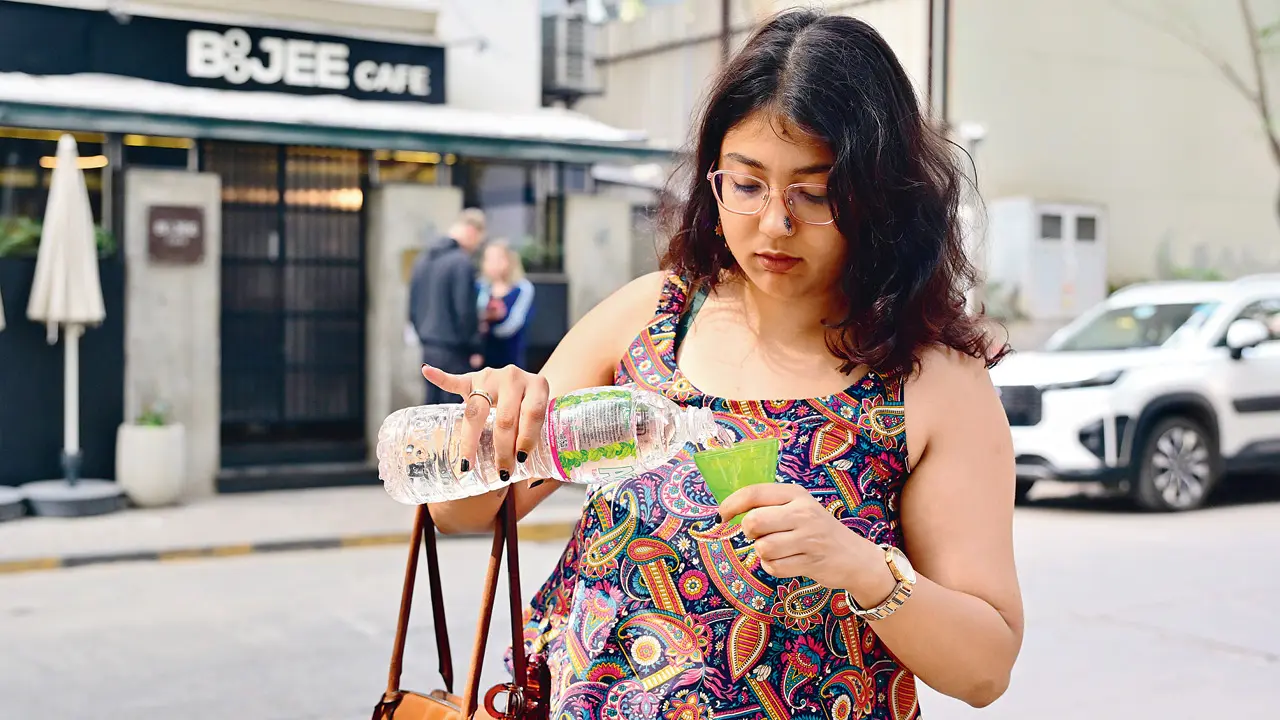
Health conscious consumers move toward natural mineral drinking water, which comes directly from nature, but at a sharp premium. PIC/SHADAB KHAN
The average man should consume about three litres of water a day. Many of us struggle to meet this goal. We buy water trackers, flavoured mixes, bottles that tell us when to drink water, and set up alarms on our phone to remind us to hydrate. Water becomes inexplicably linked with consumerism — buy this, subscribe to that. Though many of us may complain about not reaching our hydration goal, data from the UN says about 2.2 billion people live without access to clean drinking water. Even as we enter an era of “water bankruptcy”, premium waters in the market may just make you bankrupt. Water is — and has always been — a business. But when a basic human need is turned into a profit-making commodity, an uncomfortable question emerges: in a world where chronic scarcity and luxury water co-exist, who gets to stay hydrated and at what cost?

Avanti Mehta is a water sommelier at Aava water, where she conducts tastings to break down the complex flavours of natural mineral water
There’s never been a better time to dive into the issue: In a year that began with a diarrhoea outbreak in Indore making national headlines — contaminated water killed six people and affected the health of 1400 others — India is also witnessing a bewildering trend of “water tastings” led by a “water sommelier”.
“What does that even mean?” you may ask. For answers, we turn to Avanti Mehta, water sommelier at Aãva Water, who conducted a water tasting session in Hyderabad on January 9. This is one of many tastings she has conducted where blindfolded attendees are guided through sips of different natural mineral waters, asked to pause, notice, and taste what they usually gulp down without thought. For Mehta, the exercise is about awareness of knowing what you put into your body. “Do you know where your drinking water comes from? Is it tested for quality purposes, or are you using RO [reverse osmosis filtration] simply because it’s a fad? What minerals should water have?” she asks. Almost everyone at the session arrives convinced that water has no taste, or is fiercely loyal to a single brand. Almost everyone leaves curious about the possibilities.

Actor Bhumi Pednekar and sister Samiksha Pednekar launched Backbay, a natural mineral water company in 2025
How much should one pay for clean drinking water? And should it be about taste, or about securing a basic right? Living right next to the sea here in Mumbai, water might seem infinite. Only three per cent of all water is fresh water — fit for human consumption. Out of that, about 70 per cent is frozen in glaciers and ice caps. Only 30 per cent remains in groundwater, where we dig wells and handpumps to extract water for consumption.
Sure, tap water is cheaper, but growing distrust in the state’s ability to provide safe water has led to 12 per cent of urban populations relying on packaged water for fulfilling their needs, shows data from a 2019 report by the National Statistical Office. The market potential is there; even actor Bhumi Pednekar and sister Samiksha Pednekar launched Backbay, a natural mineral water company in 2025.
“Broadly there are only two kinds of packaged waters in the world: one, packaged drinking natural mineral water, which is Aãva, and second, packaged drinking RO purified water,” says Mehta, whose father Behram Mehta started Aãva Water in 2005. As Zoroastrians, nature is highly revered in the family, and Aãva was established to make a return to the natural.

Maji Taraltec Reactor device
The most famous natural mineral water brands include Evian, Perrier, Fiji Water, San Pellegrino, and in India, Himalayan Water, Qua, Vedica. Packaged drinking RO water brands include Bisleri, Aquafina, Kinley, and so on. “The key difference is that natural mineral water comes from protected natural sources. For example: Evian comes from the Alps, Himalayan from the Himalayas, Aãva originates from the Aravallis,” adds Mehta.
Water that is processed through RO, on the other hand, is not only rid of all contaminants, but also loses its mineral content. It then has to be remineralised to make it ready for consumption. Natural mineral water is naturally processed by Mother Nature and is just bottled by companies like Aãva. “We are allowed micron-level filtration to remove sand, turbidity, and suspended particles. But we are not permitted to alter the original mineral composition,” explains Mehta.
So what does a water sommelier do? “There is a lack of awareness about what is inside our water. That’s where a sommelier comes in. We explain to people the tastes of different kinds of water.”

Taraltec Solutions’ Maji device attaches directly onto a handpump and rids the water instantly of 99 per cent contaminants
“Just like wine depends on soil and geography, water depends on geology. Aãva comes from a clayey terrain in Western India. Northern brands come from rocky terrain, so they may have higher calcium and magnesium or hardness,” says Mehta, “Aãva has silica and bicarbonates along with calcium magnesium, which make it naturally alkaline. Minerals add taste, wellness, and character to water.” At R110 for a 1-litre pet bottle, or R999 for a pack of four 750-ml glass bottles, that flavour doesn’t come cheap.
Not all water is the same indeed. In India alone, 163 million people lack access to clean drinking water. In such a scenario, thinking about the source of your water, what nutritional value it contains, how bioavailable are its minerals — all become champagne problems.
“Packaged drinking water is fundamentally selling safety,” says food science expert Krish Ashok (@_masalalab on Instagram), “It’s not selling taste or anything else. The message is: you can’t trust tap water, you can’t trust the state, you can’t trust sewage systems or water treatment systems. So buy this water when you’re travelling so you don’t get waterborne diseases.”

Anjan Mukherjee, CEO of Taraltec Solutions
“Packaged mineral water, on the other hand, is sold through two lenses. One is taste. Water can taste better with minerals, up to a point. But the second thing, and this is where things go wrong, is that companies promote mineral water as a nutritional supplement, claiming it provides essential minerals like magnesium and calcium. Yes, it does contain minerals your body can absorb. But your body needs 1000 times more than what you can get from palatable mineral water. Water is not a meaningful source of micronutrients. Food is the single largest source of minerals. If you are mineral deficient, your diet is probably out of balance. You’re not eating enough vegetables — which are the biggest source of minerals. People selling natural mineral water often claim that its minerals have better bioavailability because they are natural. But whether minerals are naturally occurring or added back during remineralisation, bioavailability is the same. Your body does not know the difference.”
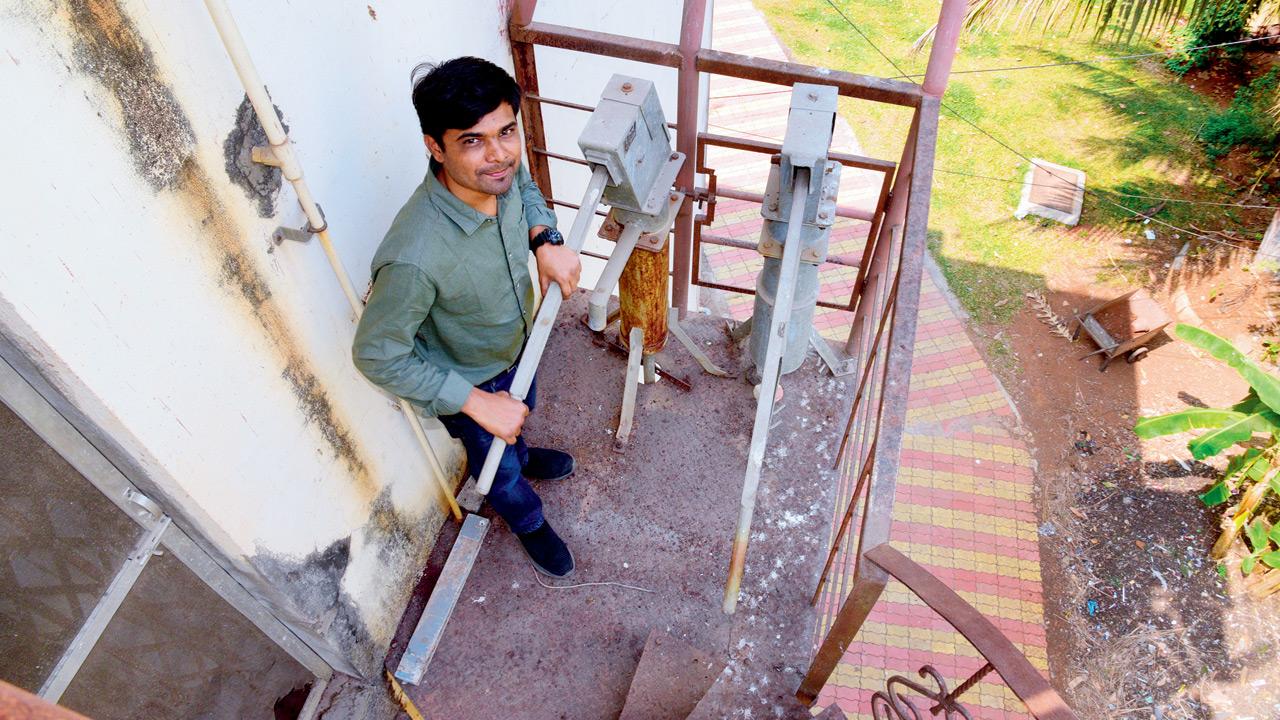
Dr Nilesh Jadhav co-founder of GERMsafe Technologies, installing their device onto a handpump. FILE PIC
According to Ashok, the standard remains this: “As long as water does not contain poison and living bacteria, it’s safe. Everything else is marketing and social media.” The country has made strides towards more equitable access for all. Ashok says, “To be fair, in the last 100 years, India has significantly improved water quality. Child deaths from waterborne diseases have fallen exponentially. Because of urban water treatment and chlorination, diseases like cholera and diphtheria — which were serious until the 1970s — have largely disappeared. When was the last large-scale cholera epidemic in India?”
So does everyone need to get on the premium water bandwagon? “Water provides water, and that’s it,” he says, “We live in this weird world where social media has convinced us that water is a source of nutrition. It is a source of an essential nutrient called water, without which you would get dehydrated.”

In rural areas, where there is no access to packaged or municipal water, handpumps remain the largest source of water. PIC/ISTOCK
What makes premium water so expensive? After all, it is just water, right? “RO water can be manufactured anywhere. But natural mineral water comes from one source only,” says Mehta, “That means logistics from Kashmir to Kanyakumari is built into the MRP. We also own land in the catchment area and must maintain recharge systems. If ecosystems die, water dies. Not all water is the same, so all water cannot be priced the same either.”
She also argues that natural mineral water is also more sustainable, “RO rejects about 75 per cent water. For every bottle of RO water, three bottles are wasted. Natural mineral water is bottled as drawn — zero rejection. Water from natural sources depends on ecosystems. Pollution, pesticides, and industrial waste ruin aquifers. We have to protect our ecosystems to keep our business going.”
Mumbai is a city appreciated far and wide for its readily available clean water. Yet, there is a population that relies on the “water mafia”. Director of documentary Water Mafia (2024), Naman Govil, explains why some remain on the fringes, “When our cities were first planned, the different departments like water, electricity, etc, were designed to service the areas that came within the city plan.

Dr Mayur Ladole, co-founder of GERMsafe Technologies, Krish Ashok, food science expert, Naman Govil, director of Water Mafia and Prayaag Akbar, author
“But as the population rose due to migration, a lot of people who migrated could not afford real estate within the planned city. So, unauthorised colonies came up. These include slums and other forms of housing that do not come under the city plan. Because these areas do not come under the plan, they did not historically receive electricity or water through the state. It’s changing now — for example, in Mumbai, it is now mandated by the High Court to provide water to every citizen regardless of where they live. But historically, these areas were not serviced. So people living in these areas had to find water somehow. Because there was demand, a black market for water came up. That is essentially the water mafia. The black market has its own pricing, its own system. People’s access can be cut off at the whims and fancies of those who control this black market.”
The water mafia has bigger consequences than we might think. “People who are reliant on the water mafia usually come from lower-income groups. Their budget restrictions are massive. Although the scenario has improved in Mumbai now but at some point, victims of the water mafia ended up paying up to 30 per cent of their income just to secure their water needs every month. If you are spending 30 per cent of your monthly income on water, you are taking money away from health and from your children’s education. It creates a cycle of poverty that you are unable to get out of.
“When children don’t get proper drinking water in adequate amounts, it affects their cognitive abilities. When that happens, you fall behind in school. When you fall behind in school, your employment prospects are affected,” says Govil. “The water needs of large cities is prioritised more often than not, so even if there is a shortage of water within a city’s traditional resources, it is able to source it from nearby towns or villages. So for big cities, supply is not really the issue. The issue largely lies in distribution.”
With 18 per cent of the world’s population, India only has 4 per cent of all natural water sources. In the hinterlands — the population that bears the brunt of water scarcity — handpumps and borewells remain the largest source of water. Rapid industrialisation and misuse of groundwater has severely depleted the water table. Ashok says, “India faces a freshwater shortage due to poor water management. Not enough rainwater harvesting. Rivers are mismanaged. Climate change is drying rivers and lakes. Growing water-intensive crops like rice in Punjab depletes groundwater. These are political and social water risks, not health or nutrition risks.”
Two tech-led start ups are addressing the issue of serving water to rural areas. CEO and founder of Taraltec Solutions Anjan Mukherjee says, “Water management is quite a disaster.” So, they developed the Maji: Taraltec Reactor, a device that can be installed directly into handpumps and removes 99 per cent microbial contamination which causes diarrhea, cholera, typhoid dysentary. With only a one-time cost of installation, it requires no electricity, no chemicals, no filters or membranes, no maintenance, nor supervision. One device costs '7200 and lasts for a lifetime.
“It is important to note that family water usage comes totally in the realm of women — from collection to purification to dispensing. Our product makes her life easier by freeing her time for other productive activities as well as for leisure,” he adds.
His product has reached 3 million people all over India. Yet, awareness remains a big issue according to him, “In villages, most of the groundwater is used for agriculture. So obviously it is getting depleted. That is wrong. For agriculture, surface water should be used from rivers or canals. It cannot be groundwater.”
Dr Mayur Ladole along with his co-founder Dr Nilesh Jadhav founded GermSafe Technology LLP under the guidance of their mentor Prof AB Pandit when they were pursuing their PhD. At a cost of '2500, their device, too, attaches onto a handpump and kills around 90 per cent of bacterial contamination in water.
“Today rural India faces two kinds of water issues: one is drought, and second is groundwater contamination. In rural areas, people wash their cattle and clothes near their water source, which affects the water table. A lot of the industries in this area dispose of untreated waste water directly into rivers which severely contaminates the drinking water.” Although factories and industries are legally mandated to treat water before disposal under the the Water (Prevention and Control of Pollution) Act of 1974, the ground reality is much different, especially worsened by corruption.
India is an already water-stressed country. Dr Ladole adds, “Even urban areas like Mumbai will face severe water shortage by 2030. We are already seeing cases of this in Bengaluru and Chennai.” UN reports also confirm that India will face a 50 per cent water deficit by 2030, only four years away from today.
“The purification technologies we have right now, like reverse osmosis, are firstly highly wasteful, and secondly largely unaffordable in rural areas. There is an expectation to buy out of the problem. But the masses should be kept in mind when developing technology,” says Ladole.
Samuel Berlie, whose late father ran a water processing plant in Sangli, Maharashtra, also emphasises the need for government intervention. “I haven’t really identified strong support for small-scale businesses or entrepreneurs. For example, there should be massive subsidies on water supply. If you’re setting up a plant, the government should give adequate subsidies to use municipal water, instead of charging the main industrial tariff.”
Mukherjee, too, adds, “My users are the poorest of the poor, who are not able to buy water. So it has to be funded by someone else. The moment the buyer is not the user, there is a gap in funding — which is where the government, CSRs, charitable institutions and HNIs [High networth individuals] should come in.”
Berlie says, “It’s one thing to say it’s a lucrative business, but at the end of the day, somebody bears the cost and that can’t be the poor or the common man. People talk about making generational wealth from this, and it’s sad that they look at it this way. Water is a need first.”
Berlie’s father had to shut his business during the COVID pandemic. He says, “During the pandemic, he was supplying water to hospitals because there was a shortage. But people exploit scarcity. We saw it during the pandemic — prices of bottled water went up. My dad distributed water for free to hospitals during that time.”
Today, the barriers to entry and the virtue of being an immensely capital-intensive business, makes it far too easy to move into an aspirational sector of water. That’s why we see a rise in natural mineral water. “The lower middle class is becoming aspirational. They want to move from Bisleri to more premium brands. There’s also a cool quotient attached to it. There’s sports water and electrolyte water — pre-mixed, fancy, premium-priced. It’s a growing market,” adds Berlie.
How exactly does premium water exist at same time as we see a water crisis in Indore? Journalist and author Prayaag Akbar’s novel Leila exists in an authoritarian dystopian world where there is a shortage of water. Akbar says, “They coexist purely as a function of late-stage capitalism. This is the world we live in, so it’s better not to be naive about the fact that they do. In almost every avenue of consumption, we have differences in how people can access things. Conspicuous consumption has become not just acceptable, but aspirational in India.”
Govil adds, “Inequality is only growing. There will be more people who have less access to clean water. If these issues are not solved at a governance level, we are potentially heading towards a very bleak future where a large percentage of people living across small and big cities will be severely affected by this crisis.”
163 million
People lack access to clean drinking water in India
 Subscribe today by clicking the link and stay updated with the latest news!" Click here!