


As a new form of storytelling about the city, Mumbai Walks Fest is hosting a range of perambulations this December
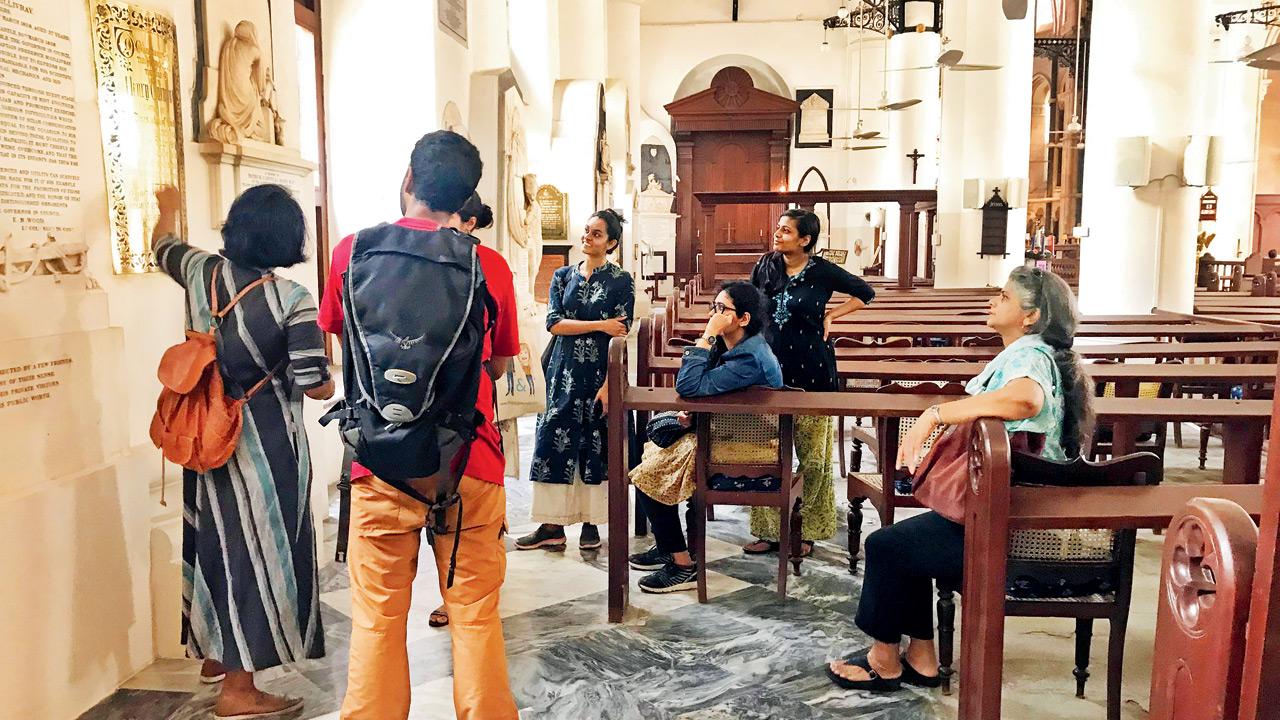
Exploring the evolution of language in the Deadletters walk with Tanya George
Mumbai is known for its looming skyscrapers, various museums and art galleries, the bazaars as well as some of the country’s most famous places of worship. However, the city’s history and culture goes far beyond just that. To bring the citizens closer to the stories of the city, Mumbai Walks Fest hosts a variety of different walks, each organised by a different storyteller, who plans to take the people on a journey to discover the city and the multitude of secrets that it hides within its corners and streets.

Byculla walk with Walks Fest founder Alisha Sadikot
The founder of Mumbai Walks Fest, Alisha Sadikot, says, “The fest is a way to bring different walk leaders together to offer their walks and make it festive.” The enchanting part about these walks is that they bring storytellers that want to narrate the stories of the city as well as attentive listeners who bring their curiosity to the table. She further adds, “It is a way to build a community among walk leaders, but also offer people a chance to join walks they may have heard of and wanted to try.” Oftentimes, these storytellers and listeners end up exchanging meaningful dialogues and take back more stories and knowledge than what they started with.
Moreover, these walks do not treat the city as a static museum, but as a place that is fluid and is multifaceted. These walks cover a variety of areas and various different topics. Some walks that are being organised under the Mumbai Walks Fest, to name a few, include the Gandhi to Gangsters walk with Priyanko Sarkar — that explores the city’s founding history with Prohibition and how it gave rise to bars, permit room culture and the infamous gangster culture, Sarkar’s Mills to Malls walk which explores how Cotton transformed the city over the ages, the Deadletters walk organised by Tanya George, that explores the evolution of language through various graves and memorials, as well as Tracing the Footsteps of Water with Akanksha Gupta, a walk that traces the journey of water that reaches our houses, and the stories of migration, water politics, water mafia, and water citizenship that revolve around it.

People on a walk with Priyanko Sarkar
People who join the walks this time also have a lot to uncover. As Sadikot puts it, “A lot of people who’ve previously participated have new walks this time. Sananda Mukhopadhyaya, who does tree walks, is doing something called the Forest Trees of Bandra. It’s based on new research she’s doing. Three people are also doing walks for the first time — one on medical history and the city, one on cricket and the city, and another on Mahim, which is very rarely explored as a place, especially from the perspective of cinema.” Hence, one can definitely expect their own interests being reflected along with some research on the city.
If you find yourself intrigued by the topics that these walks aim to cover, you should definitely join the Mumbai Walks Fest. Like Sadikot expresses, “Doing the walks is one thing, but specifically with the WalkFest, what amazes me is how many different ways there are to look at a city. You can do walks in the same area but make them completely different based on the subject. There’s no one way to look at a city, a neighbourhood, a street, or a topic. It’s amazing to bring these different perspectives to people so they can participate, enjoy, have fun, and walk a little more. That’s the whole idea — to get people invested in their city and enjoy it.”
WHEN: December 5-7 and 12-14
TO BOOK: urbanaut.app
 Subscribe today by clicking the link and stay updated with the latest news!" Click here!