
Jazz with hints of Tamil and Kashmiri lyrics — Indian indie music is bringing regional tongues to Western genres like rap, hip-hop, or electronic
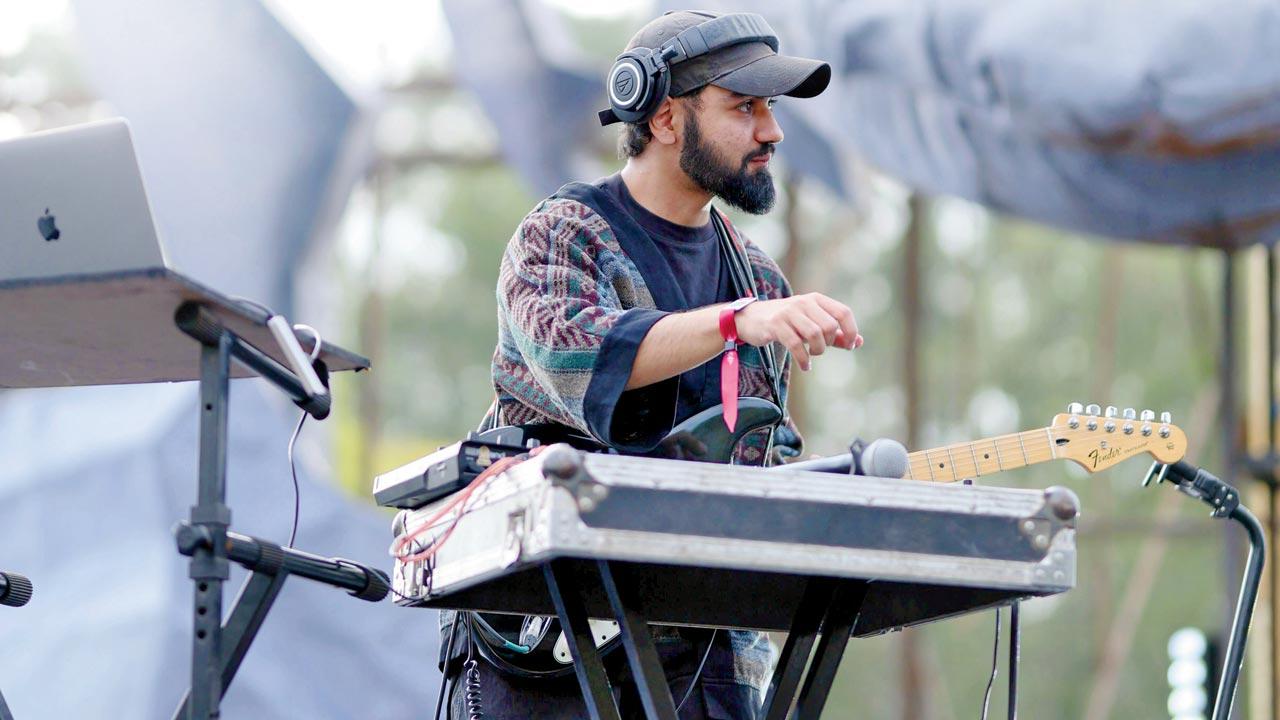
Delhi-based guitarist and producer Rajkanwar Sodhi blends Tamil percussion with lo-fi jazz to create Kanokol Jazz
Rhythmic Tamil syllables blended with lo-fi jazz: This is Kanokol Jazz, an experiment by Delhi-based guitarist and producer Rajkanwar Sodhi, where the mathematics of Tamil konnakol (vocal percussion in Carnatic music) meets the ease of lo-fi jazz.
For decades, diaspora acts have layered classical ragas over Western beats, a style that came to be known as Indian fusion or world music. Now, a fresh wave of homegrown musicians are singing in their mother tongues to global sounds, not for exotic appeal, but to say something personal.
Sodhi’s track Kanokol Jazz fuses Tamil vocal rhythms. Yawar Abdal sings in Kashmiri, Madhura Ghane, better known as Mahi G, raps in Marathi and showcases her Mahadev Koli tribal culture in videos. Increasingly, artistes are singing in languages beyond English and Hindi.
 Raghav Meattle, founder of artiste collective First.wav; Varun Parikh, founder of Bay Owl Studios; Akhila Shankar
“Identity plays a big role,” says Raghav Meattle, singer-songwriter and founder of First.wav, an artiste collective. “More artistes now know that they can be authentic. I began writing in English, and over time switched to Hindi. It was because when I started, my music was centred around my experiences as a 24-year-old in Mumbai,” he says, explaining that artistes are increasingly singing in regional tongues as art is a form of personal expression.
For Sodhi, who has always created lo-fi music with Indian elements, finding a kanokol record and blending it with jazz was an experiment. “This track has attracted a lot of desi audiences all over the world, with most listeners in India,” he says, adding that it’s natural for audiences to be drawn to such music. “Indian elements would definitely evoke more emotions because this is more relatable to us,” he says.
Speaking on how more artistes are making music in their mother tongue and bringing elements of their region, he says he sees it growing. “Music production being so accessible, anyone can get a DAW (Digital Audio Workstation) and start working. Ease of production has helped newer artistes,” says Sodhi.
Across India, online platforms like Spotify and SoundCloud, playlist curation and independent distribution now champion regional voices. Varun Parikh, founder of Bay Owl Studios and director at Abbey Road Institute, Mumbai, seconds this. “Streaming platforms allow decentralising and democratising music distribution. Of course, artistes try to get playlisted to give their music a further push. But you no longer have to be discovered on mainstream platforms alone.”
Moreover, algorithms of streaming platforms are language agnostic — another reason for artiste confidence. Parikh says, “Most algorithms don’t prioritise language; they focus on production quality and engagement. So you can be hyperlocal and still be globally relevant.”
Akhila Shankar, head of digital music aggregator TuneCore South Asia, points out that when streaming services started in India, the music available was largely English. This was, of course, more to do with the fact that urban audiences sought these platforms first as they already had some exposure to them. “As streaming platforms went deeper into regional India, this shifted, especially with the advent of 3G,” she says.
She adds that regional music has already existed. We only see more artistes getting more personal with it because there are more roads available to them. Shankar mentions that in the five years since TuneCore’s launch, English has topped the market, followed by Hindi, Punjabi, Tamil, and Bengali. And, there’s a growing popularity in Malayalam music as well.
Who’s listening to hyperlocal music? All of India is. Parikh says, “Indians are language agnostic when it comes to music. Take the song, Sapphire, as an example. It’s two artistes blending language and music. Independent musicians can now experiment without worrying who is going to take it.”
Meattle believes this is the natural evolution of music, so listeners are tuned in. “The world over, we listen to so much African and Latin music without understanding the language. Yawar [Abdal]’s song Dilshad popped in Kerala even though it had Kashmiri lyrics. I think it just needs to be a good record. Language doesn’t matter. Can I still understand what the artiste is saying even if it is not in a language I understand? I believe that music that will travel anywhere, will always have substance,” says Meattle.
Shankar says the new problem is that a lot of music is being created — 98,000 tracks are released every day and 60 to 70 per cent of them get zero streams. “Everyone has equal access to entry now, but not to grow. The next challenge is how to grow your fan base.”
Is that worrying? Not at all. “The future of music is multi-lingual. Desi hip-hop is uniquely Indian, it’s not American hip-hop in Hindi,” says Shankar. “The way Indian artistes are approaching music gives us an edge. Artistes in India are creatively ahead,” she adds, listing examples like metal band Bloodywood, who use elements of dhol.
Parikh adds that soon it’s going to be difficult to even differentiate and categorise music. “We are not going to be able to label genres. There are so many different layers, cultures, unique instruments… there’s no limit to it.”
 Subscribe today by clicking the link and stay updated with the latest news!" Click here!