Home / Sunday-mid-day / Article /
The Goan temple 2.0
Updated On: 20 June, 2022 01:18 PM IST | Mumbai | Jane Borges
Even as Goa’s chief minister launches roadmap to rebuild temples destroyed by the Portuguese, heritage activists say what the state really needs is preservation of existing historical temples rather than building new flamboyant concrete structures out of sync with where they stand





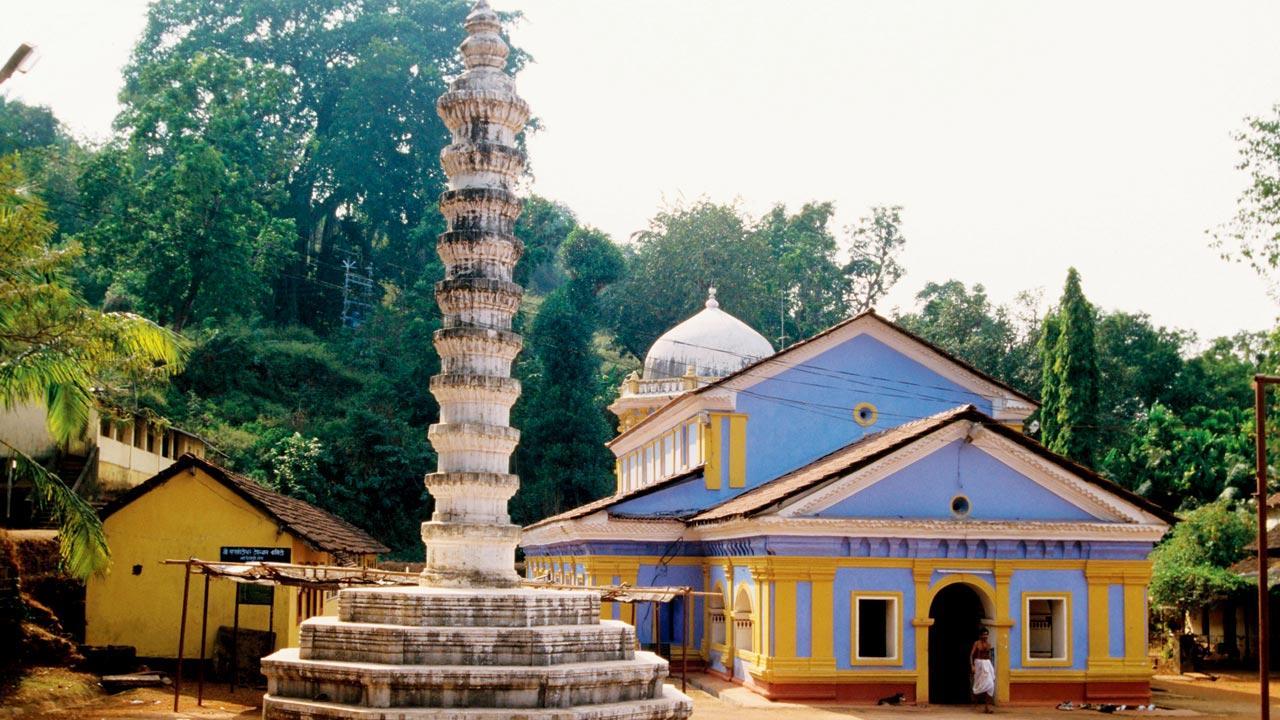
Before: Pic/Getty Images
There is a Parashuram legend ascribed to the geological history of Goa that historian and heritage activist Prajal Sakhardande recounts. According to it, Parashuram, the sixth incarnation of Vishnu, stood upon the Sahyadris. He wanted to settle here with 96 Saraswat families, so he commanded the sea to retreat by shooting an arrow from Arambol. That’s how the land of Gomantak was born. But long before the Saraswats settled here, Sakhardande says that the region was inhabited by the tribal communities, such as the Kunbi, Gowdas, and Velips. The earliest inhabitants. This history dates back thousands of years.
Goa heritage promoter Sanjeev V Sardesai, who runs the forum Hands-on-Historians (Goa), however, reminds us that the state of Goa, as we identify its borders today, was only formed in 1788. It goes back to 1510, “when the Portuguese took over the Tiswadi island [part of Old Goa], which has river Mandovi on one side, and Zuari on the other. By 1543, they got hold of the Bardez region, and in the same year, Salsette. So, when we claim that the Portuguese ruled Goa for 450 years, we must understand that they didn’t occupy the present-day Goan border for those many years.”
Trending Stories
Latest Photos
Latest Videos
Latest Web Stories
ADVERTISEMENT

Ganeshotsav 2026

ADVERTISEMENT