shot-button
E-paper E-paper
Home > Sunday Mid Day News > All ears This participatory documentary tackles the subject of invisible disabilities

All ears! This participatory documentary tackles the subject of invisible disabilities

Updated on: 17 August,2025 07:32 PM IST  |  Mumbai
Junisha Dama | junisha.dama@mid-day.com

A deeply personal film on deaf and hard-of-hearing lives heads to Melbourne for its international debut

All ears! This participatory documentary tackles the subject of invisible disabilities

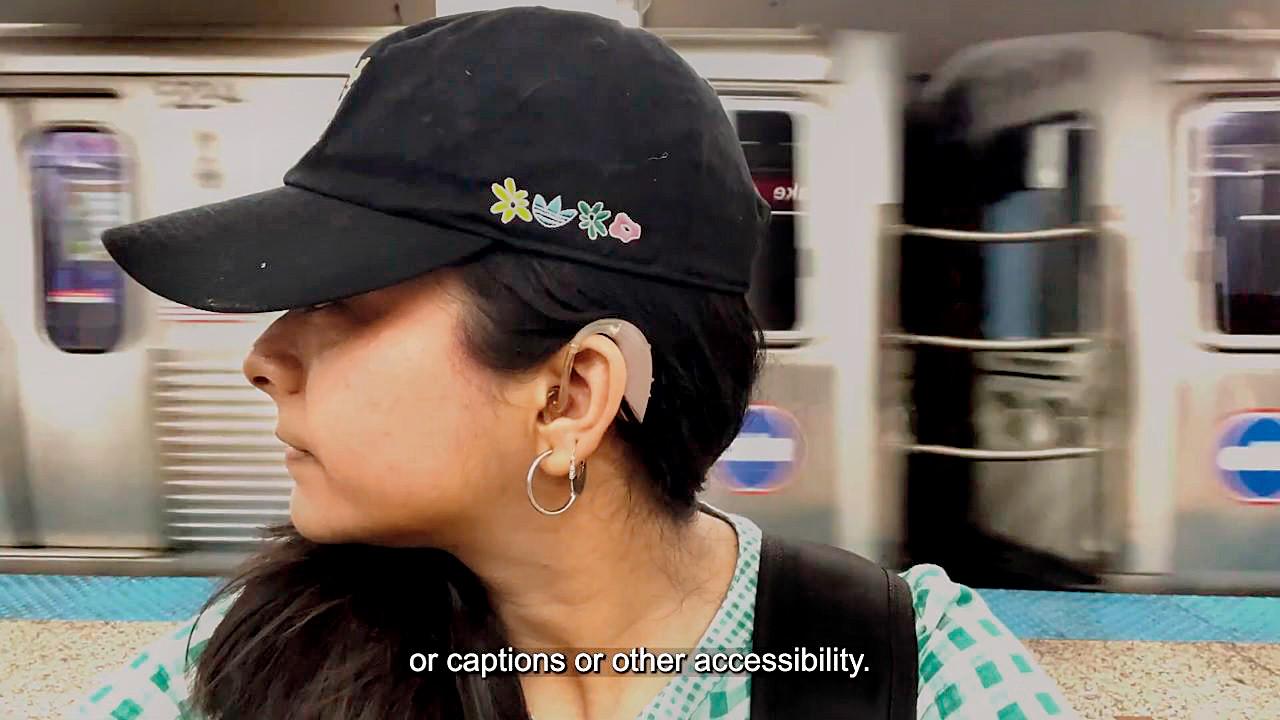
A still from Behind The Ears

Listen to this article
All ears! This participatory documentary tackles the subject of invisible disabilities
x
00:00

When Behind The Ears premieres internationally at the Indian Film Festival of Melbourne (IFFM) 2025 this August, it won’t just be another short on the circuit. Director Namya Chadha has lived the experience she’s filming in her debut feature, and her cast, Janhavi Khemka and Lavannya Balakrishnan, are not simply inspiration. They are here to talk, in their own words, about life, identity, and why, as Balakrishnan puts it, “We are really not that different, you know.”

The film follows Khemka, who is deaf, and Balakrishnan, who is hard of hearing, navigating questions of identity and the challenges of daily life. For Khemka, the initial approach from Chadha was a curveball. “I was initially surprised and unsure of how to react,” she says. “But after getting to know her [Chadha], and realising she’s a smart and kind person, I truly believed she would dedicate herself to doing something meaningful for people with disabilities around the world, and I’m glad we were able to make this film together.”


Chadha, Janhavi Khemka, and Lavannya Balakrishnan’s conversations about their lived experience form a large part of the film


Balakrishnan’s first reaction was rooted in where she was emotionally at the time. “I was a little surprised, mainly because I hadn’t yet reached a place where I could talk about my disability openly and comfortably. But I think working on the film really helped me.” She remembers thinking deeply about the ask: “Would I be making an impact? Did I need to make an impact? These were the thoughts running through my mind at the time.”

Chadha, who is also hard of hearing, says the starting point for the story came from a place of personal frustration. “A few months before I started working on this film, I attended an academic presentation about disability. Most of the conversations and discussions were focused on visible disabilities,” she recalls. That prompted Chadha to ask her mentor why no one spoke about invisible disabilities. “People often assume hearing disability means deafness, but from my lived experience and through conversations with people who use hearing aids, I came to know it varies from person to person,” she says.

Behind the Ears is a film that challenges these assumptions. It offers a fresh perspective, one that comes directly from the people living the experience. Chadha’s close relationship with her protagonists was key to this authenticity. “Lavannya is my college roommate, and Janhavi was introduced through our mentors. Both trusted me enough to share their personal stories openly,” Chadha says. This trust allowed for candid conversations where the three explored their experiences and self-concepts deeply. It’s this vulnerability and honesty that brought authenticity and emotional depth to the film.

Namya Chadha, director

The film, a participatory documentary, is a format Chadha chose for its intimacy and authenticity. “It felt like the most honest way to tell this story. It offers intimacy, authenticity, and space for collaboration with my protagonists, while allowing everyone to weave in our perspective,” she explains. 

Balakrishnan, a self-described private person, found the experience both challenging and liberating. “When I first started filming myself, it felt like my boundaries were being pushed. But Namya was incredibly supportive. She encouraged me to record only what I was comfortable with and gave me complete freedom to shoot whatever I wanted, however I wanted.” This newfound creative freedom was transformative. “In a way, I think I fell a little more in love with myself,” she says. 

The film tackles the “invisibility” of certain disabilities, a subject Chadha believes society still struggles to understand. This leads to assumptions and a lack of patience. “Sometimes, all it takes is sitting with them and creating a space to truly listen and understand.” Khemka hopes the film will encourage this understanding, emphasising that “communication takes patience, and that truly understanding each other is a process that takes time”.

Khemka wants people “to understand that disability is not weak, it’s a part of our lives.” Balakrishnan hopes, “They feel that we are just like them...we are not too different. And even if we are, that is okay. Everyone is different in some way. I also hope they understand that having a disability doesn’t define a person.”

"Exciting news! Mid-day is now on WhatsApp Channels Subscribe today by clicking the link and stay updated with the latest news!" Click here!

Did you find this article helpful?

Yes
No

Help us improve further by providing more detailed feedback and stand a chance to win a 3-month e-paper subscription! Click Here

Note: Winners will be selected via a lucky draw.

Help us improve further by providing more detailed feedback and stand a chance to win a 3-month e-paper subscription! Click Here

Note: Winners will be selected via a lucky draw.

Disabilities filmmaking Sunday Mid-Day Sunday Mid-Day latest news

Mid-Day Web Stories

Mid-Day Web Stories

This website uses cookie or similar technologies, to enhance your browsing experience and provide personalised recommendations. By continuing to use our website, you agree to our Privacy Policy and Cookie Policy. OK