Home / Sunday-mid-day / Article /
To text or not to subtext? Decoding how Gen Z, Millennials and Gen X use emojis, short forms differently
Updated On: 17 September, 2023 08:00 AM IST | Mumbai | Christalle Fernandes | Mitali Parekh
Gen Zees are targets of good-natured abuse for the phrases they use when chatting. But there’s more to their bewildering acronyms. mid-day pits them against Gen Xers in a lingo battle





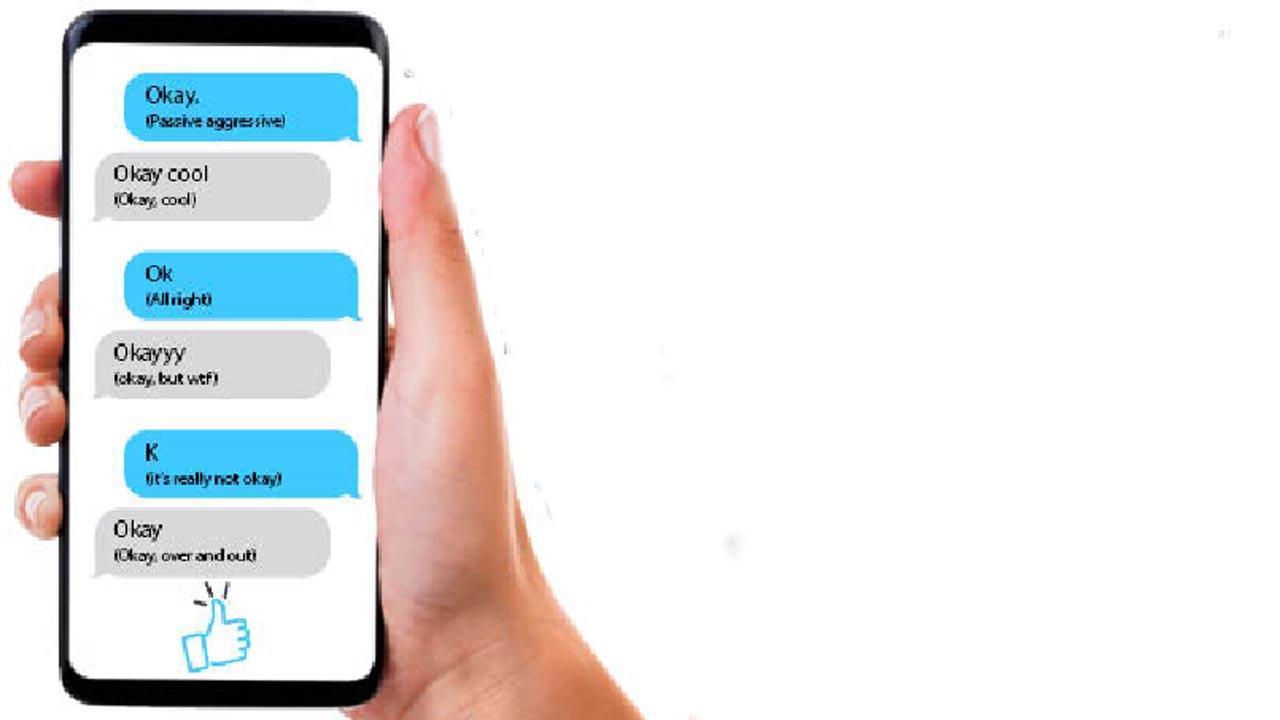
Representational images. Pic/iStock
In Alice in Wonderland, the Mad Hatter tells a bewildered Alice, “You should say what you mean.” “I do,” Alice hastily replies; “at least—at least I mean what I say—that’s the same thing, you know.” This exchange best sums up the difference between the way a Gen Xer and a Gen Zee texts. One says what they mean; the other, means what they say—with a heavy undertow of subtext.
Gen X (1965-1980) has lived through many textual atrocities: The first such communication is documented to have taken place over Instant Messengers (Yahoo! And MSN) on computers when it was just a shade insolent (not passive aggressive) to type ‘K’, LOL (Laugh Out Loud), ROFL (Rolling On the Floor with Laughter) and BRB (Be Right Back); the omission of vowels, whn v typd lk dis, tip-toed into SMSes (Short Message Service) before predictive text swooped in to save communication and stopped things from spiralling jUZT wen dEy were gOing $oUTh.
Trending Stories
Latest Photos
Latest Videos
Latest Web Stories
ADVERTISEMENT

Ganeshotsav 2026

ADVERTISEMENT