
Weeks after he was seen sporting a chip on his head, Deepinder Goyal steps down as Eternal Group CEO, sparking buzz he may be switching to his other passion: extending human longevity. Is it just voodoo science, or are we late to a party that has caught the imagination of the world’s top billionaires?
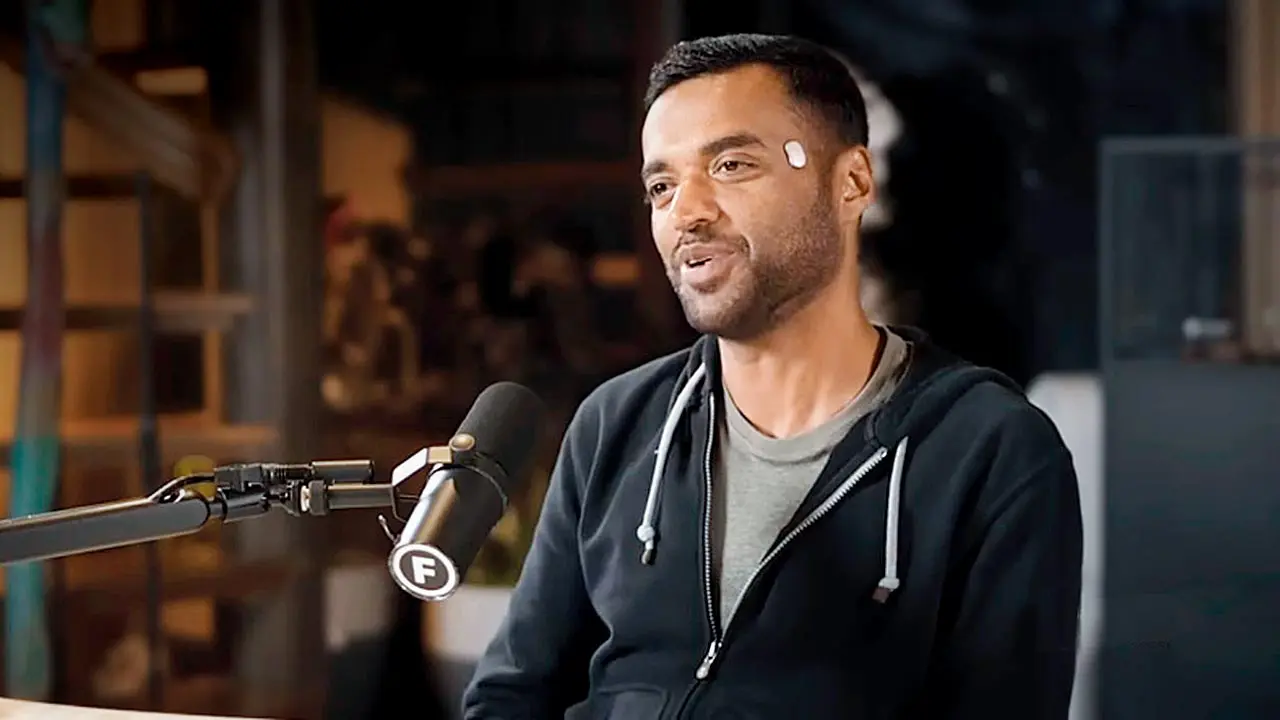
Zomato founder Deepinder Goyal wears a device called ‘Temple’, that measures oxygenation and blood flow to the brain. Goyal, who stepped down as CEO of Eternal last week, has also invested R250 crore in life longevity tech in 2025, and plans to invest more. Pic/Youtube@Raj Shamani Clips
Betty Remedios, 63, has a pep in her step as she gets out of the horizontal cylinder in which she’s been getting “intermittent vacuum therapy” in Andheri West. It’s a treatment to boost circulation in the lower body. It involves the user placing their bodies into the cylinder from the waist down, after which a vacuum pump alternates between normal and low air pressure to stimulate blood flow. It’s a technique used especially in sports injuries. More recently, it has gained attention for its ability to accelerate muscle regeneration, and the hope it brings for longevity medicine.
Longevity — it’s a word readers have no doubt been seeing a lot of in the past few days, ever since Zomato founder Deepinder Goyal stepped down as CEO of parent company Eternal on January 21 and left to chase his next passion: health and longevity research.
 Deepinder Goyal, in a post quitting Eternal, said that he wants to enter high-risk exploration. Pic/Getty Images
Goyal had also made waves in early January, wearing an experimental device on the side of his forehead, aptly named Temple. In a post on X, the tech billionaire said the device tracks cerebral blood flow in real-time, aiming to provide data on brain health, ageing, and cognition. Temple is being developed under Goyal’s longevity research initiative, Continue Research. He has invested Rs 229 crore in the venture to study what he considers the root of “most of the world’s problems”: “our short human lifespans” and proportionately short-sighted policies.
For Remedios, the motive behind going for vacuum therapy may not be as lofty; it just makes her feel better. The Mumbai resident travels a lot and has been hearing about longevity treatments that give tired, sore, and fatigue-ridden bodies an extra boost. “I had gotten the same treatment earlier, but it was only for a short time. This time, I did the full treatment for about 30 minutes [costing Rs 4500-6500], and felt a sense of relaxation,” says Remedios, who got the treatment at Fairmont Spa & Longevity, at the Fairmont hotel opposite Mumbai airport’s Terminal 2.
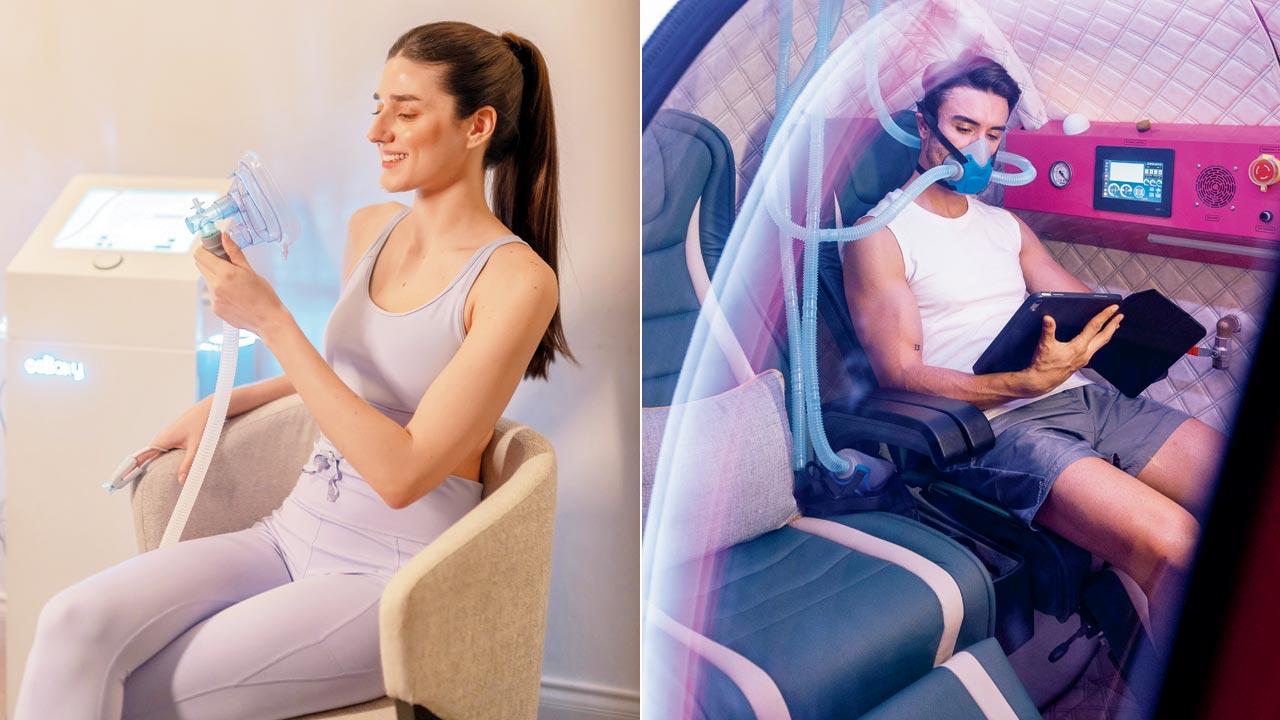 Hyperbaric oxygen therapy treatment being administered at the Fairmount Spa & Longevity at the Fairmont Hotel near Mumbai airport’s Terminal 2
Remedios tells us she heard about the spa on social media and got curious. She’s had a very stressful day, and felt it was perfect to get a treatment at the city’s first longevity spa. “I have been on my toes since morning. It was an opportune time for me to take this treatment and I am so glad I did it,” she says.
Since it launched in April 2025, the number of clients has climbed steadily, says Dr Rashmi Ambastha, spa director. Bookings went up particularly when the city’s AQI hit an all-time high in October and November, spiking to 322 in areas like BKC, Goregaon, and Malad. “At the time, our hyperbaric oxygen therapy saw a lot of takers. This therapy provides supercharged oxygen to clients through a mask inside an enclosed chamber. It looks like a spaceship, and is also a pressurised environment,” she explains.
 Betty Remedios and Dr Rashmi Ambastha
The boost of oxygen accelerates healing and recovery. “It helps in healing wounds and those who undergo surgery and recommended the treatment only after six months. It also helps in combating disadvantages of high AQI,” adds the director.
The facility also provides red-light therapy that reduces inflammation and helps with cell repair; cryotherapy (exposure to temperatures as low as -85°C) to reduce fatigue; and intermittent hypoxic therapy, which alternates between normal air and reduced oxygen to simulate the effects of high altitude air and increase red blood cells in the body.
 Experts in the field say gene-mapping is crucial to know what can trigger harmful biomarkers like Alzheimer’s or dementia. Pic/iStock
Longevity science is an umbrella term for a combination of biohacks, from therapies to wearable devices (such as the Temple), ingestible drugs, and even injectible electronics like the Rs 40,000 Ultrahuman glucose-monitoring patch, which is injected under your skin for 14 days.
But longevity is a term that some players, like Kumaar Bagrodia, the founder of NeuroLeap and Arkni PhotoBioLife, perceive as incomplete. “The focus should be on brain-first longevity: improving cellular activity in the body and change in brain and behavioural patterns for better mental health, optimal performance of mind and body,” he ventures.
 Russia’s President Vladimir Putin walks with China’s President Xi Jinping and North Korea’s leader Kim Jong Un before a military parade marking the 80th anniversary of victory over Japan and the end of World War II in 2025, where the conversation of immortality between the two leaders was caught on a hot mic. Pic/Getty Images
He explains that NeuroLeap provides in-depth brain mapping and leverages non-invasive neuro technology to read your brainwaves. “This helps understand your brain’s subconscious patterns in terms of habits, behaviour, and cognitive skills,” he says, “Then our tech-based enhancement sessions enable you to optimise your brain function for better sleep, lower anxiety, deeper attention without medication or counselling. No mobile games or brain training apps — those are not evidence based.”
He further explains that Arkni PhotoBioLife offers “red and near-infrared light therapy wearable devices”. These include a baseball cap (R29,000), and a nasal device (R7000) with LEDs inside that use specific wavelengths and frequencies of light to help stimulate mitochondrial [the powerhouse of the cell] activity. “Other wearables have only measured data [health indices such as heart rate]. Ours give therapeutic benefits that aim to improve the functioning of the body and brain at the cellular level for longevity and wellness.”
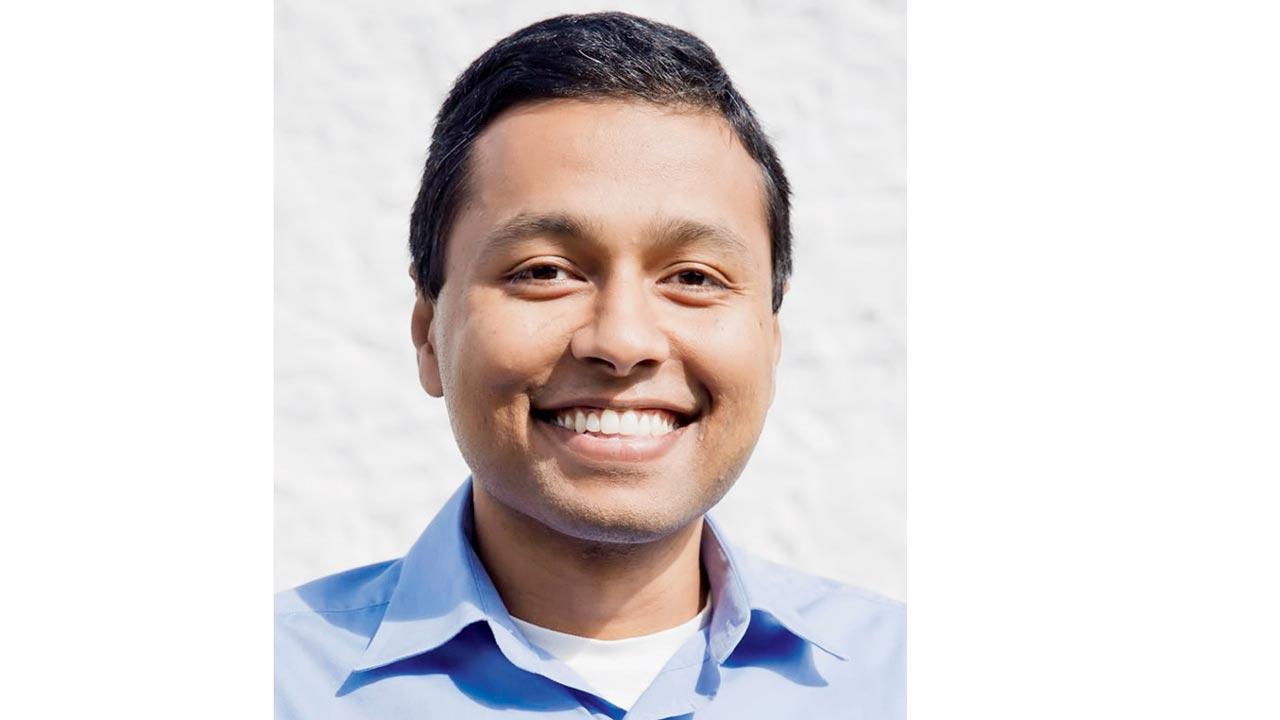 Dr Avi Roy. Pic/longevity alliance.org
Sounds like the kind of thing only tech billionaires would be into? It’s not just tech tycoons like OpenAI CEO Sam Altman, Google CEO Eric Smith, Amazon CEO Jeff Bezos, or the “anti-aging millionaire” Brian Johnson who are pondering the extension of the human lifespan. In September 2025, Russian President Vladimir Putin and Chinese President Xi Jinping were caught on a hot mic talking about longevity during the military parade in China marking 80 years of the end of World War II.
Putin, through his interpreter, was heard telling Xi that “human organs can be continuously transplanted, to the extent that people can get younger, perhaps even immortal”.
 ARKINI is a therapy wearable sold by NueroLeap based out of Mumbai. Pic/www.arkniphotobio.life
Is longevity the same as immortality? No, says Oxford-based Dr Avi Roy, who is also Chief Scientific Officer at Longevous (longevous.org), a longevity concierge medical service which provides evidence-based healthspan optimisation for clients.
He continues, “They’re completely different goals with completely different science behind them. Immortality implies you can’t die. That’s metaphysics. Longevity science is biology and medicine. We’re trying to slow biological decay, repair accumulated damage, and eventually reverse the physiological changes that make a 70-year-old different from a 30-year-old. The question isn’t ‘can we live forever?’ It’s ‘can we spend more decades in peak health?’”
 Dr Sajeev Nair
So exactly what do biogerontologists like him actually want to do? “The audacious goal is humans living healthy at 300, with the physiology of a 30-year-old. We’re nowhere close today. But that’s where we’re trying to go.”
Dr Roy proposes the idea about the ability to live in your 30s for 100 years, “Today, you might spend 30 good years [your 20s through your 40s], followed by 40 years of gradual decline, then 10 years of serious disability. What if we could flip that?” he poses to us, “What if you could spend 100 years in your biological 30s, then decline quickly at the end? The goal isn’t to avoid death. The actual target is to spend more decades feeling 30 instead of 80.”
 One of the allied therapy like light therapy that Vieroots Wellness Centre based out Kochi gives along with genetic mapping
Dr Roy shuts down the widely held belief that only genes determine your lifespan. “The Danish Twin Registry followed over 20,000 twin pairs for decades and found genetics accounts for only 20-30 per cent of lifespan variation. The rest is modifiable,” he says, adding, “Then there’s the myth of the magic pill. Ageing involves at least nine distinct biological processes. No single drug addresses all of them.”
In Kochi, Dr Sajeev Nair’s own advancing age and career as a peak performance coach led him to enter the biohacking industry, and set up the Vieroots Wellness Centre. “I’ve been in the wellness industry since 2000. Around 2016-17, I started becoming more curious about longevity and human performance,” he says.
 Brain mapping technology is being used to remap you nuero pathways and stimulate reward for good lifestyle habits. Pics/Getty Images
Nair was inching towards his 50s at the time. “I was a peak performance coach nearing my 50s. I was wondering how I could enhance my performance level and live longer without disease. So that selfish motive of having a more energetic life post 50s pushed me to learn about longevity,” he adds.
Dr Nair believes genetic markers are the key to extending healthspan. His centre uses genetic mapping for this. “We start by looking at 275 health markers, maybe thousands of genes, which can lead to different risk factors. We correlate this data along with your current health conditions using AI and identify triggers for illness.”
For example, if someone is carrying an Alzheimer’s gene,” he says, “we tell you how to block that trigger using lifestyle modification — what to eat, what exercise or medication help.”
In essence, it’s a blueprint for your wellness based on genetic information. Nair has named this programme “EPLIMO”, short for Epigenetic Lifestyle Modification Programme.
He has since added more programmes, such as microbiome testing, which involves checking stool to analyse which kind of bacteria grow in a client’s gut. A personalised probiotic, prebiotic combination plan is created to boost health.
There’s also an AI-powered health concierge app for health complaints. “If you feel dull in the morning, the app checks your genetic data and personal health conditions, and can tell if this is because you have a history of elevated levels of cortisol. It will recommend what to do accordingly,” he adds.
It’s a lot of science and money; Mordor Intelligence has forecast that the global longevity market is estimated at $31.63 billion in 2026, and is expected to reach $46.86 billion by 2031.
But the first — and easiest — step costs nothing and can be done in the comfort of your home. Sleep, says Nair, is at the core of good health and longevity. People take it more lightly than they should, he says, adding that his smart ring shows he, too, was short on REM sleep the previous night.
It’s a myth that a longer life with better health is only for billionaires, states Dr Roy. “The most effective interventions — exercise, diet, blood pressure control, evidence-based medications like metformin and SGLT2-inhibitors — are accessible to most. This is exactly why I built a clinical practice around making evidence-based longevity medicine more accessible,” he says.
“The challenge, he says, is control, because you’re balancing cancer risk against rejuvenation. We’re probably 5-10 years from serious human trials, but the cell and gene therapy market is projected to be $21 billion [Rs 2100 crore] in 2024 and projected to exceed $117 billion [R83 billion] by 2034,” he adds.
GLP-1 drugs (Ozempic, Wegovy, Mounjaro, and Trulicity), Dr Roy believes, are the future. Popularly known as “weight loss drugs”, they help regulate blood sugar and appetite. But that’s not all they can do. A 2023 study at the L M College of Pharmacy in Ahmedabad — Unlocking longevity with GLP-1: A key to turn back the clock? — stated that “GLP-1 also has a broader impact on health and ageing”.
“GLP may have neuroprotective effects, aid the management of diabetes and obesity, improve cardiovascular health, and decrease cellular aging. Its ability to protect neurons makes it a good candidate for tackling cognitive decline,” the study further states.
GLP-1 drugs are among the most thoroughly studied medications of the past decade and the hysteria around side effects is unwarranted, says Dr Roy. What’s more, they are among the most cost-effective longevity solutions already accessible to the common man. “Metformin [for type 2 diabetes] costs Rs 100-200 per month,” says Dr Roy, “Rapamycin [improves immunity and cardiovascular health] costs R3,000-5,000 monthly. SGLT-2 inhibitors [mimic calorie restriction, reduce inflammation] are Rs 1,500-3,000. These drugs are backed by strong evidence, and they’re accessible right now,” he adds.
But most Indians are still apprehensive around longevity science, including the ethical ramifications. “The real ethical failure would be not pursuing this research,” counters Dr Roy, “Ageing causes immense suffering. Loss of independence, cognitive decline, chronic pain, separation from grandchildren who barely knew you when healthy. If we can modify ageing trajectories, we have an obligation to do so responsibly.”
“Ethical failure isn’t helping people age better, but in letting only the wealthy access the benefits while everyone else gets sold hype. We get to choose whether longevity advances benefit everyone or are hoarded by the wealthy. I choose the former,” he concludes.
 Pic/iStock
$31.63 bn
Estimated global value of longevity market in 2026
$46.86 bn
Projected global market value in 2031
*Source: Mordor Intelligence
What is longevity medicine?
It is a data-driven field focused on extending healthspan — years lived in good health — by targeting the root causes of ageing. This includes using advanced diagnostics such as genomics, merging therapies such as cryotherapy, red-light therapy, or intermittent hypoxic therapy. It also includes simpler techniques such as lifestyle changes and nutrition to delay age-related decline in health and quality of life.
Billionaires bet big
. Sam Altman, OpenAI CEO, invested $180 million in Retro Bioscience, a company developing drugs to reverse cellular aging
. Eric Schmidt, former Google CEO, invested in NewLimit (which reprogrammes the epigenome), as did Joe Lonsdale, Palantir co-founder
. Jeff Bezos, Amazon founder, invested hundreds of millions of dollars in Altos Labs, which aims to extend healthy lifespans free of disease
. Peter Thiel, co-founder of PayPal and Palantir, has poured millions into the Methuselah Foundation, a non-profit that aims to make “90 the new 50 by 2030”
. Navin Jain, a former Microsoft executive, launched Biom Life Sciences, a longevity-focused biotech startup. It sells at-home health test kits and provides personalised nutrition and supplement recommendations
. Yuri Milner, a Russian-born tech investor, is investing in Altos Labs
. Vinod Khosla, founder of Khosla Ventures, has invested over $1 billion in multiple longevity startups
‘Longevity is not built in a lab’
Yasmine Karchiwala, celebrity fitness expert
 Yasmin Karichiwala
“We’re seeing innovations in brain health, metabolic optimisation, regenerative medicine, and personalised diagnostics. While it’s fascinating and informative, it’s not realistic or necessary for most people. After three decades in fitness, I’ve seen many waves come and go. Bio-hacking is just the latest one. The plus is that people are finally talking about prevention, recovery, sleep, inflammation, and mental health. Earlier, fitness was only about how you looked. Today, it’s about how long and how well you can function.
Longevity is not built in a lab — it’s built in daily life. The basics still matter the most. Move your body well and often. Sleep properly. Eat in a way
you can sustain for decades, not weeks. Learn how to manage stress, because unmanaged stress will undo everything else.
And recovery is non-negotiable. Your body doesn’t get stronger when you train — it gets stronger when you recover. If people focused on these fundamentals consistently, they wouldn’t need to chase the next miracle solution.”
‘Sitting nine hours a day hastens ageing’
Dr Tarang Gianchandani, Group CEO - Healthcare Initiatives, and CEO, Sir HN Reliance Foundation Hospital
 Dr Tarang Gianchandani
“People today may live longer but they are spending the last 20 to 25 per cent of their lives in absolutely poor health unless they are extremely lucky. We want to avoid the factor of luck through science. The HN Reliance Longevity Centre develops customised longevity programmes tailored to each individual’s biological profile and lifestyle. Our objective is to meaningfully extend the lifespan, to add healthy years of life and independence and vitality for a longer time. The only way to tackle disease load in any country is to focus on the health and well-being of its people. Our first research focus examines population-specific ageing patterns, including metabolic dysfunction, physical inactivity, and musculoskeletal decline. Sedentary behaviour is particularly significant in urban Indians, who nowadays spend over nine hours a day sitting, accelerating metabolic and mechanical ageing.
The second focus area is early detection and integrative intervention. Research shows that identifying cardio-metabolic risk factors even five to ten years earlier can reduce the disease progression by up to 40-60 per cent.”
‘It’s not about how long, but how we live’
Dr Hansaji Yogendra Director, The Yoga Institute, and President, Indian Yoga Association
 Dr Hansaji Yogendra
“I feel that these amazing scientific developments are a result of sincere efforts to reduce suffering or support human health. From a yogic perspective, however, the question is not only how long we live, but also how we live. If we extend life without paying attention to the quality of thought, emotion, and conduct, then such advances in science can leave us with more years, but not necessarily more peace.
On the other hand, when your body and mind are cared for naturally, longevity becomes a by-product. Technology supports life, but yogic wisdom teaches us how to live it meaningfully.
In our Indian tradition, ageing was not feared the way it is today. The concept of the ageless yogi was not about defying time, but about overcoming its pressures.
Yogis lived long lives because they conserved their physical, emotional, and mental energy. They followed practices such as moderation in food, self-restraint, and disciplined routine. This allowed the body to age gracefully and the mind to remain sharp.
 Subscribe today by clicking the link and stay updated with the latest news!" Click here!