Do you know what the stars hold for you in terms of love life, career, business and personal wellness today? Well, read on to know your astrological predictions as per your zodiac sign for April 1. Aries March 21 – April 20A brainstorming session at work begins on a surprising note of people not agreeing to the first five ideas. Cosmic tip: Expect a change of plans around 3 pm. TaurusApril 21 – May 20A karmic cycle of property matters involves every branch of it. Emotionally you are stronger. Cosmic tip: Make investments for the future keeping all pros and cons in mind. GeminiMay 21 – June 21All work gets done in this day of long working hours. A friend’s unasked-for advice should be taken in the right spirit.Cosmic tip: Take up a hobby that helps relax and not stress you out. Cancer June 22 – July 23Being emotionally protective is understandable as life has been on a yo-yo karmic cycle where the only thing that works is patience and love.Cosmic tip: Make small, easy to follow changes at home. Leo July 24 - Aug 23People feel you’ve achieved so much, but there are more mountains you need to climb. A de-stressing method learnt at a spa does help diminish stress. Cosmic tip: Be realistic about the path taken. Virgo Aug 24 – Sept 23Focusing on two assignments on the point of being signed keeps you on tenterhooks. You are happy for a younger family member.Cosmic tip: Spend quality time with family. Libra Sept 24 – Oct 22Have car serviced first if driving long distance. Be aware of people around if withdrawing money from an ATM. Cosmic tip: Use newer methods to achieve outcome required. Scorpio Oct 23 – Nov 22Sometimes you wish the days had more hours to them so meaningful interests could be followed and enjoyed. A relative shares bad news.Cosmic tip: Enjoy this time of receiving karmic justice. Sagittarius Nov 23 – Dec 22A boost at work helps push career into a higher phase of dealing with more meaningful projects. Health is good.Cosmic tip: Peacefully accept a slow karmic cycle when it begins after 6 pm. Capricorn Dec 23 – Jan 20Don’t just radically divert career into another line of work without first working out advisability.Cosmic tip: Make a ‘to do’ list, systematically ticking off each job as it is completed. Aquarius Jan 21 – Feb 19There’s every reason to be enthusiastic about the present since experience gained at work helps make your position strong. Cosmic tip: Be prepared to work slightly longer hours. Pisces Feb 20 – March 20Deal good naturedly with slight delays as these are a normal part of life that everyone has to work through.Cosmic tip: Just handle what needs to be done without worrying about results.
01 April,2026 02:53 AM IST | Mumbai | Shirley BoseIn a major boost to the real estate sector across the state, the Maharashtra government has decided to keep ready reckoner (RR) rates unchanged for the financial year 2026–27, a move that will provide significant relief to homebuyers and property developers across the state. In an official statement, Maharashtra Revenue Minister Chandrashekhar Bawankule said that the property valuation benchmarks used for stamp duty and registration will remain at the same levels as 2025–26. He further added that the revised rates will come into effect from April 1, 2026, through the office of the Inspector General of Registration and Controller of Stamps. Relief amid rising property costs Officials said that the move aims to ease the financial burden on buyers and provide momentum to the construction sector, which has been facing headwinds due to global economic uncertainties. Industry bodies such as CREDAI had urged the government to avoid a rate hike. By maintaining RR rates, the government has effectively kept the hike percentage at zero, ensuring there is no additional cost impact on property transactions. Ready reckoner rates in previous years In recent years, RR rates have seen periodic increases. In 2017–18, rates rose by an average of 5.86 per cent, while a modest 1.74 per cent hike was recorded in 2020–21 during the COVID-19 period. Furthermore, a 4.81 per cent increase was implemented in 2022–23 and continued for two years. However, in 2025–26, rates increased by 3.36 per cent in rural areas, 4.97 per cent in municipal council areas, and 5.95 per cent in municipal corporation regions. Meanwhile, ready reckoner rates in Mumbai rose by 3.39 per cent. The latest decision, however, marks a departure by freezing rates across the state. Strong revenue performance Despite stable rates, the state has recorded robust revenue collections. As per official data, the Stamp Duty and Registration Department collected Rs 60,568.94 crore in 2025–26 (till March 30), surpassing the Rs 60,000 crore mark. The bulk of the revenue came from the I-Sarita system, contributing Rs 49,534 crore, followed by Adjudication 2.0 (Rs 4,429.70 crore), E-Filing (Rs 1,238.26 crore), Online Leave and Licence (Rs 316.69 crore), and other sources. Over the past three years, revenue and document registrations have shown steady growth, reflecting sustained activity in the property market. Focus on transparency and system upgrades As per the official statement, while keeping rates unchanged, the government has introduced technical refinements to improve consistency and transparency in valuation tables. These include updates based on regional development plans, the addition of new survey numbers, and corrections in village-level data. Officials further said that these measures will streamline the property registration process and ensure more realistic valuation benchmarks.
31 March,2026 11:39 PM IST | Mumbai | mid-day online correspondentSupervisory data quality index score of scheduled commercial banks has improved to 90.9 in the December 2025 quarter compared to 90.7 in the July-September period, the RBI said on Tuesday. The Reserve Bank of India (RBI) has created the supervisory data quality index (sDQI) to measure data quality in terms of accuracy, timeliness, completeness and consistency in submission of returns. The objective of the index is to assess the adherence to principles enunciated in the RBI's Master Direction on Filing of Supervisory Returns 2024. "The sDQI score of Scheduled Commercial Banks (SCBs) has improved in December 2025 as compared to September 2025," the RBI said. In December 2025, two entities scored below 80. A score of less than 70 indicates "major concerns", between 70-80 "needs improvement", between 80 and 90 "acceptable", and more than 90 "good". The sDQI covers 87 SCBs and their key returns, including those on asset quality, risk-based supervision, liquidity, and capital adequacy. The RBI said sDQI provides a comprehensive and quantitative measure of the supervisory data quality, forming the basis for supervisory examinations. This story has been sourced from a third party syndicated feed, agencies. Mid-day accepts no responsibility or liability for its dependability, trustworthiness, reliability and data of the text. Mid-day management/mid-day.com reserves the sole right to alter, delete or remove (without notice) the content in its absolute discretion for any reason whatsoever.
31 March,2026 11:04 PM IST | Mumbai | PTIIn a major push towards digital governance, the Maharashtra government is set to launch ‘Maha Sadhana Saptah’, a week-long initiative aimed at enhancing the technological capabilities of its workforce. The programme, to be held from April 2 to 8, will require all government employees—from senior officials to frontline workers—to undergo four hours of dedicated digital training, marking a shift towards a “whole-of-government” approach to technology adoption. According to V Radha, additional chief secretary (services), the initiative seeks to move beyond treating technology as a siloed function and instead embed digital literacy across all levels of governance. The state has already onboarded 8.8 lakh employees onto the iGOT Karmayogi Bharat platform, providing access to a wide range of courses and learning modules. The government aims to generate nearly 35 lakh hours of cumulative learning during the week-long drive. Officials said the training curriculum will cover both advanced and practical digital tools, including emerging technologies such as artificial intelligence and blockchain, as well as everyday applications like spreadsheets and data management systems. The initiative is expected to improve efficiency in public service delivery by enabling employees to adopt data-driven decision-making and reduce dependency on manual processes. Tech push aimed at faster, citizen-centric services For frontline workers, the impact could be immediate. Police personnel may use real-time data tools for better resource deployment, while healthcare workers in remote areas could leverage AI-based tools for faster diagnosis and service delivery. The government believes that building digital skills across departments will help break administrative silos and speed up decision-making. Officials added that improved data interoperability could also reduce the need for physical documentation, making services more accessible to citizens. The initiative is also linked to the state’s broader digital push, including platforms such as Maha-Sarathi, aimed at providing unified access to government services. The move comes as Maharashtra looks to strengthen its governance framework in line with global digital leaders, with a focus on improving efficiency, transparency, and last-mile delivery of services. Officials said the programme is part of a long-term strategy to institutionalise continuous learning within the government system and ensure that public service delivery keeps pace with rapid technological advancements.
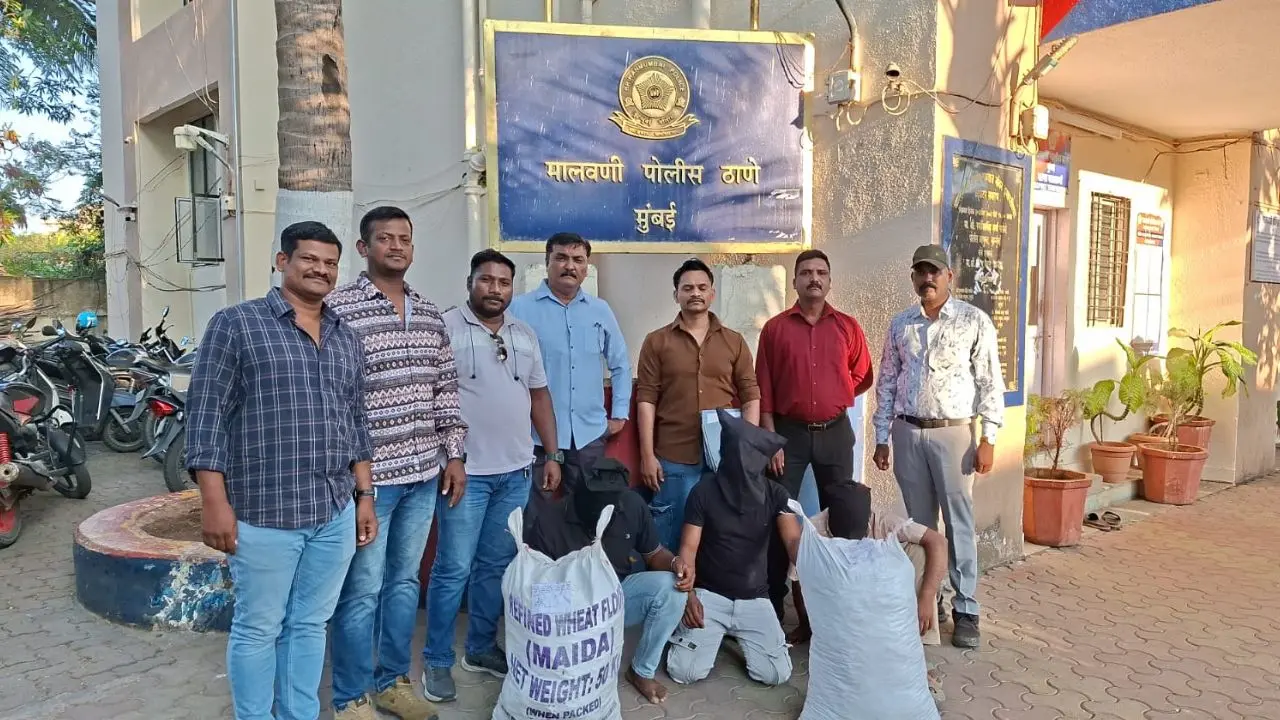
31 March,2026 09:32 PM IST | Mumbai | mid-day online correspondentMumbai Police on Tuesday seized 37 kilograms of ganja and arrested three individuals in Malwani during a late-night operation, officials said on Tuesday. The operation was carried out by the Malvani Police Station. The officials further registered a case under the Narcotic Drugs and Psychotropic Substances (NDPS) Act. As per the police officials, the incident occurred around 3:00 am on March 31, when a surveillance team was patrolling near the Poonam Rose Nursery on Marve Road in Mumbai. During the patrolling, the officers noticed suspicious movement in the area and conducted a search, leading to the recovery of 37 kg of ganja allegedly meant for sale. The officials, while further asserting about the seizure, said that the seized contraband is estimated to be worth approximately Rs 18.5 lakh in the illegal market. Three accused arrested Following the operation, the police have arrested three accused: Lavkush Phulchand Verma (28), Ankit Kumar Mansingh (24), and Situ Ramkumar Verma (24). The officials further said that all three accused are currently residing in Bhiwandi but are originally from Pratapgarh. The operation was conducted under the guidance of Senior Police Inspector Nagarkar and on the directions of Sandeep Jadhav, Deputy Commissioner of Police (Zone 11). Further investigation is underway to trace the source and supply network of the seized narcotics, police added. Police highlight rising concern Officials further emphasised that such operations are proving to be extremely crucial, particularly as the web of narcotics continues to ensnare the younger generation. The official statement further highlighted, “Concerns are being raised that ganja and other illicit drugs pose a grave threat to the health, careers, and future of the youth. Consequently, the police are consistently taking strict action against such trafficking activities.” 46-year-old man arrested with ganja worth Rs 4.27 lakh in Thane A 46-year-old man was arrested in Maharashtra’s Thane district for allegedly possessing ganja worth Rs 4.27 lakh, police said on Friday. Kuldeep Bacchu Singh, a resident of the Mithpada-Sangampada area, was apprehended on Wednesday by the Crime Branch Unit-II of Bhiwandi Police with 8 kg of the contraband, an officer said The seized ganja is valued at Rs 4.27 lakh, he added. The accused, who hails from Uttar Pradesh, has been booked under the Narcotic Drugs and Psychotropic Substances (NDPS) Act, PTI reported. A probe is underway to identify the source of the contraband and its intended recipients, the officer said. Punjab Police conduct statewide anti-drug operation, carrying out 187 arrests in a day Punjab Police carried out a massive Cordon and Search Operation (CASO) across the state as part of its ongoing anti-drug campaign, ‘Yudh Nashian Virudh’, resulting in the registration of 155 cases and the arrest of 187 individuals in a single day, Director General of Police (Law and Order) Arpit Shukla said on Thursday. Speaking on the development, the DGP said the operation was conducted under the directions of Punjab Chief Minister Bhagwant Mann and targeted identified drug hotspots across the state, as per PTI. “The operation was supervised by senior officers, including ADGs, IGs, and DIGs from the headquarters, along with district SSPs and DIGs. We have recorded 155 cases today, arrested 187 individuals, and recovered a huge quantity of heroin and tablets,” Shukla stated. Highlighting the impact of the year-long campaign, he said that ‘Yudh Nashian Virudh’ has been instrumental in curbing drug-related activities in Punjab, reported PTI. “The campaign has been operational for the past year and has led to the registration of around 80,119 cases, with 54,190 arrests made. Additionally, more than 2,384 kilograms of heroin have been recovered so far,” he added.
31 March,2026 08:56 PM IST | Mumbai | mid-day online correspondentThe Dedicated Freight Corridor Corporation of India Limited (DFCCIL) on Tuesday successfully conducted a trial run on the newly electrified double-line section between Jawaharlal Nehru Port Terminal (JNPT) and Vaitarna (New Saphale) in the Mumbai Metropolitan Region, marking the completion of the entire Western Dedicated Freight Corridor (WDFC). The trial run was conducted under the leadership of the DFCCIL Managing Director in the presence of senior officials. A container train in the down direction (JNPT to New Saphale) departed at 11.50 am, hauled by an electric locomotive. In the up direction (New Saphale to JNPT), another container train departed at the same time, powered by a diesel locomotive. The trial evaluated key technical and operational parameters, including track stability, behaviour of long welded rails under load, efficiency of overhead electrification systems, locomotive performance, signalling coordination, and the safe movement of rolling stock. It also assessed integration between mainline and loop line operations for seamless freight handling. With the successful trial, uninterrupted end-to-end connectivity has now been established on the WDFC. This is expected to significantly improve train operations by reducing the requirement of crew sets from three to one between New Makarpura and New JNPT due to fewer operational handovers. Freight trains are also expected to save nearly four hours in transit time, leading to faster turnaround of rolling stock, better asset utilisation, improved schedule reliability, and enhanced capacity to handle higher freight volumes. The completion of this final section paves the way for full-scale commercial operations on the Western Dedicated Freight Corridor, which is set to transform freight movement across the country with higher speed, greater efficiency, and increased capacity. Western Railway crosses 100 million tonnes of freight for fourth year, boosts key commodity traffic Western Railway has achieved a landmark milestone, surpassing 100 million tonnes (MT) of originating freight loading for the fourth consecutive year, reaching the mark on Thursday well ahead of the financial year's close. In a press release, the Western Railways said that its total freight loading for the period between April 2025 and Thursday, March 12, 2026, was 100.02 MT. The performance was broad-based, with several major commodity segments posting double-digit growth compared to the previous financial year. Container loading emerged as the largest contributor at 33.66 MT, growing over 10 per cent, while fertilizer loading recorded one of the sharpest jumps rising approximately 22 per cent to reach 18.92 MT. Cement loading stood at 14.53 MT, up over 3 per cent. Foodgrain loading grew the fastest among tracked segments, surging over 28 per cent to reach 1.00 MT. Iron and steel loading, at 0.69 MT, posted growth of around 24 per cent. Other commodities collectively accounted for 15.94 MT, registering growth of approximately 10 per cent. Coal and petroleum, oil and lubricants (POL) were among the other major segments contributing to the overall total. Beyond consolidating existing traffic, Western Railway also developed entirely new freight streams during the year. Commodities such as industrial salt, onion and automobiles were introduced from several locations, including Sanosara, Bhimasar, Vartej, the Vadodara Marshalling Yard, Kadi, and Gandhidham, diversifying the zone's freight portfolio and opening new revenue corridors. Officials attributed the milestone to a targeted strategy centred on attracting new freight streams, improving logistics efficiency and delivering customer-centric solutions to shippers. The fourth consecutive year above the 100 MT threshold signals a structural strengthening of Western Railway's freight operations rather than a one-off performance.
31 March,2026 08:22 PM IST | Mumbai | mid-day online correspondentThe Maharashtra government on Tuesday carried out a fresh administrative reshuffle, transferring several senior Indian Administrative Service (IAS) officers across key departments. While Ashwini Bhide has been appointed as the commissioner of the Municipal Corporation of Greater Mumbai (MCGM), Lokesh Chandra, a 1993 batch IAS officer who served as the chairman and managing director of Maharashtra State Electricity Distribution Company Ltd (MSEDCL), has been appointed as additional chief secretary to the Maharashtra Chief Minister. Vikas Chandra Rastogi (1995 batch), who was serving as additional chief secretary (agriculture), has been moved to the finance department as Additional Chief Secretary (Financial Reforms). Vinita Vaid Singal (1996 batch), principal secretary, disaster management, rehabilitation and relief, has been posted as principal secretary, soil and water conservation department. Prithviraj BP to be Vasai-Virar civic commissioner, Tukaram Mundhe shifted to disaster management Among other transfers, Parimal Singh (2004 batch), project director of the Nanaji Deshmukh Krishi Sanjivanee Project (POCRA), has been appointed secretary (agriculture), while Tukaram Mundhe (2005 batch), secretary, Divyang Kalyan Department, has been posted as the secretary of the disaster management, rehabilitation and relief department. Lahu Mali (Special Category Status, 2009) has been appointed managing director of Shivshahi Punarvasan Project Ltd, Mumbai, while Manik Gursal (SCS, 2009) will take over as the secretary of the Divyang Kalyan Department. In other changes, Prerna Deshbhratar (2010 batch), currently the joint commissioner of state tax, Mumbai, has been posted as the commissioner of fisheries, Mumbai. Meanwhile, Prithviraj BP (2014 batch), additional municipal commissioner in Pune, has been appointed the Vasai-Virar Municipal Commissioner. The transfer order dated March 31, 2026, is part of a broader administrative reshuffle aimed at strengthening governance across departments in the state.
31 March,2026 06:37 PM IST | Mumbai | Sanjeev ShivadekarThe Autorickshaw Driver Association, Maharashtra, has announced a statewide protest across all Regional Transport Offices (RTOs) on April 8. The association alleges coercion in the registration process for the newly formed “Dharmaveer Anand Dighe Maharashtra Autorickshaw and Meter Taxi Drivers Welfare Board.” While issuing an official statement on Tuesday, President Shashank Rao and General Secretary Vilas Bhalekar claimed that autorickshaw drivers are being forced to pay Rs 500 as a registration fee and Rs 300 as an annual fee at RTO offices across the state. The association, while issuing a letter, also stated that autorickshaw drivers have been demanding an independent welfare board to implement beneficial schemes; however, the government allegedly set up the board without consulting major unions. The statement further noted, "For the past 20 years, these demands have been submitted to the Maharashtra State Government through the Joint Action Committee. “While forming such a welfare board, it was necessary for the government to consult representatives of major autorickshaw unions in Maharashtra. However, without any consultation, the government unilaterally decided and established the board,” the association further added. The Maharashtra Auto Rickshaw Association further alleged that drivers are being compelled to register with the board, failing which, essential services such as permit renewals and vehicle passing are being withheld. Calling the practice "illegal", the association said that many drivers, especially those facing financial constraints, have opposed the fees and refused to register. "A representation regarding the issue was submitted on March 23 to the Transport Minister and Transport Commissioner, but no action has been taken so far," the statement added. Auto Rickshaw Association announces protest on April 8 In view of their demands, the federation has called for a statewide protest march at all RTO offices across Maharashtra on April 8. They further warned of large-scale participation by autorickshaw drivers and owners. Mumbai Auto Rickshaw drivers to stage protest at Andheri RTO In Mumbai, the protest will be led by the Mumbai Autorickshaw Taxi Men’s Union and will take place at the Andheri RTO at 11 am. The federation has further urged authorities to immediately halt the alleged forced fee collection and engage with stakeholders to address the concerns of drivers.
31 March,2026 05:23 PM IST | Mumbai | mid-day online correspondentIn a strong show of citizen-driven sustainability, over 813 kg of old but usable clothes were collected during a special drive in Vashi, ensuring they are reused instead of ending up in landfills. The initiative, held at Sahitya Mandir Hall, was jointly organised by the Navi Mumbai Municipal Corporation (NMMC), Project Mumbai, and Marathi Sahitya Sanskriti va Kala Mandal. Residents from across Navi Mumbai turned up in large numbers, donating clothes in good condition. The collected garments have now been sent to the Textile Recovery Facility (TRF) at CBD Belapur, where they will be sorted, processed, and upcycled into new products, significantly reducing textile waste. NMMC Chief Dr Kailas Shinde said, “Citizen participation is key to effective waste management. Initiatives like these not only reduce the landfill burden but also promote responsible habits among people. Our focus is to build a sustainable and cleaner Navi Mumbai through such collaborative efforts.” Officials highlighted that the TRF project, run in collaboration with the Ministry of Textiles, SBI Foundation, and Tisser India, also creates employment for women from self-help groups who are actively involved in sorting and recycling. Positive response from Navi Mumbaikars strengthens sustainability push Rohit Fadtare of Project Mumbai said, “The response from citizens has been extremely encouraging. People are now more aware and willing to contribute towards sustainability. This is not just a collection drive; it’s a movement towards responsible living.” Vaishali Kadam of Tisser Trust added, “Every piece of clothing reused or upcycled is a step towards reducing waste. At the same time, it empowers women by creating meaningful livelihood opportunities through the recycling process.” Along with clothes, plastic waste was also collected and sent for recycling, further strengthening the environmental impact of the drive. Civic officials thanked citizens for their enthusiastic participation and urged more residents to adopt eco-friendly habits, making Navi Mumbai a model for sustainable urban living.
31 March,2026 05:19 PM IST | Mumbai | Abhitash SinghMotorists heading towards Navi Mumbai via the Sion–Panvel Highway should brace for heavy traffic congestion during Tuesday evening’s peak hours. Two lanes of the Vashi Bridge — which passes over Thane Creek just before the Vashi toll plaza — have been shut to facilitate ongoing expansion joint repair work, officials said. Officials from the Maharashtra State Road Development Corporation (MSRDC) told mid-day.com that the two lanes on the bridge have been closed for maintenance. The work is currently underway, and the affected lanes are expected to reopen by Wednesday. The temporary closure is likely to cause significant delays for commuters travelling from Mumbai towards Navi Mumbai, especially during the evening rush hour when traffic volume is high on this arterial route. Commuters are advised to plan their journeys accordingly and, if possible, consider alternate routes to avoid inconvenience. Key advisory for motorists Affected stretch: Two lanes of Vashi Bridge (Thane Creek Bridge) before Vashi toll plaza on Sion–Panvel Highway (towards Navi Mumbai) Reason: Expansion joint repair and maintenance work Duration: Lanes expected to reopen by Wednesday. The short-term disruption is part of routine maintenance to ensure the structural safety and smooth functioning of the busy Thane Creek Bridge, which handles heavy daily traffic between Mumbai and Navi Mumbai.
31 March,2026 04:32 PM IST | Mumbai | Ranjeet JadhavIn a landmark administrative decision, senior IAS officer Ashwini Bhide has been appointed as the Municipal Commissioner of the Brihanmumbai Municipal Corporation (BMC), becoming the first woman to hold the top post in the civic body’s history. The appointment has been widely welcomed as a progressive step towards greater representation of women in leadership roles. Mayor Ritu Tawde Calls It a ‘New Era’ for BMC Reacting to the development, Mumbai Mayor Ritu Tawde described Bhide’s appointment as the beginning of a “new era” in the history of the BMC. In a statement shared on social media platform X, Tawde extended her congratulations and expressed confidence in Bhide’s leadership. बृहन्मुंबई महानगरपालिकेच्या इतिहासात नवे पर्व…! बृहन्मुंबई महानगरपालिकेच्या आयुक्त पदी श्रीमती अश्विनी भिडे जी यांची नियुक्ती झाल्याबद्दल त्यांचे हार्दिक अभिनंदन. बीएमसीच्या इतिहासातील त्या पहिल्या महिला आयुक्त ठरल्या आहेत, ही आपल्या सर्वांसाठी अत्यंत गौरवाची बाब आहे.… pic.twitter.com/jPkIefp4Lo — Ritu Tawde (@TawdeRitu) March 31, 2026 Calling it a moment of pride for the city, Tawde highlighted that the appointment signifies not only an administrative change but also a celebration of women’s empowerment. She further noted that with Bhide’s experience and disciplined work approach, Mumbai’s development is expected to scale new heights. Tawde also expressed optimism about working together with Bhide to achieve the vision of a “smart and safe Mumbai,” underscoring the significance of both the Mayor and Commissioner being women. Government Order and Additional Responsibilities The appointment was formalised through an order issued by the General Administration Department of the Government of Maharashtra. Alongside her role as BMC Commissioner, Bhide has also been given additional charge as the Managing Director of the Mumbai Metro Rail Corporation (MMRC) until further orders. Leadership Transition at BMC Bhide succeeds outgoing Municipal Commissioner Bhushan Gagrani, who is set to retire from service on Tuesday, March 31. Her appointment marks a significant leadership transition in one of India’s most prominent civic bodies. Prior to this role, Bhide was serving as the Additional Chief Secretary in the Chief Minister’s Office under Devendra Fadnavis. She is known for her strong administrative acumen and decisive leadership style. Track Record in Key Infrastructure Projects Bhide has played a crucial role in several major infrastructure initiatives in Maharashtra, most notably her leadership in the Mumbai Metro projects. She had earlier served as the Managing Director of the Mumbai Metro Rail Corporation, where she oversaw the execution of critical urban transport developments. Her appointment is expected to bring a blend of experience, efficiency, and strategic vision to the BMC at a time when Mumbai continues to face complex urban challenges.
31 March,2026 03:37 PM IST | Mumbai | mid-day online correspondentADVERTISEMENT