For decades, the Indian bridal aesthetic was anchored by a single, immovable coordinate: dulhan red. It was a colour that signalled tradition, high-impact theatre, and a specific heritage costume. But as we move into 2026, a seismic shift is occurring under the mandap. The modern bride is staging a non-red revolution. Influenced by the rise of quiet luxury, the technical demands of high-intensity LED lighting, and a growing consciousness toward garment longevity, brides are pivoting to a palette of sage, lavender, champagne, and ivory. This evolution is being shaped by modern design philosophies that prioritise versatility and sophistication. Design experts delve into how the 2026 bride is redefining what it means to look regal, moving away from conventional norms toward a more personalised and contemporary elegance. The litmus test: How to choose your forever shade When you move away from the safety of red, the sheer volume of choices—from buttercream to steel blue—can be overwhelming. Shivani Nirupam, founder of label Shivani Nirupam, argues that while trends may dictate specific shades, the ultimate litmus test for a bride is emotional resonance and visual warmth. "The most important thing to remember is that you have to look at your wedding pictures forever. Whether the trend is off-white or cream, the trend will fizzle out with time. To make your bridal attire truly timeless, pick your favourite colour,” says Nirupam. However, Nirupam acknowledges that in a country where muhurat timings and monsoon rains are unpredictable, the environment plays a role. Her advice? Pick your battles: 1. The morning bride: If you love bright shades but want to avoid red, opt for warmer non-red tones that compliment the soft, gold morning light.2. The monsoon/indoor bride: If you are a pastel girl but your rituals are indoors, opt for cool-toned decor to make your look stand out against the shadows. Redefining regal in the era of quiet luxury If red and gold represented the theatre of the past, what defines the high-fashion royalty of 2026? Rahul Khanna, creative director at Rohit Gandhi + Rahul Khanna, notes that the focus has shifted from loud announcements to tonal sophistication. "Traditionally, regality was expressed through high-contrast combinations like red and gold that immediately signalled wedding. In 2026, the focus is on refinement, proportion, and personal expression. The bride is not moving away from grandeur; she is redefining it,” Khanna explains. This quiet luxury move means the 2026 bride is prioritising her personal brand over a heritage uniform. “She wants to feel like herself, not a character in a costume. The power of sage or champagne lies in its ability to enhance the bride’s natural tone rather than overpowering it,” he adds. The technical edge: Fabrics as built-in filters One of the most practical drivers of the non-red trend is the evolution of wedding technology. Traditional, heavy, light-absorbing reds often look flat or excessively dark under the high-intensity LED setups common in modern 2026 mandaps. Khanna highlights how fabrics like tissue silk, organza, and tulle act as natural reflectors, "Lighting has fundamentally changed how bridal wear is perceived. Dense textiles can absorb light, whereas lighter, translucent materials interact with it. Layered silhouettes allow light to pass through and scatter as the bride moves." The result is what Khanna calls a soft halo or organic cinematic luminosity. “In a wedding film, these non-red fabrics act as a built-in filter, enhancing the bride’s complexion in a way that light-absorbing traditional fabrics simply cannot,” he poses. Crafting the high-impact look without loud colour A common fear for brides moving away from red is losing that bridal impact. Nirupam suggests that the safety net of high-impact colour can be replaced by architectural detail and strategic jewellery. "The muted pastel story works well when you pick it up a notch with jewellery. A regal jadau set can pack a burst of vibrance on champagne or cream. Even creating lehengas out of your mother’s wedding saree is now considered a sign of luxury," Nirupam says. For those opting for shades of white, she recommends: 1. Intricate zardozi: Meticulous gold thread work that adds a royal flair to pared-down shades.2. Tonal contrast: Dramatising a baby pink lehenga with rubies or a pastel yellow lehenga with emeralds to break the monotony. The jewellery shift The transition to a non-red palette has fundamentally changed the bridal jewellery box. While gold and polki are traditional staples, they can feel heavy against lavender or sage. Nirupam notes that for sunset pheras, diamonds offer an ethereal, minimalistic charm that serves as a sign of modest class. Furthermore, diamonds offer a versatility that gold often lacks—they can be repeated and repurposed easily. Top jewellery trends include: 1. Pearls: For an old-worldly charm and vintage romance.2. Tanzanite: Increasingly considered auspicious and pairing beautifully with shades of lavender or blue.3. Monotone adornment: Matching the jewellery’s gemstones to the lehenga’s embroidery tones for a sophisticated, seamless look. The taboo palettes: Five trends dominating 2026 Saurabh Gupta, co-founder of Kalki, identifies a total rejection of cookie-cutter looks. He muses, “Colours once considered inauspicious or taboo for the main ceremony are now at the forefront of the 2026 season.” Gupta outlines five key palettes: 1. The new whites: Once considered too minimal, ivory, and buttercream are now elevated with rich textiles for a look of understated elegance.2. Sophisticated neutrals: Previously reserved for pre-wedding functions, champagne, sand, and beige are now main-ceremony favourites for their refined, luxurious feel.3. Nature-inspired tones: Sage green, and olive resonate with the modern bride’s desire for "renewal and balance."4. Couture blues: Powder blue, steel blue, and icy pastels are reinterpreted through high-fashion craftsmanship to offer a fresh, contemporary statement.5. Modern greys: Once perceived as sombre, soft grey, dove tones are now modern neutrals that, when paired with silver or pearls, define quiet luxury. The silver and pewter rebellion For the first time in a decade, cool metallics are challenging the reign of gold. Khanna explains that designers are now using champagne-silver threads and 3D beadwork to ensure these cool tones don't look like standard evening gowns. "Cooler metallics can actually sharpen radiance. They create a contrast that highlights the warmth of the skin rather than dulling it. By layering cool metallics with subtle warm undertones, designers are creating multidimensional looks that feel unmistakably bridal while remaining modern,” Khanna shares. The afterlife of the wedding outfit Perhaps the most significant driver for the non-red revolution is Intentionality. Gupta points out that 2026 brides are thinking about the afterlife of their attire. "Brides are increasingly viewing their outfits as long-term investments. A champagne or sage lehenga transitions seamlessly into high-fashion galas or festive gatherings. It extends the life of the garment well beyond the wedding day,” Gupta says. This move isn't just about minimalism, it’s about mindful luxury. “Brides are asking whether a piece can evolve with them. By choosing versatile colours and prioritising craftsmanship over theatrical colour, the 2026 bride is ensuring her investment piece remains relevant for decades,” he reflects. Conclusion: A future-facing heritage As the non-red revolution continues, it is clear that tradition isn't being abandoned—it’s being refined. Whether it is the focus on personal favourites, mastery of cinematic lighting, or embrace of unconventional palettes, the message is the same. The 2026 bride respects her heritage, but she refuses to wear it as a uniform. She is choosing colours that spark joy, fabrics that hold light, and designs that promise a life beyond the wedding day. In 2026, the most regal thing a bride can be is unmistakably herself.
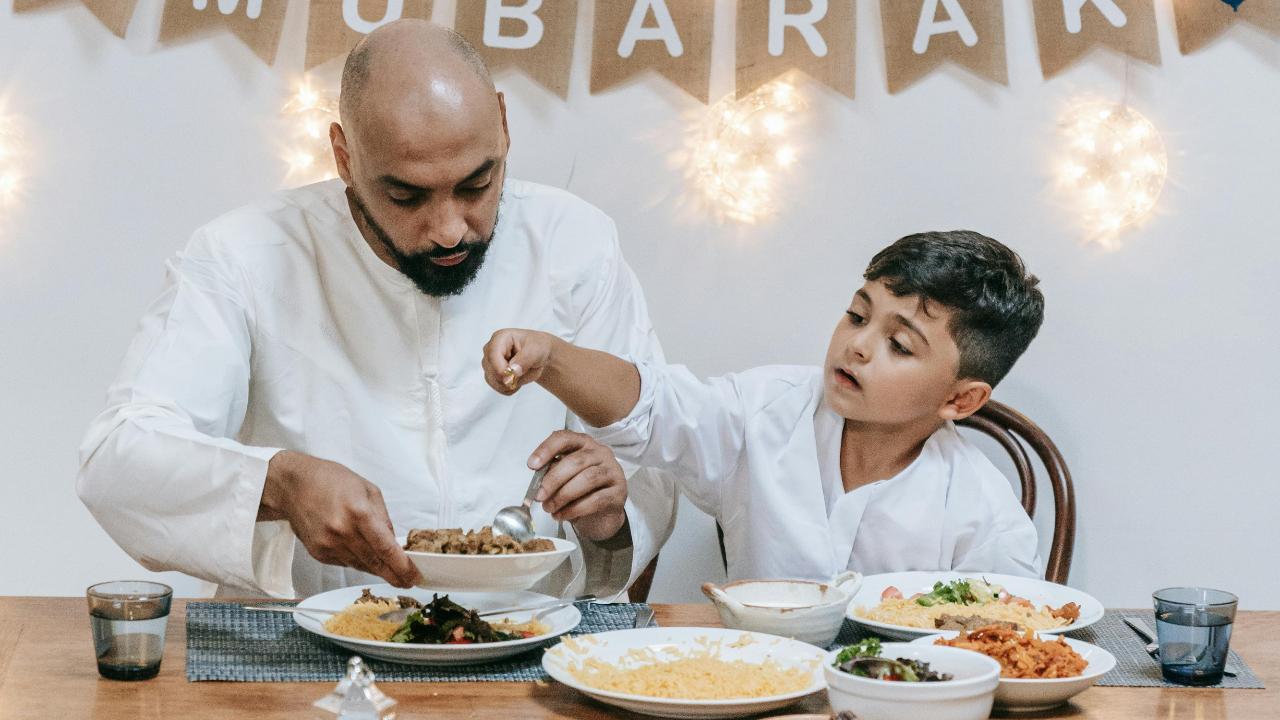
31 March,2026 11:05 AM IST | Mumbai | Maitrai AgarwalAs the crescent moon signals the arrival of Eid 2026, the sartorial landscape is undergoing a profound transformation. The days of stifling, heavy silks and restrictive, gold-laden brocades are giving way to a new philosophy: quiet regality. This season, festive menswear is shedding its weight in favour of liquid linen and structural sheer—concepts that prioritize the wearer’s comfort without sacrificing an ounce of prestige. The modern man is no longer content with being a passive participant in tradition; he is looking for garments that breathe with him, from the early morning Salat to the late-night family Dawat. To navigate this shift toward breezy, effortless luxury, we sat down with two luminaries of Indian couture: Archana Jaju, creative director of her eponymous label known for heritage craftsmanship, and Aisha Rao, the founder and creative director of her namesake label celebrated for her colour-forward perspective. The fabric revolution: Beyond the heavy silks Archana Jaju notes, “There has been a decisive move toward fabrics that allow the garment to move naturally while still maintaining an elegant drape." Her top recommendations for a breathable festive season include:1. Linen: It carries a relaxed texture that instantly feels summer-appropriate while still looking refined when tailored into kurtas or Nehru jackets.2. Cotton voile: Soft, sheer, and lightweight, it works beautifully for layered kurtas, giving a breezy and refined finish.3. Khadi: I gravitate toward khadi because it carries a sense of heritage. It brings understated sophistication while keeping the look light.4. Silk-cotton blends: Perfect for festive occasions, they combine the softness and breathability of cotton with the subtle sheen of silk, giving outfits a more celebratory feel without making them heavy.5. Chanderi: Its subtle sheen and elegant fall give it a luxurious feel, while still being breathable. This makes it ideal for tunics, kurtas, and light jackets. Elevating the everyday: How to make linen festive Linen is often associated with casual summer dressing, but Jaju argues that the secret lies in the tailoring and texture:1. Tailored perspective: A well-cut linen kurta with clean lines or a softly structured Nehru jacket layered over it can immediately make the outfit feel more polished.2. Textural contrast: When linen is paired with another fabric like chanderi or a light silk layer, the contrast subtly elevates the look.3. Intricate detailing: Tone-on-tone embroidery, delicate thread work, or carefully chosen buttons can add character without overpowering the natural simplicity of linen.4. Intentional accessories: A classic watch, a pair of beautifully crafted juttis, or even a subtle pocket square can transform a very minimal outfit into something that feels special enough for Eid. Mastering the oversized silhouette The oversized look is undeniably trending, but pulling it off requires a focus on balance and proportion: 1. Visual balance: A relaxed kurta, for example, looks great with more fitted trousers or straight-cut pants creating visual balance. The garment can still feel loose and comfortable, but it doesn’t appear shapeless.2. Subtle structure: Even in oversized garments, elements like defined shoulders, well-placed seams, or soft pleats can help maintain form. These details give the garment purpose.3. Anchoring with layers: A lightweight waistcoat or Nehru jacket can introduce another dimension while giving the silhouette more structure.4. Confident ease: Ultimately, oversized fashion is about embracing ease and confidence. When proportions are balanced and the styling feels intentional, the result is relaxed yet sophisticated. The art of the sheer: Transparency with sophistication Sheer fabrics can feel intimidating, but Jaju suggests thoughtful layering for family gatherings:1. Coordinated layers: A lightweight kurta or slip in a similar shade allows the sheer fabric to remain the focus while ensuring the outfit feels comfortable.2. Proportional hemlines: I often prefer the inner kurta to be slightly shorter than the sheer outer layer so the top layer falls beautifully and creates a soft sense of movement.3. Strategic sleeves: A sleeveless inner layer works beautifully under sheer long sleeves, while a fuller inner sleeve can add dimension if the outer layer is shorter.4. Aesthetic restraint: In my opinion, the most important aspect of styling sheer fabrics is restraint. When the layering is subtle and the colours remain soft and harmonious, sheer pieces can feel graceful. The palette of 2026: From dark hues to pastel power Aisha Rao encourages men to move from darker, heavier hues to lighter, breezier tones. Her guide to the new palette: 1. The Entry point: Ivory carries a timeless sophistication and works seamlessly in festive silhouettes allowing the craftsmanship to enhance the garment.2. The 'old money' neutral: Beige has a refined, almost 'old money' charm, understated yet extremely polished.3. Sophisticated brights: Butter yellow and pastel pink carry a gentle warmth that tends to flatter a wide range of skin tones while still feeling sophisticated, they bring a subtle brightness to festive dressing without becoming overpowering.4. The seasonal refresh: Pistachio green has a refreshing quality that feels distinctly seasonal while still remaining elegant and versatile in menswear.5. Narrative prints: Prints add a sense of movement and character while maintaining the brand’s signature narrative of whimsical couture. The details that matter: Five essentials of quiet luxury Jaju identifies the subtle details that elevate understated silhouettes: 1. Buttons: Handcrafted, mother-of-pearl, wood, or fabric-covered buttons bring thoughtful refinement.2. Footwear: Embroidered juttis, minimal sandals, or sleek loafers anchor the outfit while keeping it festive.3. Watches: A classic watch adds a touch of sophistication without stealing focus.4. Waist accessories: Belts or fabric cords can define shape in oversized kurtas or jackets.5. Accents: Tonal pocket squares or subtle brooches inject personality and polish. The endurance test: Morning prayer to evening dinner To keep a linen outfit looking fresh through a long day of celebrations, Jaju recommends:1. The initial press: Start with a gentle press so the garment begins the day with clean lines.2. Embrace the texture: Linen naturally develops soft creases, when it’s well pressed initially, those creases tend to look relaxed rather than messy.3. Smart blends: Choosing linen blends instead of pure linen is another option, as the blend often holds its shape a bit better.4. Modular layering: A lightweight jacket or vest can subtly cover areas that crease more easily and also allows you to adjust your look throughout the day. Aisha Rao concludes, “The intention of this season is to create menswear that feels soft and playful while still maintaining a sharp, confident presence."
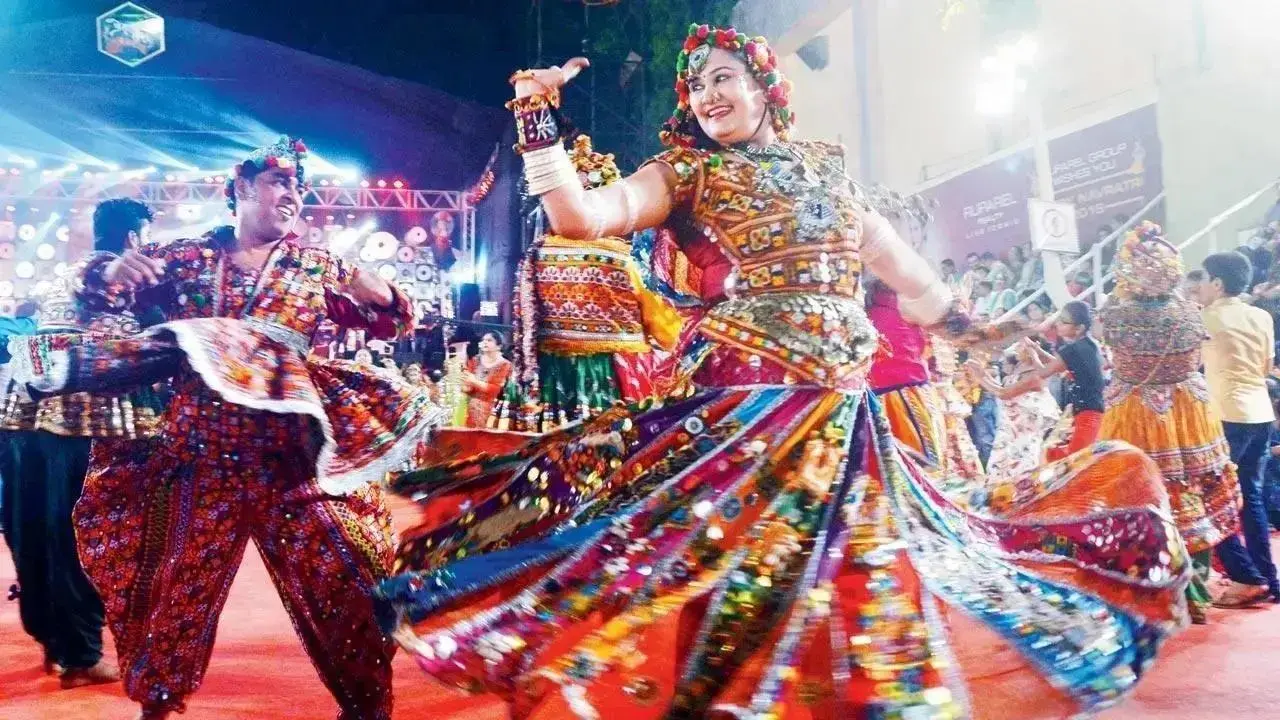
31 March,2026 10:05 AM IST | Mumbai | Maitrai AgarwalNavratri is more than just a festival, it is a whirlwind of 360-degree fashion, rhythmic movement, and cultural vibrance. In 2026, festive fashion has evolved into a blend of heritage and modern maximalism, where tradition meets tech and stability meets style. Whether you are hosting a traditional chowki, visiting friends for a festive meal, or attending a serene aarti, the way you accessorize tells a story of devotion and personal style. To help you navigate this period, we’ve gathered exclusive insights from fashion experts. Here is how to transform your festive wardrobe into a masterpiece of light, even if your feet never leave the ground. The 360-degree philosophy According to Paridhi Patodia and Shrishti Agarwal, founders of the artisanal label Parishri, the magic of Navratri styling lies in the unexpected. While many focus solely on the neckline, Patodia argues that because you are constantly moving and spinning, your outfit must work from every perspective. "Most people focus only on earrings or a necklace, but the real magic often comes from the accessories that people don’t think about," she explains. To achieve a truly complete look, the duo recommends these six essential additions:1. The Kamarband A gold-plated kamarband (waist belt) adds immediate structure. Even the simplest ghagra or sari is transformed into a styled, festive ensemble once the waist is defined.2. Payal In a festival defined by footwork, payal (anklets) are essential. A delicate gold-plated payal adds a subtle elegance that highlights your movement on the dance floor.3. Back jewelleryWith many modern cholis featuring deep-cut backs, this negative space is a canvas. A gold-plated back chain or pendant falling along the spine ensures you look striking even when your back is turned to the crowd.4. HaathphoolA haathphool highlights their grace and adds richness without the cumbersome weight of heavy bangles.5. Baju bandh For those wearing sleeveless or short-sleeved blouses, the baju bandh (armlets) offers a regal, traditional frame for the arms.6. Hair accessoriesDon't neglect the crowning glory. Woven gold-plated chains or pins in a braid pull the entire look together, making it feel curated rather than accidental. The 2026 trend: modern maximalism As we move through 2026, the trend of ‘Modern Maximalism’ is taking centre stage. Rushin Jhaveri, co-founder of Modera, explains that this involves bold, layered styling with a contemporary edge, "We are seeing a shift where traditional lehengas are elevated by metallic belts and geometric chains.” Interestingly, technology is also finding a place in our jewellery boxes. “Tech-integrated accessories—pieces that can hold digital memories or connect to personal stories—are emerging, bringing a modern dimension to the festival while respecting its cultural spirit,” he adds. This manifests in digital heirlooms—sculptural pieces embedded with near-field tech that link to personal memories or micro-LED fibres woven into traditional threadwork to mimic the soft glow of a festive lamp. Building the Navratri capsule accessory kit If you are starting from scratch, Jhaveri, suggests focusing on versatility. You don't need a hundred pieces; you need the right five. Here are his essentials for transitioning through nine nights:1. Statement jhumkas: These anchor the look. Their sculptural movement frames the face and pairs effortlessly with both lehengas and fusion wear.2. The choker necklace: Highly adaptable for any neckline. Look for kundan, polki, or enamel detailing for richness.3. Stackable bangles: Mix textures like mirror-work and oxidised finishes to add sound, sparkle, and energy to your dance.4. Statement maang tikka: A piece that is neither too minimal nor too bridal can instantly elevate a simple ghagra-choli.5.The kamarband: Beyond aesthetics, it secures your dupatta, allowing you to move freely. The art of the mix: Rules for layering How do you mix gold, oxidised silver, resham (threadwork), and mirror-work without looking cluttered? Patodia and Agarwal offer a simple golden rule: Balance.1. The anchor piece: Choose one statement piece (like a bold choker) and build around it with lighter elements.2. Layer for depth: Instead of one heavy necklace, layer a choker with a longer pendant. This adds depth without the physical weight.3. Spread the sparkle: Don’t concentrate all your jewellery around the neck. By spreading elements to your waist (kamarband) and anklets (payal), the look feels balanced and effortless. High stability style "Navratri is as much an athletic event as it is a fashion showcase," notes Jhaveri. To ensure your jewellery stays on through the day and doesn't cause discomfort, he shares these pro-stability tips:1. Weight distribution: Choose lighter constructions like hollow or openwork designs to keep pieces from feeling heavy.2. The ear chain secret: Use ear chains (saharas) for heavy jhumkas to hook into the hair and distribute weight.3. The glue trick: Use a tiny drop of eyelash glue to keep your maang tikka centred, and secure it with crossed bobby pins.4. Stay close: Chokers and fitted bangles stay more stable during movement than loose, dangling pieces. Navratri is a celebration of energy, colour, and movement. Whether you are leaning into the regal warmth of gold-plated pieces or experimenting with tech-integrated modern maximalism, the goal remains the same: to enhance your natural energy. As our experts suggest, when styled thoughtfully, even a few well-chosen pieces can transform a simple outfit into a mesmerising festive masterpiece.
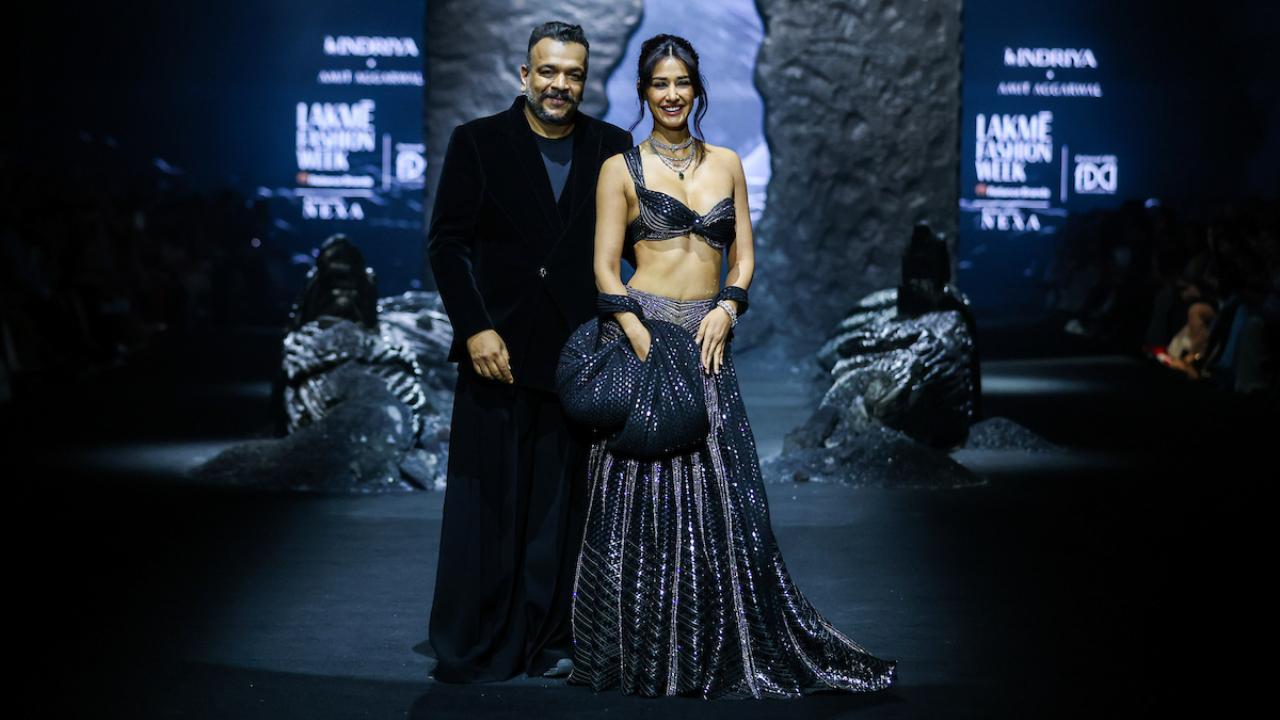
26 March,2026 03:14 PM IST | Mumbai | Maitrai AgarwalIndriya, Aditya Birla Jewellery, in collaboration with designer Amit Aggarwal, unveiled its latest collection, ‘Orizon’, at Lakmé Fashion Week on March 21, the third day of the fashion week. Indriya paid homage to India’s cultural heritage through polki and diamond, submitting a redefined, modern Indian expression. The show was envisioned to empower not confine; and inspire the modern Indian woman to move forward, staying rooted and carrying her heritage with pride. The rich ‘kaarigari’ will be complemented by Aggarwal’s handloom fabrics, vintage Banarasi textiles and contemporary mirrorwork thus creating a contemporary dialogue between tradition and innovation. “Orizon” is conceived as a narrative of transformation. Light marks a rare moment of change, and the collection traces the shift from shadow to radiance -- an inner journey that moves from introspection to stepping confidently into the light. Through this progression, tradition awakens into modern expression, revealing form, feeling and purpose with renewed clarity. Rooted in a shared reverence for innovation and emotional resonance, the collaboration between Indriya and Amit Aggarwal reflects a contemporary dialogue between heritage and evolution, structure and sensation, memory and modernity. At the heart of the partnership lies a shared belief that tradition does not confine creativity but equips it, serving as a living language that empowers new forms of expression. The runway presentation unfolded as a visual narrative of light and form. It began with Indriya’s refined diamond pieces in minimal compositions capturing the first hints of illumination, gradually transitioning into statement Polki and gold creations where traditional forms were reimagined through contemporary geometry. The show echoed Indriya’s heritage stories of India to life through modern expressions of jewellery. Designed to empower the modern Indian woman — one who draws confidence and identity from her cultural roots - the runway brought together Indriya’s luminous interpretation of Polki and the sculptural silhouettes of Amit Aggarwal. A defining highlight of the show was Indriya’s re-interpretation of Polki through the exploration of light, colour, and fluidity. Indriya’s master kaarigars brought exceptional craftsmanship to the forefront, moving beyond conventional techniques through the samosa dart setting — a distinctive method where the angular structure beneath each Polki stone enhances light reflection, creating a heightened brilliance and ethereal glow. Further elevating the show was Indriya’s bold pairing of Polki with a captivating palette of tare gemstones including vivid tourmalines, deep tanzanites, rich sapphires, classic rubies and South Sea pearls. Even carved stones were layered with delicate “kissing” Polki elements, adding intimacy and dimensionality to each piece. This interplay of colour and light brought depth and individuality to every design, reinforcing the brand’s philosophy of jewellery as an experiential art to be experienced.Innovative techniques such as wall-prong and corner-bezel settings minimised the visibility of metal, allowing gemstones to appear almost suspended — creating an aesthetic of weightless elegance. Through these distinct pillars of exceptional quality, reflective brilliance, innovative use of colour and modern fluid designs, the presentation redefined traditional Polki for the discerning, modern connoisseur as an evolving expression of legacy, artistry, and light. At its core, Orizon traced a journey from introspection to radiance, where light became a metaphor for transformation. The presentation progressed from quiet brilliance to bold luminous expressions, mirroring the wearer’s evolution from inward reflection to confident self-expression. Sandeep Kohli, CEO, Indriya, Aditya Birla Jewellery, said, “Lakmé Fashion Week was a powerful canvas to express how Indriya is redefining Polki and diamond for a new era through design superiority and modern intent. Our jewellery, elevated by design innovation, illuminated the runway, presenting a narrative where heritage is not a constraint, but a source of empowerment, one that allows tradition to evolve. This jewellery narrative came alive in dialogue with Amit Aggarwal’ sculpturalsilhouettes, crafted from upcycled Banarasi weaves and mirror work, which set the visual language of the show. Together with Amit Aggarwal, we presented a new expression of Indian craftsmanship that feels modern and empowered, created for women who carry heritage forward." Parallel to this narrative, Amit Aggarwal approaches design as a process of evolution. Titled “Orizon", the showcase unfolds as a carefully constructed visual journey. It begins in restraint and shadow, symbolising moments of inward reflection and quiet strength. Gradually, jewel tones, reflective surfaces, crystal embellishments and reinterpreted heritage textiles begin to emerge. As light interacts with form, the narrative evolves into one of confidence and self-expression. The presentation culminates in softened metallics and luminous hues, evoking a refined, contemporary bridal sensibility where softness and strength coexist. Orizon becomes a metaphor for transformation—a moment where inherited tradition meets personal awakening, allowing the wearer to step into a more empowered self. Speaking about the ensemble, Amit Aggarwal says, “Bringing ‘Orizon’ to life at Lakmé Fashion Week X FDCI was about capturing a moment of transformation. Conceived as a journey of evolution, seeing the collection unfold on the runway reaffirmed how craft continues to grow through emotion, innovation and collaboration. Working with Indriya, Aditya Birla Jewellery, allowed us to create a seamless dialogue between garment and jewellery, where both complemented one another to shape a unified narrative of transformation. The synergy between both the brands presenting ensembles is defined by precision, crafismanship, and modern allure.” Disha Patani took centre stage as the showstopper, adorned in Indriya’s captivating jewellery, paired with Amit Aggarwal’s sculptural couture. Her presence brought Orizon to life, embodying a powerful expression of heritage reimagined, where tradition meets modernity in a luminous, contemporary form. Within this evolving narrative, garments and jewellery remain in constant dialogue. Sculpted silhouettes and sensorial adornment complement one another, each carrying its own emotional and visual language while enhancing the presence of the other. The result is a series of ensembles that feel immersive, intentional and complete.
23 March,2026 12:04 PM IST | Mumbai | mid-day online correspondentAmid the ongoing Lakme Fashion Week x FDCI in Mumbai, the fashion world mourns the loss of Indian fashion designer Manish Malhotra's mother Garima Malhotra, who passed away at 94, on March 19. Her demise comes two days before the designer was set for his show 'Nexa presents Manish Malhotra Luxury Pret', on the third day (March 21). According to sources, the show has now been cancelled. Taking to social media, Lakme Fashion Week shared, "NEXA presents Manish Malhotra scheduled for today stands cancelled. NEXA presents ‘The Spotlight’ by Anurag Gupta will now take place at 9:30 PM this evening. Guests holding invitations for the Nexa Spotlight Sunday show can present the same for entry to the rescheduled 9:30 pm show today." View this post on Instagram A post shared by Lakmē Fashion Week (@lakmefashionwk) The statement from Malhotra's team read, "With gratitude for a life beautifully lived, we share the peaceful passing of our beloved mother, Mrs Garima Malhotra, at the age of 94. Having been blessed with a long and fulfilling journey, she leaves behind cherished memories, generations of love, and a legacy that will continue to guide us. The cremation ceremony will be held on March 20, 2026, at 10 am. We invite you to join us in offering prayers and bidding her a respectful farewell. Om Shanti.” Some of India's biggest celebrities and close friends of the family attended the ceremony today to pay their respects. Inside Lakme Fashion Week x FDCI The first day of Lakme Fashion Week x FDCI being held at the Jio Convention Centre from March 19 to 22 saw the likes of The Boys Club, Chola, Abraham & Thakore, Kartik Research and Anamika Khanna display their collections on the first day. With the second day underway, the schedule includes 'NIF Global presents GenNext – Jubinav, Saim, Taarini Anand', 'NIF Global: The Runway', 'R|Elan x Payal Pratap', 'Khadi India presents Navdhara Khadi featuring Samant Chauhan, CoEK, Pawan Sachdeva, Shruti Sancheti – an FDCI curation', R|Elan Circular Design Challenge in partnership with the UN in India presents CRCLE' and 'Supima presents AfeW Rahul Mishra'. The third day will see 'Line Outline by Deepit Chugh, Jajaabor, 'Triune by Prasoon Sharma', '360 One presents Aisha Rao, Bhumika Sharma, Ritika Mirchandani', 'Lakme Salon x Verandah presents Indigene', 'Indriya, Aditya Birla Jewellery presents Amit Aggarwal' The final day will 'FDCI x Pearl Academy: First Cut', 'Max Fashion presents Unserious Everything', 'Nexa presents The Spotlight by Anurag Gupta', 'Satya Paul x Aditi Rao Hydari' and end with Lakme Grand Finale x Pero.
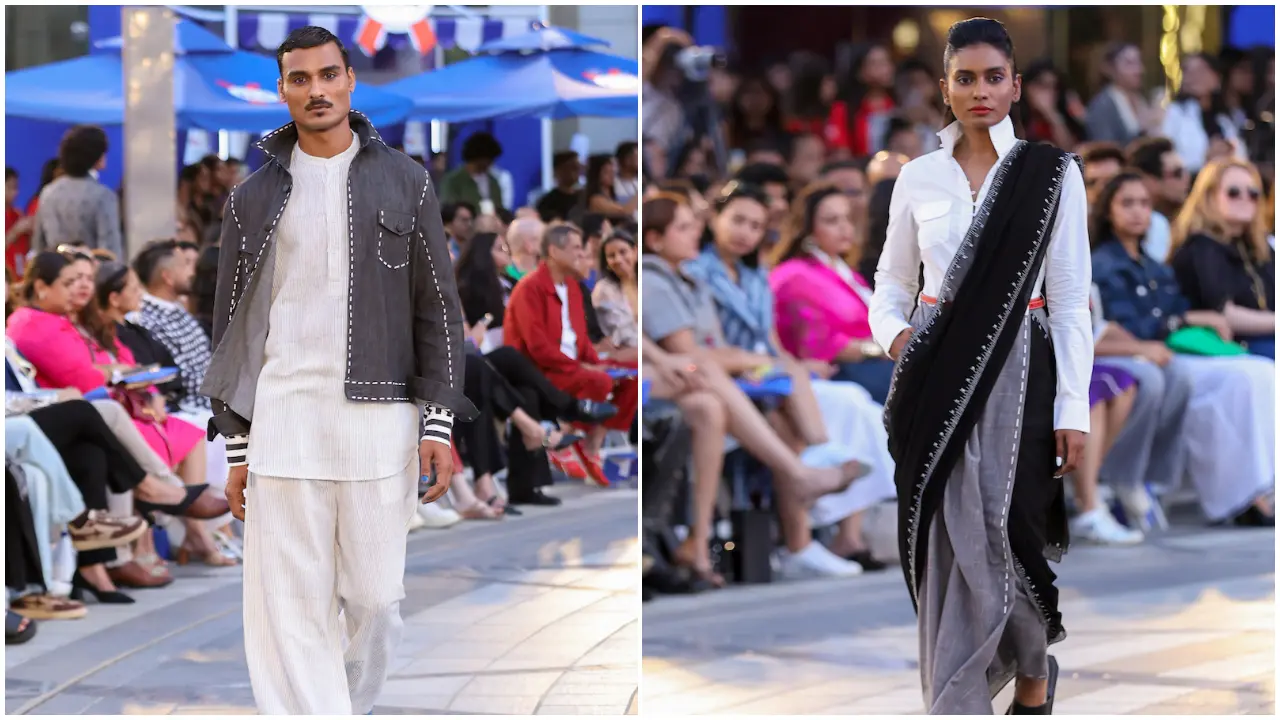
21 March,2026 02:02 PM IST | Mumbai | mid-day online correspondentOn the first day of Lakmé Fashion Week x FDCI, French lifestyle brand L’Atelier 1664, along with Indian design house Abraham & Thakore collaborated to showcase the collection titled, 'Sari’torial', inspired by modern French lifestyle sensibilities with contemporary Indian design. It was the third show after the fashion week opened with 'The Boy’s Club', featuring designs by Countrymade, Dhruv Vaish, Sahil Aneja and Vivek Karunakaran, and Chola with an immersive presentation, and followed by celebrated Indian fashion designer Anamika Khanna, who closed the first day. Through this association, L’ Atelier 1664 and Abraham & Thakore collaborated on a series of curated experiences across fashion, design and culture. The initiative aims to celebrate craftsmanship, creativity and modern expressions of style by connecting Parisian elegance with Indian design thinking. A play on the word sartorial, 'Sari’torial' brings together the ease of the sari with the precision of tailoring, integrating stitched and unstitched forms, as well as masculine and feminine elements. The garments are designed to be layered, adaptable and quietly distinctive. With this collaboration, L’Atelier 1664 aimed to reflect the philosophy of '1664 Blanc — Good Taste with a Twist'. As a lifestyle platform, it brings together tastemakers from fashion, design and cuisine to create immersive cultural experiences that celebrate individuality, creativity and refined living. The collection was brought to life through graphic surface patterns developed through techniques such as hand block printing, pintucks, pleating and embroidery developed across handwoven textiles, luxe silks and handspun cottons. A restrained palette of black and white, offset with L’Atelier 1664’s signature blue and subtle accents of gold, creates a visual language that is both graphic and timeless. Abraham & Thakore, who are known for their distinctive approach to Indian design, enjoyed combined traditional craftsmanship with modern aesthetics. For more than three decades, the design house has been recognised for its understated elegance, clean silhouettes and thoughtful use of textiles. At the heart of their philosophy is the idea of creating clothing for “all the days you’re not getting married” — a perspective that continues to shape their approach to modern Indian fashion through thoughtful, wearable and enduring design. Speaking about the association, Partha Sarathi Jha, who is the vice president, Marketing, Carlsberg India shared, “Z ‘Atelier 1664 was created as a platform that brings together culture, design and contemporary lifestyle. Our collaboration with Abraham & Thakore at Lakmé Fashion Week brought this vision to life on the runway. The response from the fashion community and the energy around the L’Atelier lounge reflect the power of creative collaborations that celebrate thebest of French-inspired elegance and Indian craftsmanship.” The visionary designer duo, added, “This association with L’Atelier 1664 reflects a meeting of sensibilities - French art de vivre and the richness of Indian craftsmanship. It is a fusion of ideas that celebrates heritage, creativity, and a contemporary way of living.”
20 March,2026 10:38 PM IST | Mumbai | mid-day online correspondentCelebrated designer Anamika Khanna showcased at Lakme Fashion Week in partnership with the Fashion Design Council of India (FDCD with her label AK|OK. With the opening night showcase. Khanna set the tone for the season and presented a collection that balanced versatility, craftsmanship and contemporary glamour on the runway. The collection focused on garments that could be styled, layered and worn in multiple ways, reflecting a relaxed yet confident design approach. The runway clothes highlighted ease in shape and the freedom of versatile separates designed for contemporary wardrobes. From draped dhoti pants and ruffled asymmetric tops to relaxed co-ord sets and floor-length gowns, the silhouettes balanced comfort with visual impact. The garments moved effortlessly between statement dressing and everyday wearability, offering pieces that felt adaptable without losing their distinctive character. At its core, the collection also explored the quiet beauty of what feels misplaced, much like a flower growing where it does not seem to belong. Each piece reflected emotional rawness, hand-painted imperfection and the idea that scars, irregularities and disruptions can come together to create something unexpectedly beautiful. In many ways, the collection became an experiment in belonging, where the unusual eventually feels right. This narrative unfolded through experimental compositions and hand-painted textures that balanced softness with boldness. Unfinished details, asymmetry and gentle distortions transformed perceived flaws into poetic design elements. Bold graphics inspired by flowers and nature appeared alongside intricate hand embroidery and 3-D embroidery mixed with gold zari work. Bright, exotic colours and draped silhouettes further amplified the visual language of the collection, celebrating imperfection as a form of authenticity while redefining beauty through irregularity and emotion. A thoughtfully developed colour palette guided the mood of the collection. Soft ecrus and warm browns gradually transitioned into dusty pinks and deep blacks, creating a visual narrative that felt sensual, warm and quietly bold. The tonal progression added depth to the garments while allowing the craftsmanship and silhouettes to take centre stage. Surface detailing appeared through intricate hand embroidery, lending texture and refinement to the pieces. The collection also introduced playful alternatives to fur, which added movement and dimension across select garments, bringing a subtle sense of drama to the runway. A notable addition this season was the introduction of menswear within the AK|OK universe. The menswear pieces echoed the relaxed yet elevated aesthetic of the collection, offering contemporary silhouettes that complemented the label’s established design language while expanding its creative direction. Speaking about the collection, designer Anamika Khanna said, “Our new collection celebrates Indian women in all shapes and sizes, and we have also focused on sustainability in fashion through our carefully selected fabrics, colours and crafts. This season, we are presenting a line of fluid garments through flattering silhouettes and glamorous finish for occasion wear and red carpet looks. The newest addition is our statement-worthy menswear range, which is a perfect add for a modern men’s wardrobe.” Across the runway, the garments reflected a design philosophy rooted in fluidity and versatility. The silhouettes allowed space for individual expression, encouraging styling combinations that could shift seamlessly between occasions. This story has been sourced from a third party syndicated feed, agencies. Mid-day accepts no responsibility or liability for its dependability, trustworthiness, reliability and data of the text. Mid-day management/mid-day.com reserves the sole right to alter, delete or remove (without notice) the content in its absolute discretion for any reason whatsoever
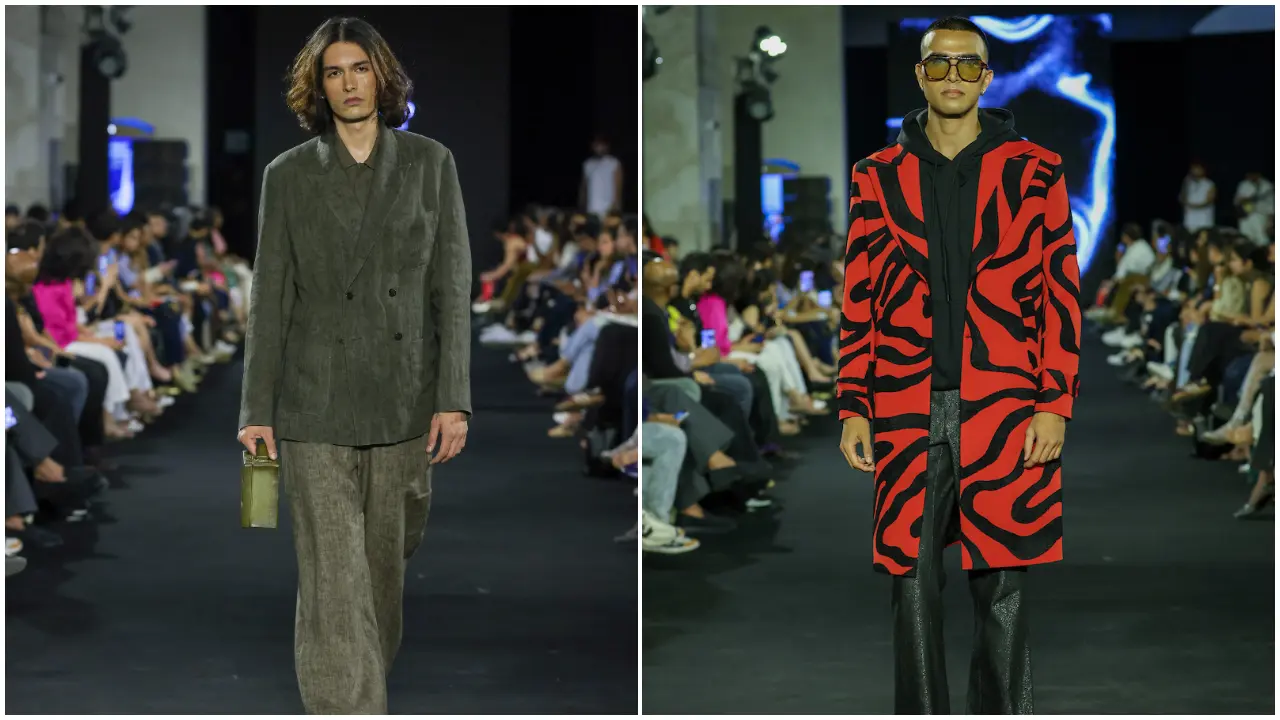
20 March,2026 10:11 PM IST | Mumbai | mid-day online correspondentThe Fashion Design Council of India (FDCI) presented “The Boys Club,” a dynamic menswear showcase at Lakme Fashion Week x FDCI, Mumbai. The show opened the fashion week on March 19 at the Jio World Convention Centre, featuring Countrymade, Dhruv Vaish, Sahil Aneja and Vivek Karunakaran. Countrymade by Sushant Abrol presented "Cenotaph", inspired by the architecture of memorial cenotaphs, spaces where remembrance takes form. The collection featured faded olives, scorched browns, oxidised bronze and stark black-and-white tones. Techniques such as mud-resist printing, cold pigment dyeing, bronze patina, kantha, raw-edged appliques and coatings that mimicked withered stone suggested the passage of time and erosion. It only got more mesmerising as Dhruv Vaish’s collection "The Blueprint" explored how cities reveal themselves through patterns like grids of streets, intersecting crossings, scaffolding lines and shifting terrains. The designer translated these quiet urban systems into contemporary menswear, where seam lines echoed the logic of roads and geometric panelling reflected temporary architectures. Fabrics such as linen, cotton denim and printed silk formed the base of the garments. Accompanying Abrol and Vaish, Indian designer Sahil Aneja presented "Strata", a collection inspired by the shifting forms of natural terrain and the fluidity of molten stone. The designer experimented with textures to create interplay of light and shadow across the garments. Indian designer Vivek Karunakaran’s collection “The Thangam” showcased its uniqueness as he interpreted South India’s enduring and understated relationship with gold through contemporary ceremonial menswear. Crafted from raw silks, tussar, Kanjeevaram and silk organza, the pieces featured subtle textures in tones of gold, ecru and earthen hues, accented by navy and teal.“Mens fashion has seen seismic changes in the last decade—from dull greys and predictable stripes, it now serenades a vibrant palette, bold motifs, play of textures, as the new age man is ready to take that proverbial leap of faith. The FDCI Boy’s Club is homage to the man who likes to experiment innovatively,” said Sunil Sethi, Chairman, FDCI. Lakme Fashion Week started on a high as South Indian and Bollywood actor, Siddharth opened the show for designer Vivek Karunakaran, wearing a brown silk coat paired with draped dhoti pants in rich earthy tones.
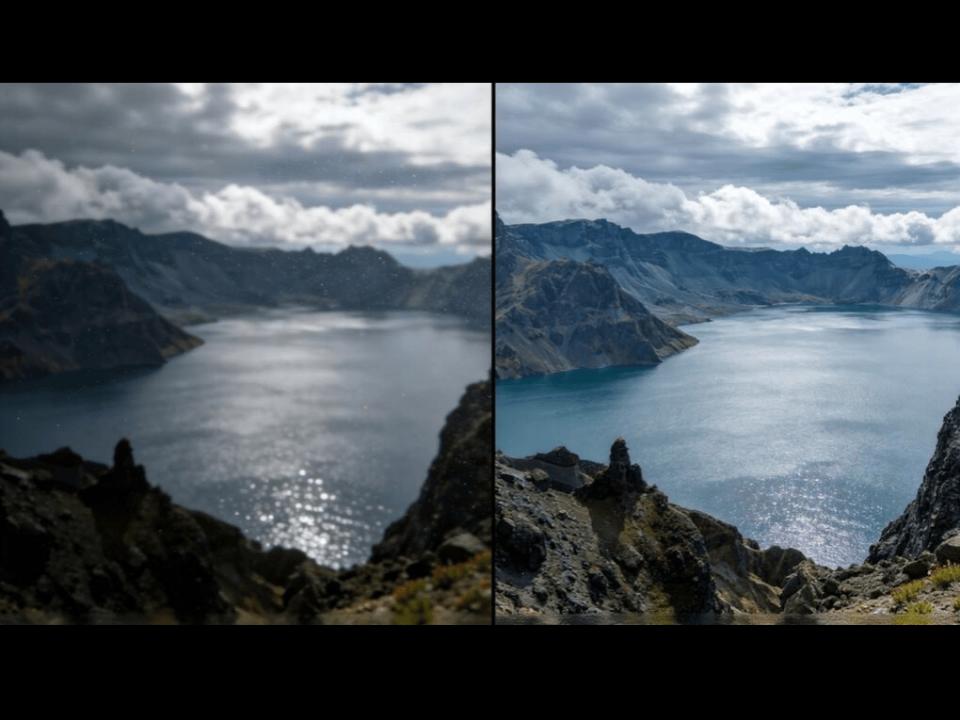
20 March,2026 01:16 PM IST | Mumbai | mid-day online correspondentYou’ve just captured a breathtaking moment in your favorite video game. The lighting is perfect, the action is frozen in time, and you know it would make an amazing desktop background. There’s just one problem. When you try to set it as your wallpaper on a large 4K monitor, it looks blurry, pixelated, and completely loses its magic. This is a common frustration for gamers who want to personalize their setup with unique, high-quality art. Fortunately, you don't need complex software or design skills to fix this. Thanks to modern technology, you can transform those small, standard-resolution screenshots into stunning, ultra-HD wallpapers that look sharp on any 4K display. This guide will walk you through the entire process, turning your in-game victories into crystal-clear desktop masterpieces. Your Step-by-Step Guide to Upscaling Game Art Follow these simple steps to convert any gaming screenshot into a beautiful 4K wallpaper. The process is straightforward and yields incredible results. Step 1: Capture the Best Possible Screenshot The quality of your final wallpaper depends heavily on the quality of your starting image. Always aim to capture your screenshot at the highest resolution and detail settings your game allows. Many modern games include a dedicated photo mode, which is perfect for this. These modes often pause the action, letting you control the camera angle, depth of field, and other effects to frame the perfect shot. If your game doesn't have a photo mode, use your graphics card's software, like NVIDIA's Ansel or AMD's ReLive, which offer similar tools. As a last resort, the default screenshot key in platforms like Steam (F12) works too. Just make sure to save the output as a PNG file instead of a JPG. PNG is a lossless format, meaning it preserves all the original image data without compression, giving you a much cleaner source to work with. Step 2: Use an AI Tool to Enlarge Your Image This is where the real transformation happens. Traditional resizing methods just stretch the existing pixels, which is why images become blurry. AI tools work differently. They analyze the image and intelligently create new pixels that match the context of the scene, adding genuine detail. An AI-powered Image Upscaler is the perfect tool for turning a 1080p screenshot into a 4K masterpiece. These online tools are designed to be incredibly user-friendly. The process usually involves visiting the website and uploading your screenshot directly from your computer. The AI then gets to work, analyzing the colors, shapes, and textures within your image to recreate it at a much higher resolution. This technology is especially effective for game screenshots, as it excels at defining the sharp lines of character models and the detailed textures of environments. Step 3: Choose the Right Upscaling Factor Once your image is uploaded, you'll need to tell the AI how much larger to make it. Most tools offer options like 2x, 4x, or even 8x magnification. To get a 1080p (1920x1080) screenshot ready for a 4K (3840x2160) monitor, you’ll want to use the 2x setting. This will double both the width and height, perfectly matching the resolution of your display. If your original screenshot is smaller than 1080p, you may need to use the 4x option. The goal is to get the final image resolution as close as possible to 3840x2160. Most upscaling tools will show you the output resolution before you process the image, so you can choose the setting that best fits your needs. Step 4: Process and Download Your HD Wallpaper With your upscaling factor selected, you can now start the process. This typically involves clicking a button labeled "Upscale," "Start," or "Process." The AI will take anywhere from a few seconds to a minute to work its magic, depending on the image size and the server load. Once it's finished, you'll see a preview of your newly enlarged image. You should notice a dramatic increase in sharpness and clarity. The pixelation will be gone, replaced by crisp lines and clean details. If you're happy with the result, download the new high-resolution image to your computer. Remember to save it as a PNG to preserve all the new detail the AI just created. Step 5: Make Final Adjustments (Optional) Sometimes, your upscaled image is perfect right away. Other times, you might want to make a few small tweaks to make it even better. You might want to crop the image to focus on a specific subject or adjust the brightness to make it pop. For these tasks, you can use a simple and effective AI Photo Editor. These tools often provide one-click solutions for enhancing colors, adjusting lighting, and sharpening details. For instance, if your original screenshot was a bit dark, you can use an auto-enhance feature to balance the light and shadows. If the colors feel a bit muted, you can increase the saturation. These final touches can elevate your wallpaper from great to absolutely perfect without requiring you to learn complicated software like Photoshop. Step 6: Set Your New Wallpaper Now for the final, most satisfying step. It’s time to set your new, high-resolution image as your desktop background. On Windows: Right-click on your desktop and select "Personalize." In the "Background" section, click "Browse." Navigate to your upscaled wallpaper file and select it. On macOS: Open "System Preferences" and click on "Desktop & Screen Saver." Click the "+" button in the bottom left corner to add the folder containing your new image. Select your upscaled wallpaper from the list. Stand back and admire your work. Your desktop is now adorned with a unique, ultra-sharp wallpaper that you created from your own gaming adventures. Tips for the Best Results To ensure your wallpapers look as professional as possible, keep these best practices in mind. Tip Description Start With a Clean Source Remove any in-game user interface (UI) elements like health bars or ammo counters before taking your screenshot. Most photo modes have an option to hide the UI. Match Your Aspect Ratio Most monitors use a 16:9 aspect ratio. If your screenshot is a different shape, you may need to crop it to fit your screen without stretching or black bars. Check for Artifacts AI is powerful, but not always perfect. Zoom in on your upscaled image and check for any strange patterns or "hallucinated" details. If you see any, try upscaling the original again. Don't Overdo Sharpening While a little sharpening can make details pop, too much can create a harsh, unnatural look. Use sharpening effects sparingly for the best results. Organize Your Collection Create a dedicated folder for your custom wallpapers. This makes it easy to find them and cycle through your collection whenever you want a fresh look. Common Mistakes to Avoid Upscaling is simple, but a few common missteps can lead to poor results. Here’s what to watch out for. Using a Heavily Compressed Original Image If you start with a low-quality, heavily compressed JPG file, the AI will have to work with poor information. This can cause the AI to amplify compression artifacts, resulting in a blocky or messy final image. Always start with a PNG or the highest quality JPG you can get. Choosing the Wrong Upscaling Factor Upscaling a 1080p image by 4x or 8x for a 4K screen is unnecessary and can sometimes introduce strange artifacts. The AI has to invent a lot more detail, and it can sometimes make mistakes. Stick to the magnification level that gets you closest to your target resolution for the cleanest result. Forgetting to Fine-Tune Colors A screenshot taken in a dark cave or a bright, sunny field might not have the best color balance for a desktop wallpaper. An image that is too dark can make desktop icons hard to see, while one that is too bright can be distracting. A quick adjustment to brightness, contrast, or color temperature can make a huge difference. Ignoring Small Details Before you upscale, look closely at your screenshot. Is there a distracting object in the background? Is the framing slightly off-center? It’s much easier to crop or edit these small imperfections on the original, smaller file before you commit to the upscaling process. Conclusion You no longer have to settle for blurry or pixelated backgrounds on your high-resolution monitor. With the power of AI image upscaling, you can easily turn any game screenshot into a work of art that’s perfectly suited for a 4K display. By starting with a high-quality source image and following a few simple steps, you can create a personalized desktop that showcases your favorite gaming moments in stunning clarity. So go ahead, dive into your screenshot folder, and start creating. Your perfect desktop wallpaper is just a few clicks away.
18 March,2026 02:13 PM IST | Mumbai | Jaison LewisThe much-awaited Lakme Fashion Week 2026, in partnership with the Fashion Design Council of India (FDCI), is set to begin March 19 and will go on till 22. The event will take place at the at the Jio World Convention Centre in Mumbai. The four-day event will showcase conscious collections and innovative design, bringing together leading designers, emerging labels, brands and industry stakeholders on one platform. Recognised as India’s premier fashion and lifestyle event, Lakme Fashion Week has been curating fashion experiences for more than 25 years. Each season, the platform hosts over 100 designers, brands and fashion professionals across multiple showcases. The schedule for the event is as follows: Day 1- March 19 12:00 pm FDCI presents The Boy’s Club, Countrymade, Dhruv Vaish, Sahil Aneja, Vivek Karunakaran 4:00 pm Chola (Presentation) 6:00 pm L’Atelier 1664 x Abraham & Thakore 8:00 pm Fashion Trust Arabia, India Guest Country – Winner Kartik Research 9:00 pm FDCI & Lakme Fashion Week Opening Night – AK|OK Anamika Khanna (Presentation) Day 2- March 20 12:00 pm NIF Global presents GenNext – Jubinav, Saim, Taarini Anand 3:00 pm NIF Global: The Runway 5:30 pm R|Elan x Payal Pratap 6:30 pm Khadi India presents Navdhara Khadi featuring Samant Chauhan, CoEK, Pawan Sachdeva, Shruti Sancheti – an FDCI curation 8:00 pm R|Elan Circular Design Challenge in partnership with the UN in India presents CRCLE 9:30 pm Supima presents AfeW Rahul Mishra Day 3- March 21 12:00 pm Line Outline by Deepit Chugh, Jajaabor, Triune by Prasoon Sharma 2:00 pm 360 One presents Aisha Rao 3:00 pm Bhumika Sharma, Ritika Mirchandani 5:30 pm Lakme Salon x Verandah presents Indigene 8:00 pm Indriya, Aditya Birla Jewellery presents Amit Aggarwal 9:30 pm Nexa presents Manish Malhotra Luxury Pret Day 4- March 22 12:00 pm FDCI x Pearl Academy: First Cut 3:00 pm Max Fashion presents Unserious Everything 5:30 pm Nexa presents The Spotlight by Anurag Gupta 7:30 pm Satya Paul x Aditi Rao Hydari 9:30 pm Lakme Grand Finale x Pero
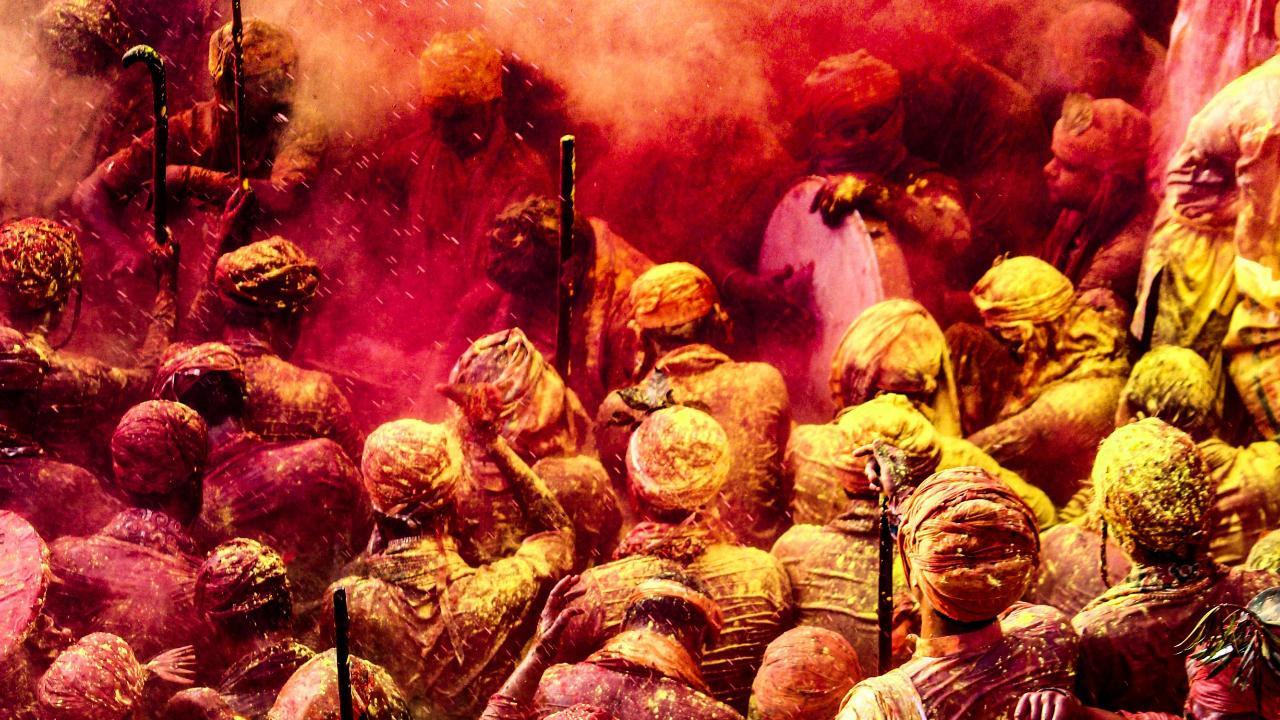
16 March,2026 03:24 PM IST | Mumbai | mid-day online correspondentIn 2026, the tradition of donning old rags for Holi has officially retired. As celebrations evolve, so does our understanding of what we wear to meet the flying pigments and inevitable buckets of water. The modern Holi wardrobe is no longer about disposal; it is about the breathable shield—a garment that protects the skin from toxic industrial dyes while maintaining its dignity when soaked. The wrong fabric choice does more than just ruin an outfit, it can trap harmful chemicals against your pores or become a heavy, transparent mess the moment the first splash hits. True festive luxury now lies in textile intelligence—choosing materials that balance airflow with opacity and structure. To help you navigate the loom, we’ve consulted fashion experts to curate the ultimate guide to Holi-ready fabrics. The philosophy of textile intelligence Sandhya Shah, founder of label Sandhya Shah, believes that a garment is a vessel for celebration. "Fabric carries memory. It remembers movement, touch, and joy. I have never subscribed to the idea of old clothes for Holi. If a garment is designed thoughtfully, it should return to your wardrobe with dignity," she poses. For Shah, protection isn't about wearing a plastic-like barrier, it is about the density of the weave. She recommends five specific textiles for the modern reveller:1. Handwoven structured cotton: Unlike flimsy cottons that collapse and cling when wet, denser handwoven varieties hold a quiet structure. This density allows the skin to breathe while retaining opacity.2. Balanced cotton-silk: A precise blend is key. Silk offers a soft luminosity that naturally resists pigment absorption, while cotton provides the necessary fluidity. Unlike chiffon, this blend maintains its composure under pressure.3. Linen-cotton blends: While pure linen is breathable, it can over-absorb water. A cotton blend controls this behaviour, preventing structural collapse while allowing maximum airflow.4. Textured jacquards and dobby weaves: Texture acts as a visual diffuser. On a dobby weave, stains do not sit flat and harsh, they break gently across the texture of the fabric, making them less noticeable.5. Lined mid-weight Chanderi: In Shah’s collections, Chanderi is always used with intention. When mid-weight and lined, its translucency becomes controlled elegance rather than a vulnerability. The science of the forgiving fabric When the party is over, the real test begins with stain removal. Kirti Seth, founder of Kaseeda, notes that the most forgiving fabrics are those that release water-based stains easily. "Mid-weight cotton poplin and cotton satin are particularly dependable because they release water-based stains more easily than most synthetics and retain their structure even when damp. The real advantage lies in the weave density. A tight weave prevents pigments from penetrating deeply into the fibers, making spot cleaning far more effective and reducing the likelihood of permanent staining,” Seth shares. Below, she outlines three kinds of fabrics to steer clear from this Holi: 1. Synthetics (polyester): These often trap oily pigments, making stains nearly permanent.2. Silk, viscose and rayon: These delicate materials are vulnerable to watermarking and can lose their finish entirely after moisture exposure.3. Dry clean only labels: In an environment of water and heat, natural fibres with pre-shrunk, colourfast treatments are far more reliable. If someone intends to wear the outfit again, the care label matters just as much as the fabric itself. Seth suggests looking for machine washable (cold), colorfast, and pre-shrunk. These details indicate the garment has been treated for durability and longevity. Beyond white: Solving the transparency trap While white is the classic blank canvas for Holi, it is also the highest maintenance. Seth suggests moving toward softer tones like ivory, ecru, and bone."Bright white has timeless appeal, but it is also the most unforgiving option. Lighter shades like Ivory, ecru, and bone provide the same minimalist look but offer greater depth and opacity. Bright white reflects light intensely and becomes sheer faster than expected. By choosing a bone or ecru shade in a textured finish like a self-stripe or dobby weave, you significantly reduce the risk of the garment becoming see-through when damp,” Seth explains. The GSM myth Many people believe that a higher GSM (grams per square metre) ensures quality. However, Seth clarifies that GSM measures weight, not density. “A heavy fabric with a loose weave can still become transparent. For Holi, the goal is medium weight with a tight weave and minimal stretch to prevent the garment from growing and pulling at stress points when wet,” she elaborates.The stress test: Identifying common pitfalls Vatsala Kalani, co-founder of Shop Mauve, emphasises that comfort and confidence are inseparable during high-energy celebrations. She identifies three common mistakes that lead to discomfort disasters:1. Chiffon and georgette: These fabrics may look pretty and flowy, but once wet, they cling to the body and can turn sheer. They also tear easily when pulled or caught during playful moments.2. Heavy denim: While these may seem sturdy, they absorb water slowly and then become heavy and uncomfortable. Wet denim in particular can restrict movement and take hours to dry.3. Ultra-thin white cotton: Cotton is breathable, but ultra-thin white cotton can turn transparent once soaked. It also absorbs colour quickly and stains deeply. The home stress test: Kalani suggests holding your fabric against the light and misting it with water. If it sticks to your skin or becomes sheer immediately, it isn't Holi-friendly. Performance versus nature In 2026, we are seeing a rise in active utility wear for festivals. Kalani weighs the pros and cons of modern blends versus organic options: Moisture-wicking syntheticsThese are designed to pull sweat away from the skin and dry faster which makes them practical for long hours outdoors. However, not all synthetics are equal. Poor quality polyester can trap heat and sometimes irritate sensitive skin, especially when mixed with colour and sweat. Organic cottonThe gold standard for sensitive skin. It allows for superior air circulation and reduces friction, though it stays damp longer than synthetic blends. Silhouette as protectionFinally, the cut of your garment can be as protective as the fabric itself. Kalani advocates for: Oversised fits: These create an internal micro-climate of airflow and prevent the fabric from stretching across the body (which increases transparency).Layered looks: A relaxed shirt over a tank or a structured co-ord set adds a secondary layer of security.Avoiding body-hugging cuts: In thin fabrics, tight silhouettes highlight areas of vulnerability the moment they are soaked. The essential fabric cheat sheet According to experts, your Holi wardrobe should function as a breathable shield. Here is the definitive guide to choosing textiles that balance style, safety, and longevity:1. Cotton-silk blends: Best for resisting deep stains as the silk content provides low pigment absorption and a soft luminosity.2. Structured cotton: Best for maintaining dignity when wet, as the high density and tight weave ensure maximum opacity.3. Linen-cotton blends: Best for long, hot outdoor celebrations, offering high breathability without the structural collapse of pure linen.4. Synthetics (polyester/nylon): Avoid entirely as these carry a high stain risk as they trap oily dyes and can irritate sensitive skin.
03 March,2026 09:35 AM IST | Mumbai | Maitrai AgarwalADVERTISEMENT









-1773653959883_d.png "Lakme Fashion Week 2026")