shot-button
E-paper E-paper
Home > Lifestyle News > Nature And Wildlife News > Article > IIT Roorkee study says groundwater dominates Gangas flow in plains not glacier melt

IIT Roorkee study says groundwater dominates Ganga’s flow in plains, not glacier melt

Updated on: 01 August,2025 11:51 AM IST  |  New Delhi
IANS |

Meanwhile, more than 58 per cent of the river’s water is lost to evaporation during summer -- an alarming yet overlooked component of the river’s water budget

IIT Roorkee study says groundwater dominates Ganga’s flow in plains, not glacier melt

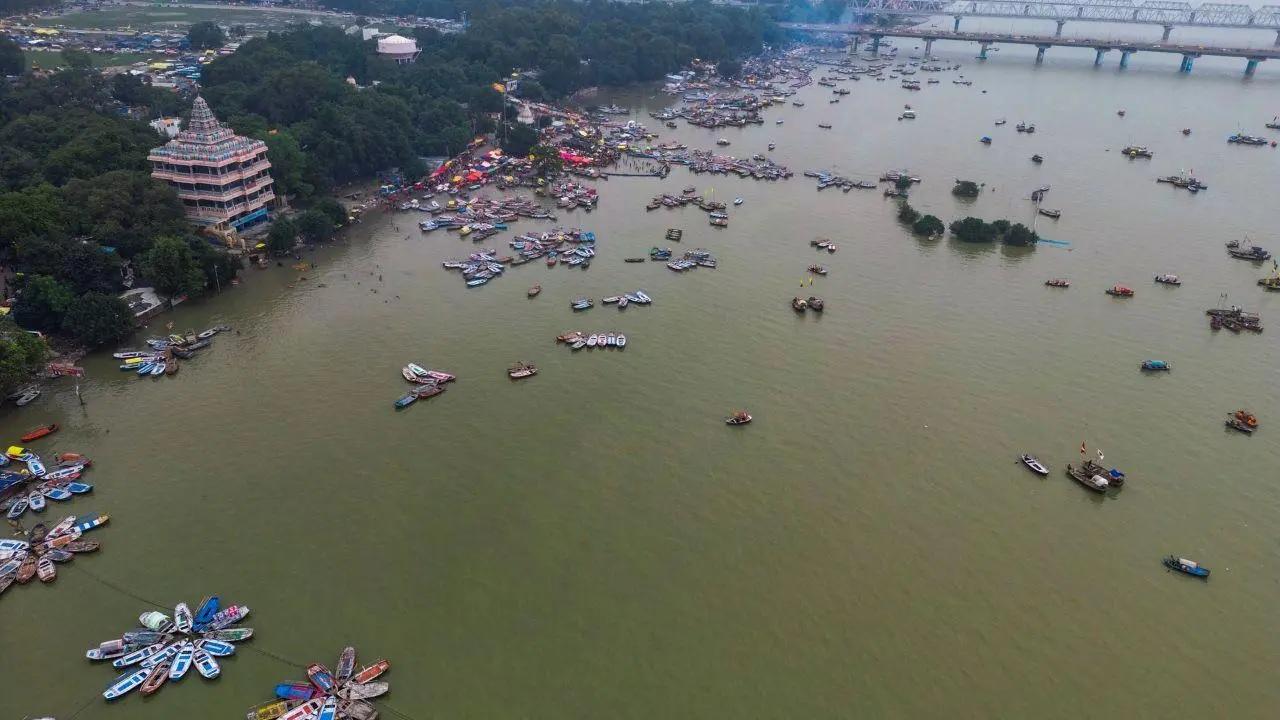
The findings strongly support reviving tributaries, increasing environmental flow releases from barrages, and protecting local water bodies to recharge aquifers. Photo Courtesy: PTI

Listen to this article
IIT Roorkee study says groundwater dominates Ganga’s flow in plains, not glacier melt
x
00:00

The river Ganga is primarily sustained by groundwater discharge, not glacial melt as widely believed, according to a study led by researchers at the Indian Institute of Technology (IIT) Roorkee. 

The study showed that natural underground contribution boosts the river’s volume by nearly 120 per cent along the middle stretch.


Meanwhile, more than 58 per cent of the river’s water is lost to evaporation during summer -- an alarming yet overlooked component of the river’s water budget.


Published in the journal Hydrological Processes, the study reveals the negligible role of glacial melt in maintaining the Ganga’s flow in the Indo-Gangetic plains during summer.

The study quantifies that beyond the Himalayan foothills, the glacier-fed input is virtually absent and does not influence the summer discharge up to Patna. Post-Patna, tributaries like Ghaghara and Gandak become the dominant contributors.

“This research redefines how we can understand the Ganga’s summer flow. It should prove a sustainable future river rejuvenation strategy, not just for the Ganga but for all major Indian rivers,” said Prof. K.K. Pant, Director of IIT Roorkee.

Contrary to prior satellite-based studies warning of severe groundwater depletion across North India, the new findings based on a full-scale isotopic analysis of the Ganga River from its Himalayan origin to its deltaic end, including its major tributaries, indicate largely stable groundwater levels across the central Ganga Plain.

In fact, consistent flows from shallow hand pumps across decades reinforce the evidence of a resilient aquifer system that continues to feed the Ganga during non-monsoon periods.

“Our analysis shows that the Ganga is not drying because groundwater is depleting, but due to over-extraction, excessive diversion, and neglect of tributaries. Groundwater is still the hidden lifeline of the Ganga,” said lead author Prof. Abhayanand Singh Maurya, faculty at the Department of Earth Sciences, IIT Roorkee.

The findings strongly support reviving tributaries, increasing environmental flow releases from barrages, and protecting local water bodies to recharge aquifers.

This story has been sourced from a third party syndicated feed, agencies. Mid-day accepts no responsibility or liability for its dependability, trustworthiness, reliability and data of the text. Mid-day management/mid-day.com reserves the sole right to alter, delete or remove (without notice) the content in its absolute discretion for any reason whatsoever.

"Exciting news! Mid-day is now on WhatsApp Channels Subscribe today by clicking the link and stay updated with the latest news!" Click here!

Did you find this article helpful?

Yes
No

Help us improve further by providing more detailed feedback and stand a chance to win a 3-month e-paper subscription! Click Here

Note: Winners will be selected via a lucky draw.

Help us improve further by providing more detailed feedback and stand a chance to win a 3-month e-paper subscription! Click Here

Note: Winners will be selected via a lucky draw.

ganga environment Nature Lifestyle news uttar pradesh

Mid-Day Web Stories

Mid-Day Web Stories

This website uses cookie or similar technologies, to enhance your browsing experience and provide personalised recommendations. By continuing to use our website, you agree to our Privacy Policy and Cookie Policy. OK