It wasn’t just a cuddle but a full-blown cinematic moment, as Siddhant Chaturvedi and Mrunal Thakur promoted their latest film on Tuesday Almost an angel When Triptii Dimri flew to New York for the Victoria’s Secret Fashion Show in October last year, her eager audience prayed to see her as an angel. Close to the ramp but certainly not on it, the actress went only as far as the front row. For all the hearts that were broken back then, here’s some balm. We hear Dimri’s association with the lingerie brand is only just beginning. Her career has already taken flight, but the next few months may well see her in wings! Silent stage Despite khabris entrenched in conference rooms and at cocktail parties, there are days when one finds the fieriest nuggets in the most obvious place — the newspapers. On February 5, Naseeruddin Shah wrote an opinion piece for The Indian Express about being unceremoniously disinvited from an event organised by the Urdu department of Mumbai University, ostensibly because the veteran actor “openly makes statements against the country.” If you do not sing praises of the leading dispensation, are you no longer a patriot? Already offended on his behalf for being defamed (and dropped at the nth hour), we were further appalled to read that the audience was told Shah himself had refused to attend. These days, it seems speaking your mind results in taking a virtual body blow. A handful of Sultans have already found their leading roles reduced to mere cameos in textbooks, and now a Shah has lost his stage. When will this end? Sporting style Sandeep Patil (right) his India cap bracelet.Pics/Clayton Murzello If ever there was a man who wears his heart on his sleeve (both literally and figuratively), it would have to be Sandeep Patil. Back in the Eighties, the chipper cricketer was often spotted on magazine covers. Decades have slipped away, but Sandy stays as suave as ever. On Saturday evening, at a Cricket, Cocktails, and Controversy fireside chat with journalist Ayaz Memon at The Indus Club in BKC, the 1983 World Cup champ sported a bracelet bearing an India cap charm. From the evening of his Beyond Boundaries autobiography launch in November 2024, I recall his silk shirt fastened by jewel-encrusted red seam ball buttons. No doubt, his collection includes several other terrific trinkets. Equally certain is that Patil, long retired, still carries the game with him — on his sleeve, on his wrist, and unmistakably in his heart. Father of the bride Atul Khatri with daughter Diya When comedy and commerce collide IRL, one finds Atul Khatri promoting an online matchmaking site. View his set on Instagram for a giggle, as he talks about wading through the wild world of online matrimony on a hunt for a dulha for his daughter. With both his girls, Mishti and Diya, now married (Diya just last week on February 3), the standup star and his wife Shaguna are officially empty nesters. Given this background, it lends itself to laughs that Atul and Shaguna have a ‘ship name,’ much like Brangelina or Bennifer — they’re called ShagAtul. Ideal for empty nesters, wouldn’t you say?
11 February,2026 08:31 AM IST | Mumbai | Sonali Velinker KamatScrambling for the trophy dancers lift Nora Fatehi skyward at the opening ceremony of the 2026 ICC Men’s T20 Cricket World Cup. Symbolism, perfectly staged. Desi Girl, Global Footprint Janhvi Kapoor Brands announce ambassadors so frequently, it barely qualifies as news anymore. But that wasn’t the case when New Balance picked Janhvi Kapoor to represent them in India recently. Even though the Bollywood belle was picked to be the face of the footwear giant only for the local market, it was US-based publication Women’s Wear Daily that broke the story. To call it the ‘Priyanka factor’ would be myopic, yet it is clear that Indian film celebrities are increasingly regarded as noteworthy on the global stage. More power to our desi girls — may they rule the world. Bowled by a blunder The lack of respect for history and legacy in cricketing circles is often rued by our in-house cricket nut. The latest misdemeanour is mounted on Marine Drive for all to see: a signboard for Wankhede Stadium spelt ‘Wankhade’. Logos of the Mumbai Police Traffic Control Branch and the Mumbai Cricket Association appear at the bottom, suggesting one or both parties have authorised the signage. To be fair, this is an unintended gaffe — yet so many feathers have been ruffled. One such ruffled party is the legendary Barrister Sheshrao Wankhede’s daughter, Ramola Wankhede Mahajani. Her gentle request is only for the erroneous board to be replaced. Here’s hoping the authorities act swiftly. The show must go on Manish Malhotra He is well known for hosting super-glam A-list parties and being the go-to designer for so many Bollywood beauties, but it is something else entirely that makes Manish Malhotra really special. The quiet, solid foundation on which his fashion dominance is built is unwavering commitment. Back in the day, his interns told tales of reporting to work in the wee hours of the morning. Decades since, Manish continues to excel with undiminished passion. This week we hear the designer’s mother has been quite ill. Despite the obvious personal stress, Manish kept his commitment to close Dubai Fashion Week with a spectacular show on February 6. He flew in just for a day, returning to be by his mother’s side after the show. Now that she is home from the hospital, and surrounded by her nearest and dearest, we trust she will have a speedy recovery. Plating up a new chapter Mishali Sanghani and Ammar Moiz For over a decade, Mishali Sanghani’s Pali Bhavan has been a Bandra institution. With its vintage maximalist vibe, it delivered charm in spades, alongside divine Indian food. At year-end, it quietly downed its shutters — but not without an unofficial last hurrah. Saying goodbye the night we happened to dine there, were Malaika Arora, her dishy rumoured beau Harsh Mehta, and designer Vikram Phadnis. “We made an announcement on Instagram, and people started to call us out of panic,” Mishali confesses. Thankfully, when one door closes, another opens and, in this case, perhaps two. Within a week of closing in Bandra, the eatery welcomed regulars to their new outpost in Churchgate. Located in the iconic building that is home to Eros Cinema, the new Pali Bhavan is a “grown-up version” of the suburban OG. In addition, plans are afoot to open in Dubai. Could it have something to do with Sheikh Hamdan’s whistle-stop visit to the restaurant when he was in Mumbai in April 2025? It never hurts to have the Crown Prince as a patron, but this move may have more to do with the fact that Mishali and her co-owner husband Ammar Moiz now live in that dazzling city. Either way, when it happens, Dubai will be richer for it.
10 February,2026 07:39 PM IST | Mumbai | Sonali Velinker KamatA photographer aiming for a shot of Fatima Sana Shaikh exiting a Bandra beauty store on Tuesday found himself unexpectedly in the frame, when the actress reached in to share the sweet potato he was snacking on. Flying high, thinking higher Rahul Bhatia. Pic/Getty Images Late last year, IndiGo experienced one of the biggest operational disruptions in its history. Flight cancellations and the ensuing chaos left many passengers disgruntled. Not surprisingly, the airline faced some serious flack, with commentators bandying about words like ‘poor governance’ and ‘oversight.’ The board, and even Group Managing Director Rahul Bhatia, was the target of barbs. It’s a sad treatise on our times that people complain vociferously but compliment softly — a pattern evident in the case of IndiGo. “There was no clamour to remark on how quickly the airline bounced back,” says our fly on the wall in the capital, while letting us in on a little-known fact. Through it all, Bhatia was undergoing treatment for a nerve-related back ailment in Switzerland. And yet he remained hands-on when firefighting was required. Moreover, despite battling on two fronts at the time, we hear Bhatia was thinking about those with less access than he has. “His medical ordeal prompted him to consider the need for similar world-class recuperative facilities in India. He wants to open a post-operative care unit here, where people unable to afford exorbitant costs will receive subsidised treatment,” I’m told. It may be some time before thought begets action, but the thought is certainly a noble one. Sinful Sage Deepak Chopra They say there’s no such thing as bad publicity, but that may not be the case for Deepak Chopra. How does a ‘wellness guru’ recover from a globally publicised friendship with a notorious sex-trafficker? Worse still is the flippant, distasteful tone of their exchange, laid bare in the latest tranche of Jeffrey Epstein documents, released by the US House Oversight Committee and the Department of Justice. “God is a construct. Cute girls are real,” says Chopra in a 2017 email to Epstein — and that is just one indigestible morsel. The latter’s crimes were an open secret by this time, so our godforsaken guru should have known he was laughing with Lucifer. If Chopra now thinks that a pseudo-apology expressing “regret” for his “poor judgment in tone” (not in friends!) will suffice, he severely underestimates public outrage. Good luck finding any “cheerleaders” going forward. Social Engagement Power moves happen in boardrooms, but the ones that are cemented in ballrooms are far more telling. Late last week, the worlds of telecommunications and entertainment collided in the capital, with the engagement of Zubin Bharti Mittal and Nayana Bijli. On February 6, both proud fathers — Bharti Enterprises’ Rajan Mittal and PVR’s Ajay Bijli — welcomed an august gathering at the Mittal home on Amrita Shergill Marg. Expectedly, the evening was a who’s-who of influence, with titans of industry, media moguls, and policymakers mingling over carefully curated cocktails and hors d’oeuvres — from our dapper Minister of External Affairs S Jaishankar to Mahua Moitra and DLF’s Rajiv Singh, to cigar czar Chetan Seth, carrying his customary Cubans. Mumbai representation came in the form of veteran politician Praful Patel and wife Varsha, as well as Sajjan and Sangita Jindal. Soory not sorry Vaibhav Sooryavanshi. PIC/PTI A good pun is like a six over midwicket — fun to watch when someone else gets hit. England’s U-19 World Cup hopes were smashed by India in Harare, courtesy of Mumbai marvel captain Ayush Mhatre and Rajasthan’s own Vaibhav Sooryavanshi. The 14-year-old dynamo didn’t just bat; he launched a fireworks display of 175 runs, blasting 15 sixes and as many fours. Reporting the matter under the headline SOORY ENGLAND CRUSHED, British tabloid The Sun put its best foot forward. Clearly, when its headline writers get the chance to combine cheek and cricket, they hit it out of the park.
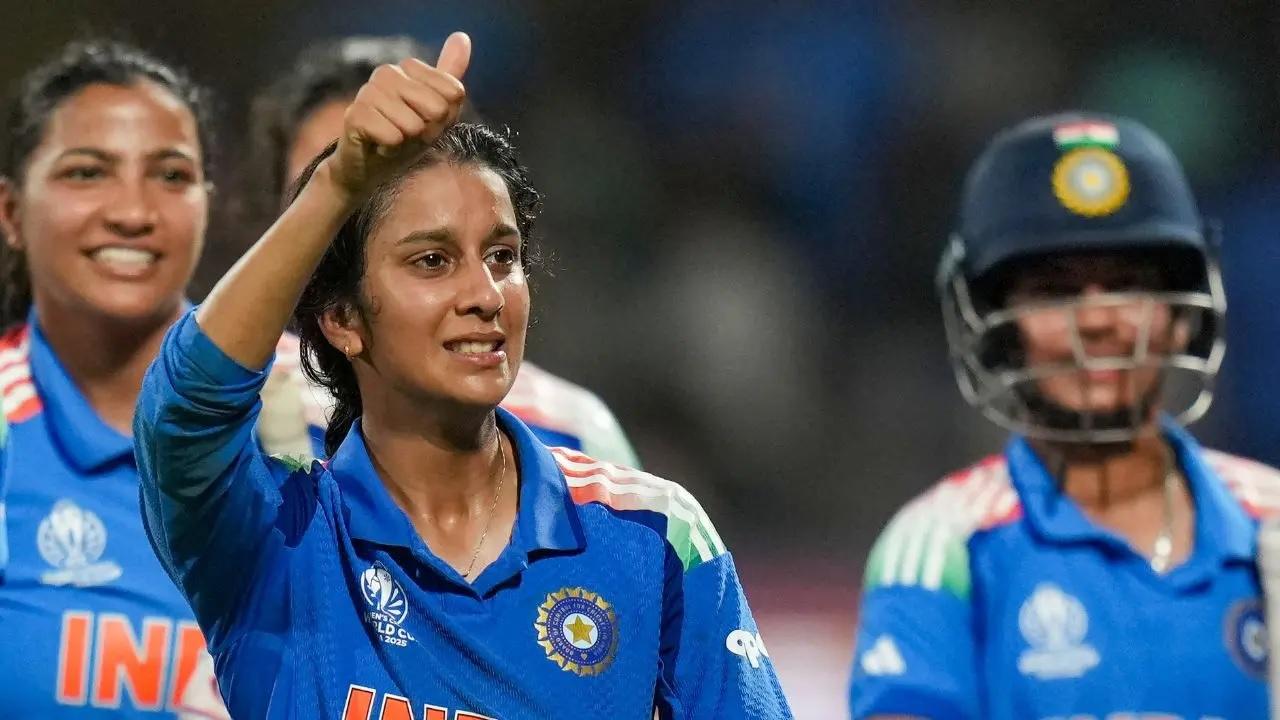
10 February,2026 07:42 AM IST | Mumbai | Team mid-dayThere’s a twenty-year age gap between our two interviewees. But it doesn’t hamper a free flowing conversation between Viren Rasquinha and Jemimah Rodrigues. Rasquinha keenly listens to the cricket journey of Rodrigues, who arrives at the Bandra eatery straight from a practice session and will head out to Vasai for an outreach programme post the interview. That Rodrigues first started as an under-17 hockey player for Maharashtra and later, Mumbai, serves as a common ground for both. “She wouldn’t remember it but I have seen her play hockey in school at a rink hockey tournament I organise every year,” Rasquinha tells us, sipping on fresh mint lemonade . The duo bond over their love for sport while indulging in wholesome pasta and sandwiches at the Nutcracker in Bandra. What made you pick cricket over hockey? Jemimah: I love hockey. I want to play hockey too but I don’t get the time as I am continuously on tour. There was a time when I played both, but I reached a higher level in cricket than hockey. It was a difficult choice as I wanted to play both. Viren: I too played football for Mumbai before hockey. My first love is football. But I reached a better level in hockey. Also I wanted to play in the Olympics and the Indian football team didn’t qualify for the Olympics at that time. I love all sports; I have played hockey, football, cricket, hide-and-seek, everything at gully level. How does it feel to play for the country? Jemimah: It’s the dream of every child, when I picked up a bat or the hockey stick, it was my dream to play for India, and I can’t believe that I am living it. Standing in the stadium when the national anthem plays gives me goosebumps. The whole country is watching. Viren: Very few can live their dream. For me, to captain India, to play at the Olympics and win a medal were my dreams, the first three got fulfilled. I still remember the moment when I captained India for the first time; it was an India-Pakistan test series in Chandigarh with 40,000 people in the stadium. It was an amazing feeling. When we walked into the stadium for the first match at the 2004 Athens Olympics against Holland, the whole stadium stood up for the anthem; it was something. People don’t see that it takes 10 years of hard work to reach there. You fail so many times before you taste success; it teaches you a lot. But what I couldn’t do as a player, I want to help the next generation of athletes to achieve it with Olympic Gold Quest [Rasquinha is the CEO of the organisation that works with athletes such as PV Sindhu, MC Mary Kom and Saina Nehwal]. I want to ensure that today’s athletes don’t face the problems that I faced. To win an Olympic medal, we need better coaching, training facilities and support staff. Dhara [to Viren]: How long will it take for India to increase the medal tally at the Olympics? Viren: The aim should be to be in the top 10 countries, with a target of winning 10 medals. If we are lucky and prepare well, it is achievable in the next Olympics. Dhara: What hurdles did you face? Viren: The first time when I went for an under-14 national level tournament, it was called the KD Singh Babu tournament in Lucknow. I wasn’t at all prepared for the January winter, I had never gone out of Mumbai in winter. We had eight reservations for twenty people. I had just carried one sweater, and for 14 days, I must have worn five or six T-shirts. Eighteen of us stayed in a classroom under the stadium. You have got to struggle for all Olympic sports, things are better now though. Jemimah: Facilities in hockey weren’t that great when I started too. When we had our state matches, we just had four reserve seats and 18 would travel on that. We used to take days to reach, and had very large kit bags. Hockey is our national sport, but we don’t get as many facilities as we do in other sports. When I started playing cricket, we didn’t have any nets for girls. So I played with my brothers. But practising with boys was a blessing in disguise. I got to improve my game even more, because if you hit a boundary to a guy, they will bowl harder because you are a girl. Did Bandra play a role in your career? Viren: I was lucky that my school, St Stanislaus, has a big ground that exhibits a culture of hockey and football. My coach, Marcellus Gomes, was an Olympian. Had that not happened, I wouldn’t have played for India. My parents always encouraged me. Jemimah: We moved to Bandra when I was seven as commuting from Bhandup by train every day was strenuous. I played hockey because my school supported it, and our pastor’s daughter used to also be in the team, so he encouraged me too. Warm Lebanese sandwiches, penne arrabbiata and hummus avocado toast arrive. Viren: Wow, I have ordered a lot. I really like their hummus and pita. The Lebanese sandwich is my favourite from the order. Do you want to have a dessert, Jemimah? Jemimah: I’ll have the blueberry cheesecake. Once a week I keep a cheat day, and today is one of them [grins]. I love the pasta. Do you find time to eat out in Bandra? Jemimah: I tour a lot, but when I am at home, I head to Carter Road promenade with my brothers and cousins for the shawarmas. Viren: I drop by Bandra Gymkhana with my family. I also like Salt Water Café. My wife and I like doing Sunday breakfasts. We either go to Suzette or Eat Around the Corner. We also go to Madras Cafe and Cafe Mysore in Matunga. Dhara: Should cricket be included in the Olympics? Jemimah: It will encourage more to pursue it, as the Olympics is the biggest stage in sport. It will give us the motivation to work harder and win the gold. Viren: I am not too sure on this. Cricket does not have a tradition of being an Olympic sport. It’s like football; everyone remembers who won the World Cup, not the Olympics. Dhara: What do you feel about cricket being the most followed sport in India? Viren: My thoughts vary. From the management side, we have lessons to learn. They do a wonderful job in marketing the sport well. Look at the quality of infrastructure and support staff. We crib too much; rather than going with a begging bowl to corporates we should go with a plan and the right people to execute it. Look at the league matches; it’s a great opportunity for young players to play with big names. Jemimah: IPL has given a great opportunity to young players; even ones who would just be called to bowl in the nets. We need a women’s league too though.
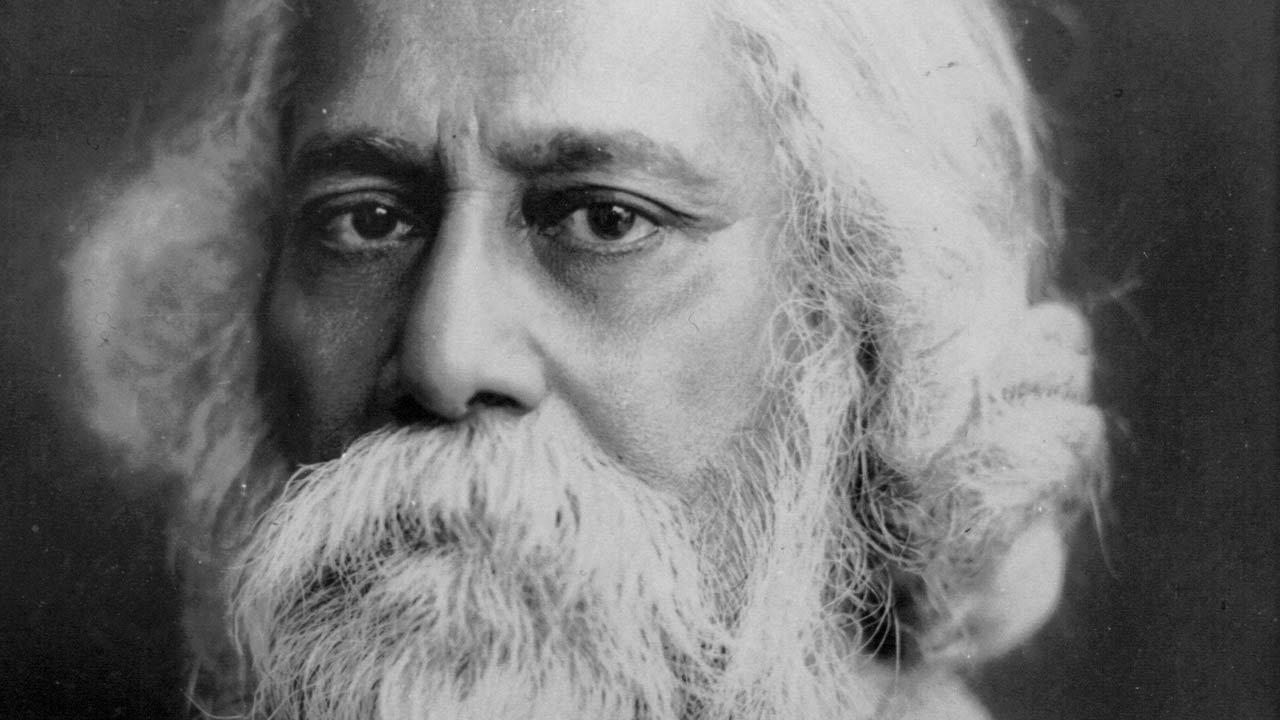
03 November,2025 07:48 PM IST | Mumbai | Dhara Vora SabhnaniLegend has it that Nobel laureate Rabindranath Tagore’s birthday was first celebrated when he was 26 years old, thanks to his beloved niece Sarala Devi, who gathered bokul flowers to make him garlands, and presented him with a swish new set of dhuti-chador (dhoti and a wrap). Despite the late start, Pachishe Baishakh, or the 25th day of Baishakh month, when Tagore was born, has become no less than a festival in the lives of Bengalis. Palong Shak Bhate; Kachkolar Hingi; Pathar Bangla; Chingri Diye Bhat Bake; Rice Since then, to celebrate Rabindrajayanti, programmes are held in every school, club, pada (neighbourhood) association, and even at home. No matter your age, you’re expected to chip in, be it with a poetry recital, a song, a dance performance or a play. And, like all Bengali celebrations, snacks are integral — a customary box of singaras (samosa’s eastern cousin), sandesh and vegetable chop — but for a change, food isn’t central to the day. Kachkolar Hingi So, imagine our surprise when, ahead of the literary icon’s 160th birth anniversary, we learnt about Malad-based home chef Madhumita Pyne’s Thakurbarir Ranna menu that celebrates the myriad cooking styles of the Tagore household. A Kolkata girl at heart, Pyne, who highlights lesser represented fare from Bengal through her venture Insomniac Cook, shares that the Rabindrajayanti menu is rooted in her love for food history. “Last year, I picked up the books Thakurbarir Ranna by Purnima Thakur and Amish o Niramish Ahar by Pragyasundari Devi; both lend an insight into the Tagores’ kitchen. From meat pies to bakes and biscuits, I realised so many of their dishes were so different from what you’d see in any other Bengali household, as they had cultural exchanges across the world, including with the British at home.” Peyajer Payesh From the summer favourite jhaler jhol mixed veggies curry to the soul-warming murgir pishpash (one-pot chicken curry-rice), the menu boasts of eight fairly unique dishes from the Tagore family’s repertoire. “Tagore’s relationship with food was strange. He was known to not like the same food for a long time and would give into fad diets. For instance, he went through a diet where he ate raw eggs only, or the time he went through phases of eating boiled vegetables,” she reveals. Palong Shak Bhate Still reeling from the euphoria of connecting with friends and family for two virtual Rabindrajayanti programmes, the unmistakable aroma of mustard greets us when we open Pyne’s neatly packed, labelled containers. We pair palong shak bhate (Rs 250) — a mash of spinach and coconut tempered with mustard — with aromatic Gobindobhog rice. The heady notes of mustard hit the right spot. The kachkolar hingi (Rs 250), a hing-flavoured green banana sabzi, we find, is a simple celebration of the humble plantains; the boris or tiny lentil dumplings in it pack a nice crunch. The Tagore family’s European exposure comes alive in chingri diye bhat bake (Rs 450), a mildly spiced, layered casserole of rice, prawns, potato slices and onion rings that makes for a comforting affair. The pathar Bangla (Rs 450), a tender mutton curry, however, is a bit sweet-ish for our liking. Madhumita Pyne The real surprise is the dessert — peyajer payesh (Rs 200), or onion kheer. Laden with fragrant dry fruits, the payesh is a lip-smacking way to wrap up the eclectic feast. We’re not sure what Tagore did post such luncheons, but we recommend a nice siesta. Till: May 16 (order 48 hours in advance)Call: 9892803506
07 August,2023 10:03 AM IST | Mumbai | Sukanya DattaUnrecognisable was an adjective that many used for Brendan Fraser in his latest role for Darren Aronofsky's The Whale. For an actor who was touted as the definition of stardom in the 90s' decade, the adjective might feel surreal. Yet, after a decade of struggle and emotional upheaval, Fraser has marked his return to the limelight in dramatic fashion. Known for his genial charm and comic timing, the actor also hides within him a subtle performer with a flair for intense drama. To celebrate his comeback to the A-list, we look back at five underrated Brendan Fraser performances that have slipped through the cracks. School Ties (1992) This might well have read as the 1990s stars to watch for compilation. Alongside Matt Damon, Ben Affleck and Chris O'Donell, Fraser led the complete 90s' upcoming star list in a school drama about a Jewish senior battling friendship, emotional trauma and discrimination. It earned him notice among the critics for his easy presence and dramatic impact. Airheads (1994)It is not easy to hold your own alongside two comedy greats, Adam Sandler and Steve Buscemi. Fraser did that and more as the lead of a loser rock band that hijacks a radio station to play their songs. While Sandler walked away with the plaudits, Fraser caught the eye of the studios for his looks and comic timing. Gods and Monsters (1998) The actor has always had a penchant for the dramatic and stealing limelight from the heavies. This underrated cult film on the fictionalised life of filmmaker James Whale starred some heavyweights in Ian Mckellan and Lynn Redgrave. Fraser received critical acclaim for his first major dramatic performance in a film that won the Oscar for Best Adapted Screenplay. The Quiet American (2002) In this adaptation of Graham Greene's eponymous novel, the actor took on the talents of Sir Michael Caine as a young American trapped in a love triangle. In the midst of his action career, the film was a daring departure and showed his leading man abilities. Crash (2004) Arguably the film of the year, this multiple-Academy award winner saw Fraser play Rick Cabot, a district attorney battling racial tensions in Los Angeles while planning his reelection. While the film's Academy run and other performances overshadowed him, the role is another one on Fraser's list of underrated performances.
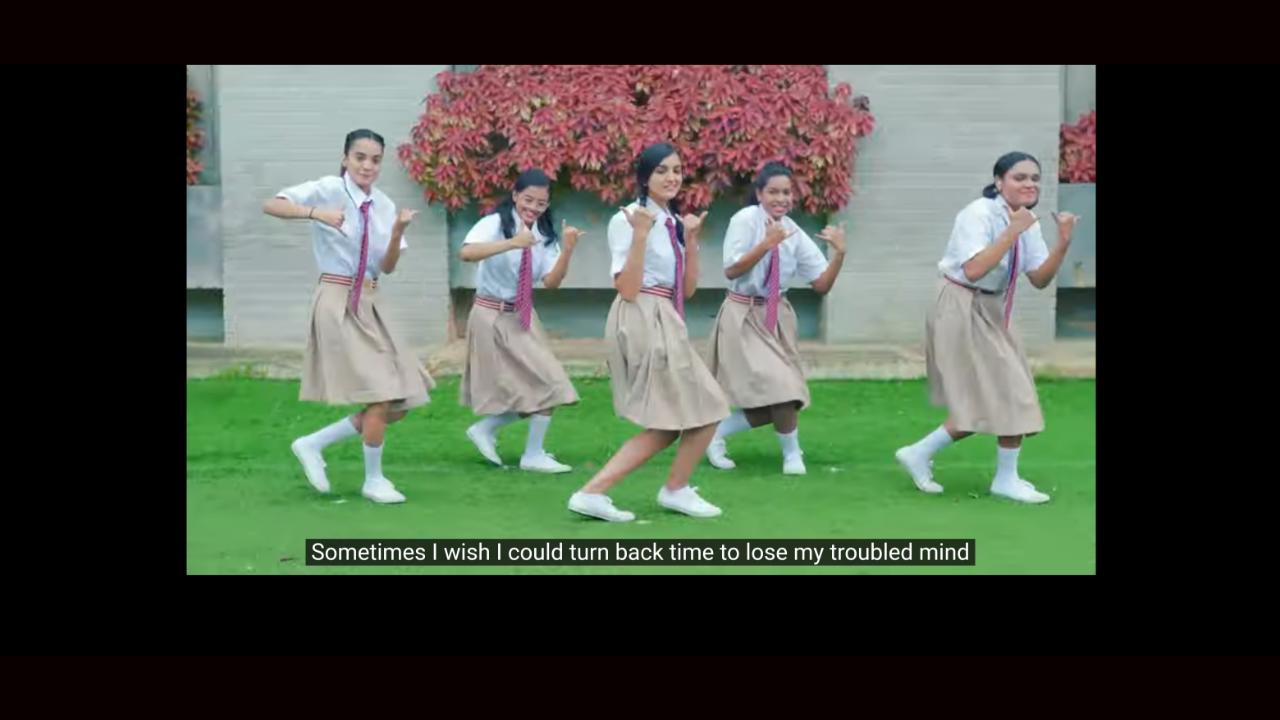
17 September,2022 10:18 PM IST | Mumbai | Shriram IyengarIt isn’t always necessary that you deliver an empowering message sounding as serious as a school principal hauling up a truant kid. Sometimes, you can even be the class clown and make a meaningful impact. That’s something Aditi Ramesh does with her new single, Shakti, where the singer takes a stand for female empowerment with lines like, “Time goes on/ And our prejudices grow strong/ Freedom of expression/ No more repression.” The whole tune has a jovial feel to it even as Ramesh and a bunch of other girls dressed as pupils goof around on a school’s campus, before the weight of a patriarchal world inevitably burdens their shoulders. Musically, the track is a cornucopia of sounds, with Ramesh’s South India-inflected English transitioning from a mellow pop tune to glitchy electronic beats. The essence of Shakti lies in its message, but throughout, its primary purpose seems to be entertaining the listener. And sometimes, the most powerful messages are packaged as entertainment, which is often the most impactful way of delivering them. Need an example? Think of Charlie Chaplin’s iconic speech from The Great Dictator, where he parodied Nazi Germany. LOG ON TO youtube.com
17 December,2021 05:38 PM IST | Mumbai | Shunashir SenThe purpose of rap music has historically been to highlight societal injustices and tell oppressors that they can’t get away scot free. That’s what indie artiste Young Daku has done with a track called Farmers Rap, which highlights the battle that farmers in the country are waging against the central government’s policies. Some senior members of the protest asked him to compose the track that they later presented at the South Asian Conference on Agriculture, an international meet where their plight was showcased in the form of music. And Young Daku encapsulates this plight with the lines, “The problem with the present is the burdened MSP/ The setting of the prices and the owner of the seeds/ The farmers gonna die/ Then where you gonna feed.” Overall, the track punches holes into the government’s justifications, and the rapper has a hint of growl in his voice, which only adds more character to his menacing lyrics. This is what rap music was intended for when it was born in the African-American-dominated Bronx borough in New York in the 1970s. Now, after all these years, that same don’t-mess-with-us ethos has well and truly reached the musical landscape of our country. LOG ON TO youtube.com Also Read: Why it is urgent to address caste-based discrimination in Indian medical institutions
13 November,2021 10:19 AM IST | Mumbai | The Guide TeamMusician Priya Ragu is busy breaking boundaries and she cannot be contained. Earlier this month, Ragu announced the drop of her debut mix-tape, damnshestamil and in the run up to its release, ever-so-swiftly dropped a banger, a track called Kamali, a highly flavoured sonic fusion of elements like R&B and pop. However, there’s more to Kamali than meets the eye; it’s a story, an uplifting and unique narrative, based on entirely true events. About a year ago, Ragu chanced upon a short documentary that followed the life of a seven-year-old girl, in the coastal town of Mahabalipuram, Tamil Nadu. The girl, named Kamali, was the only female skateboarder in the region, and the film captured her identity, her motivation and her mother’s strong efforts to guide her, against all odds. This struck a chord with Ragu, who immediately put pen to paper. “Somebody sent me a link to this short movie and when I watched it myself, I was touched by it. I felt this was a story that needed to be told,” says Ragu from her current base in St Gallen, Switzerland. Priya Ragu We think it was too. Through the song and the subsequent music video, Ragu captures the essence of the child’s story, often speaking to her through Tamil verses that appear in each hook; a treat for bilingual listeners. The video, shot during the pandemic, features Kamali, and includes visuals and unseen footage from the original film. Ragu’s music and visuals were a welcome change. For the most part, watching an artiste like Ragu take her platform by storm is a matter of pride as well, for she represents a community and identity that’s uncommon in many international spheres. Ragu uses her Tamil roots and her culture for good and not blindly for aesthetics. This anthem is reassuring and powerful, serving as words of support and encouragement to the Kamalis of the world. “When I first saw an artiste like MIA, somebody who looks like me, do music, it gave me a lot of confidence to create my own sound. It’s nice to see the impact on young brown girls, because I get messages from many saying how much it motivates them. There are many such artistes like that coming up now,” she signs off. Log on to: YouTube
04 August,2021 08:26 AM IST | Mumbai | Gayathri ChandranIt was around two months after the first lockdown last year. Anish Sood, an electronic music producer born and brought up in Goa — who back then went by the same artiste name — opened up his system at home in the sunshine state. He then proceeded to delete all the files in it with synth compositions he’d been storing till then. It might seem like a dramatic move for a musician to make. But for Sood, that moment had been building up for about three years. Subconsciously, he’d been laying the ground for Anyasa, his new musical moniker, one that blossomed during the pandemic. Sood became Anyasa; Anish Sood, the artiste name, became a closed chapter. Anyasa sees Sood incorporating Indian classical music elements into his repertoire for the first time. He is grounded in house and techno music as a synthesizer-composer. But last year, while producing a track called Jigyasa that Indo-US indie act Anhad and Tanner was making, it struck a chord. Sood heard Isheeta Chakrvarty sing Indian classical vocals on what was otherwise a wholly western track, and realised that he could take a leaf out of that book. Subconsciously, he’d been looking for a change from ‘Anish Sood’. The new label he had signed to, Anjunadeep, also gave him a nudge in the same direction and Jigyasa acted as a catalyst, Anyasa tells us. Anyasa aka Anish Sood Anyasa thus started corresponding with Chakrvarty, who’s Mumbai-based, sending her a couple of demos. He says that she liked what she heard, and he told her to free-style over it with her vocals. “Back then, it was meant to be a conceptual EP,” the artiste tells us. But life clearly had different plans, since that correspondence laid the foundations for Gaya, Anyasa’s debut EP, a product that consciously blends Indian elements into the sonic spectrum of western electronica. Anyasa says, “I’ve actually had minimal experience [in Indian classical] and that is something which started changing towards the latter half of last year. I started reading up on it and began understanding ragas better.” He adds that for Indian electronic artistes to break out globally, they need to bring something authentic to the table. “Afro-house is the best example of that,” he says, referring to how the beats of traditional African vocals and instruments have added a distinctive layer to contemporary house music, the sound acting as a sort of soft power that shines a light on the ‘Dark Continent’. The plan now is to develop a DJ set for nightclub gigs — whenever that scenario will again be allowed — and, apart from that, build a large-scale ensemble with 10 other musicians to perform at a festival stage. This stage will have Indian classical instruments and vocalists, western instruments like the violin, maybe even Rajasthani folk instruments like the sarangi. Who knows? There’s only one thing he knows for sure, the musician says. The bass line from his synthesizer will hold the compositions together. This will be music where the East meets the West. “I can’t say that I am the first person to do it, because I am not,” Anyasa says, explaining how maverick acid-house composer Charanjit Singh was way ahead of his time over 20 years ago. But the fact is that here is a musician who has gone through a musical transformation during the pandemic, to the extent where we can say, “Anish Sood is dead. Long live Anyasa.”
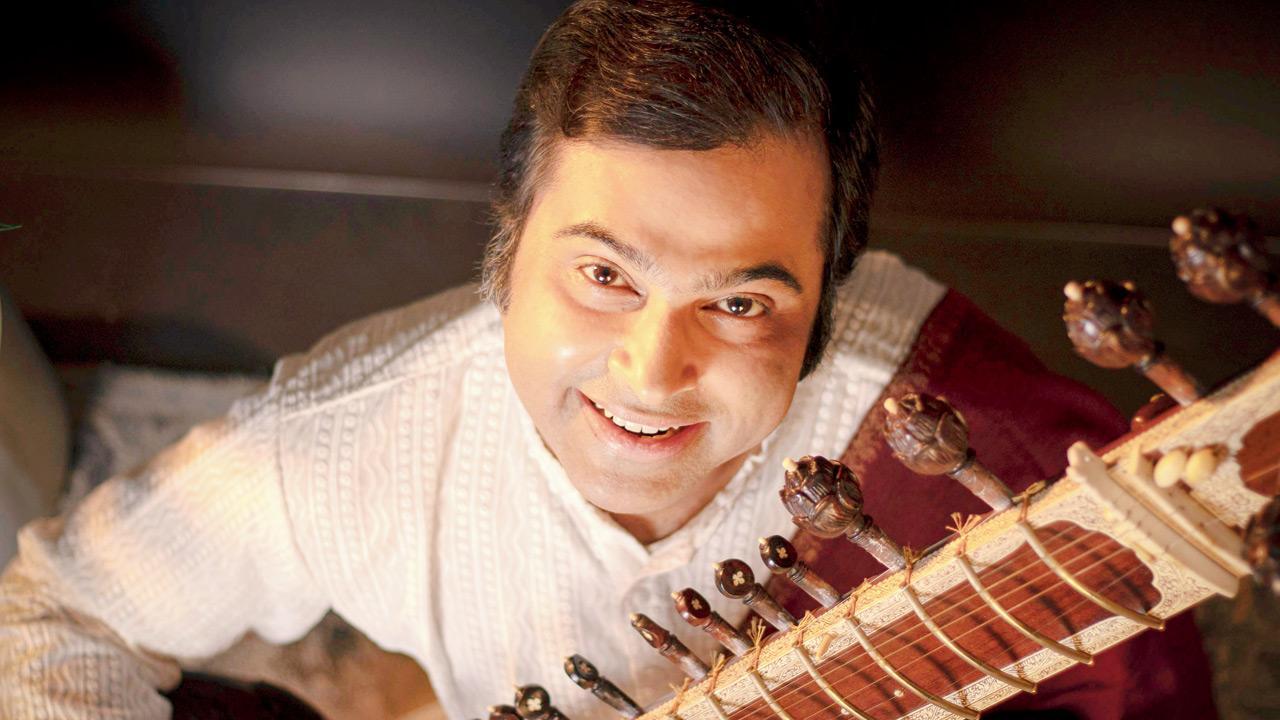
02 August,2021 08:35 AM IST | Mumbai | Shunashir SenSitar maestro Purbayan Chatterjee found himself to be in a bit of a soup in January this year. He had about 25 per cent of a new album he was working on framed in his head. And he then had a 10-minute phone call with UK-based label Sufiscore, after which he gave them a wish list of global collaborators he was keen to work with to finish the project. These names included the who’s who of improvisational music — Ustad Zakir Hussain; keyboardist Jordan Rudess of progressive metal act Dream Theater; Antonio Sanchez, who composed for the hit musical Birdman; Michael League, founder of modern jazz pioneers Snarky Puppy; and banjo virtuoso Béla Fleck, among others. By the end of the month, all of them were on board, thanks mainly to Hussain putting in a personal word about Chatterjee’s prowess to these musicians. And the soup that the sitar player found himself in was this — “How do I direct someone like Béla Fleck or Zakir Hussain? How do I wear both hats, of the project being my own vision and letting these artistes bring their own magic into the picture?” It’s an understandable conundrum. But happily for Chatterjee, the biggest lesson that these masters taught him is to have belief in himself. They made him understand that there might be 100 different ways of approaching a composition, but you have to have 100-per cent belief in that one sound you decide upon. Chatterjee says, “They would ask me, ‘What do you want us to do?’ And I would say, ‘I would love for you to bring in your own vision,’ to which they would reply, ‘Sure, we will do that. But what vision do you have?’ No one was high and mighty, saying things like, ‘Leave it to me, I will figure this out alone.’ That’s how grounded these masters are.” The final album, called Unbounded - Abaad, is thus a sum total of these collective visions where the musicians would go back and forth as equal partners, exchanging notes across continents before everyone was happy with what was on the table. The first single from it, Shanmukhapriya featuring Shankar Mahadevan, released two days ago, while the entire record will be launched in September. Its sonic design is such that traditional sounds such as Carnatic or Indian folk music do a merry dance with modern influences like the electric guitar. But remember while listening to it that this album is not just a piece of music. It’s also a lesson in humility. It was possible only because the disparate stakeholders kept their egos aside, no matter how accomplished they are. And that’s something we can all take on board in life, regardless of whether we are musicians or not. Log on to: soundcloud.com
30 July,2021 08:33 AM IST | Mumbai | Shunashir SenADVERTISEMENT