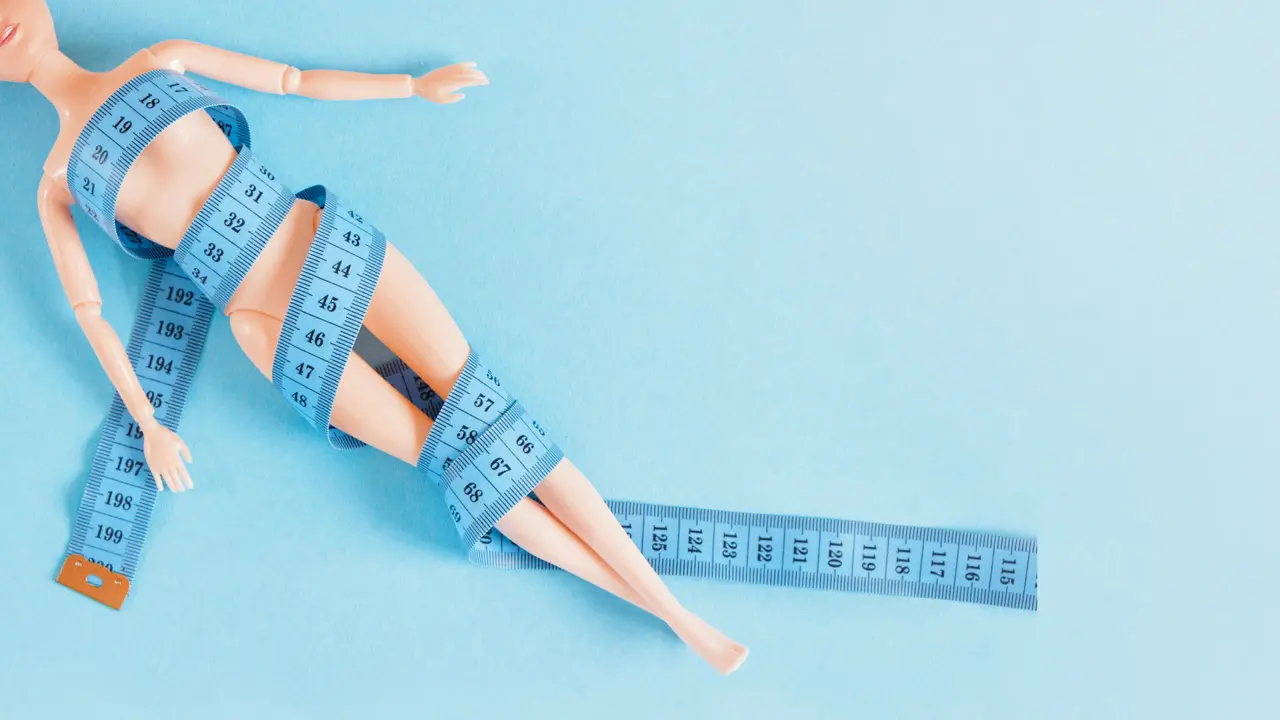
Publicity by a global apparel brand was recently called out, and banned for backing unhealthy body image types, relaying the larger picture of an industry that’s prone to adulating very thin body types. Experts weigh in on tackling this disturbing trend

Representation pic
It’s hip to be skinny, or at least that’s what the growing throng of celebrities flocking to get-thin-quick GLP1 medications and fastidious diets would have you believe in the post-Ozempic era. For those of us who’ve been around for long enough, it seems almost like a playback of the waif-chic aesthetic that was trending in the ’90s.
This time around, however, advertising watchdogs are beginning to sit up and take notice. The UK’s advertising regulator, Advertising Standards Authority, has reportedly banned two advertisements by a popular clothing retailer that featured painfully thin-seeming models, with photography effects used to make their limbs shrink to disproportionate minimums. While the offending images were removed, the incident points to a larger trend of unhealthy body standards being praised and even celebrated by the fashion industry all over again, after a brief dalliance with body positivity.
Your body, the soft target
“As an actor whose image is so closely tied to their appearance, I can tell you that you will be judged no matter what you do. When I started out, I was naturally lanky, owing to my ectomorphic body type. I was criticised for being too skinny. Today, the same people who said that, complain that their favourite actor is ageing, as though that is somehow a bad thing. You’re always doing too much, or doing too little,” laments actor and mental wellbeing coach, Shruti Sheth. The pressure to ‘fit in’ with a very narrow idea of what beauty should look like can take its toll even on industry veterans, agrees Dr Aditi Govitrikar, supermodel, actor and former Mrs India. The simple fact of the matter is that no one can compete with an image that doesn’t exist — yet that’s what the industry tells us, time and again.
There is a fixation on perceived physical flaws, also referred to as body dysmorphia. REPRESENTATION PICS/ISTOCK
She elaborates, “Unrealistic beauty and body standards have always existed in fashion, but in the post-Ozempic era, they’ve taken on a dangerously ‘invisible’ quality. The pressure to be unnaturally thin is no longer just about diet or exercise — it’s tied to medical interventions and digital manipulation, making the ideal even more unattainable. For models and actors, whose careers depend on their physical appearance, this creates a toxic loop of comparison, self-criticism, and extreme measures to ‘fit in’. Body dysmorphia thrives in that environment because the benchmark is unrealistic and dangerous. What’s worrying is that young professionals entering the industry see these altered images and assume they’re achievable naturally, leading to physical and mental health damage.”
Janhvi Dargalkar, a clinical psychologist, adds that constant exposure to curated media ads, social platforms, and runways showcasing emaciated figures normalise unattainable thinness as a benchmark for worth, making extreme slenderness seem achievable and desirable, despite the health risks. “This environment fosters body dysmorphia — a mental health condition where individuals fixate on perceived physical flaws,” she notes, explaining how the condition plays out.

A model walks the ramp at a popular fashion week in Delhi in 2024. PIC COURTESY/HUEMN on Instagram
>> Social comparison: Internalising thin ideals via social media or advertising campaigns and comparing yourself to digitally altered or styled-to-look-thinner models leads to feelings of inadequacy.
>> Cognitive distortion: Repeated exposure warps your self-image, making you see your healthy body as ‘flawed’ or ‘fat,’ even when they’re not. This fuels obsessive thoughts characteristic of dysmorphia.
>> Pressure to conform: The cultural glorification of thinness pushes vulnerable individuals toward unhealthy behaviours such as restrictive eating or overexercising, escalating into dysmorphic preoccupation
>> Emotional erosion: Body dissatisfaction breeds shame, anxiety and low self-esteem, core components of dysmorphia
Tune out, tune in
“Although the fashion world talks of diversity, it still worships one body type! When I started [modeling], there was already pressure to fit into a narrow beauty mould, but at least there was some diversity in body shapes, especially on the international stage. Today, digital retouching and quick-fix pharmaceutical trends have made that mould narrower. The upside is that there’s a growing counter-movement — thanks to social media, we now see more voices advocating for authenticity, body diversity, and health over aesthetics. However, the change is uneven. Luxury and fast-fashion brands tend to glorify the ‘ultra-thin’ look, while smaller or progressive labels are more inclusive. The challenge is getting mainstream fashion to not just nod to body positivity but to genuinely embrace it in campaigns, casting, and sizing,” Dr Govitrikar observes.

A handful of brands cater to individuals with plus-size needs. PICS COURTESY/HOUSE OF HER, DOODLAGE
Sheth, however, believes that true change must come from within, which begins with fixing self-talk and extends to the descriptors we use to define those closest to us. “While we can all hope for marketing to be more responsible, that expectation isn’t realistic. There’s only so much we can do to change what others do. What we can control is our ability to decide what we will allow to influence us,” she asserts. “Brands or even industries exist to feed our consumption habits. We mustn’t allow them to consume us, instead. Our weight or appearance has become such a focal point for us, as a society, that it is often the first thing people notice about us. Comments, critiques and even criticisms are deeply ingrained in even our casual conversations. We reduce ourselves to just a number on a scale when there is so much more to discuss,” she says.
Dargalkar suggests a simple roadmap to foster resilience and healthy body image:
>> Spot media tricks: In case of parents, especially, talking with your children about how ads or social media use filters or poses to make people look unrealistically thin teaches them critical thinking to reject harmful images.

Dr Aditi Govitrikar and Janhvi Dargalkar
>> Celebrate what bodies do: Describe one thing daily that your body does well, like ‘My legs help me run’. This builds confidence by focusing on abilities, not looks.
>> Follow diverse role models: Watch shows or follow social media with all kinds of body types. Seeing variety helps everyone feel normal and reduces the pressure to idealise one body type.
>> Look in the mirror neutrally: Practice looking in the mirror and saying simple facts, such as ‘I have curly hair’, without judgment. This calms concerns about appearance.
>> Feel your body in action: Try activities such as walking or stretching, focusing on how your body feels, not how it looks. This helps you appreciate your body and reduces negative thoughts.

Shruti Sheth
>> Turn ‘flaws’ into strengths: Change the way you perceive things like scars or freckles as cool parts of your story. For instance, ‘My scar shows I’m tough’. This mindset celebrates your uniqueness.
>> Model positive body image: Children learn by observing and imitating their parents. Parents must learn to speak kindly about their own bodies, avoiding negative comments. This social learning approach shows children how to value themselves, reducing the risk of body dysmorphia by example.
Subscribe today by clicking the link and stay updated with the latest news!" Click here!