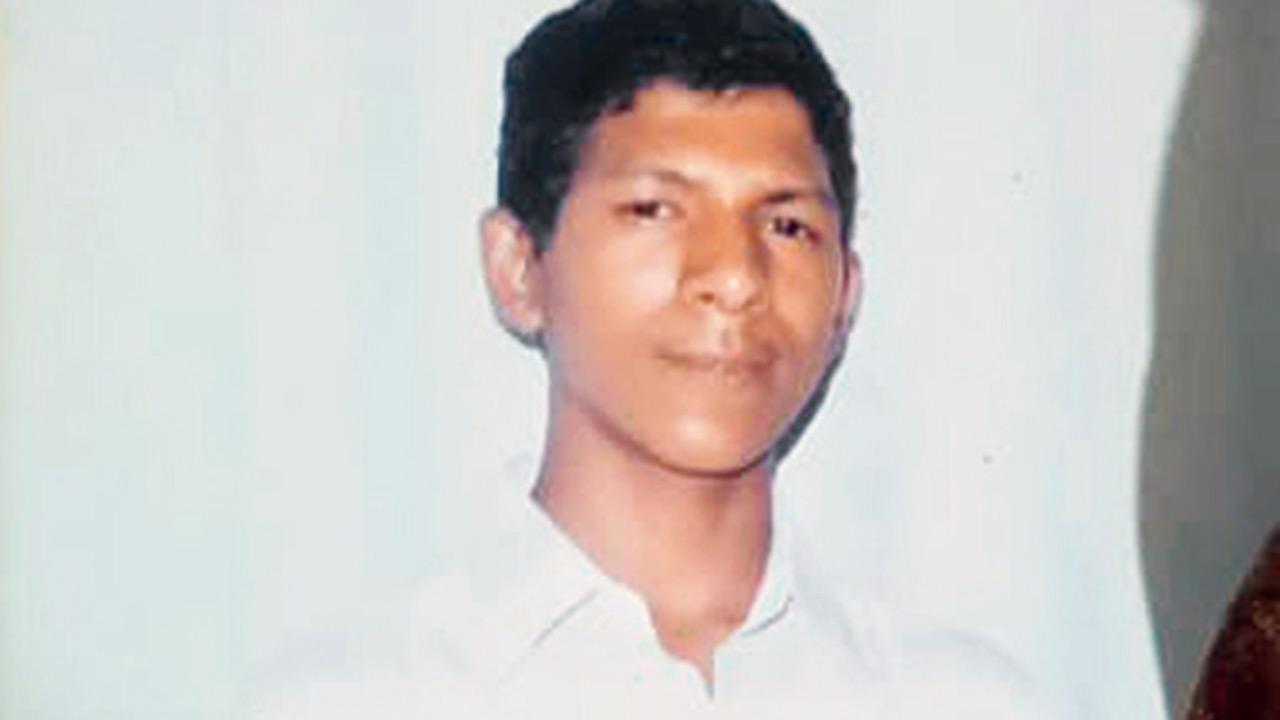
Abrar Sayyed, whose sibling was only 20 when he was killed in the blast, joins the devastated voices of others who lost beloved family members on September 29, 2008; kin say they will pursue their fight for justice

Azhar Sayyed, a mechanic who died after the bomb went off near Bhikku Chowk in Malegaon nearly 17 years ago
While the special NIA court’s acquittal of all seven accused in the 2008 Malegaon blast has been met with celebration among the suspects and their supporters, the families of those killed or injured in the incident expressed disappointment and announced plans to challenge the judgment in a higher court. The NIA court had observed, “The overall evidence does not inspire confidence in the court to convict the accused. There is no reliable and cogent evidence to warrant conviction.” However, Abrar Sayyed, 38, brother of Azhar Sayyed, a 20-year-old who died in the blast, said, “If those acquitted are not responsible, then who is the real culprit and where is he? We are not at all satisfied with this decision. It will be challenged in the higher courts.”

Lt Col Prasad Purohit, who was accused of plotting the blast, outside the special NIA court in Fort on Thursday. PIC/SAYYED SAMEER ABEDI
Recalling the night of the tragedy, Abrar said, “The blast occurred at 9.33 pm at Bikku Chowk in front of the Nisar Hotel. I was offering namaz in the mosque when I heard the explosion. I rushed to the spot. The scene was horrific. I joined others in helping the injured reach the hospital. Two hours later, I was informed by relatives and friends that my brother was among the dead.”
Azhar was a mechanic by profession. At night, he used to work on a part-time basis at a store near Anjuman Chowk. He was drinking tea outside the hotel when the blast occurred. He was seriously injured in the explosion. People who had come to help the injured rushed Azhar to the hospital for treatment, but in vain.

Liyakat Shaikh, father of 10-year-old Farheen Shaikh, the youngest person to die in the 2008 blast. PICS/By Special Arrangement
Iqbal Shah, 54, the son of Harun Shah, a 60-year-old dyer who died in the blast, told mid-day that his family was unhappy with the court’s verdict and plans to challenge the decision.
According to Iqbal, his father would often visit Nisar Hotel for tea and paan. At the time of the explosion, he, like Azhar, was drinking tea outside the hotel.
Liyakat Shaikh, the father of 10-year-old Farheen Shaikh, the youngest victim, appeared deeply saddened by the special NIA court’s verdict and told mid-day that the family would challenge it.
‘Fight will continue’
“The verdict is extremely disappointing for the victims of the Malegaon blast and justice-loving citizens of the country,” said Maulana Haleemullah Qasmi, president of Jamiat Ulama Maharashtra (Arshad Madani faction), which is providing legal assistance to the blast victims.
Abrar Sayyed, brother of Azhar Sayyed
“The victims struggled for 17 years in pursuit of justice, and the verdict reflects the prosecution’s failure. Had the state and Central governments pursued the case with sincerity, this judgment would not have come. It seems the investigating agency fought the case just as a formality. Government witnesses turned hostile one after another during the trial, but the agency failed to act against them or file cases of perjury — even after victims repeatedly requested action,” said Qasmi.
He further claimed, “If the blast victims hadn’t intervened in the case, the saffron-clad accused would have been discharged as early as 2016, when NIA had given them a clean chit.”

Harun Shah, a dyer who lost his life in the blast; (right) Iqbal Shah, the son of the deceased, who plans to challenge the special court’s ruling
“We will certainly challenge this verdict in the Bombay High Court. But now, it’s a test for the Maharashtra government — how soon it moves the high court to appeal the judgment. In the 7/11 Mumbai train blasts case, the government challenged the high court’s verdict in the Supreme Court within hours and got a stay,” he said.
Maulana Qasmi assured the blast victims that “Jamiat’s legal aid committee will continue its fight to ensure justice and bring the real culprits to book.” He also thanked the lawyers and socio-political figures who supported the victims’ cause.
Advocate Speak
Commenting on the verdict, senior advocate Shahid Nadeem, who represented the families of the victims, said, “The special NIA court acquitted the accused, citing insufficient evidence, but this verdict is a reflection of the agency’s failure. The victims did not get justice because the agency failed to present strong evidence before the court.”
He added, “The victims tried their best to ensure the accused were punished, but the case was weakened due to crucial witnesses turning hostile. The agency could not protect its own witnesses, and the prosecution failed to present substantial evidence in court.”
“At least the court acknowledged that a bomb blast did happen in Malegaon in 2008, which killed six people and injured 101,” he said. The advocate also remarked, “It felt as if the victims themselves were on trial. They had to relive their trauma in court and recount the inhuman events of September 29, 2008. Despite all this, the NIA failed to convince the court.”
Those acquitted by the special court
1) Sadhvi Pragya Singh Thakur
2) Lieutenant Colonel Prasad Purohit
3) Retired Major Ramesh Upadhyay
4) Sudhakar Chaturvedi
5) Ajay Rahirkar
6) Sudhakar Dhar Dwivedi
7) Sameer Kulkarni
The incident
The blast occurred at Bikku Chowk in Malegaon, a city with a Muslim majority, on September 29, 2008, during the month of Ramzan and just before Navratri. The Anti-Terrorism Squad (ATS) filed the charge sheet, arrested 11 accused, and claimed that an improvised explosive device was planted on an LML Freedom motorcycle.
During the investigation, the ATS traced the motorcycle to Sadhvi Pragya Singh Thakur, who was arrested on October 23, 2008. However, it was found that one Ramchandra Kalsangra had been using the motorcycle for 1.5 years prior to the blast, the number plate on the vehicle was fake, and both the engine and chassis numbers had been removed.
The charge sheet was filed by ATS in 2008. In 2011, the case was transferred to the National Investigation Agency, which filed a supplementary charge sheet in 2016, dropping the Maharashtra Control of Organised Crime Act (MCOCA) charges. In its verdict on Thursday, the special NIA court ruled that the prosecution had failed to prove that the bomb was planted on the bike. It further stated that no concrete evidence — including bomb traces, RDX, or fingerprints — was found during the investigation.
Subscribe today by clicking the link and stay updated with the latest news!" Click here!