Nationalist Congress Party leader Sunil Tatkare, on Sunday, while hinting about the investigation into the Ashok Kharat case, said that individuals with "perverse tendencies" must be tried in fast-track courts and, if warranted, should be given the death penalty. While replying to queries on self-styled godman Ashok Kharat, who was arrested last month after a married woman accused him of raping her repeatedly over three years. The Raigad Lok Sabha MP said that the government should conduct a thorough investigation through the SIT and take stringent action against anyone found to have direct or indirect links to the issue. Earlier a subsequent probe uncovered a host of crimes, including sexual assault and financial irregularities linked to the land and other properties of Ashok Kharat. The NCP leader further asserted, "Individuals with perverse tendencies must be tried in fast-track courts and, if warranted, should be given the death penalty. Perverse behaviour should not merely be suppressed but dealt with decisively under the law," as cited by news agency PTI. He was speaking to reporters after visiting Tuljabhavani Temple in Osmanabad district, some 400 kilometres from the metropolis. CM Fadnavis orders probe into CDR leak in Ashok Kharat case Maharashtra Chief Minister Devendra Fadnavis on Sunday said the CDR leak in the Ashok Kharat case will be probed. The CM further stated that the arrested self-styled godman's assets will be investigated by the Enforcement Directorate. No one has the right to obtain such call data records, Fadnavis said amid a furore after social activist Anjali Damania on Friday made revelations about calls between Kharat and Deputy Chief Minister Eknath Shinde. Damania further claimed that she received Kharat's CDR (Call Detail Records) on WhatsApp from an unknown number. The Chief Minister further said, 'The leak of call data records (CDR) in the Ashok Kharat case will be probed, and strict action will be taken.' No one has the right to access call data records (CDRs); only authorised agencies may do so. How this data was leaked and by whom will be investigated by the state government, as per PTI. ED to investigate Kharat’s assets Expressing more on the Kharat case, Fadanavis said that the ED will investigate the antecedents of Kharat's assets. Kharat was arrested earlier on March 18 for allegedly raping a woman for three years, with a subsequent probe uncovering a host of crimes, including sexual assault and financial irregularities linked to land and other properties, as reported by PTI. (With inputs from PTI)
05 April,2026 06:29 PM IST | Mumbai | mid-day online correspondentMaharashtra Chief Minister Devendra Fadnavis on Sunday described the Kumbh Mela as a symbol of India's cultural ethos and said that the mega congregation represents the inclusive spirit of Sanatan culture, where people gather without discrimination based on caste or ideology. Addressing the closing ceremony of the Akhil Bharatiya Sant Samiti, he stated that the state government has made extensive arrangements in Nashik to manage large crowds at the Simhasta Kumbh Mela 2027 and ensure smooth arrangements for devotees. He emphasised that the Kumbh was a unique occasion where everyone participates equally and seeks spiritual purification through sacred rivers like the Ganga and Godavari. "No one asks about caste or beliefs; all come together in a spirit of unity," he said. Calling the festival a symbol of India's cultural ethos, he said any form of social discrimination is a later distortion, which is gradually diminishing. Fadnavis highlighted the policy decisions in Maharashtra, citing that the government had implemented a law banning cow slaughter during his earlier tenure as chief minister and later accorded the status of "Rajya Mata" to cows. He further said that under the state's Freedom of Religion legislation, steps will be taken to curb forced or fraudulent religious conversions. The law also includes strict action against those who allegedly deceive women into marriage under false pretences, he said, adding that provisions have been made to safeguard the rights of affected women and ensure that the religion of a child, in such cases, remains that of the mother's original faith. Stressing Maharashtra's legacy as a land of saints and social reformers, he said that the government would act in accordance with the guidance of religious leaders and implement suggestions emerging from the two-day deliberations. He also warned against "hypocrisy" by a few individuals that brings disrepute to the saint community, asserting that strict action would be taken against such elements.
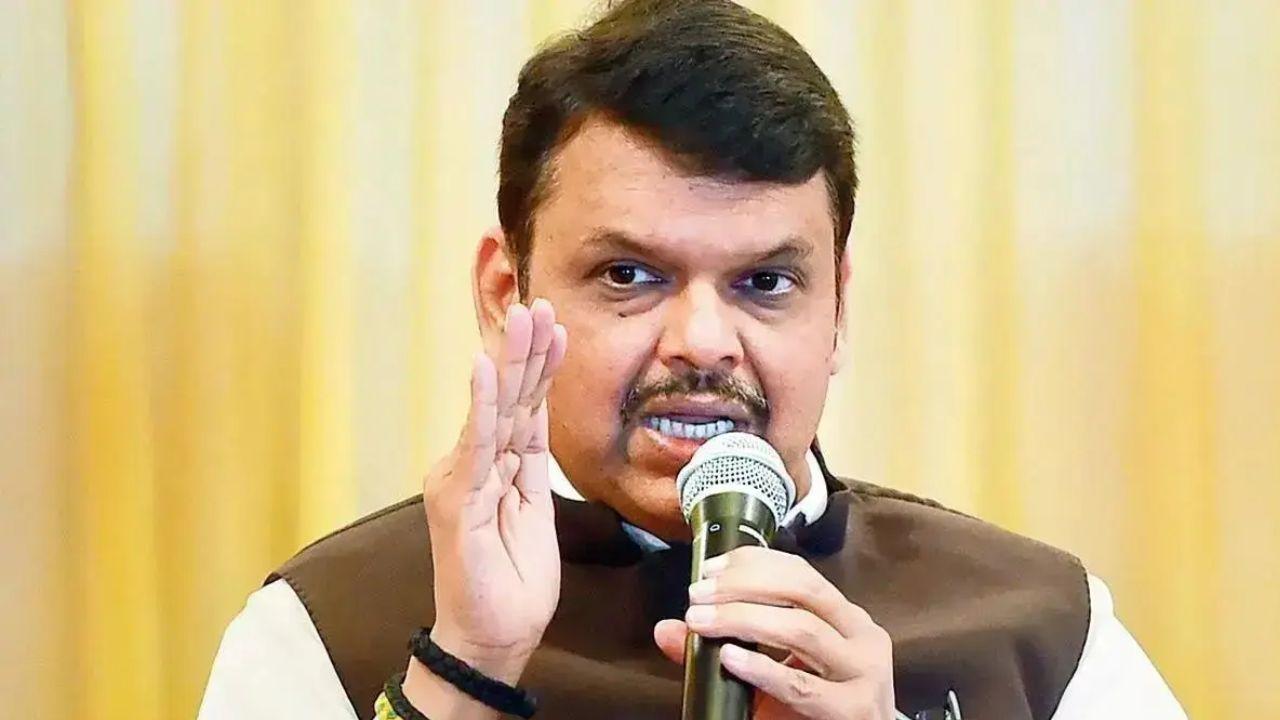
05 April,2026 04:42 PM IST | Mumbai | PTIMaharashtra Chief Minister Devendra Fadnavis on Sunday said the CDR leak in the Ashok Kharat case will be probed. The CM further stated that the arrested self-styled godman's assets will be investigated by the Enforcement Directorate. No one has the right to obtain such call data records, Fadnavis said amid a furore after social activist Anjali Damania on Friday made revelations about calls between Kharat and Deputy Chief Minister Eknath Shinde. Damania further claimed that she received Kharat's CDR (Call Detail Records) on WhatsApp from an unknown number. The Chief Minister further said, 'The leak of call data records (CDR) in the Ashok Kharat case will be probed, and strict action will be taken.' No one has the right to access call data records (CDRs); only authorised agencies may do so. How this data was leaked and by whom will be investigated by the state government, as per PTI. The chief minister further highlighted that mere allegations are not sufficient in sensitive cases, adding that action will be taken on the basis of solid evidence. ED to investigate Kharat’s assets Expressing more on the Kharat case, Fadanavis said that the ED will investigate the antecedents of Kharat's assets. Kharat was arrested earlier on March 18 for allegedly raping a woman for three years, with a subsequent probe uncovering a host of crimes, including sexual assault and financial irregularities linked to land and other properties, as reported by PTI. The Maharashtra CM, while talking to the media on Sunday, said that ED has taken cognisance of the matter and has begun action. "All accounts of Kharat have come to our notice, and the transactions through them have been identified. It is my firm belief that all illegal assets and wrongdoing will be exposed," the CM asserted. Expressing happiness over the probe by the Special Investigation Team (SIT), the CM further said more and more individuals are coming forward with information about Kharat as "people's confidence is increasing". Around 12 cases have been registered so far, he added. Fadnavis on SIT investigating Ashok Kharat’s case CM added, "The SIT is receiving a lot of inputs, and we will not stop until we dig out the entire root of this issue. Strict punishment will be given in cases involving misconduct or atrocities against women. There is a consensus across Maharashtra on this, and for us, this issue is above politics," as cited by PTI. (With inputs from PTI)
05 April,2026 04:32 PM IST | Mumbai | mid-day online correspondentThe escalation in West Asia has resulted in a world-wide crisis, and India’s financial hub has also felt the impact of the conflict. Hundreds of labourers employed as loaders in south Mumbai have been witnessing a drop in their workloads. In this test drive, mid-day spoke to multiple stakeholders engaged in the import-export field to understand the impact of the West Asia conflict on the city’s traders. Industry players say that with the shipping routes hit in the Gulf region, customer demand is declining, thereby impacting the entire inner circle of the business chain. Freight costs surge, shipments stall The disruption of key maritime routes, including the Strait of Hormuz, and the partial shutdowns of the Gulf terminals have severely impacted global shipping. Shipments are now being rerouted through longer, multi-leg journeys, significantly increasing both time and cost. “I shipped goods to Saudi before the war but still had to pay war surcharges. What normally costs USD 800 is now costing nearly USD 5,000,” said Amir, an imitation jewellery exporter. “At a time of low demand and high risk, sustaining oneself is heroic,” he said. Air cargo has also taken a hit. Limited airline availability has worsened delays and inflated rates.“My customer in Dakar has been waiting over 10 days, but the freight is stuck,” another exporter, Surendra said. “Only select airlines like Lufthansa are accepting cargo to East Africa and rates have jumped from Rs 450 per kg to Rs 1,300 with no reliability and frequent cancellations.”For many, exporting no longer makes financial sense. “Costs are skyrocketing and customers are unwilling to pay more,” said a steel exporter. Manufacturing takes a hit The disruption in logistics has directly translated into a breakdown of supply chains. Industries that rely heavily on imports, especially from West Asia are facing acute shortages.“Earlier, materials came directly from China. Now they arrive through multiple routes with delays,” said Aksh, a steel manufacturer. “War surcharges are added at every stage, so costs keep rising.”The steel industry is among the worst affected, given its reliance on imports from the Gulf. Around 70–80 per cent of limestone is imported from the UAE and Oman, while nearly 59 per cent of Direct Reduced Iron (DRI) comes from the region. Industrial gases such as LPG, LNG, and propane, critical for welding and molding, are also in short supply. With input constrained, some factories have cut production by as much as 50 percent. Manufacturers now face a paradox: rising input costs combined with falling export viability are forcing production to halt. The domino effect: Demand, costs, and cash flow The crisis is not just about supply, it is equally about demand destruction and financial stress.Goods worth crores of rupees are stuck in transit, and payment cycles have become uncertain. Exporters are hesitant to ship due to high costs, buyers resist price hikes, and payments are delayed amid logistical risks. Currency fluctuations, particularly a rising dollar, add further strain. “We are facing shipping delays, pending payments and a rising dollar,” said Burad, a businessman with over three decades of experience.Small and medium enterprises (MSMEs) are among the hardest hit, lacking the financial cushion to absorb prolonged disruptions.A single disrupted shipment can wipe out months of profit. Jewellery exporters report consignments worth lakhs being returned undelivered. “Cargo sent to the UAE was returned to JNPT,” one exporter said.Insurance has become another bottleneck, with companies increasingly reluctant to cover shipments to high-risk regions. Ground zero: Labourers face crisis again While businesses struggle, the most severe impact is felt at the bottom of the economic pyramid. Daily wage labourers who form the backbone of the supply chain are facing a crisis reminiscent of the Covid-19 lockdown.With factories scaling down and logistics slowing, work opportunities have dwindled sharply. “We used to earn Rs 700– Rs 800 a day, but now it’s barely Rs 100–200,” said Jagdish Kanojia, who leads a group of loaders. “It feels like the Covid period again.”Fuel shortages coupled with rising prices have worsened living conditions. “There is no LPG available, it’s being sold in black,” said a factory worker. “Kerosene has gone up from Rs 110 to Rs 150, and even my regular eatery is shut, hence I am returning to my village,” he added.Like the factory worker quoted above, many others are now returning to their villages as survival in the city is becoming increasingly difficult. “My roommate left because there is no gas for welding work,” another worker said.“I have three daughters and I am the only breadwinner,” said Ibrahim, a hawker. “Where should the poor go?”The ancillary sectors are also under strain. Packaging costs, especially plastics, have surged sharply.“We used to buy plastic at Rs 1,100, now it’s above Rs 2,200,” said Mohammed Ali, who packages cargo for shipments. “Businessmen won’t pay more, but our costs have doubled and workers are leaving.”Iconic restaurant chains such as Bhagat Tarachand in Kalbadevi, small eateries, and several other establishments in the area are also struggling. Many have either shut down, shifted to coal and electrical appliances, or reduced operations due to LPG shortages, further impacting workers who depend on them for affordable meals. Pockets of opportunity amid crisis Interestingly, not all sectors are losing. Certain industries such as plastics, brass, and select metals may benefit from rising global prices and tightened supply.A few traders are holding inventory, anticipating better margins. However, most believe the situation depends on how long the conflict lasts.“A prolonged war could lead to bigger gas disruptions, higher input costs and inflation,” said Burad. “Domestic demand may hold, but exports will lag.”Still, some remain cautiously optimistic. “This is a short-term disruption, a mid-term opportunity and a long-term test of reliability,” said Pravin Wasan, who runs a shipping company. “Those who manage logistics well will emerge stronger.”For now, the focus across Mumbai’s trade ecosystem has shifted from growth to survival.The conflict serves as a stark reminder: in a globalised world, no economy is isolated, and the deepest impacts are often felt by those least equipped to bear them.
05 April,2026 03:19 PM IST | Mumbai | Mrinal DoshiThe Maharashtra Congress has launched a major restructuring drive to rebuild its organisation at the grassroots level. The initiative, called ‘Sangathan Srujan Abhiyan’, comes amid criticism from party workers over the lack of change and the continued dominance of the same leaders in key roles. As part of this revamp, the party is finalising names for 72 district presidents across the state. In a significant shift from past practices, the Congress will now also appoint taluka (block) presidents, covering around 675 talukas. First ever taluka-level appointments For the first time in its history, the party will directly select taluka presidents instead of leaving the decision to district leaders. This move, initiated by state Congress chief Harshwardhan Sapkal, aims to reduce internal groupism and make the selection process more transparent. Each taluka will also have heads for 10 different frontal organisations and departments, including Youth Congress, NSUI, Mahila Congress, Seva Dal, and representatives from OBC, SC, ST, minority, and social media wings. Expanding leadership base The restructuring exercise is expected to provide organisational roles to more than 7,000 party workers, significantly expanding the leadership base. Observers appointed by the party will recommend at least three names for each position, with the final decision taken by the central leadership. The Congress plans to appoint nearly 8,000 office bearers within the next two months, including both district and taluka-level leaders. Replacing old faces with new leadership The revamp is part of a broader effort led by Rahul Gandhi to rejuvenate the party by strengthening its connection with grassroots workers. The new structure will prioritise youth leadership and improve representation of OBCs, Dalits, Adivasis, minorities, and women. Sapkal said the party will focus on two key principles: building the organisation based on ideology and raising issues affecting the public. In a major change, 45 out of 60 district presidents are set to be replaced, along with appointments in 12 newly created organisational districts. Leaders who have held posts for over five years will step aside to make way for new faces. Party leaders have said this move is not about removing senior leaders but about giving opportunities to new leadership and strengthening the organisation. Preparing for future elections The Congress believes this organisational overhaul will help rebuild its grassroots strength and prepare the party for the 2029 Assembly and Lok Sabha elections. By expanding its base and bringing in fresh leadership, the party aims to improve its performance in future polls.
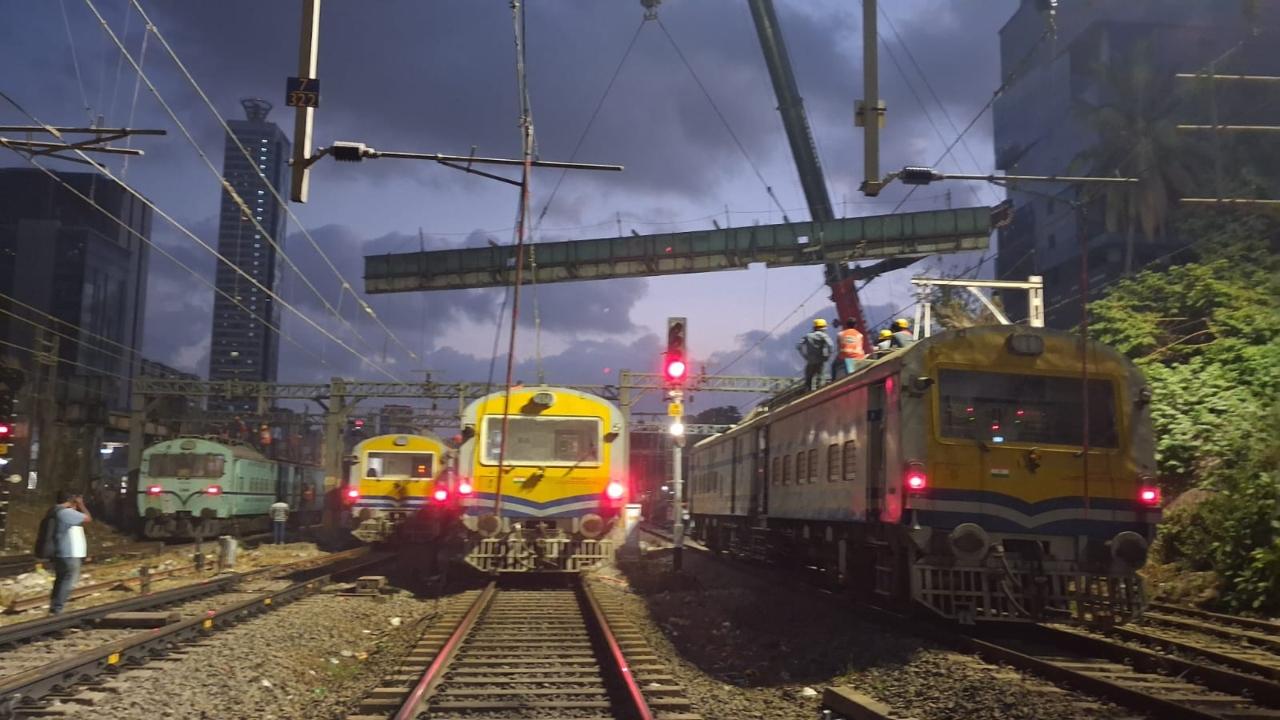
05 April,2026 03:11 PM IST | Mumbai | mid-day online correspondentThe old Elphinstone bridge connecting Parel and Prabhadevi in central Mumbai was completely demolished early on Sunday morning as part of the ongoing removal work of the structure, officials said, adding that the bridge was fully removed by 7:14 am. According to the officials, to carry out the demolition safely, a block was imposed on suburban railway lines. The removal block on the UP and DOWN slow lines was cleared at 7:06 am, while the UP and DOWN fast lines were restored at 7:14 am. The demolition and restoration of services were completed in a coordinated manner, ensuring minimal disruption to commuters during the early hours, officials said. Railway officials stated that all lines are now fully operational. Suburban train services have resumed as per the regular Sunday timetable. Double-deck bridge to come up Following its demolition, construction of the new double-deck bridge will soon begin. The project is expected to be completed by 2027. It will feature two decks with 2+2 lanes each, linking the Western suburbs to the Sea Link, Atal Setu (Mumbai Trans Harbour Link), and Eastern Express corridors. Over a century-old bridge The 112-year-old bridge has been a vital east-west connector across Mumbai’s railway corridor, linking the former mill hub of Parel with the residential and commercial zones of Prabhadevi. It was originally commissioned by the Great Indian Peninsula Railway (GIPR) in 1905 and completed in 1913. However, decades of heavy traffic, structural wear, and urban expansion have taken a toll. Its removal is part of a larger project to construct a new double-deck road overbridge and elevated connector that will drastically improve the east-west link in central Mumbai. Midnight blocks between Parel and Currey Road station Earlier, the Central Railway had on Wednesday announced special traffic and power blocks to facilitate the dismantling of panels of the Elphinstone Road Over Bridge (ROB). The dismantling work by the authorities was being carried out between Parel railway station and Currey Road railway station. As per the official statement, the blocks were carried out over two consecutive nights, April 2/3 and April 3/4, primarily during midnight hours to minimise disruption to suburban services. The block was implemented on the section between Byculla railway station (excluding crossovers) and Dadar railway station (excluding platforms). Midnight on April 3 (Thursday/Friday), services on the Up slow line and both UP and DOWN fast lines were affected from 12:30 am to 4:30 am. On the following night, April 3/4 (Friday/Saturday), the block was imposed on the UP Fast line during the same time window. Several trains diverted Due to the block, several long-distance trains were diverted. Officials had said that train number 11020 Konark Express was being diverted between Matunga and Byculla on both nights and will halt twice at Dadar station. Additionally, on the night of April 3/4, 12810 Howrah-CSMT Mail and 12134 Mangaluru-CSMT Express was diverted on the same route with a double halt at Dadar. Central Railway had also urged the commuters to plan their journeys accordingly during the period.
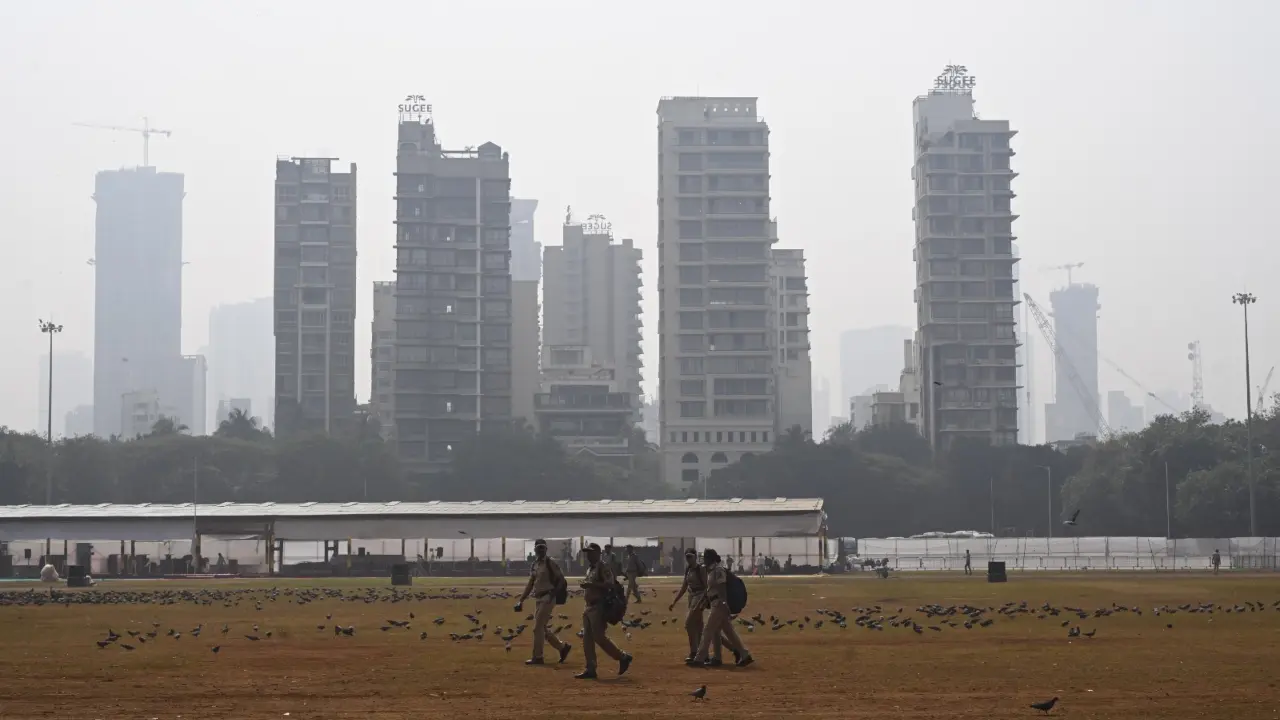
05 April,2026 12:11 PM IST | Mumbai | Rajendra B. AklekarMumbai was expected to witness mainly clear skies on Sunday and the temperatures could reach 33 degrees Celsius, the Indian Meteorological Department (IMD) stated, predicting that some parts of Maharashtra were very likely experience light rains on April 5. The weather department predicted that the temperatures in Mumbai were likely to touch 33 degrees Celsius and the minimum temperature was likely to settle at approximately 23 degrees Celsius. A weather bulletin stated that parts of Maharashtra including Jalgaon, Nashik, Ahilyanagar, Kolhapur, Satara, Sangli, Solapur, Jalna and Chhatrapati Sambhajinagar were expected to receive light to moderate rains on Sunday. Meanwhile, a yellow alert was issued for Parbhani, Hingoli, Nanded, Bhandara, Chandrapur, Gondia and Nagpur. It said, "Thunderstorm accompanied with lightning and gusty winds (speed reaching upto 30-40 kmph) were likely to occur at isolated places on Sunday." AQI in Mumbai Mumbai’s air quality has gradually improved over the week. According to the Central Pollution Control Board's (CPCB) Sameer app, Mumbai’s Air Quality Index (AQI) was on Sunday recorded 'Satisfactory' at 10:05 am and stood at 60. A health impact message stated, "Minor breathing discomfort to sensitive people." AQI recorded in parts of the city Bandra Kurla Complex: 52 (Satisfactory) Borivali East: 66 (Satisfactory) Byculla: 47 (Satisfactory) Malad West: 55 (Satisfactory) Deonar: 115 (Moderate) Colaba: 66 (Satisfactory) Meanwhile, the air quality was recorded as 'Satisfactory' in Thane which reported an AQI at 62 on Sunday morning. In Kalyan AQI was recorded at 60 (Satisfactory), and in Navi Mumbai at 67 was also in 'Satisfactory' category. Thunderstorms and rains likely in parts of Maharashtra Meanwhile, earlier this week, parts of Mumbai, particularly the suburbs, on Thursday night experienced light drizzle, according to the weather department officials who said that it may have been caused by western disturbance. The IMD had last week predicted a fresh spell of cloudy weather and thunderstorms was expected in parts of Maharashtra this week, with light rain likely in several regions. According to the weather department, Maharashtra's ghat regions may also witness thunderstorms, gusty winds, rain and possible hail in some places. Some parts of Maharashtra, including Pune, witnessed heavy unseasonal rains on Thursday.
05 April,2026 11:04 AM IST | Mumbai | mid-day online correspondentA car was gutted in fire near Kalika Mata Temple at Teen Hath Naka on the Mumbai-Nashik Highway in Maharashtra's Thane (West) late on Saturday night, officials said, adding the driver of the vehicle escaped unhurt in the incident. The incident was reported to the Disaster Management Cell at around 11:54 pm. According to Regional Disaster Management Cell (RDMC) of the Thane Municipal Corporation (TMC), the vehicle was being driven by its owner who was travelling alone from Powai to Kolshet. Upon noticing the fire, he immediately pulled the car to the side of the road and stepped out safely. No injuries were reported in the incident, officials said. Emergency teams quickly responded Police personnel, fire brigade teams with a fire engine and rescue vehicle, and disaster management staff with a pickup vehicle rushed to the spot soon after the alert was received, civic officials said. Due to the intensity of the blaze, the car was completely burnt, causing extensive damage to the vehicle. Blaze brought under control Firefighters, along with disaster management teams, managed to completely extinguish the fire by around 12:10 am. Officials said that the situation was brought under control quickly. Fire breaks out at sweet shop in Thane Meanwhile, in an another incident, a fire broke out at a sweet shop in Maharashtra's Thane district on Friday morning, civic officials said, adding that no injuries were reported in the incident. The officials further said that emergency services were quickly rushed to the scene and the situation was brought fully under control. Officials said that the incident occurred at the sweet shop, located in Ashar Metro Tower near MRR Children’s Hospital in the Vartak Nagar area of Thane (West). The fire was reported to the disaster management control room at around 9:18 am. Fire origin linked to inverter battery According to the officials, preliminary information suggests that the fire started in an inverter battery placed on a loft area inside the shop. The blaze quickly spread to nearby materials, including electrical wiring, cardboard and a wooden cupboard. Teams from the fire brigade, disaster management unit, local police and electricity department rushed to the spot. Firefighters, supported by rescue vehicles and equipment, worked promptly to bring the situation under control. Property damaged Officials stated that no one was injured in the incident. However, the fire caused damage to the inverter battery, electrical fittings and other items within the shop. The fire was completely extinguished with the joint efforts of the fire brigade and disaster management personnel. Authorities stated that the situation is now stable and under control.
05 April,2026 10:00 AM IST | Mumbai | mid-day online correspondentA 24-year-old Mulund resident ended up paying nearly double the market price of an iPhone Pro Max, without ever receiving the phone — after falling victim to a months-long WhatsApp scam. The victim, identified as Parth Pawar, was approached via WhatsApp by a person claiming to be a sales representative of “Elite Best Company Group,” offering an iPhone 17 Pro Max at nearly half its price and promising delivery from the US. To gain his trust, the accused shared photographs, ID details and packaging visuals, claiming the phones were factory-sourced and unlocked for use in India. He initially paid Rs 10,000 as a booking amount. The deal quickly turned into a trap. The soon demanded additional payments under various pretexts, including shipping charges, customs duty, taxes and clearance fees, each time assuring the delivery would be completed. In a further twist, the fraudsters claimed that 11 phones had been mistakenly shipped instead of one, putting the order “on hold” and demanding more money to resolve the issue. They continued contacting the victim through multiple international and domestic numbers, creating urgency and lending credibility to the scam. Over nearly four months, from October 2025 to February 2026, the victim made 37 transactions, transferring a total of Rs 2,99,500 to different mobile numbers linked to the accused. The scam came to light after victim discussed the matter with his family, who alerted him that he had been cheated. He then approached the cyber helpline before lodging a complaint with Navghar police. Police officials said the case highlights a growing trend of “layered payment scams,” where victims are gradually coerced into making multiple payments under seemingly legitimate charges. A case has been registered under relevant sections of the IT Act and the Bharatiya Nyaya Sanhita. Police are now tracing the accused, including a man identifying himself as “Mohammed Yusuf,” and others linked to multiple phone numbers used in the fraud. Police advisory (Dos & Don’ts) “Citizens should exercise caution while purchasing products online, especially through WhatsApp or social media platforms,” the police has said. Dos>> Verify the seller and company through official websites>> Purchase only from authorised platforms or retailers>> Check reviews and authenticity before making payments>> Report fraud immediately on cyber helpline 1930 or cybercrime.gov.in Don’ts>> Do not trust “too-good-to-be-true” offers on gadgets>> Do not transfer money to unknown mobile numbers or UPI IDs>> Do not make multiple payments under pressure for shipping, customs or clearance>> Do not share personal or banking details with unknown sellers
05 April,2026 08:28 AM IST | Mumbai | Aishwarya IyerIn a shocking incident of cruelty to animals in Jogeshwari West, a ram, named Rocky, died due to injuries sustained during a fight. His opponent named Chamkila survived the fight. Amboli police has registered an FIR against those who participated in it and started investigation into this matter. Accused are Sajid Abdul Latif Saiyed, Saud Firdos Master, and Imran Mohammad Ali Qureshi. The incident On March 24, complainant Saloni Sakaria received information about sheep fighting between January and March 2026. The fight was organised at Rawji Maidan in Jogeshwari West. The video of the sheep fighting with a large crowd watching was also uploaded on YouTube. Complainant Saloni submitted a video of the sheep fight to the Amboli police. The footage clearly shows accused Sajid Sayed, Saud Master, Imran Qureshi, and others organising the fight. FIR registered Police Sub-Inspector Sushantkumar Patil visited the spot, and an FIR was registered on April 2 under various sections. A police officer said, “A prize of Rs 1 lakh rupees was to be awarded to the winner. In this fight, Chamkila the ram reportedly won the fight while Rocky died.” Rocky vs Chamkila >> Rocky the ram died, Chamkila the ram won >> Winner stood to collect Rs 1 lakh cash prize
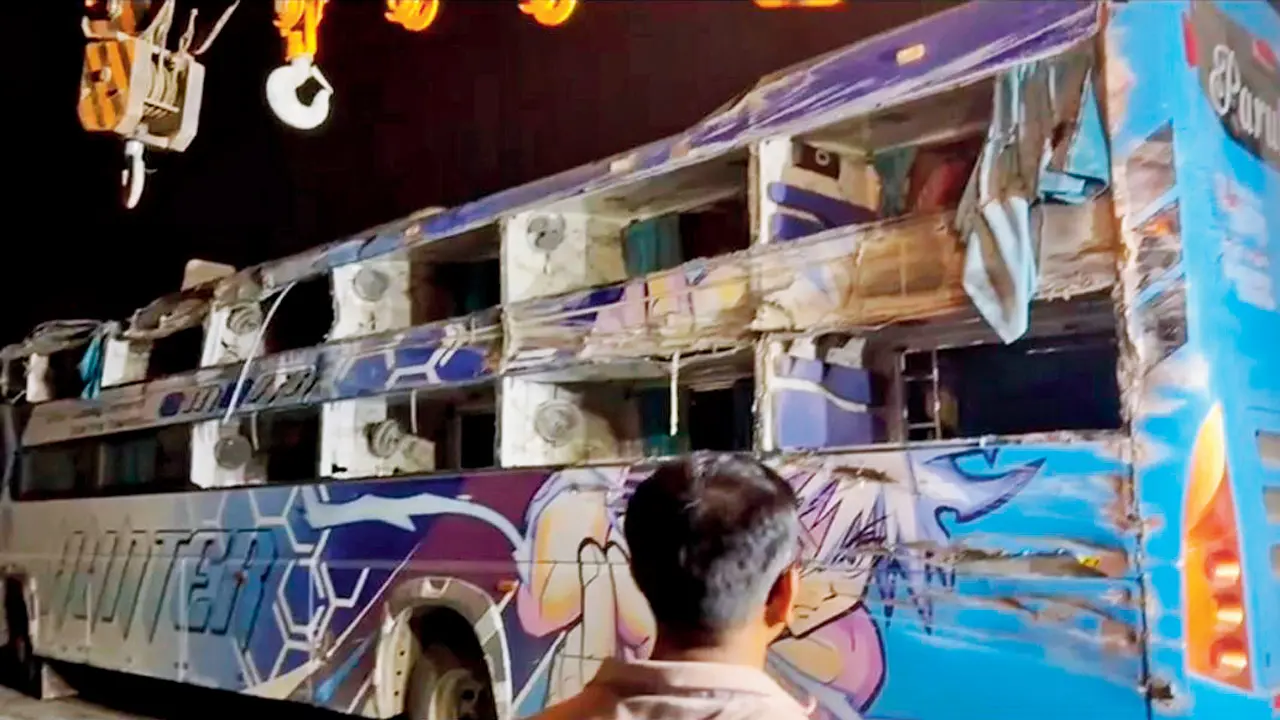
05 April,2026 08:07 AM IST | Mumbai | Dinesh VaktaniaJust 20 minutes before a bus crashed on the Mumbai-Goa highway on Friday, killing two passengers and injuring 38 more, a motorist trailing behind the sleeper coach had seen the bus driver driving erratically and even reported it to the RedBus app. This “digital warning” is now being scrutinised by the Nagothane police as grounds to prove criminal negligence by the bus driver. Survivors have already alleged that driver Hemant Patil, 33, was intoxicated. As mid-day had earlier reported, the terrified Goa-bound passengers had even filed a complaint on the app and halted the journey for a midnight “sit-in” protest. But with no alternative transport at 2 am, they were forced back into the vehicle which crashed an hour later in Sukeli Khind, a notorious stretch of the highway. It has since emerged that a motorist driving behind the bus also reported the bus being driven recklessly on the narrow ghat section. “The motorist even spoke to some survivors after the crash, confirming he had tried to flag the danger digitally,” said a police source. This “third-party” evidence is now central to the case being built by API Sachin Kulkarni of Nagothane Police Station. A team from the RTO is expected to conduct a “mechanical audit” of the bus. Investigators are looking for signs of brake failure or steering lock, though preliminary findings suggest the bus failed to negotiate an “upward gradient” due to excessive speed. Driver in coma The driver, Hemant Patil, a resident of Kankavli, remains in a coma at Alibaug Civil Hospital. He has been booked under the BNS for rash driving and causing death by negligence. “We have sent the driver’s blood samples for chemical analysis,” API Sachin Kulkarni said, “Once the medical report confirms the alcohol level, we will be in a position to press more stringent sections.” Doctors say One of the deceased has been identified as Advocate Neelam Vibhute, a resident of Panvel. Neelam was traveling with her husband, Vaibhav , who also sustained injuries. The second deceased victim was identified as Naeem Shaikh, a resident of Kamothe. At MGM Hospital, Kamothe, 12 of the 22 injured are in serious condition. Dr KR Salgotra, Medical Superintendent, confirmed that five patients are battling multi-organ trauma. “The nature of the injuries—pelvic fractures and head trauma—indicates the high velocity at which the bus hit the ground,” he said.
05 April,2026 07:38 AM IST | Mumbai | Abhitash SinghADVERTISEMENT









-1775380767308_d.png "State Congress chief Harshwardhan Sapkal. File Pic")