An RTI filed by mid-day exposed a hole in the NTCA’s records as they passed the responsibility to state officials. India is home to 75 per cent of the global wild tiger population. Environmental activist Debi Goenka echoed said, “If the NTCA cannot even track the number of tigers being killed, it is failing in its primary responsibility

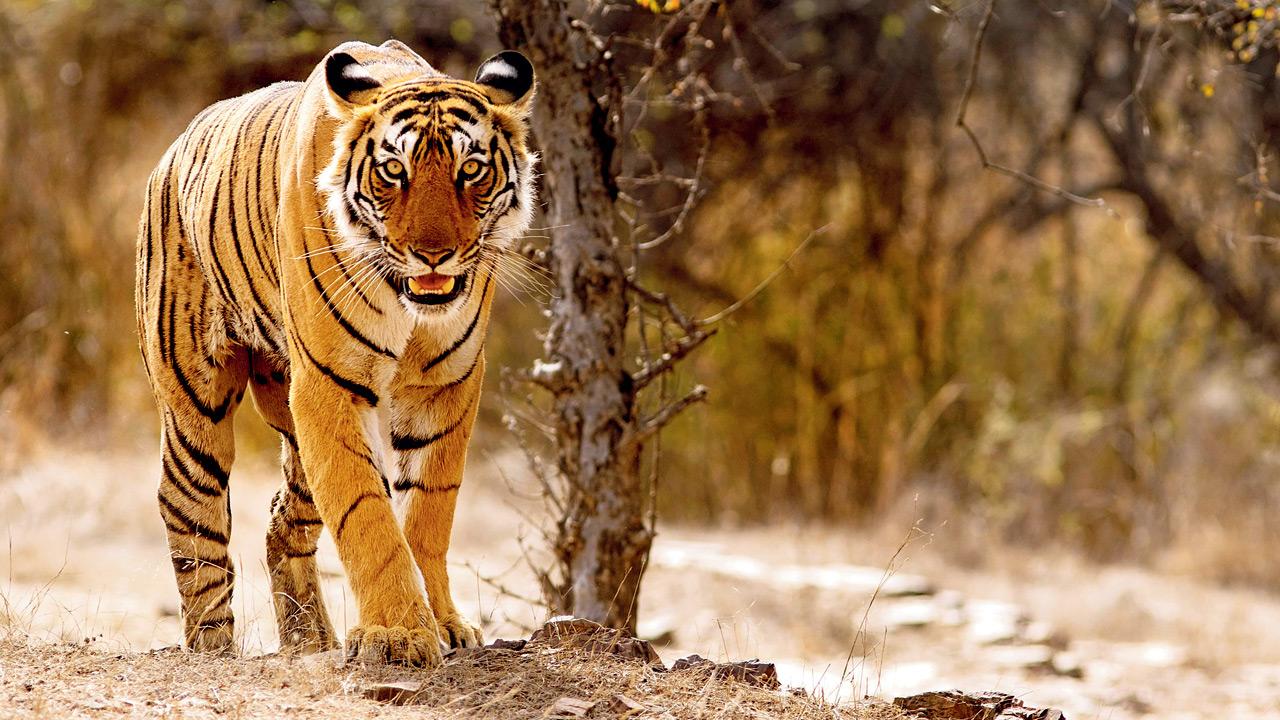
India is home to 75 per cent of the global wild tiger population. Representation Pic/istock
While the National Tiger Conservation Authority (NTCA) is the apex body responsible for tiger conservation in India, it has made a surprising admission in response to an RTI query filed by mid-day. When asked for data on the number of tigers that have gone missing in India between 2010 and February 2025, the NTCA stated that it does not possess this information and advised contacting the respective state governments instead.
Earlier this year, mid-day had submitted an RTI request to the NTCA seeking year-wise and state-wise data on missing tigers from 2010 to February 26, 2025. In response, the NTCA shared the ‘Status of Tigers, Co-predators and Prey in India 2022’ report, which provides population statistics of tigers across the country, categorised by state, park, and reserve. However, it did not address the specific query about missing tigers. In reply to the question on missing tigers, the NTCA responded, “The said information is not available with this authority. Further, you may like to contact the Chief Wildlife Warden(s) of all Tiger Range States.”
India is home to 75 per cent of the global wild tiger population. A press release issued in July 2022 stated, “On April 9, 2022, during the celebration of 50 years of Project Tiger in Mysuru, Prime Minister Narendra Modi declared the minimum tiger population to be 3167 — based on estimates from camera-trapped areas. Further analysis by the Wildlife Institute of India, including both camera-trapped and non-camera-trapped tiger presence areas, puts the upper estimate at 3925, with an average population of 3682 — reflecting a commendable annual growth rate of 6.1 per cent.”
The same release also highlighted that Madhya Pradesh hosts the highest tiger population (785), followed by Karnataka (563), Uttarakhand (560), and Maharashtra (444). Among tiger reserves, Jim Corbett National Park reported the highest population (260), followed by Bandipur (150), Nagarhole (141), Bandhavgarh and Dudhwa (135 each), Mudumalai (114), Kanha (105), Kaziranga (104), Sundarbans (100), Tadoba (97), Sathyamangalam (85), and Pench (77). Wildlife conservationist Kedar Gore, director of The Corbett Foundation, explained several reasons tigers may go missing from official records.
“Tigers can go missing when carcasses are not recovered, whether due to poaching, human-wildlife conflict, or natural causes like aging or territorial fights. Sometimes, tigers are pushed out of their ranges during conflicts and move into areas not covered by camera traps. Though still alive, their absence in photographic data makes them appear ‘missing’. Given the high demand for tiger parts in the illegal wildlife trade, poaching — especially outside reserves and in corridors — is a significant concern. Unfortunately, forest departments rarely acknowledge poaching as a possible cause,” said Gore. He added that scrutiny often falls on tigers frequently seen in tourism zones, while others, especially those in less-monitored areas, may also be missing without public awareness.
“There have been cases where missing tigers were identified later through confiscated skins. A robust tracking and response system is essential. It’s inaccurate to label all missing tigers as poached, but it’s equally flawed to assume they are simply roaming unharmed in the wild. Coordination between NTCA and state forest departments, and timely information sharing, is crucial. Many deaths are still reported with ‘unknown’ causes — these grey areas must be addressed urgently,” he said. Environmentalist Stalin D criticised the NTCA for its lack of accountability.
“The real tiger population figures are often manipulated to mislead the public. Habitat loss and increasing human-wildlife conflict are taking a toll. The NTCA, despite being a conservation body, is doing little. If they have no data, one must ask: what exactly are they doing? We believe the real population could be at least 30 per cent lower than what’s reported. This lapse must not go unpunished,” he stated.
Environmental activist Debi Goenka echoed said, “If the NTCA cannot even track the number of tigers being killed, it is failing in its primary responsibility. The absence of data indicates their decisions are based on assumptions rather than facts. It’s time for fresh, committed leadership —young officers who are willing to work in the field and bring about real change.”
Subscribe today by clicking the link and stay updated with the latest news!" Click here!