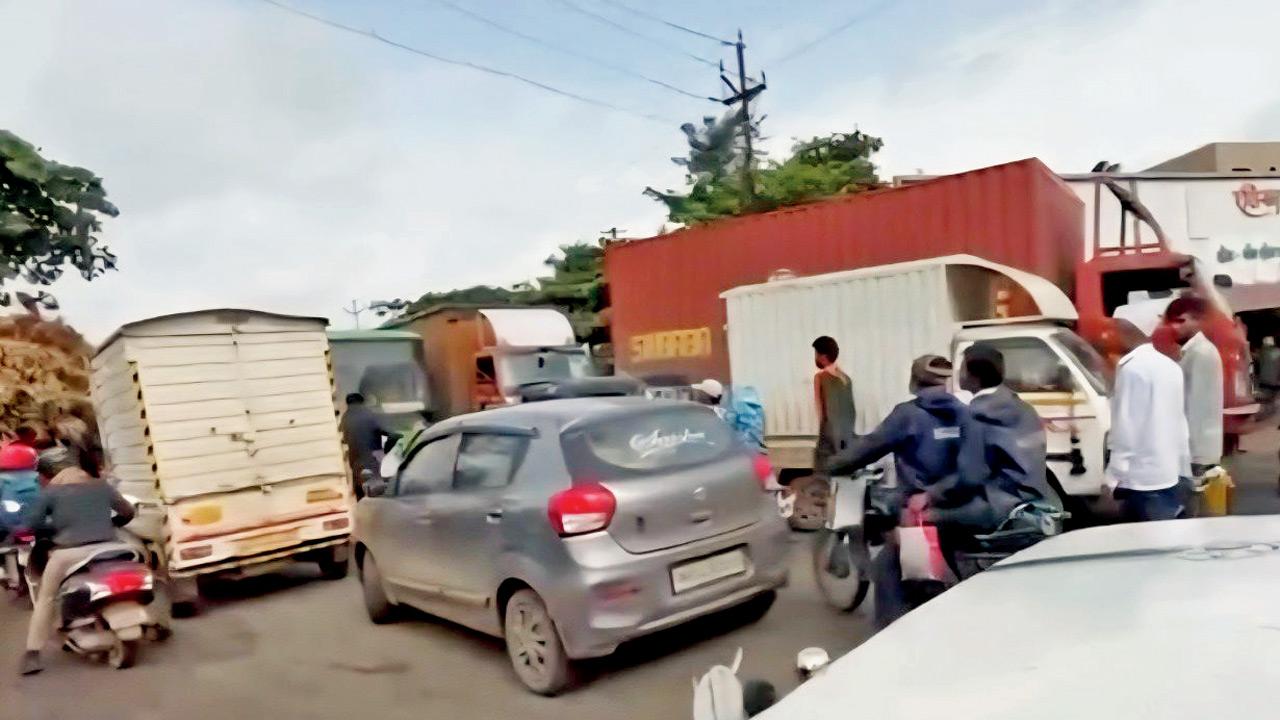
The Chakan industrial belt, a vital economic corridor housing some of India’s biggest automobile and manufacturing giants, is fast becoming a symbol of infrastructural failure

After an eight-hour shift at work, many commuters have to put up with another eight hours of chock-a-block traffic on a daily basis
Imagine finishing your shift as a worker at Pune’s Chakan MIDC at 5 pm, but only reaching home at 1 am after spending eight hours in crawling traffic on the 30-km route to your home. Or a high school student taking three hours to cover the 3 km from school to home, reaching home only at 8.30 pm.
The Chakan industrial belt, a vital economic corridor housing some of India’s biggest automobile and manufacturing giants, is fast becoming a symbol of infrastructural failure. Despite being a significant contributor to India’s economy, the region is marred by dangerously potholed roads, poor road maintenance and inadequate traffic regulation, causing daily traffic snarls.
The stretch between Chakan MIDC and Talegaon is especially treacherous during the monsoon season, with crater-like potholes and zero visible repair work. The result: frequent vehicle breakdowns, increasing accidents, and working-class commuters stranded for hours. “We lose valuable working hours daily because of this. Industries suffer, workers suffer, but no one seems to care,” said Omkar Shinde, who moved from Beed to Pune for work. He now spends nearly six to seven hours daily just commuting.
Sayali Kumar, who commuted from Nashik to Chakan, said, “This is a complete infrastructural breakdown in one of Pune’s major industrial hubs. Every day, we face traffic chaos on pothole-ridden roads. These industries contribute to the national economy, yet the people’s suffering is completely ignored by our representatives.”
Despite heavy rains lashing the region for the past couple of months, no monsoon-preparedness road repair was carried out. Workers have become increasingly anxious due to the rising number of fatal accidents. Some companies are now considering shifting operations, as employees are seeking jobs elsewhere to escape the daily ordeal. Politicians have largely remained indifferent, often using the issue as a political tool but failing to deliver real solutions.
In previous years, even traffic police attempted to patch potholes with sand and gravel. However, these makeshift repairs were never followed up with proper tarring—especially ahead of monsoon. This year, the situation has worsened. Large sections of the road are submerged due to a lack of proper drainage. Several senior executives now leave work two hours earlier just to beat the worst of the traffic. Evening commutes have become particularly dangerous.
Dilip Batwal, founder of the Federation of Chakan Industries, told Sunday mid-day: “Pune generates one of the highest industrial revenues, yet there’s been no meaningful development of basic infrastructure here. The situation is worsening each year. While the government’s revenue rises, this area is neglected. If this continues, the loss won’t just be Pune’s — it will affect the entire state. Companies have already started expanding in other states due to Chakan-Talegaon MIDC’s infrastructure collapse. We have lost patience.”
Official speak
Dr Yogesh Mhase, divisional commissioner with the Pune Metropolitan Region Development Authority (PMRDA), said, “PMRDA has instructed the concerned departments to submit proposals for road repairs and actively pursue funding from the government.” At a recent PMRDA meeting, a slew of road repair and widening projects were announced along key routes in the region.
Subscribe today by clicking the link and stay updated with the latest news!" Click here!