Home / Mumbai / Mumbai News / Article /
Fraudsters use fake WhatsApp marriage invites, traffic challan messages to steal money
Updated On: 26 August, 2025 11:06 AM IST | Mumbai | Samiullah Khan
The latest victim, 45-year-old businessman Bholanath Gupta from Kandivli West, received two such “wedding invitation” files from the WhatsApp number of his acquaintance, Jai Jaiswal, a cosmetics trader from Jaunpur, Uttar Pradesh





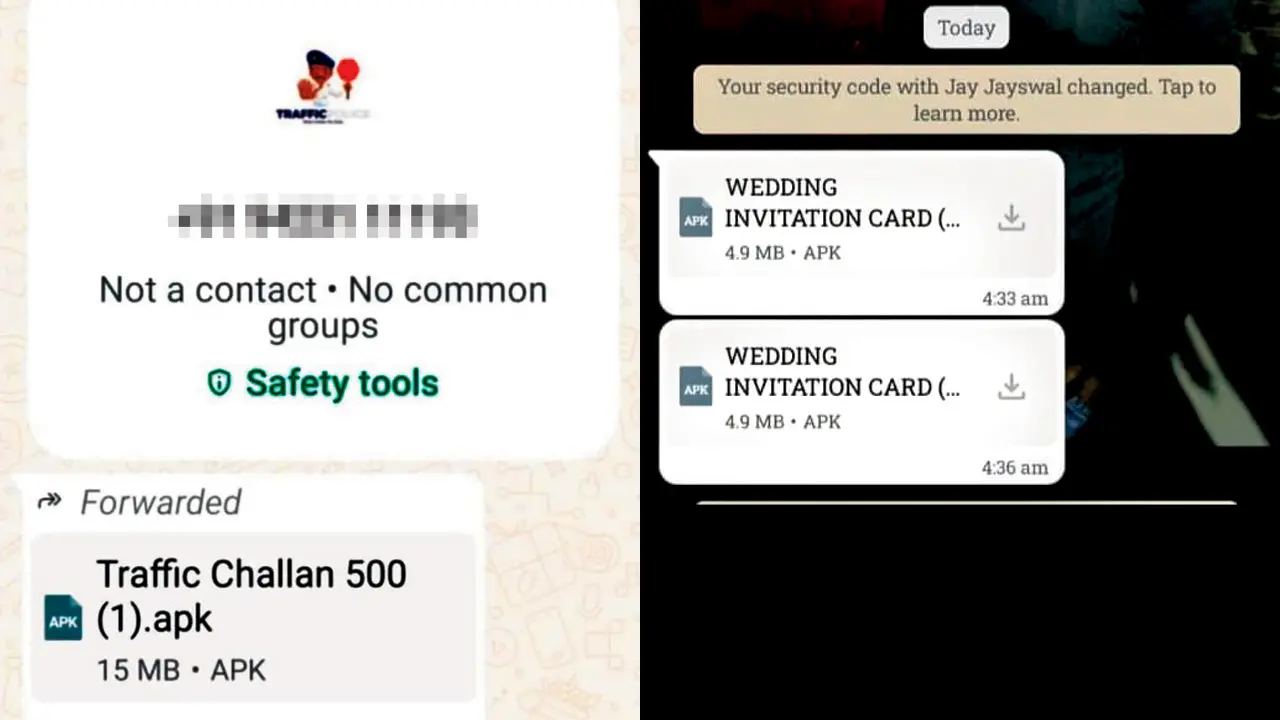
A fake traffic challan and forged wedding invite on WhatsApp carry malware-filled files that let fraudsters hack victims’ phones. Pics/By Special Arrangement
A new cybercrime trend has emerged where scammers are spreading malicious APK files disguised as wedding invitations and traffic challan fines via WhatsApp. These APK files resemble the PDF files that are generally shared as wedding invites and traffic challans. Once downloaded, these files allow fraudsters to hijack victims’ mobile phones and siphon money from their bank accounts.
The latest victim, 45-year-old businessman Bholanath Gupta from Kandivli West, received two such “wedding invitation” files from the WhatsApp number of his acquaintance, Jai Jaiswal, a cosmetics trader from Jaunpur, Uttar Pradesh. “On August 20, around 5 am, I received an APK file resembling a wedding invite from Jai’s number. The moment I clicked on it, my phone froze. None of the functions worked even after several restarts. Later that night, I got messages that six transactions worth Rs 44,000 had been debited from my account. I immediately reported it to the cyber helpline and then to Kandivli police,” Gupta said.
Jaiswal admitted he, too, was tricked. “I clicked on a similar file sent from my neighbour’s number. It asked for permissions and personal details. Soon, my WhatsApp began auto-forwarding the same ‘invitation’ to all my contacts. Many later complained of hacked phones and stolen money. I filed a complaint with the cyber helpline and put up a WhatsApp status warning others,” he explained.
Trending Stories
Latest Photos
Latest Videos
Latest Web Stories
ADVERTISEMENT
Mid-Day Fast
ADVERTISEMENT