According to data from the National Tiger Conservation Authority (NTCA), the highest number — 29 tiger deaths —took place in Madhya Pradesh, followed by Maharashtra with 28 tiger deaths and 10 deaths each reported from Assam and Karnataka

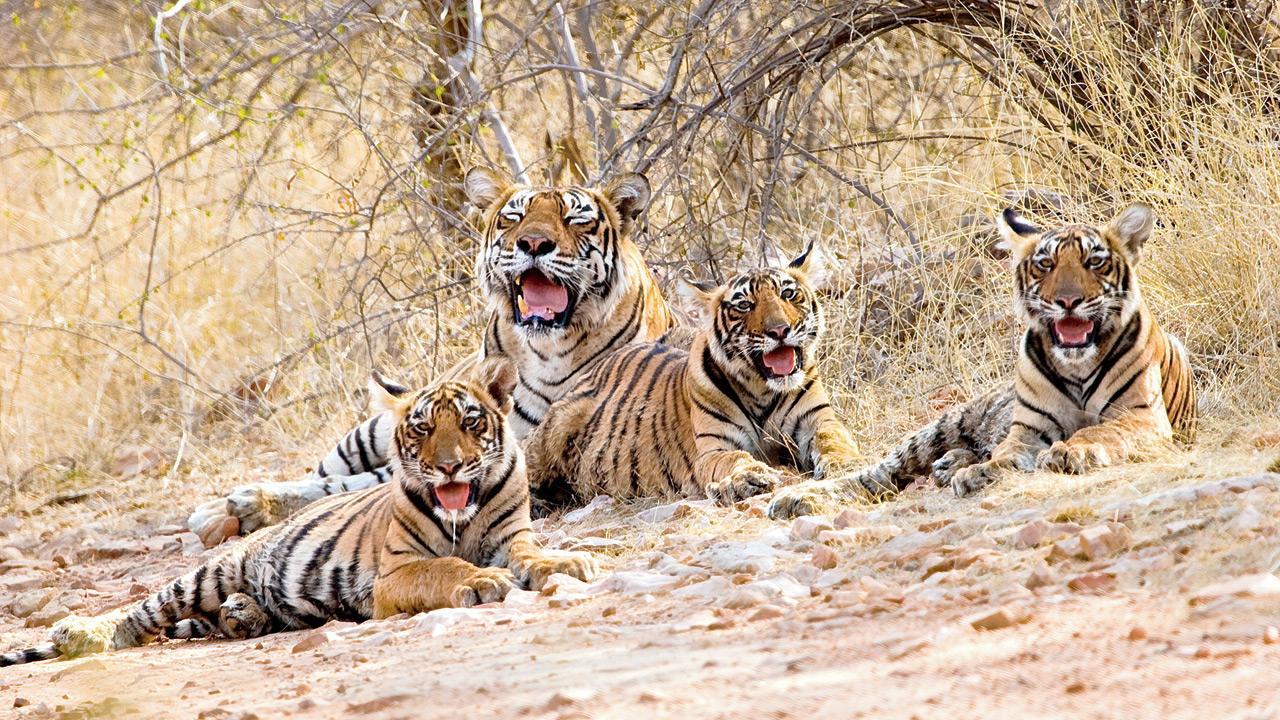
India is home to nearly 75 per cent of the global wild tiger population. REPRESENTATION PIC/ISTOCK
The first six months of this year seem to be going quite badly for wild tiger populations, as a total of 107 tiger deaths have been reported across the country due to several factors. In 2024, 76 tigers had died in the first six months of the year, indicating that the deaths this year are much higher in comparison.
According to data from the National Tiger Conservation Authority (NTCA), the highest number — 29 tiger deaths —took place in Madhya Pradesh, followed by Maharashtra with 28 tiger deaths and 10 deaths each reported from Assam and Karnataka.
A total of nine tiger deaths were reported from Kerala, seven from Uttarakhand, Uttar Pradesh (4), Tamil Nadu (3), and Rajasthan (2), while the remaining deaths took place in other tiger-bearing states in the country.
Tigers around India
India is home to nearly 75 per cent of the global wild tiger population. According to the press note released in July 2022, along with the All India Tiger Estimations 2022 report, “On April 9, 2022, during the 50-year celebration of the Project Tiger at Mysuru, Prime Minister Narendra Modi declared the minimum tiger population at 3167, which is the population estimate from the camera-trapped areas. After further analysis of data, done by the Wildlife Institute of India, from both camera-trapped and non-camera-trapped tiger presence areas, the upper limit of the tiger population is estimated to be 3925, and the average number is 3682 tigers, reflecting a commendable annual growth rate of 6.1 per cent per annum.”
The release further stated that the largest tiger population of 785 is in Madhya Pradesh, followed by Karnataka (563), Uttarakhand (560), and Maharashtra (444). Abundance of the big cat within tiger reserves is highest in Corbett in Uttarakhand (260), followed by Bandipur in Karnataka (150), Nagarhole in Nagarhole (141), Bandhavgarh in Madhya Pradesh (135), Dudhwa in Uttar Pradesh (135), Mudumalai in Tamil Nadu (114), Kanha in Madhya Pradesh (105), Kaziranga in Assam (104), Sundarbans in West Bengal (100), Tadoba in Maharashtra (97), Sathyamangalam in Tamil Nadu (85), and Pench in Madhya Pradesh (77).
Expert Speak...
Kedar Gore, wildlife conservationist, Corbett Foundation
“Recording of tiger deaths by NTCA without ascribing any reason to the nature of death is a matter of concern. Maharashtra and Madhya Pradesh have recorded 28 and 29 tiger deaths, respectively. While some deaths could be due to territorial fights, many others could be due to retaliatory killings or poaching attempts by people. Tiger carcasses found after 3-4 days are in a putrified state, and therefore, no conclusion can be drawn from such cases and often such deaths are reported as due to natural causes.”
Gore also pointed out that there is a tendency to declare most deaths as natural, as deaths of tigers that cannot be categorised as being old must be thoroughly investigated as unnatural deaths. “More transparency and accountability must be brought in while dealing with tiger deaths. Human-wildlife conflict is on the rise and this could be a major reason for such a high number of tiger deaths. Addressing these issues urgently is crucial for the safety of both, tigers and people,” Gore added.
Year-wise tiger deaths
2024: 126
Total no of tiger deaths that took place in the entire year, with 76 reported in the first six months of the year, as per NTCA data
2023: 182
Total no of tiger deaths took place in the entire year, with 103 reported in the first six months
2022: 122
Total no of tiger deaths that took place in the entire year; 70 reported in first six months
2021: 126
Total no of tiger deaths reported in the entire year; 79 in the first six months
Subscribe today by clicking the link and stay updated with the latest news!" Click here!