
Women say they have to battle filth, shame and infections every month owing to unhygienic public toilets across the city, thus affecting their mental health
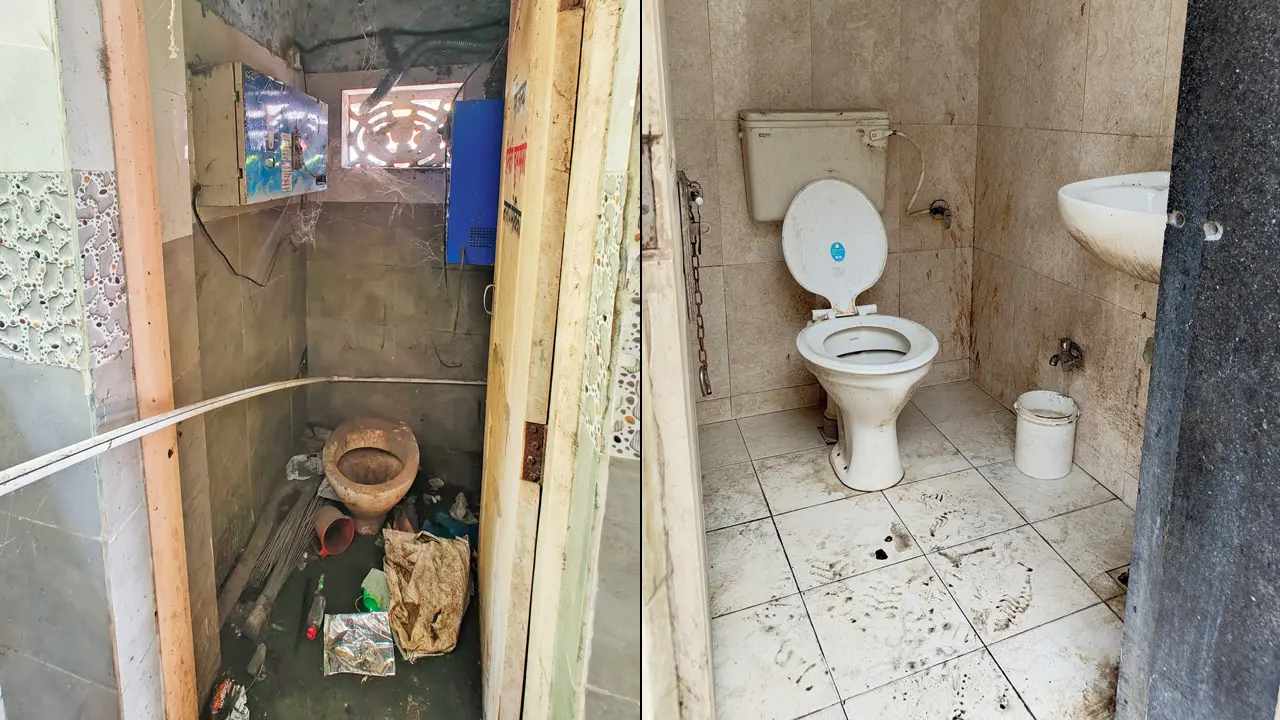
An unclean toilet in Borivli East reflects the poor sanitation standards of Mumbai’s public facilities; (right) A toilet at Bandra station one of several facilities in the city that fail to meet basic hygiene expectations. Pics/Ritika Gondhalekar
A recent study by Mahina, a period products brand, has revealed a disturbing reality — four out of five women feel anxious about finding clean public restrooms during their periods. While menstruation is a natural biological process, the lack of hygienic infrastructure in cities like Mumbai turns it into a daily struggle for millions of women. The issue goes beyond physical discomfort — it affects mental well-being and limits professional opportunities, especially in on-field jobs.
Working women’s ordeal
For many women, menstruation brings its own set of challenges — cramps, fatigue, hormonal shifts. But on top of that is the constant worry about access to clean, private spaces for hygiene management.

An unhygienic public toilet at Yari Road in Andheri West offers no relief to women looking for clean, safe sanitation. Pic/Kirti Surve Prade
“Cleanliness is always a concern, and I avoid any facility that looks neglected or poorly maintained. I rarely use public toilets — they’re either closed or filthy. If I’m between meetings or delayed, I step into a mall, hotel, or restaurant instead. But that’s not always possible. Sometimes I avoid drinking water entirely if I know I’ll be out for long hours. It’s not healthy, but it feels safer, especially during periods,” said Smruti Bhalerao, a PR professional.
“The mere presence of a toilet is not enough — it must be well-maintained and visibly clean. This is not just about convenience; it’s about health, dignity, and the freedom to move through the city without having to make such basic compromises,” she added.

Makeshift public toilets in Borivli West lack hygiene and regular maintenance, making them unusable for menstruating women
Some women choose to simply stay home during their periods. “I make sure I’m either at home or in the office, where I know I have access to a clean washroom. The lack of public toilets affects women not just during their periods, but in general. I’ve seen women forced to urinate under flyovers, with relatives trying to shield them, or hiding behind sarees. It’s a sorry state for what is supposed to be one of Asia’s richest municipalities,” said Olive D’silva, a private firm employee.
“Hygiene becomes critical during periods, and searching for a clean toilet is often embarrassing and exhausting. I believe this is one reason why many capable women avoid jobs in fields like sales, logistics, or transport,” she added.
Lack of clean facilities also makes it harder to use modern menstrual products like cups and disposal pads. “Public washrooms usually stink and are extremely dirty. I wait till I reach the office because using them increases the risk of UTIs. I carry hand sanitiser and intimate wipes, but it’s not enough. Menstrual cups are the most convenient for me, but without clean water and surroundings, I can’t use them. Sometimes, there’s not even a dustbin to dispose of used pads,” said Aditi Kajrolkar, another working professional.
 Public toilet at Dadar station is unusable due to a broken flush tank
Given that many commuters in Mumbai spend at least two hours daily travelling to and from work, women in field jobs are the most affected. “I’m a real estate agent, already working in a male-dominated industry. On top of that, not having clean toilets adds to the stress. My family has often suggested switching to a desk job just for better hygiene access,” said Neha Jindal, a real estate agent. “But should a lack of clean toilets be a reason to give up your dreams — especially in Mumbai, the so-called ‘maximum city’?”
Impact on health
The consequences aren’t just inconvenient — they’re dangerous. “UTIs are the most common issues among female patients. But we also see reproductive tract infections, skin rashes, and fungal infections caused by unclean toilets. Every month, I treat 30–35 such cases,” said Dr Vandana Ghadge, a gynaecologist.
“When women avoid drinking water or hold their urine for long hours, it leads to kidney stones, bladder issues, and dehydration.” This, in turn, affects mental health. “About 50 per cent of women report mental stress from delayed urination. Combine that with the cultural shame around menstruation — even in a metro like Mumbai — and it creates long-term damage to women’s confidence and self-esteem,” said Dr Rashmi Joshi-Shetty, a consultant psychiatrist.
“I’ve had patients who are still asked to sleep on the floor or avoid touching anything at home during periods. Add to that the lack of safe, clean public toilets, and it’s no surprise that women start withdrawing from work or social spaces.”
What can be done?
The solution, experts say, is clear: build and maintain toilets. “Toilets are built, but they’re not maintained. If authorities lack the manpower, they should hand them over to NGOs or citizen groups,” said a volunteer from an NGO working on women’s rights. “These groups can charge a small, transparent fee based on usage to pay for cleaners. Clean toilets are a fundamental right. The government must at least provide water, electricity, and proper dustbins free of cost.”
 Subscribe today by clicking the link and stay updated with the latest news!" Click here!