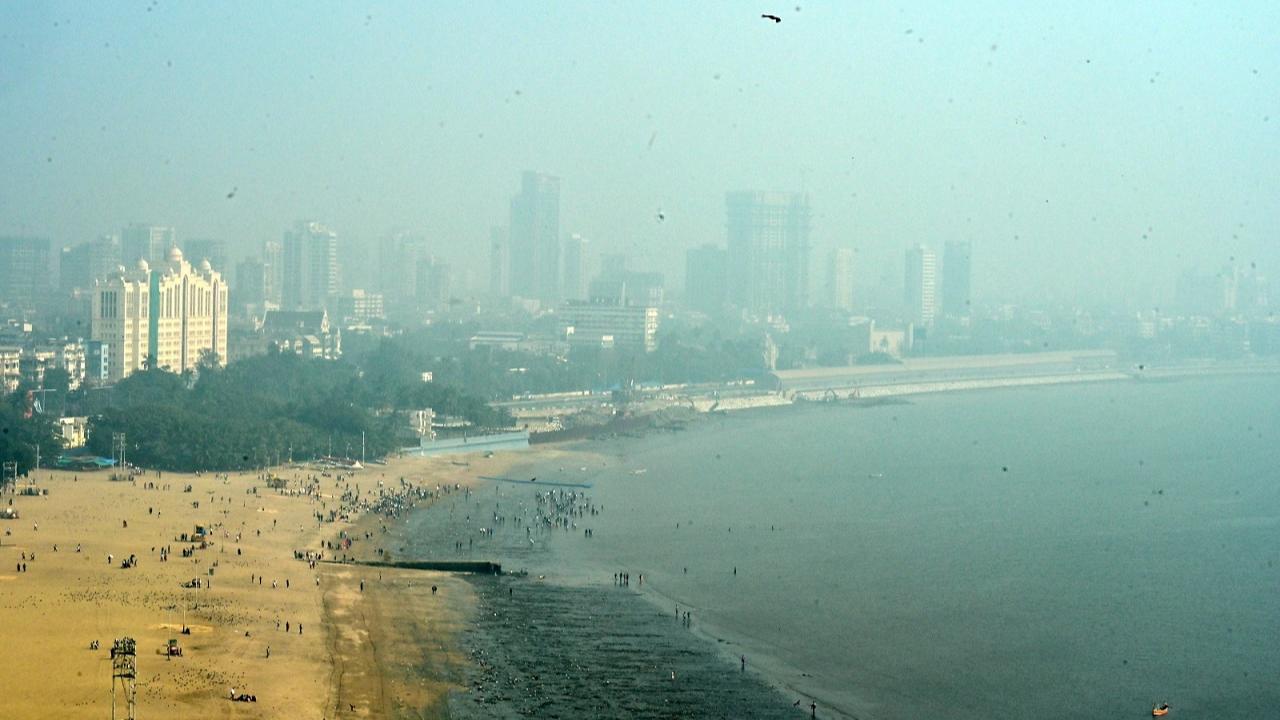
Daytime temperatures were expected to climb to around 31 degrees Celsius, while nighttime readings were likely to drop to about 20 degrees Celsius, remaining consistent with late-January averages

File Photo
Mumbai experienced a typical clear-sky winter day on Thursday, January 22, 2026, with bright, dry and largely comfortable conditions prevailing across the city. The weather department forecast sunny conditions through the day.
Daytime temperatures were expected to climb to around 31 degrees Celsius, while nighttime readings were likely to drop to about 20 degrees Celsius, remaining consistent with late-January averages. Humidity levels were projected to hover near 61 per cent, ensuring generally pleasant conditions, though those outdoors during midday hours could feel a slight stickiness under direct sunlight. Winds were forecast to become moderately strong, with speeds reaching up to 22 km/h.
Despite the favourable weather, air quality continued to be a concern. The city’s Air Quality Index (India) stood at 133 on Wednesday, placing it in the ‘moderate’ category. However, Mumbai later recorded an AQI of 251, which falls under the ‘very poor’ classification, highlighting persistent pollution issues.
AQI readings at key locations across the city on Thursday were as follows:
Bandra Kurla Complex: 148
Kandivali East: 116
Byculla: 144
Andheri East: 157
Chembur: 110
Deonar: 137
Delhi's air quality remains 'very poor' at 312 despite marginal improvement
Meanwhile, Delhi continued to grapple with 'very poor' air quality on Thursday morning, even as there was a marginal improvement in pollution levels, with the Air Quality Index (AQI) recorded at 312 around 7 am, according to data released by the Central Pollution Control Board (CPCB).
Although the AQI showed a slight improvement compared to Wednesday morning, when it stood at 341, pollution levels across the national capital remained firmly in the 'very poor' category. The prolonged deterioration in air quality continues to pose serious health concerns, especially for children, the elderly and those suffering from respiratory illnesses.
Several parts of the national capital recorded high pollution levels. As per CPCB, Anand Vihar registered an AQI of 379, Ashok Vihar at 333, and Wazirpur at 336. Other hotspots included Punjabi Bagh (338), RK Puram (359), Bawana (323), ITO (331), Chandni Chowk (361) and Dwarka Sector 8 (342), all falling in the 'very poor' category.
Subscribe today by clicking the link and stay updated with the latest news!" Click here!