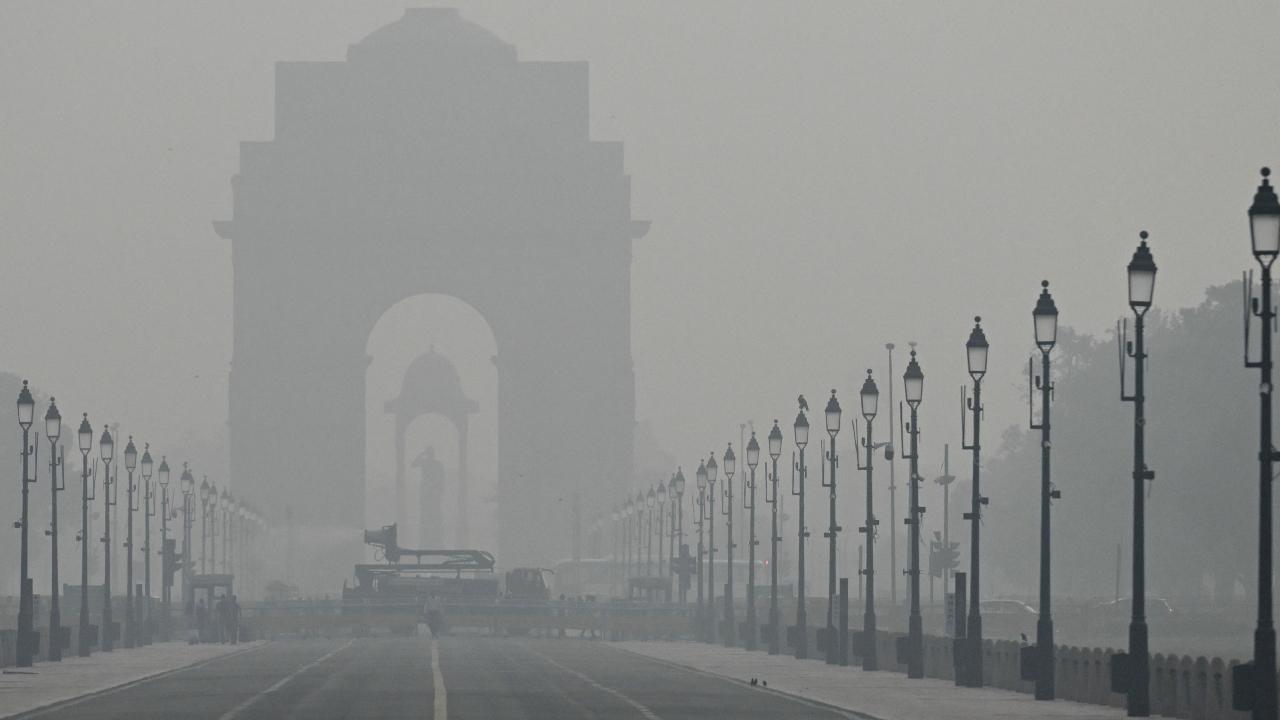
While the AQI showed a slight improvement from Tuesday morning’s reading of 397, pollution levels stayed firmly in the ‘very poor’ category, raising persistent health concerns—especially for children, senior citizens, and people with respiratory conditions

File Pic
Delhi continued to grapple with unhealthy air on Wednesday morning, with the Air Quality Index (AQI) pegged at 341 around 7 am, according to data from the Central Pollution Control Board (CPCB).
While the AQI showed a slight improvement from Tuesday morning’s reading of 397, pollution levels stayed firmly in the ‘very poor’ category, raising persistent health concerns—especially for children, senior citizens, and people with respiratory conditions.
Several pollution hotspots report alarming AQI readings
Multiple locations across the capital reported alarmingly high AQI levels. Anand Vihar and Ashok Vihar both recorded readings of 388, while Wazirpur stood at 386. Other heavily polluted areas included Punjabi Bagh (374), RK Puram (377), Bawana (383), ITO (369), Chandni Chowk (369), and Dwarka Sector 8 (376), underscoring the widespread nature of the pollution.
AQI scale highlights severity of current air quality
Under the AQI scale, values between 0–50 are considered ‘good’, 51–100 ‘satisfactory’, 101–200 ‘moderate’, 201–300 ‘poor’, 301–400 ‘very poor’, and 401–500 ‘severe’.
Foggy conditions add to deteriorating air quality
Adding to the grim conditions, the India Meteorological Department (IMD) reported moderate fog in several parts of the city, with dense fog at isolated locations. The temperature hovered around 9 degrees Celsius at 7 am.
Stage IV GRAP measures revoked, agencies asked to stay alert
Earlier, amid the worsening air quality, the Commission for Air Quality Management (CAQM) had invoked Stage IV measures of the Graded Response Action Plan (GRAP) across Delhi and the National Capital Region (NCR). However, the commission later revoked its January 17, 2026 orders enforcing Stage IV actions, which come into effect when AQI levels cross 450 and enter the ‘severe’ category.
Despite the rollback, authorities have directed all implementing agencies in the NCR to remain on high alert and strictly enforce preventive steps under GRAP Stages I, II, and III to ensure air quality does not deteriorate further. Continuous monitoring and regular reviews will remain in place to curb any slide into the ‘severe’ zone.
Meanwhile, the winter chill in the capital has begun to ease gradually.
The maximum temperature is hovering around 24 degrees Celsius, while the minimum temperature has settled close to 7 degrees Celsius, offering some respite from the cold even as pollution continues to pose serious health risks.
Subscribe today by clicking the link and stay updated with the latest news!" Click here!