An Akasa Air aircraft and a SpiceJet plane sustained damage after coming into contact at Delhi airport on Thursday afternoon, officials said, adding that the Directorate General of Civil Aviation (DGCA) has launched an investigation into the incident. Both Boeing 737 aircraft have been grounded following the mishap. The DGCA further said that the concerned air traffic controller and SpiceJet pilots have been de-rostered pending a detailed probe. Aircraft collision at Delhi airport under DGCA probe Officials said the Akasa Air aircraft was stationary on the taxiway and preparing for take-off, while the SpiceJet aircraft was taxiing towards its parking stand when the incident occurred around 2.15 pm at Terminal 1 of Delhi airport. The Akasa Air flight was scheduled to operate QP 1406 from Delhi to Hyderabad, while the SpiceJet aircraft had arrived from Leh after operating SG 124, they added. DGCA details damage to SpiceJet and Akasa aircraft According to the Directorate General of Civil Aviation (DGCA), the winglet of SpiceJet’s Boeing 737-700 aircraft (VT-SLB), while taxiing into the allocated parking bay after operating SG 124 (Leh–Delhi), came into contact with the horizontal tail surface (HTS) of an Akasa Air Boeing 737 aircraft positioned on the apron after pushback for its Delhi–Hyderabad sector. The DGCA said the impact resulted in damage to the right-hand winglet of the SpiceJet aircraft and the horizontal tail surface of the Akasa Air aircraft. A detailed investigation is underway. ATC and pilots off-rostered pending inquiry In an updated statement, the aviation watchdog said the concerned air traffic controller and the SpiceJet pilots involved have been off-rostered pending inquiry. Akasa Air aircraft returns to bay; passengers safe Akasa Air said its aircraft operating flight QP 1406 from Delhi to Hyderabad was required to return to the bay after the incident. Preliminary information suggests the aircraft was stationary when contact occurred, the airline said. The aircraft involved is a Boeing 737 MAX 8. The airline confirmed that all passengers and crew were safely disembarked. It added that relevant authorities have been informed and the matter is under investigation. SpiceJet aircraft grounded at Delhi airport SpiceJet said its Boeing 737-700 aircraft was involved in a ground occurrence while taxiing at Delhi airport, resulting in damage to its right winglet and the left-hand horizontal stabiliser of another aircraft belonging to a different airline. The aircraft has been grounded at Delhi. Officials, citing preliminary inputs, said the wings of both aircraft came into contact on the taxiway. Details regarding the number of passengers onboard the two aircraft were not immediately available. (With Agency inputs)
16 April,2026 10:34 PM IST | New Delhi | mid-day online correspondentThe government on Thursday said that the supply of LPG to households continues without disruption, even as global conditions impact logistics. According to the Ministry of Petroleum and Natural Gas, online bookings for LPG have risen to 98 per cent, and no shortages have been reported at distributorships. The ministry said, “Supply of LPG to domestic households remains normal… and no dry-outs have been reported.” It also added that 100 per cent supply is being ensured for domestic LPG, piped natural gas (PNG), and CNG for vehicles. Technology helps prevent misuse Officials said the use of Delivery Authentication Codes (DAC) has improved transparency in distribution. Currently, around 92 per cent of deliveries are being completed using DAC verification, helping prevent diversion of cylinders at the distributor level. Consumers have also been encouraged to use digital booking platforms instead of visiting distributors. Rising demand for PNG connections The demand for PNG connections has increased significantly in recent months. Around 4.58 lakh PNG connections have been activated with over 5.1 lakh new customers registering since March. About 35,000 users have surrendered LPG connections and switched to PNG States have been advised to speed up the process of providing new PNG connections to both households and commercial users. Priority supply for essential sectors The government has prioritised LPG supply for critical sectors, including: -Hospitals and educational institutions-Pharmaceutical, steel and automobile industries-Agriculture and seed sectors Additionally, the supply of 5 kg LPG cylinders for migrant workers has been doubled compared to early March levels. Since March 23, around 15.5 lakh small cylinders have been sold. Commercial and auto LPG demand rises Commercial LPG demand has remained strong, with over 1.42 lakh metric tonnes sold since March 14. Auto LPG consumption has also increased, with public sector companies recording a 62 per cent rise in sales. The biggest increase has been seen in states like Karnataka, Tamil Nadu, Telangana, Rajasthan, and West Bengal. Strict action against hoarding To prevent black marketing and hoarding, authorities have stepped up enforcement across the country. These steps are aimed at ensuring fair distribution and preventing misuse. -More than 2,500 raids were conducted in a single day-Penalties were imposed on 238 LPG distributors-63 distributorships have been suspended so far The ministry has advised citizens not to panic or stockpile fuel. It said, "Citizens are advised to avoid panic purchase of petrol, diesel, and LPG as the government is making all efforts to ensure availability of petrol, diesel and LPG. Beware of rumours and rely on official sources for correct information," reported the news agency. People have also been encouraged to use alternative fuels such as PNG, electricity, kerosene, and coal to reduce pressure on LPG demand. Additional measures, including increased refinery output and longer booking intervals, have been introduced to manage supply efficiently. (With IANS Inputs)
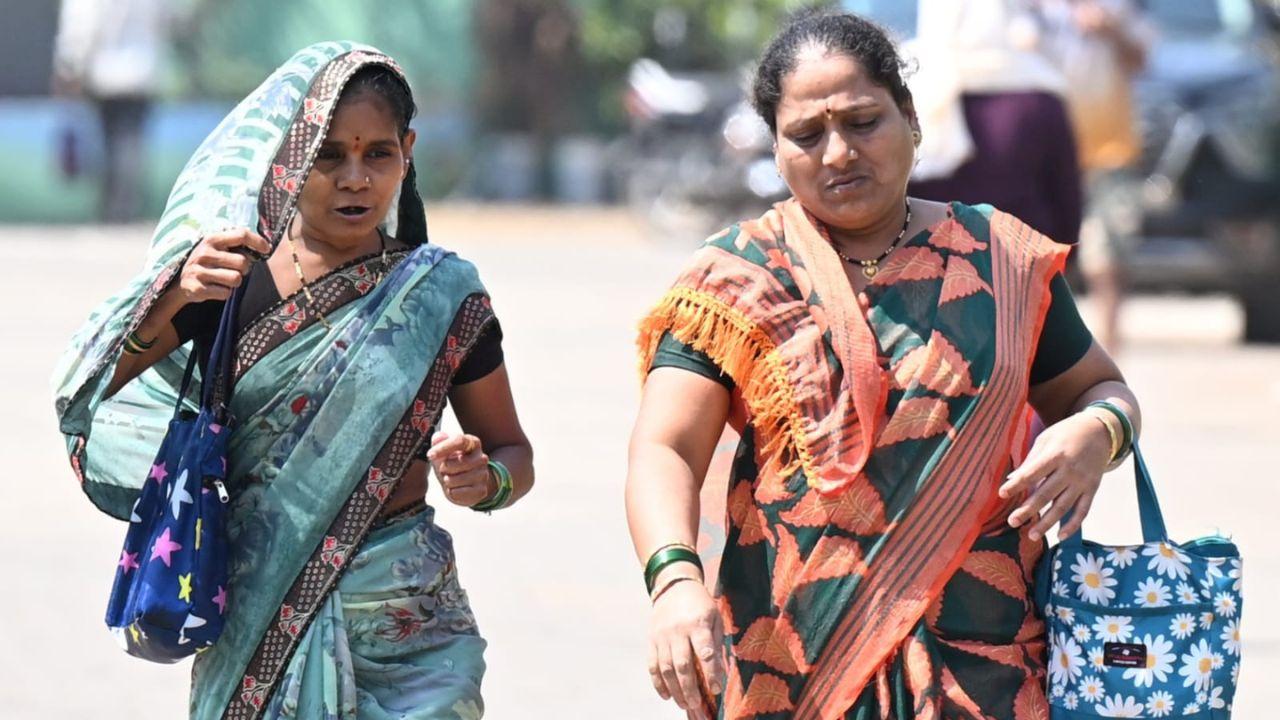
16 April,2026 09:21 PM IST | Mumbai | mid-day online correspondentMaharashtra continued to reel under intense early summer heat on Thursday, with Akola and Amravati jointly recording the highest temperature in the state at a scorching 44.2 degrees Celsius, the highest reading so far in 2026. Top 10 hottest cities in Maharashtra (16 April 2026) Akola and Amravati - 44.2 degrees CelsiusWardha - 44.0 degrees CelsiusMalegaon and Solapur - 43.4 degrees CelsiusParbhani and Jeur - 42.0 degrees CelsiusJalgaon - 41.5 degrees CelsiusChhatrapati Sambhajinagar - 41.4 degrees CelsiusSatara - 41.2 degrees CelsiusPune - 39.7 degrees Celsius Vidarbha remains worst hit region Vidarbha remained the worst-affected region, with multiple cities consistently staying above 43 degrees Celsius. Marathwada and Madhya Maharashtra also experienced severe heat, while the Mumbai and Konkan coast remained relatively cooler at 31.5 to 33.6 degrees Celsius but suffered from high humidity levels of 65 to 80 per cent, making conditions far more uncomfortable. Nashik records lowest minimum temperature In sharp contrast, Nashik recorded the lowest minimum temperature in the state at just 16.3 degrees Celsius, offering some relief during the night. No rainfall was reported from any part of Maharashtra in the last 24 hours, and skies remained largely clear across the state. IMD flags early rise in temperatures The India Meteorological Department (IMD) has noted that temperatures this April are rising unusually early, with many districts already running 2 to 4 degrees Celsius above normal. The situation remains serious in Nanded, which continues to be under a yellow alert till 20 April. Officials have warned of continued heatwave conditions followed by possible thunderstorms and gusty winds in the coming days. How Maharashtra is facing three different heat patterns Maharashtra is currently experiencing three distinct types of heat depending on the region. Vidarbha: Worst affected by extreme dry heat Vidarbha was by far the worst affected. The region recorded the most extreme temperatures in the state, with Akola and Amravati both touching 44.2 degrees Celsius, the highest in Maharashtra and the entire country so far this year. Wardha followed closely at 44.0 degrees Celsius, while Chandrapur, Washim, Nagpur and Yavatmal all remained above 43 degrees Celsius. The heat remained dry, with very low humidity and no rainfall recorded anywhere in the region. Marathwada: Severe but slightly lower heat Marathwada also faced severe heat, though slightly less intense than Vidarbha. Parbhani was the hottest at 42.0 degrees Celsius, followed by Chhatrapati Sambhajinagar at 41.4 degrees Celsius and Udgir at 40.4 degrees Celsius. The weather remained dry with low humidity levels and zero rainfall. Mumbai, Konkan and Pune: Humid but relatively cooler In sharp contrast, Mumbai and the Konkan region (including Pune) remained comparatively cooler. Mumbai (Colaba) recorded 33.6 degrees Celsius, while Santacruz stood at 33.1 degrees Celsius. Coastal stations such as Alibag, Ratnagiri and Dahanu stayed between 31.5 and 33.1 degrees Celsius. However, high humidity levels of 65 to 80 per cent made conditions more oppressive. Pune recorded 39.7 degrees Celsius, hot but lower than interior districts, with low humidity and clear skies. Key difference in weather patterns Vidarbha and Marathwada are experiencing dry, scorching heat with temperatures well above 40 degrees Celsius and very low humidity. Mumbai, Konkan and Pune are experiencing humid heat, lower temperatures, but significantly higher discomfort due to moisture in the air. No rainfall has been reported from any of these regions in the last 24 hours. This sharp regional contrast shows how the same state is dealing with two very different types of summer stress at the same time. IMD trend analysis: Early onset of heatwave conditions According to the India Meteorological Department (IMD), temperatures in interior Maharashtra are rising significantly earlier than usual this year. Several districts in Vidarbha, Marathwada and Madhya Maharashtra are currently running 2 to 4 degrees Celsius above normal for mid-April. Heatwave-like conditions, typically expected in the second half of May, have arrived nearly a month early in 2026.
16 April,2026 08:49 PM IST | MumbaiNanded is set to witness a sharp change in weather over the next four days, with the District Disaster Management Authority (DDMA) issuing a yellow alert warning of heatwave conditions followed by thunderstorms and gusty winds. After days of searing temperatures of 42 to 43 degrees Celsius, the expected transition to rain and lightning could catch residents off guard, prompting officials to urge heightened caution. The DDMA has issued a yellow alert for Nanded and parts of Marathwada till April 20. Nanded to experience the two extremes After prolonged spells of extreme heat across the region, officials have cautioned that a sudden onset of rain, lightning and strong winds may pose risks to the public. According to an advisory issued by the Regional Meteorological Centre, Mumbai, heatwave conditions are likely at isolated places on April 17. On April 18, heatwave conditions may persist, with light to moderate rain accompanied by thunder and lightning expected during the afternoon and evening. The weather is expected to turn more unstable on April 19 and April 20, with thunderstorms, lightning and gusty winds reaching speeds of 30 to 40 kmph likely at isolated locations across the district. Authorities warn of sudden weather shift Officials said the transition from intense heat to stormy conditions could prove hazardous, particularly for those working outdoors. The DDMA has urged all departments to remain on alert and ensure preparedness to deal with any emergencies arising from the changing weather. Public advised to exercise caution Residents have been advised to take precautions during both heatwave and thunderstorm conditions. During peak heat hours, people should avoid venturing out between 12 noon and 3 pm, stay well hydrated, and wear light, loose cotton clothing. Particular care has been advised for children, the elderly and those with existing health conditions. As thunderstorms approach, citizens are advised to remain indoors, avoid open spaces and metal objects, and unplug electrical appliances. Officials have also warned against taking shelter under trees or handling electrical fixtures during lightning activity. With no recent rainfall and temperatures already running high, the expected weather shift underlines the need for vigilance, officials said.
16 April,2026 07:50 PM IST |Akola district in Maharashtra on Thursday emerged as the hottest place in state, recording a scorching maximum temperature of 44.2 degrees Celsius, the highest recorded anywhere in the country so far this year. According to the latest data released by the India Meteorological Department (IMD), Akola and Amravati both touched 44.2 degrees Celsius on April 16, marking a sharp spike in the ongoing heatwave across Vidarbha. Several other interior districts in Maharashtra also crossed the 42 degrees Celsius mark, underlining the severity of the early summer heat. On April 14, the IMD reported that the highest maximum temperature of 44 degrees Celsius was recorded jointly at Akola in Maharashtra and Kalaburagi in Karnataka. On the latest reading, Akola's temperature has further risen by 0.2 degrees Celsius. Maximum temperatures (>= 41.5°C) recorded at different locations over the country as of today, 14th April 2026The highest Maximum temperature of temperature of 44°C was reported jointly at Akola (Maharashtra) and Kalaburagi (Karnataka). pic.twitter.com/yjfQFMfPKx — India Meteorological Department (@Indiametdept) April 14, 2026 Extreme heat in interior Maharashtra Temperatures in Vidarbha Akola and Amravati led with 44.2 degrees Celsius, followed by Wardha (44.0 degrees Celsius). Chandrapur, Washim, Nagpur and Yavatmal also recorded temperatures above 43 degrees Celsius. Temperatures in the region were 2 to 3.6 degrees Celsius above normal. Temperatures in Marathwada Parbhani recorded 42.0 degrees Celsius, Chhatrapati Sambhajinagar 41.4 degrees Celsius, and Udgir 40.4 degrees Celsius. Temperatures in Madhya Maharashtra Malegaon and Solapur both recorded 43.4 degrees Celsius, Jeur touched 42.0 degrees Celsius, while Jalgaon, Satara and Pune saw highs ranging between 39.7 degrees Celsius and 41.5 degrees Celsius. In sharp contrast, the Mumbai and Konkan coastal region remained relatively cooler but highly humid. Mumbai (Colaba) recorded 33.6 degrees Celsius with 65 per cent humidity, while Alibag, Ratnagiri and Dahanu reported temperatures between 31.5 degrees Celsius and 33.1 degrees Celsius, with humidity levels as high as 70 to 80 per cent. No relief from rain in Maharashtra No rainfall was reported from any part of Maharashtra in the last 24 hours. The entire state remained dry under largely clear skies, with only Satara reporting the presence of high-level cirrostratus clouds. Yellow alert in Nanded The intense heat comes even as the District Disaster Management Authority in Nanded has issued a yellow alert till April 20, warning of heatwave conditions followed by possible thunderstorms and gusty winds in the coming days. With temperatures already touching 44.2 degrees Celsius in Akola, the highest so far in 2026, authorities have urged people to avoid outdoor activity during peak afternoon hours, stay hydrated, and take extra care of the elderly, children, and those with health conditions.
16 April,2026 07:47 PM IST |Congress leader Priyanka Gandhi Vadra on Thursday launched a sharp attack on the Centre, warning that the proposed Constitution amendment linked to women’s reservation and delimitation could have serious consequences for India’s democratic framework, reported PTI. Speaking during a debate in the Lok Sabha, she alleged that the government has moved from exerting pressure on institutions to launching what she described as an “open attack” on democracy. Sharp Criticism of Proposed Constitutional Changes Priyanka Gandhi questioned the intent behind the proposed amendment, arguing that while it appears to promote women’s representation, its deeper implications raise concerns, reported PTI. She asked why the government cannot implement 33 per cent reservation for women within the existing 543 Lok Sabha seats, instead of linking it to a future increase in seats through delimitation, reported PTI. According to her, the proposal to expand the Lok Sabha to up to 850 seats based on delimitation creates uncertainty and shifts the focus away from immediate implementation. Concerns Over Delimitation Commission The Congress leader expressed apprehension about the role of the proposed delimitation commission, stating that a small group of members would effectively determine the political representation of states, reported PTI. She warned that such a process could alter the balance of representation and impact federal principles. “On the surface it looks fine, but when examined closely, it reflects political intent,” she said, reported PTI. Allegations of Pressure on Institutions Priyanka Gandhi accused the government of weakening democratic institutions over time, including the Election Commission and the judiciary. She said the current move marks a more direct challenge to democratic values, reported PTI. “If this Constitution amendment bill is passed, democracy will be finished in India,” she said, escalating her criticism during the debate. Congress Reiterates Support for Women’s Reservation Despite her criticism of the bill’s structure, Priyanka Gandhi clarified that the Congress continues to support women’s reservation. She said the party has consistently backed measures to increase women’s participation in governance, reported PTI. She traced the historical roots of the demand, referring to early efforts within the Congress and subsequent initiatives taken by former leaders to advance women’s representation in local bodies and legislatures. Debate Shifts From Reservation to Delimitation The Congress leader argued that the current discussion is no longer centred on women’s reservation but has shifted towards delimitation and its potential political consequences, reported PTI. She said the provisions related to redrawing constituencies and increasing seats have changed the nature of the debate, raising broader questions about representation and fairness. Key Bills Introduced in Lok Sabha The government has introduced the Constitution (One Hundred and Thirty-First Amendment) Bill, 2026, along with the Delimitation Bill and the Union Territories Laws (Amendment) Bill. These legislations aim to enable the implementation of women’s reservation in Parliament and assemblies, including in Union Territories such as Delhi, Puducherry, and Jammu and Kashmir. (With inputs from PTI)
16 April,2026 07:30 PM IST | New Delhi | mid-day online correspondentOver 1,200 youths received employment offers during a special job fair organised by the Gadchiroli Police in Maharashtra under 'Project Udaan' on April 16, 2026, officials said. They said that the aim was to provide employment opportunities to the youth in remote areas of once Maoist-hit Gadchiroli. The event was held at Shaheed Pandu Alam Hall in the police headquarters and aimed at supporting educated young men and women from rural and tribal regions, an official statement said on Thursday. "A total of 1,278 candidates received job offers from 38 reputed companies. These included firms such as Mahindra & Mahindra, Tata Motors, Flipkart and DMart.Selected candidates were offered annual salary packages ranging from Rs 1.8 lakh to Rs 3.6 lakh," it said. Strong participation from youth Huge crowds of youths turned up for the special initiative, officials said. Pic/Gadchiroli Police More than 4,000 unemployed youth registered for the event, out of which around 2,400 attended the fair in person. Many participants came from remote and difficult-to-access areas, the statement said. The special initiative was aimed to connect job seekers with employers and improve employment prospects in the region, officials said. The appointment letters were distributed by Ashish Jaiswal, Minister of State and Guardian Minister of Gadchiroli district, the statement said. He encouraged the selected candidates to work sincerely and make the most of the opportunities provided, while also urging them to prepare themselves for a competitive future. Part of wider development efforts The officials said that such initiatives are part of ongoing efforts to promote development in Gadchiroli, where the influence of extremism has significantly reduced in recent years. Through various employment and skill-based programmes, the police have already helped thousands of young people find jobs in sectors such as healthcare, hospitality, automobile and technical services. New vehicles for anti-Maoist operations Cops get new vehicles. Pic/Gadchiroli Police Meanwhile, on the occasion, as many as 31 new four-wheel vehicles were handed over to the police officials in Gadchiroli for patrolling and anti-Maoist operations in the district. These include three modern surveillance vans aimed at strengthening security and monitoring in the district. The event was attended by several senior officials, including Milind Narote, Avishyanth Panda and Nilotpal, along with other administrative and police officers.
16 April,2026 06:48 PM IST | Gadchiroli (Maharashtra) | mid-day online correspondentPM Modi on Thursday hailed Indian Railways after a report suggested decline in train accidents and fatalities in the past years. Indian Railways has seen a fundamental shift in the last decade and is now setting new standards through continuous reforms and the use of modern technology, said Prime Minister Modi. He shared an article by Ashwini Vaishnaw explaining how the railway safety ecosystem has been strengthened through clear policy decisions, technology adoption, and regular funding support. The Prime Minister's Office posted on X saying, "The Indian Railway ecosystem has undergone a fundamental shift and the results are right in front of us." The Indian Railway ecosystem has undergone a fundamental shift and the results are right in front of us. Union Minister Shri @AshwiniVaishnaw writes how this sector is setting new benchmarks through sustained reforms and technology.An insightful read here.… pic.twitter.com/hJQaJO7bQ6 — PMO India (@PMOIndia) April 16, 2026 "Safety first" approach in railways The article highlights that during PM Modi’s first term, Indian Railways adopted a 'Safety First' approach as a core policy direction. It states that safety in railways is not just a technical issue but a matter of public trust, especially since millions of people depend on trains every day. According to the article, the system has been improved through technology-led upgrades and continuous investment in safety infrastructure. Sharp decline in train accidents One of the key highlights of the reform process is the major reduction in train accidents. - In 2014-15, there were 135 train accidents - In 2025-26, the number fell to 16 This marks a decline of nearly 89 per cent, even as passenger numbers and train operations have increased. The consequential accident index, which measures accidents per unit of train running distance, also dropped from 0.11 to 0.01, indicating significantly improved safety. Lives lost significantly reduced Railway safety improvements have also led to a sharp fall in fatalities. - In 2014-15, 292 people lost their lives in train accidents - In 2025-26, 16 deaths were reported in 16 accidents Officials said this shows that the system has become much safer for passengers. Railways as India's lifeline Highlighting the importance of railways in daily life, Vaishnaw noted that Indian Railways carries over two crore passengers every day. He said, "Every morning, as India wakes up, its railways are already in motion." The network serves office-goers, students, migrant workers, families and soldiers across the country.
16 April,2026 06:20 PM IST | Mumbai | mid-day online correspondentA heated argument broke out between two BJP women leaders at the Pune Municipal Corporation (PMC) headquarters and a video of the incident has recently gone viral on social media. The incident took place on Wednesday during a meeting called by the PMC building department to review the progress of a women’s hostel project in Baner, Pune. The hostel is being developed for women from tribal communities. According to officials, nearly 80 per cent of the construction work is already completed and a fresh tender worth Rs 3 crore has been issued to finish the remaining work. The meeting, which was meant to review the project status, quickly turned chaotic when an argument broke out between the two BJP leaders. Argument escalates, security intervenes Former corporator Rajshree Kale and sitting corporator Rohini Chimate got into a heated exchange over who should oversee the project. The argument intensified rapidly, with both leaders making allegations against each other. PMC security personnel had to step in to control the situation and prevent further escalation. A video of the confrontation later went viral on social media, drawing widespread attention. Social media reactions and allegations The incident triggered strong reactions online after the video went viral after it was shared online also by a social activist. पुणे महापालिकेत ‘टक्केवारी’वरून भाजपच्या महिला नगरसेविकांमध्येच वाद.बाणेर येथील आदिवासी मुलींच्या वसतिगृह प्रकल्पावरून माजी व विद्यमान भाजप महिला नगरसेविकांमध्ये, कंत्राटदाराच्या उपस्थितीत, जोरदार खडाजंगी — व्हिडिओ व्हायरल; ₹३ कोटींच्या टेंडरमुळे पारदर्शकतेवर प्रश्नचिन्ह.… pic.twitter.com/6d7XvQxPDM — Vijay Kumbhar (@VijayKumbhar62) April 16, 2026 Activist Vijay Kumbhar posted on X, alleging internal conflict within the BJP over the project. He claimed the dispute reflected tensions over the Rs 3 crore tender and raised concerns about transparency in the work process. Corporator Chimante's perspective According to PTI reports, Chimate said she attended the meeting to monitor progress as the local corporator. She said, “The work of the hostel is in the final phase and I had gone to PMC’s building department to take the follow up and expedite the work. However the former corporator said since has been following up with the progress of the work, she will continue to do it and asked me to stay away from it,"” She alleged that Kale insisted on continuing to oversee the project despite not holding office and used inappropriate language during the discussion. Kale questions work quality Rajshree Kale, however, denied the allegations and said she raised concerns about the quality of construction work being carried out by a contractor. "I only flagged the quality of work being carried out by the contractor. Upon my objections, she (Chimate) used intimidating language and said now she is the corporator and the project will be looked after her, and asked me to stay away from it," she said. She claimed that Chimate had appointed a new contractor and that the work quality was substandard. According to her, the situation escalated after differences over project supervision and execution. (With PTI Inputs)
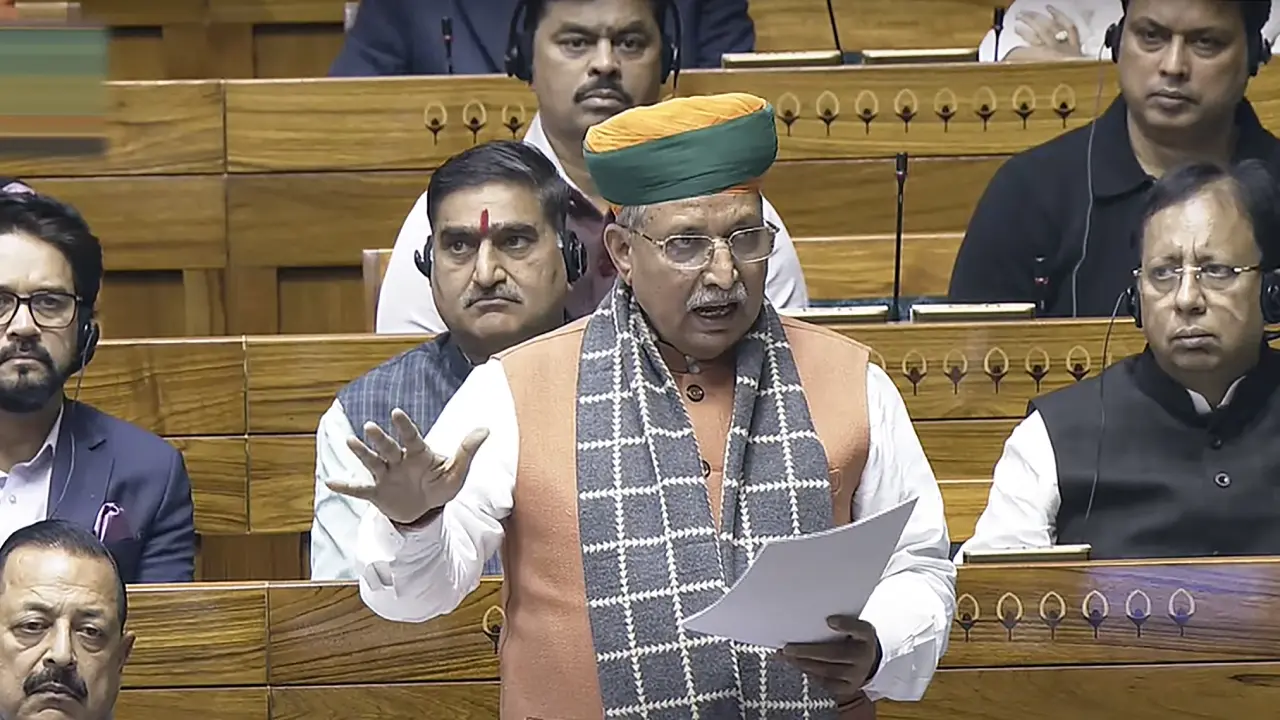
16 April,2026 06:02 PM IST | Mumbai | mid-day online correspondentThe Centre on Thursday said that the strength of the Lok Sabha will increase by 50 per cent as part of the proposed delimitation exercise linked to the implementation of women’s reservation, reported the IANS. Minister of State (MoS) for Law and Justice Arjun Ram Meghwal said the total strength of the House would rise to 815 members if the proposed legislation is passed. Under the proposal, seats in several states are expected to increase significantly. Uttar Pradesh’s strength would go up to 120 seats, Tamil Nadu to 59, West Bengal to 63, Kerala to 30, and Gujarat to 39, the news agency reported. The government said the increase would ensure proportional representation after delimitation based on post-2026 census data. Women’s reservation linked to delimitation Meghwal said the Women’s Reservation Bill, passed in 2023, provides for implementation after the next census and delimitation exercise. He stated that one-third of the Lok Sabha seats, around 272 seats, would be reserved for women. He added that the expansion would ensure no reduction in existing representation for states or sitting Members of Parliament. Bills introduced in Parliament The government introduced the Constitution (One Hundred and Thirty-First Amendment) Bill, 2026 and the Delimitation Bill, 2026 in the Lok Sabha. In addition, the Union Territories Laws (Amendment) Bill, 2026 was introduced by Union Home Minister Amit Shah, as per the IANS. Current strength vs proposed structure According to the IANS, at present, the Lok Sabha has 530 members from states and 20 from Union Territories. However, earlier delimitation norms had fixed the total strength at 543. The new proposal would significantly expand both state and Union Territory representation, with UT representation capped at 35 members. PM Modi on women’s reservation Prime Minister Narendra Modi said the women’s reservation initiative would transform the direction and nature of Indian politics by increasing women’s participation in decision-making. He said the government would ensure that the delimitation process does not disadvantage any state, adding that it would be carried out in a fair and balanced manner. The Prime Minister urged all parties to adopt a “nation-first” approach and said concerns of states would be addressed. He assured that no region—north or south, large or small—would be treated unfairly in the delimitation exercise. (with IANS inputs)
16 April,2026 05:51 PM IST | New Delhi | mid-day online correspondentWomen on Thursday held a ‘Ranragini Jan Aakrosh’ bike rally in Maharashtra’s Nashik, protesting against alleged incidents of religious conversion and sexual harassment linked to the Tata Consultancy Services (TCS) office in the city. Several participants raised slogans and demanded strict action against those accused in the case. Watch | Devayani Farande alleges coercion, demands strict action #WATCH | Nashik, Maharashtra: Women hold 'Ranragini Jan Akrsoh' bike rally over Nashik TCS alleged religious conversion and sexual harassment. BJP MLA Devayani Farande says, "Pressuring Hindu girls to hold roza and offer namaz, raping them, and converting them is against the… pic.twitter.com/xLDAgkCx7a — ANI (@ANI) April 16, 2026 BJP MLA Devayani Farande, who participated in the rally, made strong remarks while addressing the issue. She alleged that Hindu girls were being pressured to observe roza and offer namaz, and accused the perpetrators of sexual assault and forced religious conversion. Farande called for stringent action, stating that those found guilty should face severe punishment under the law. She also demanded strict legal measures, including the attachment of the property of the accused. Foreign funding and extremist angles under scanner The investigation into alleged religious conversion and sexual harassment at a Nashik branch of an IT giant suggests that seven male accused operated as an organised gang to target female employees, a senior officer has said. As reported by news agency PTI, police have registered nine cases in connection with the allegations. While seven men and a woman have been arrested, one female accused is on the run. Nashik Police Commissioner Sandeep Karnik, while explaining the role of the two female accused who were arrested earlier, said that the operations and HR head of the unit had allegedly discouraged a victim from submitting a complaint, saying "these things happen" and sided with the accused. Speculation of foreign funding and involvement of an extremist organisation In a related development, the Nashik court on Wednesday remanded the female operations manager in judicial custody till April 28. Responding to reports speculating involvement of any extremist organisation or funding from abroad for the accused, the police commissioner said a thorough investigation is underway, and the police have written to the SID, ATS and NIA. "As and when we get some evidence, we will be able to come to a conclusion about the same," the investigation officer also added. He also highlighted that nine cases registered by the police include a complaint lodged by a male employee of the firm, alleging an attempt at religious conversion and religious harassment at the workplace.
16 April,2026 05:25 PM IST | Nashik | mid-day online correspondentADVERTISEMENT












-1776342503628_d.png "Rail safety improves significantly under ‘Safety First’ approach. Representational Image")
-1776340144748_d.png "Pune Municipal Corporation (PMC) headquarters. File Pic")