
Bharatiya Janata Party (BJP) leader Ramkripal Yadav on Monday said that the name of the next Chief Minister of Bihar will be decided in the NDA meeting scheduled for Tuesday, ANI reported. Last Cabinet meeting under Nitish Kumar, says BJP leader Speaking to ANI ahead of the development, Yadav stated that the upcoming Cabinet meeting will be the last one under the leadership of Chief Minister Nitish Kumar. “Tomorrow is the last Cabinet meeting under the leadership of Chief Minister Nitish Kumar. The way Bihar has gained momentum in development over the last 20 years, he has left an indelible mark through his work,” Yadav said. Meanwhile, outgoing Chief Minister Nitish Kumar is set to chair a Cabinet meeting on April 14, which is likely to be crucial. Sources indicate possible resignation after meeting ANI sources said the meeting may clear several important proposals and could be the last meeting of the current Council of Ministers. According to ANI sources, Nitish Kumar will step down after the Cabinet meeting. Janata Dal (United) Working President and Rajya Sabha MP Sanjay Kumar Jha said Nitish Kumar remains committed to Bihar’s development, even if he is not Chief Minister. NDA formed government under Nitish Kumar’s leadership Jha said the party fought the 2025-30 mandate under Nitish Kumar’s leadership with NDA support, and the new government will continue his policies. He added that even if Nitish Kumar is not Chief Minister, his focus will remain on Bihar, and he will travel to Delhi only for Parliament sessions. Nitish Kumar takes oath as Rajya Sabha MP Nitish Kumar took oath as a Rajya Sabha MP on April 10. PM Modi congratulates Nitish Kumar on Rajya Sabha oath Prime Minister Narendra Modi on April 10 congratulated Bihar Chief Minister Nitish Kumar after he took oath as a member of the Rajya Sabha, praising his long-standing contribution to governance and development. In a post on X, the Prime Minister highlighted Kumar’s administrative track record, stating that his commitment to good governance has earned widespread appreciation. He credited the JD(U) leader with making a lasting contribution to Bihar’s development over the years. ‘Experienced Leader Will Strengthen Parliament’ PM Modi described Nitish Kumar as one of the most experienced political leaders in the country and expressed confidence that his return to Parliament would add value to legislative functioning. “It will be a great pleasure to see him in Parliament once again,” the Prime Minister said, recalling Kumar’s earlier tenure as a Member of Parliament and his role as a Union Minister. He added that Kumar’s vast political experience would further enhance the dignity of Parliament. The Prime Minister extended his best wishes for Kumar’s upcoming term in the Rajya Sabha, calling it an important new chapter in his public life. (With ANI inputs)
13 April,2026 09:22 PM IST | Danapur (Bihar) | mid-day online correspondentChairman of Tata Sons, N. Chandrasekaran, on Monday described the sexual harassment allegations at the Nashik office of Tata Consultancy Services (TCS) as “gravely concerning and anguishing,” and announced a high-level internal investigation into the matter, reported PTI. The development follows serious complaints filed by multiple employees, prompting both corporate and law enforcement action. Senior Executive to Lead Internal Investigation In an official statement, Chandrasekaran said that a thorough probe has been initiated under Arathi Subramanian to establish facts and identify those responsible, reported PTI. He emphasised that the company is treating the issue with the utmost seriousness and has already initiated action against the accused employees. The company is also cooperating fully with ongoing police investigations, reported PTI. Allegations by Eight Female Employees The controversy stems from complaints lodged by eight female employees at the TCS Nashik office. The complainants have alleged sexual harassment, mental harassment, and coercion, including claims of forced religious conversion by certain senior colleagues. The allegations also raised concerns about inaction by the human resources department, which the complainants claim did not adequately address their grievances. Police Action and SIT Probe Underway Following the complaints, local police constituted a Special Investigation Team (SIT) to probe the case. Authorities have so far arrested seven individuals, including a female HR manager associated with the company. Investigators are examining evidence and statements to determine the extent of misconduct and institutional lapses, if any. TCS Reaffirms Zero-Tolerance Policy In its response, TCS reiterated its long-standing “zero-tolerance policy” toward harassment and coercion of any kind. The company stated that it has always prioritised employee safety and well-being at the workplace, reported PTI. Officials confirmed that immediate action was taken once the matter came to light, including suspending certain staff members pending investigation. Strict Action Promised Against Guilty Chandrasekaran assured that appropriate and stringent action would be taken against anyone found guilty following the investigation. He also indicated that the company would implement necessary process improvements and corrective measures to prevent such incidents in the future, reported PTI. The Tata Group chief reiterated that the organisation remains committed to upholding ethical standards and ensuring a safe work environment for all employees, reported PTI. (With inputs from PTI)
13 April,2026 08:59 PM IST | Mumbai | mid-day online correspondentThe Supreme Court on Monday dismissed a plea by several candidates seeking Economically Weaker Section (EWS) reservation in an Uttar Pradesh recruitment process, ruling that invalid income certificates cannot be used to claim the benefit. Bench hears challenge to Allahabad HC order According to PTI, a bench of Justice Manoj Misra and Justice Prasanna B. Varale was hearing a petition filed by Poonam Dwivedi and other candidates challenging an Allahabad High Court order that had rejected their contention. Valid EWS certificate mandatory, says court Upholding the High Court’s decision, the bench said the candidates failed to furnish valid EWS certificates for the relevant financial year, as required under recruitment rules. Court highlights error in certificates In its order, the court said, “If the certificate(s) relied upon by the appellants were not in respect of the financial year prior to the year of the application and were issued even before the closure of the relevant financial year, there was an error apparent on the face of those certificates.” Recruitment for 9,000 posts at centre of case The case arose from recruitment to over 9,000 posts of female health workers in the state, where certain candidates under the EWS category were excluded from the final selection list despite clearing the written examination. Candidates cite administrative errors The candidates argued that discrepancies in their certificates were due to errors by issuing authorities and confusion regarding the applicable financial year. Certificates found invalid for eligibility Rejecting the contention, the bench noted that the certificates were either issued before the closure of the relevant financial year or pertained to the wrong period. The court emphasised that EWS certificates must relate to the financial year preceding the application year and be valid as on the cut-off date. “In such circumstances, we do not find any good reason to interfere with the order passed by the High Court,” the court said. The court also held that candidates cannot blame authorities for issuing incorrect certificates, especially when they had enough opportunity to obtain proper documentation. Strict compliance in recruitment process The bench reiterated that eligibility conditions in public recruitment must be strictly followed, noting that even minor discrepancies can lead to rejection. The court added that such challenges should not ordinarily be entertained, as they may delay recruitment and affect thousands of aspirants. (With PTI inputs)
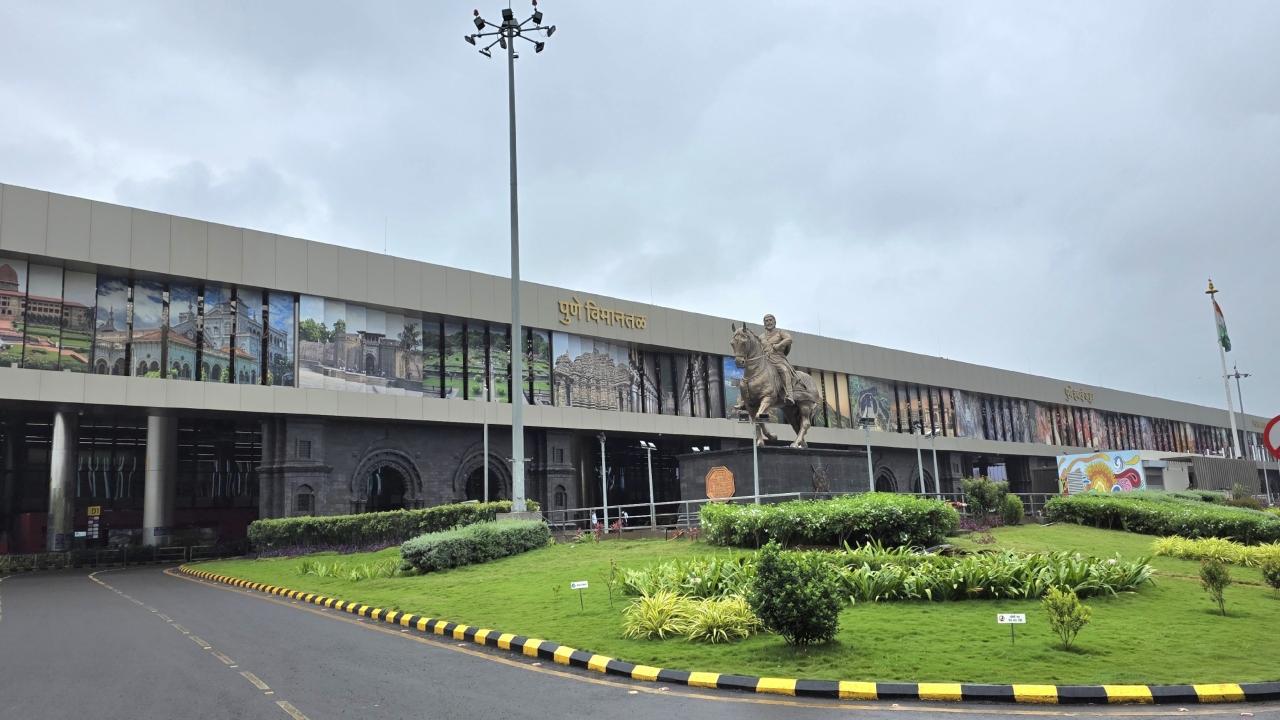
13 April,2026 08:01 PM IST | New Delhi | mid-day online correspondentPune airport in Maharashtra has received 15 additional flight slots, increasing its total capacity from 220 to 235. The move is expected to improve passenger handling and overall operational efficiency at the airport. With the additional slots, new flight routes will be introduced connecting Pune to Mangalore, Solapur and Bagdogra. These routes are likely to enhance regional connectivity, promote tourism, and support business travel. Boost under regional connectivity scheme Pune airport continues to play a key role under the Government of India’s UDAN initiative, officials said. At present, the airport is connected to several regional destinations, including Nanded, Kishangarh, Sindhudurg and Jalgaon. These routes help improve last-mile connectivity and support balanced regional development. Support from Civil Aviation Ministry Officials said that the expansion has been made possible due to the efforts of the Ministry of Civil Aviation, particularly the proactive approach of the Minister of State for Civil Aviation and Cooperation in enhancing airport capacity and connectivity. Economic and travel benefits The increase in flight slots and new routes is expected to improve passenger convenience, boost tourism and trade, strengthen regional integration and support economic growth in and around Pune. Authorities said the airport will continue to expand its network and infrastructure to meet rising demand for air travel. New schedule from May 1 The additional flights under the expanded slot capacity are scheduled to begin operations from May 1, 2026, further strengthening Pune’s connectivity network. The complete schedule below:
13 April,2026 07:46 PM IST | Pune | Archana DahiwalThe India Meteorological Department (IMD) on Monday predicted that India’s 2026 southwest monsoon rainfall (June-September) is likely to be below normal, at around 92 per cent of the Long Period Average (LPA). The long-period average rainfall for the country is 87 cm (based on 1971-2020 data). IMD has indicated that rainfall is most likely to fall in the 90-95 per cent range, suggesting weaker-than-normal monsoon conditions, an official statement said. One of the major reasons for below normal rainfall could be the emergence of the El Nino conditions, which cause less rainfall activity in the country. Higher chance of below-normal rainfall According to IMD’s forecast, the chances of below normal and deficient rainfall are higher than usual, while the probability of above normal and excess rainfall is lower than climatological averages. Forecast breakdown- - Deficient rainfall: 35 per cent probability - Below normal: 31 per cent probability - Normal: 27 per cent probability - Above normal: 6 per cent probability - Excess: 1 per cent probability Regional rainfall pattern The spatial outlook suggests that below-normal rainfall may cover many parts of the country. However, some regions are expected to perform better in parts of Northeast India, some areas in Northwest India and parts of South Peninsular India, an official statement said. These regions may receive normal to above-normal rainfall, while the rest of the country is likely to remain below normal. IMD has noted changing ocean conditions influencing the monsoon: - Weak La Nina-like conditions are shifting towards ENSO-neutral conditions in the Pacific - There is a possibility of El Nino development during the monsoon season, which can weaken rainfall - The Indian Ocean Dipole (IOD) is currently neutral, but may turn positive towards the end of the season These ocean-atmosphere patterns are key drivers of India’s monsoon performance. The snow cover factor The IMD also observed that snow cover across the Northern Hemisphere between January and March 2026 was slightly below normal, the statement said. It said that the snow cover in Eurasia and northern regions often has an inverse relationship with monsoon rainfall, meaning reduced snow cover can sometimes influence rainfall patterns. The IMD will release an updated monsoon forecast in the last week of May 2026, followed by monthly updates during the season.
13 April,2026 07:29 PM IST | Mumbai | mid-day online correspondentIn a significant achievement for the Tiger Recovery Project, radio collars of two translocated tigresses were removed after both have successfully settled in new habitat at Sahyadri Tiger Reserve, officials said. According to the officials, the radio collars of translocated tigresses—STR-T-4 and STR-T-5—were successfully removed on April 9 and April 10, 2026, after officials confirmed that both had fully adapted to their new habitat. The tigresses have established territories within the Chandoli Wildlife Division, marking a key milestone in the ongoing conservation initiative. Background of the Tiger Recovery Project The movements and behaviours were closely monitored using radio telemetry and camera traps by forest officials and experts. Pic/Sahyadri Tiger Reserve The Tiger Recovery Project, launched in 2017, is a joint initiative involving the State Forest Department, the Wildlife Institute of India, and the National Tiger Conservation Authority. The project aims to revive tiger populations in selected reserves through habitat improvement, prey augmentation, and translocation. Prey base strengthened before translocation Before relocating tigers, authorities implemented Phase I of the Prey Augmentation Programme between 2017 and 2022 to improve the availability of prey species. Following its success, Phase II of the project was launched with approval from the Ministry of Environment, Forest and Climate Change. Translocation and monitoring Under the programme, eight tigers (three males and five females) were relocated from Tadoba-Andhari Tiger Reserve and Pench Tiger Reserve to strengthen the population in the reserve. STR-T-4 and STR-T-5 were released into the wild in November and December 2025 after being fitted with radio collars. Their movement and behaviour were closely monitored using radio telemetry and camera traps by forest officials and experts. Successful adaptation and integration The officials have removed their radio collars. Pic/Sahyadri Tiger Reserve After four to five months of monitoring, both tigresses were found to have adapted well to their surroundings and established independent territories. Camera trap footage also confirmed their interaction with resident male tigers—STR-T-1, STR-T-2, and STR-T-9—indicating successful integration into the ecosystem. Encouraging signs for breeding With the tigresses now fully settled, the officials have removed their radio collars and will continue monitoring them through camera traps. Officials said the successful adaptation and interaction with resident tigers indicate a strong possibility of breeding in the near future. This could significantly boost the tiger population in the reserve and mark a major success for the conservation programme.
13 April,2026 07:10 PM IST | Mumbai | Ranjeet JadhavThe Government of India has initiated coordinated efforts to bring back 15 Indian-flagged vessels currently positioned near the Strait of Hormuz, as authorities continue to monitor maritime safety amid evolving geopolitical conditions in the Gulf region, reported ANI. The move comes as part of joint efforts by the Ministry of Ports, Shipping and Waterways and the Ministry of External Affairs to ensure the safe return of Indian vessels and crew members. Government Monitoring Situation, Plans Safe Return Addressing an inter-ministerial briefing, Additional Secretary Mukesh Mangal said that authorities are closely coordinating with multiple agencies to facilitate the vessels’ return, reported ANI. He stated that as soon as conditions permit safe navigation through the Strait of Hormuz, all 15 Indian-flagged and Indian-owned vessels will begin their journey back. Officials emphasised that the situation is being continuously assessed to avoid any risk to maritime assets or crew. ‘Jag Vikram’ Transit Marks Key Breakthrough In a positive development, the Indian-flagged LPG vessel Jag Vikram has successfully crossed the Strait of Hormuz and is expected to arrive at Kandla Port on April 14, reported ANI. The vessel, carrying 20,400 metric tonnes of LPG and 24 seafarers, completed its transit on April 11. This marks the first successful passage of an Indian vessel through the strategic route following the recently announced 14-day ceasefire between the United States and Iran, reported ANI. The development is being seen as a crucial step toward restoring confidence in maritime trade routes in the region. No Incidents Reported, Seafarers Safe Officials confirmed that no incidents involving Indian-flagged vessels have been reported in the past 24 hours. Authorities continue to maintain vigilance through real-time monitoring systems to ensure the safety of ships operating in the Gulf, reported ANI. The government has reiterated that the welfare of Indian seafarers remains a top priority amid ongoing tensions. Over 2,100 Seafarers Repatriated So Far The ministry also highlighted ongoing repatriation efforts, noting that more than 2,177 Indian seafarers have been brought back safely from the Gulf region so far. Of these, 93 were repatriated in the last 24 hours alone, reported ANI. These efforts are being carried out in coordination with Indian missions abroad and key maritime stakeholders to ensure timely assistance. Port Operations Normal Across India Despite global uncertainties, port operations across India remain stable, with no reports of congestion at any major ports. The government said logistics and cargo movement continue uninterrupted, reported ANI. Strategic Importance of Hormuz Route The Strait of Hormuz remains a critical artery for India’s energy imports, particularly LPG, with nearly 90 per cent sourced from Gulf nations. Ensuring safe passage through this route is vital for maintaining energy security and supply chain stability. (With inputs from ANI)
13 April,2026 07:06 PM IST | New Delhi | mid-day online correspondentPrime Minister Narendra Modi on Monday hit out at the DMK government in Tamil Nadu, accusing it of hampering the implementation of central government schemes, depriving the public of the benefits. Virtually addressing the party's booth workers in Tamil Nadu at the 'Mera Booth Sabse Mazboot Samvad' programme, PM Modi alleged that the DMK government failed to conduct proper surveys that resulted in eligible people being deprived of schemes like PM Awas Yojana and PM Mudra Yojana. "Under the Mudra scheme, millions of youth and small traders have received loans without a guarantee. A large number of women have also benefited from it. But it is unfortunate that due to the attitude of the DMK government, many poor families could not avail the benefits of the PM Awas Yojana. Proper surveys were not conducted, names of eligible people were not included... If this work had been done, then millions of families in Tamil Nadu would have received pucca houses." PM Modi said. The Prime Minister assured BJP workers that the government has always ensured that the benefits of schemes are availed by the people and has taken steps to cut out middlemen. He highlighted the Direct Benefit Transfer (DBT) schemes, where people have received financial assistance directly to thier bank accounts. "Our approach has been to ensure that the benefits of schemes reach farmers directly, without any middlemen. In Tamil Nadu, thousands of crores have been transferred directly to farmers under PM Kisan. Under the Fasal Beema Yojana as well, claims worth thousands of crores have been settled, and that money has gone directly into farmers' accounts," he said. Tamil Nadu polls are scheduled to be conducted in a single phase on April 23, with counting scheduled for May 4. The main contest is the elections is expected between the DMK-led Secular Progressive Alliance (SPA), which includes the Indian National Congress, Desiya Murpokku Dravida Kazhagam (DMDK), and Viduthalai Chiruthaigal Katchi (VCK), and the National Democratic Alliance (NDA), led by AIADMK with the Bharatiya Janata Party (BJP) and Pattali Makkal Katchi (PMK) as allies. Actor-turned-politician Vijay is also set to make his electoral debut with TVK, which may turn the contest into a three-way fight. This story has been sourced from a third party syndicated feed, agencies. Mid-day accepts no responsibility or liability for its dependability, trustworthiness, reliability and data of the text. Mid-day management/mid-day.com reserves the sole right to alter, delete or remove (without notice) the content in its absolute discretion for any reason whatsoever.
13 April,2026 06:47 PM IST | New Delhi | ANIThe India-flagged LPG vessel Jag Vikram, carrying 20,400 metric tonnes of liquefied petroleum gas, is expected to arrive at Kandla port in Gujarat on April 14, according to the Ministry of Ports, Shipping and Waterways, reported ANI. The announcement was made during an inter-ministerial briefing, where officials highlighted the vessel’s safe transit through the strategically crucial Strait of Hormuz amid easing geopolitical tensions in the region. First Indian Vessel After Ceasefire Breakthrough Additional Secretary Mukesh Mangal confirmed that Jag Vikram successfully crossed the Strait of Hormuz on April 11. The development is being seen as significant, as it marks the first Indian-flagged vessel to navigate the route following the recently announced 14-day ceasefire between the United States and Iran, reported ANI. The ceasefire has helped de-escalate tensions in the Gulf region, allowing the gradual restoration of vital maritime trade routes that are critical for global energy supplies. Vessel Carries 20,400 MT LPG With 24 Crew The vessel is transporting 20,400 metric tonnes of LPG and has 24 seafarers onboard. Officials reiterated that the journey has remained incident-free, underlining the safety of Indian maritime operations despite earlier concerns over regional instability, reported ANI. The safe passage of Jag Vikram is particularly important for India, which relies heavily on energy imports routed through the Gulf. No Incidents Reported in Last 24 Hours Providing a status update, Mukesh Mangal stated that no incidents involving Indian-flagged vessels have been reported in the past 24 hours. Authorities continue to maintain close surveillance over maritime activities in the region to ensure the safety of ships and crew, reported ANI. Over 2,100 Indian Seafarers Repatriated The government has intensified efforts to support Indian seafarers in the Gulf region. So far, more than 2,177 seafarers have been safely repatriated, including 93 in the last 24 hours alone, reported ANI. These operations are being carried out in coordination with the Ministry of External Affairs, Indian missions abroad, and maritime stakeholders to ensure welfare and timely assistance. Port Operations Normal, No Congestion Reported The ministry also confirmed that port operations across India are functioning smoothly, with no congestion reported at any major port. This reflects stable logistics and uninterrupted cargo movement despite global uncertainties, reported ANI. Strategic Importance of Gulf Route for India The successful transit of Jag Vikram underscores the importance of the Gulf region for India’s energy security. Nearly 90 per cent of the country’s LPG imports are sourced from Gulf nations, making safe maritime passage through the Strait of Hormuz vital. With tensions showing signs of easing and maritime routes reopening, the arrival of Jag Vikram at Kandla Port is expected to further strengthen confidence in the resilience of India’s energy supply chain. (With inputs from ANI)
13 April,2026 06:40 PM IST | New Delhi | mid-day online correspondentKarnataka government-owned Bharat Earth Movers Limited (BEML) has announced that it has secured an export order worth USD 36.38 million (around Rs 336 crore) from the Middle East. The order is for supplying heavy earth moving equipment, the company said in a regulatory filing on Monday, reported IANS. The equipment will be used for infrastructure development projects in the region. Strengthening global order book With this new contract, BEML said its international order book has increased to USD 106.95 million (around Rs 996 crore), further strengthening its global presence. The company added that the fresh order supports its ongoing push into international markets across multiple infrastructure segments, as per the news agency. Earlier, on March 18, BEML had received a Letter of Intent for an overseas order worth about USD 60 million from the African region. This order involves the design, manufacture, supply, testing and commissioning of standard gauge metro rolling stock. It was also the company’s first international order in the metro segment. Stock performance after announcement Following the announcement, BEML shares traded in positive territory. The stock rose nearly 1 per cent during intra-day trade to hit Rs 1,635.80 on the NSE before giving up some gains and closing slightly higher at Rs 1,623.10, up 0.12 per cent. A market update noted that the stock has fallen 12.44 per cent so far this year and is down 46.34 per cent over the past one year. Despite strong order wins, the company reported weak financial results in the December 2025 quarter. BEML posted a consolidated loss of Rs 22.38 crore, compared to a profit of Rs 24.41 crore in the same period last year. On a standalone basis, the company recorded a loss of Rs 23 crore in Q3 FY26, slightly better than the Rs 25 crore loss in the year-ago quarter. However, revenue increased during the period. Consolidated income rose to Rs 1,087.13 crore from Rs 880.28 crore a year earlier. At the same time, expenses also climbed sharply to Rs 1,112.54 crore from Rs 850.70 crore, which affected profitability. Corporate update In a separate development earlier this year, the company informed that Bipin Kumar Gupta ceased to be an Independent Director on the board from February 10 after completing his tenure. (With IANS Inputs)
13 April,2026 06:20 PM IST | Mumbai | mid-day online correspondentPolitical leaders cutting across party lines have expressed strong support for proposed amendments to the Women’s Reservation Act following outreach by Prime Minister Narendra Modi. The proposed changes aim to expedite the implementation of the legislation, widely known as the Nari Shakti Vandan Adhiniyam, ahead of the 2029 general elections, reported IANS. The Prime Minister recently wrote to leaders of various political parties seeking their backing for an amendment Bill, triggering a wave of endorsements from across the political spectrum. Broad Political Consensus Emerges Senior leaders from multiple parties welcomed the move, describing it as a long-awaited step toward enhancing women’s representation in legislative bodies. NCP(SP) MP Supriya Sule confirmed receiving the Prime Minister’s letter and reiterated her party’s consistent support for the Women’s Reservation Bill. She stated that her party has backed the legislation in the past and will continue to do so, while also urging the government to provide clarity on its implementation framework, reported IANS. ‘Need of the Hour,’ Say Leaders Shiv Sena spokesperson Shaina NC emphasised that the legislation is long overdue, noting that women in India have waited nearly three decades for such a reform. She highlighted that increased electoral opportunities for women would enable them to demonstrate their capabilities and contribute more effectively to governance, reported IANS. Her remarks reflect a broader sentiment among leaders that the Bill is not just symbolic, but a necessary structural reform to ensure gender parity in politics. Historic Step Towards Gender Representation Sanjay Jha, National Working President of JD(U), described the development as a “historic moment,” pointing out that the proposed framework ensures one-third reservation for women in both the Lok Sabha and state legislative assemblies, reported IANS. He added that the implementation is expected to take effect from 2029, marking a significant shift in India’s political landscape by institutionalising women’s participation in law-making bodies, reported IANS. Debate Over Implementation Timeline The Women’s Reservation Act, passed in 2023, provides for 33 per cent reservation for women in legislative bodies. However, its rollout has been linked to the completion of the next Census and subsequent delimitation exercise. The proposed amendment seeks to delink its implementation from the 2027 Census and instead base it on the 2011 Census. This adjustment is aimed at ensuring that the reservation comes into force in time for the 2029 Lok Sabha elections. Special Parliament Session to Deliberate Bill The government has convened a Special Session of Parliament from April 16 to 18 to deliberate on the Women’s Reservation (Amendment) Bill. The session is expected to witness detailed discussions on the proposed changes and their implications. Meanwhile, BJP Bihar President Sanjay Saraogi credited the Prime Minister’s leadership for pushing forward the legislation, stating that it reflects a strong commitment to ensuring equal participation of women in governance, reported IANS. (With inputs from IANS)
13 April,2026 06:18 PM IST | Mumbai | mid-day online correspondentADVERTISEMENT








-1776088575520_d.png "IMD has indicated that rainfall is most likely to fall in the 90-95 per cent range. Representational Pic/File")


-1776085945719_d.png "PM Narendra Modi. File Pic")

-1776083152805_d.png "BEML secures new infrastructure equipment deal in Middle East. PIC/BEML")
