Addressing an online press conference, IMD Director General Mrutyunjay Mohapatra said that most parts of the country can expect typical rainfall in August, with the exception of the northeast and adjacent eastern regions. In contrast, rainfall levels in September are anticipated to be above average

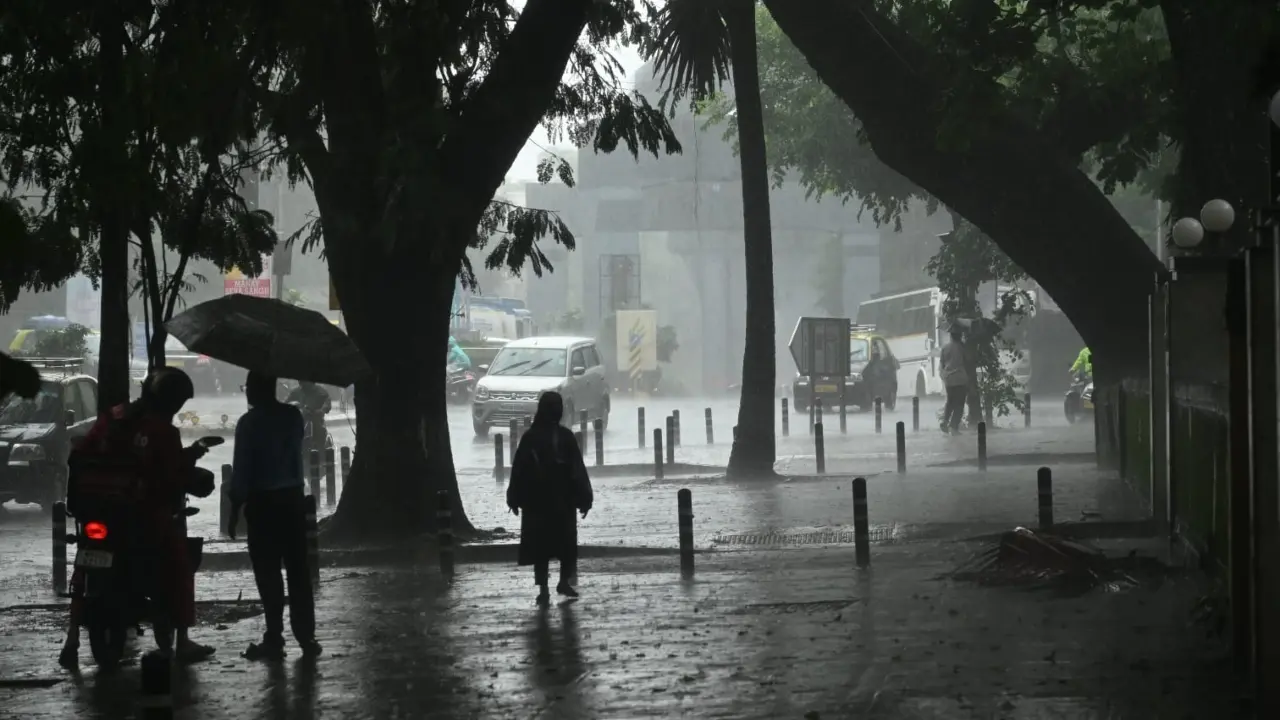
The monsoon remains vital to India’s economy, particularly the agricultural sector, which sustains around 42 percent of the population and contributes 18.2 percent to the country’s GDP. Representational Pic/File
India is likely to experience above-average rainfall during the latter half of the monsoon season, covering August and September, according to the India Meteorological Department (IMD).
Addressing an online press conference, IMD Director General Mrutyunjay Mohapatra said that most parts of the country can expect typical rainfall in August, with the exception of the northeast and adjacent eastern regions. In contrast, rainfall levels in September are anticipated to be above average, reported the PTI.
The country recorded higher-than-usual rainfall during the first half of the monsoon season (June and July), with some states like Himachal Pradesh suffering flash floods. From 1 June to 31 July, India received 474.3 mm of rainfall against a normal of 445.8 mm -- representing a surplus of six percent.
Mohapatra noted that overall rainfall during the second half of the southwest monsoon is projected to be 106 percent of the Long Period Average (LPA) of 422.8 mm. Most regions are expected to see normal to above-normal precipitation, except parts of the northeast, eastern India, certain areas in central India, and some southwestern zones of the peninsular region, which may experience below-normal rainfall, as per the PTI.
He added that while subdued rainfall is forecast over the next two weeks, current conditions do not qualify as a "break monsoon phase" -- a period marked by a shift of the monsoon trough to the Himalayan foothills, often leading to dry spells across much of the country.
Interestingly, the number of extremely heavy rainfall events so far -- 76 in total -- is the lowest recorded in five years. Northeast India, however, is seeing its fifth consecutive year of below-normal rainfall. The IMD has observed a declining rainfall trend in the region over the past three decades.
Favourable Madden-Julian Oscillation (MJO) patterns in late July and the development of six low-pressure systems (four of which intensified into depressions) contributed to the heavy downpours in July, particularly in areas from West Bengal to Rajasthan, the news agency reported.
ENSO-neutral conditions currently prevail and are expected to continue through October, with a possibility of weak La Nina conditions developing post-monsoon.
Earlier in May, the IMD had predicted that India would receive 106 percent of the long-period average of 87 cm during the June-September monsoon period. Rainfall in the range of 96–104 percent of the LPA is deemed “normal”, reported the PTI.
The monsoon remains vital to India’s economy, particularly the agricultural sector, which sustains around 42 percent of the population and contributes 18.2 percent to the country’s GDP. It is also essential for recharging reservoirs used for drinking water supplies and hydroelectric power.
(with PTI inputs)
Subscribe today by clicking the link and stay updated with the latest news!" Click here!