Over 15 months since the Ladki Bahin scheme began, the state government is yet to confirm a final list of beneficiaries; is this a genuine logistics issue or a very strategic pre-poll move?

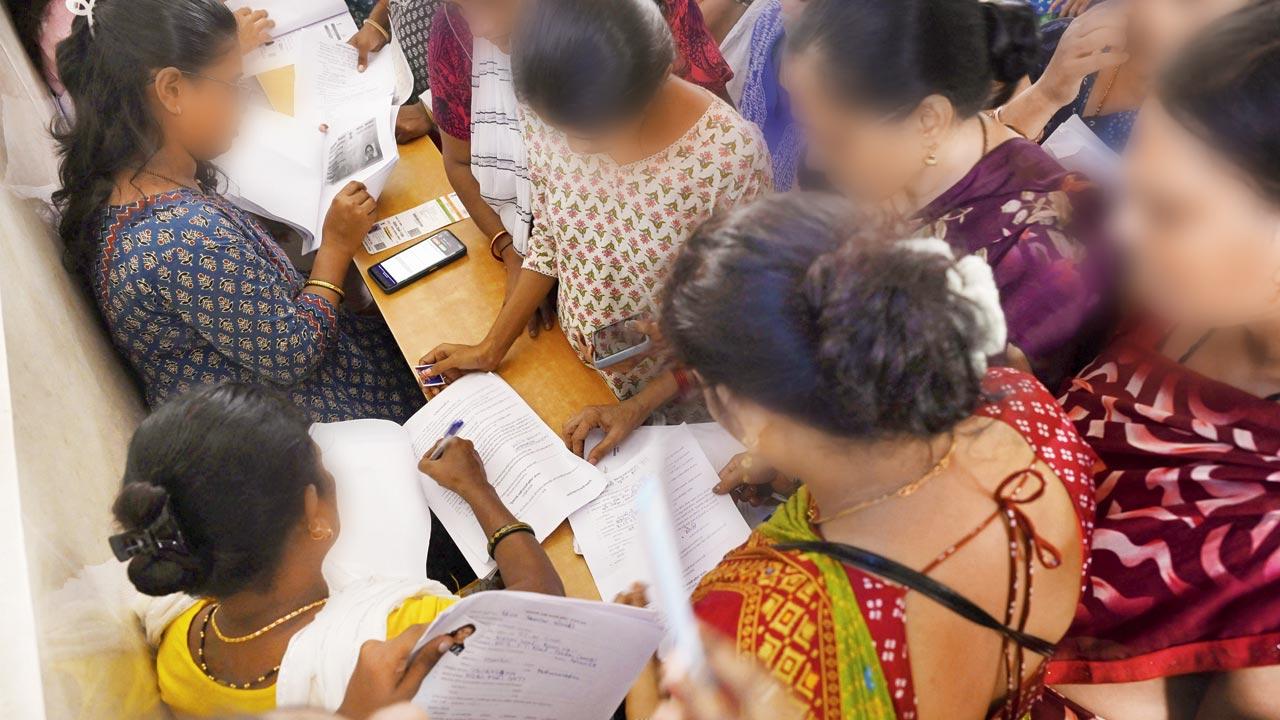
Scores of Ladki Bahin Yojana applicants gather at an Anganwadi in Dadar to submit forms on October 15, 2024. Pic/Ashish Raje
The Mahayuti government’s flagship scheme — Ladki Bahin Yojana— exposes the gap between big pre-poll announcements and basic execution. Fifteen months after rolling out direct transfer of Rs 1500 every month to eligible women in the state, the verification process is still on and the final list and number of eligible beneficiaries are yet to be known.
As the government is still stuck with the verification process, time and again reports have come to the fore about ineligible people still pocketing money through this welfare scheme. Ineligible beneficiaries not only continue to burn a hole in taxpayers’ pockets, but even damage the credibility of the programme itself.
According to government records, when the scheme was announced, it had around 2.63 crore applicants. Initially, the welfare scheme amount was disbursed without any scrutiny, By February 2025, the scrutiny process reduced that figure by 11 lakh to 2.52 crore. In March, the number was further reduced to 2.46 crore. But, when further verification began, though at a snail’s pace, nearly 26.34 lakh names were found ineligible; that leaves 2.25 crore eligible women.
Now that scrutiny has been initiated, it has been observed that even men enrolled in the scheme. This raises a key question: were lapses in screening due to government or oversight and flaws by administration, or both?
But with over ten per cent of the original list being faulty, ineligible women and men took advantage of the scheme. More numbers will have to be deleted once the entire verification process is done. But such casualness with data and spending will certainly not go down well with the common man.
At a time when the government is pouring over Rs 36,000 crore every year into the scheme, the minimum expectation of citizens is to make it foolproof. This is not a technical challenge anymore. The verification to weed out ineligible beneficiaries in today’s digital age, where permanent account number (PAN), Aadhaar, and bank accounts are all linked, is no longer a tedious or uphill task and can be completed within a few weeks, no matter the size of the database.
In neighbouring Madhya Pradesh (MP) state Aadhaar-linked, Direct Beneficiary Transfer (DBT)-enabled accounts were made mandatory for benefits, which helped
reduce leakages.
Since the scheme was already in place in MP, the Maharashtra government could have taken a cue from them and done similar things here, as the format for implementation and plugging leakages in the scheme was readily available.
In fact, any government could have cleaned up the rolls in a week. But the mandatory E-KYC process was initiated just 10-15 days ago, nearly 15 months after the launch of the scheme. The real struggle for many beneficiaries is that they lack smartphones, internet connectivity and, more importantly, knowledge of how to complete the process independently. They need assistance to get verified as per government norms.
In the past, the scheme has even sparked tensions within the ruling party, with several MLAs and ministers complaining that delays in the disbursement of development funds were being blamed on the popular scheme. When the programme was announced, it was estimated to cost Rs 45,000 crore, but during the 2025-26 budget, the spend was cut to Rs 36,000, highlighting the strain the scheme was placing on the finance department and the state’s rising debt.
So, what is coming in the way of finalising the list of eligible beneficiaries? Administrative inefficiency or deliberate political move?
The delay raises questions on whether the scheme is really to empower women or whether it is turning out to be a political cushion padded with taxpayers’ money. The obvious suspicion is that the delay is not accidental but political. Why risk alienating names before the “mini elections”, the local body polls? A bloated list of beneficiaries will only help the ruling regime to get electoral mileage during the ZP, panchayat, municipal corporation and council polls.
So why is the verification process moving at snail’s pace? The Ladki Bahin scheme was a game changer — the idea changed the fortunes of BJP, Eknath Shinde-led Shiv Sena, and Ajit Pawar’s faction of the NCP. After the Lok Sabha poll debacle for the BJP and its allies, the welfare scheme turned out to be a political jackpot for the Mahayuti in the Assembly polls.
The Supreme Court has set January 31, 2025, as the deadline for local body polls. For Mahayuti, these polls are a test of strength before the 2029 Lok Sabha polls.
Aware of the litmus test during the upcoming polls, keeping the Ladki Bahin list longer works for the ruling regime, given how crucial women voters were in swinging the 2024 Assembly polls.
This year, the state in its budget has estimated a debt of R9.32 lakh crore for the financial year 2025-206. The debt is said to be the highest in the state’s history.
This simply means that even when the state government’s debt is rising, governance still takes a backseat and vote bank politics takes precedence and the driver’s seat.
Sanjeev Shivadekar is political editor, mid-day. He tweets @SanjeevShivadek
Send your feedback to mailbag@mid-day.com
The views expressed in this column are the individual’s and don’t represent those of the paper
Subscribe today by clicking the link and stay updated with the latest news!" Click here!