shot-button
E-paper E-paper
Home > News > Opinion News > Article > Buddhas no one talks about

Buddhas no one talks about

Updated on: 08 June,2025 06:51 AM IST  |  Mumbai
Devdutt Pattanaik |

For example, no one tells us that Ashoka visited sites linked to TWO Buddhas, not just the one!

Buddhas no one talks about

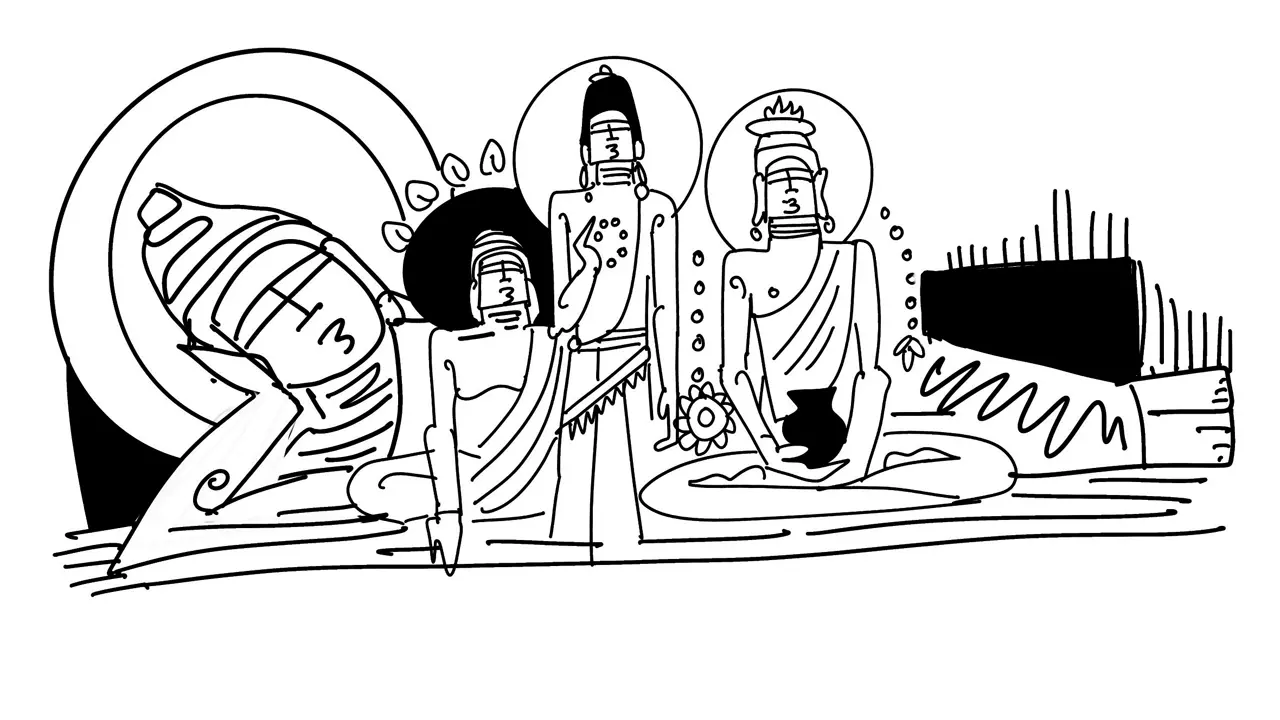
Illustration/Devdutt Pattanaik

Listen to this article
Buddhas no one talks about
x
00:00

Devdutt PattanaikTwo hundred years ago, people in India did not remember Buddha or the Chola kings of Tamil Nadu or even Ashoka. Even today, our understanding is strongly shaped by colonialism and nationalism. For example, no one tells us that Ashoka visited sites linked to TWO Buddhas, not just the one! 

There was Lumbini, site of Gautama Buddha’s birth. But there was also Nigali, in Nepal, site linked to Konakamana Buddha, who existed before Gautama Buddha Two, not one, Buddhas. It is clear in the Ashokan edict, but no one seems to know about this other Buddha. Our textbooks, our historians, do not talk about it. We are told of “historical” Buddha who is actually the “popular” Buddha of Theravada Buddhism, whose Pali canon, was first translated by the British. 


There is nothing historical about Gautama Buddha. The story of his birth, renunciation, sermon and death follows the same repetitive pattern attributed to each and every Buddha before him -- similar to repetitive patterns of Jain Tirthankara. There was even talk of a future Buddha, Maitreya. 


There are seven Buddhas as per Sanchi Stupa, twenty-four and more as per the oldest Buddhist Sanskrit texts found barely two decades ago in Gandhara. These texts are dated to 200 BC, seven hundred years before the Pali Canon of Sri Lanka, considered the oldest recorded manuscript until now. The Ashokan edicts are the oldest documented proof of the existence of the Buddhist faith, and of other holy sects in India: Sramana, Ajivika, Brahmana, collectively known as pasandas.

Then, we have heard of the Bamiyan Buddhas of Afghanistan destroyed by the Taliban. There was a larger Western image and smaller Eastern image. They were carved around 600 AD, around the time Prophet Muhammad was born, and Harshavardhana ruled India, and the Chinese Traveller Xuanzang visited India. In his writings, there was a third image -- a sleeping Buddha, the parinirvana, the moment of death. But there is no sign of it now. But who are these two Buddhas? We assume they are both Gautama. But there are not. 

The larger one is Vairochana Buddha, a transcendental cosmic Buddha who exists outside space and time. And the second one may be Gautama Buddha, based on the hand gesture. The locals referred to them as Salsal and Shamama, and saw them as male and female figures, or the boy and the queen mother. No one remembers that this region of Gandhara was Buddhist before Islam arrived. And that Buddhism and Islam had huge conflict between them. The Buddhism that pushed back on Islam was not the Buddhism of Sri Lanka (Theravada) but Chinese imperial Buddhism (Mahayana) and more importantly Tibetan occult Buddhism (Vajrayana) which developed 400 years after the Bamiyan statues were built. 

We are taught about  Gautama Buddha as a historical figure who lived in the Terai region and Gangetic plains. The magical stories linked with him since earliest times are dismissed by all as fantasy. That is like trying to read the Ramayana without the Pushpaka Vimana. The oldest Buddhist artwork shows how he intimidated doubters and haters with his miracle at Sravasti, flying in the air, producing fire and water from his body. How he went to heaven to preach his “dhamma” and came back on earth at Sankisa, near Farrukhabad, UP. But what about the other Buddhas -- Amitabha, Kashyapa, Dipankara? Who will tell their tale?

The author writes and lectures on the relevance of mythology in modern times. Reach him at devdutt.pattanaik@mid-day.com

"Exciting news! Mid-day is now on WhatsApp Channels Subscribe today by clicking the link and stay updated with the latest news!" Click here!

Did you find this article helpful?

Yes
No

Help us improve further by providing more detailed feedback and stand a chance to win a 3-month e-paper subscription! Click Here

Note: Winners will be selected via a lucky draw.

Help us improve further by providing more detailed feedback and stand a chance to win a 3-month e-paper subscription! Click Here

Note: Winners will be selected via a lucky draw.

mumbai columnists Devdutt Pattanaik mumbai news

Mid-Day Web Stories

Mid-Day Web Stories

This website uses cookie or similar technologies, to enhance your browsing experience and provide personalised recommendations. By continuing to use our website, you agree to our Privacy Policy and Cookie Policy. OK