Explaining AAP’s rise in Gujarat
Updated On: 14 November, 2022 07:05 AM IST | Mumbai | Ajaz Ashraf
A weak Congress left a hole in the state with no strong Opposition, and Kejriwal’s party filled that void. In addition, the party’s Delhi model of governance has wowed young voters and intellectuals alike





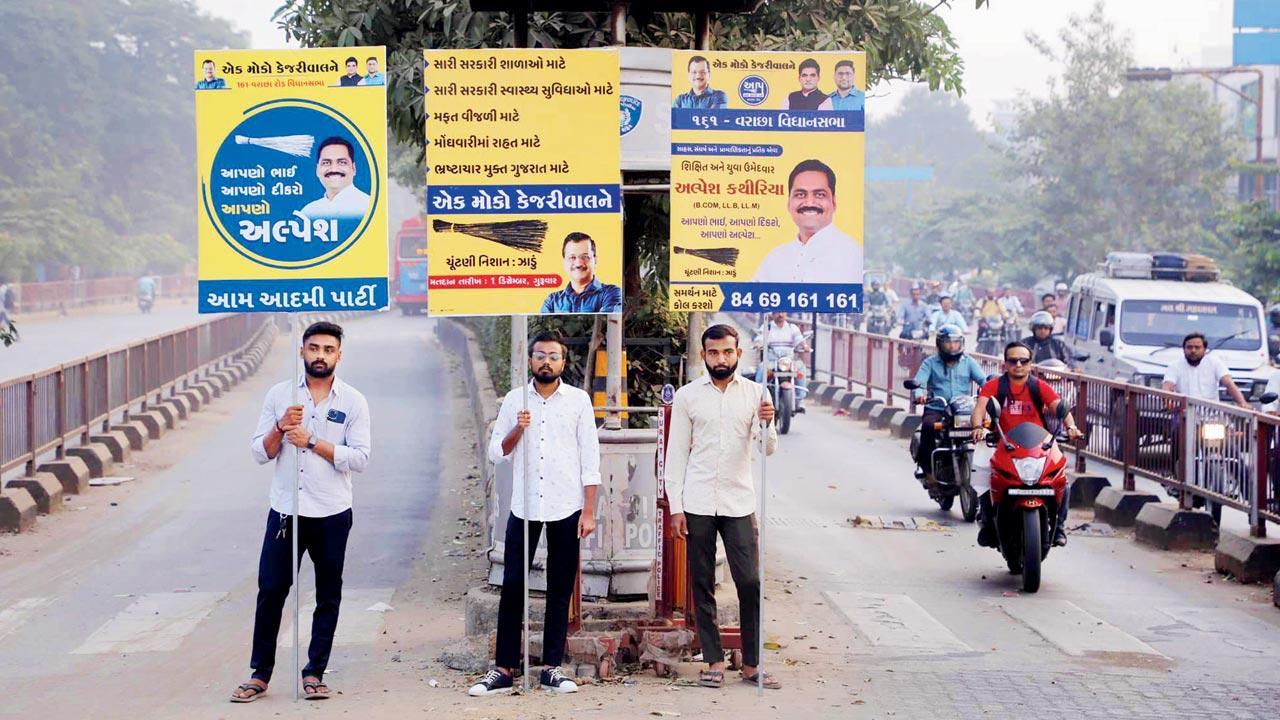
AAP workers campaign on a road in Gujarat, increasing the party’s visibility and reaching out to more voters. Pic/Twitter
 The Gujarat Assembly elections survey by Lokniti-Centre for the Study of Developing Societies (Lokniti-CSDS) has sent a frisson among political observers. The survey shows the Aam Aadmi Party could poll 22 per cent of votes, the Congress 21 per cent and the Bharatiya Janata Party a whopping 47 per cent. These findings assure a comfortable victory for the BJP, a scenario surprising to few.
What is the excitement about, you may ask. Well, in 2017, the AAP contested 29 Assembly seats and polled 0.10 per cent of votes. This means the party has gained 22 per cent of votes over the last five years, an astonishing feat. The Lokniti-CSDS survey has sparked murmurs accusing AAP leader Arvind Kejriwal of playing the BJP’s game to split the Opposition votes—and relegating the Congress to the third spot.
Trending Stories
Latest Photos
Latest Videos
Latest Web Stories
ADVERTISEMENT

Ganeshotsav 2026

ADVERTISEMENT