


What’s it about a Rs 50 lakh film, Laalo, that’s made Rs 120 cr at the box office, with everybody eager to meet its debut director, Ankit Sakhiya, 29?
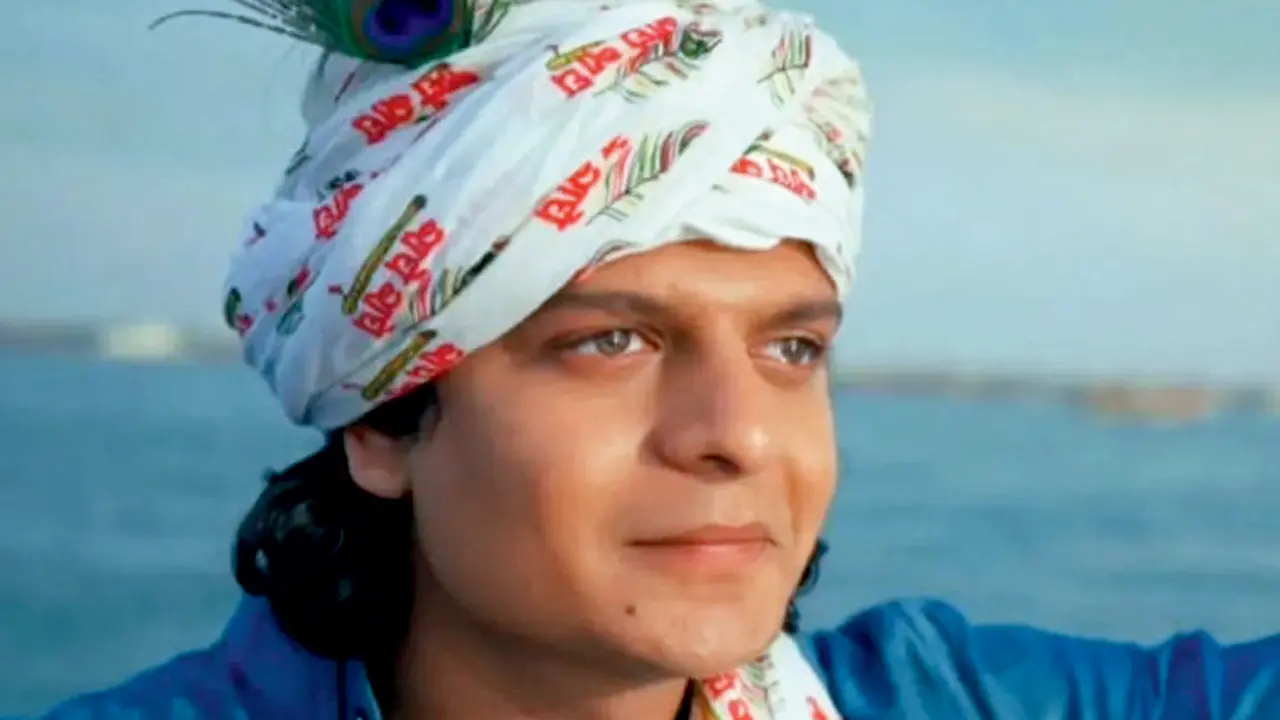
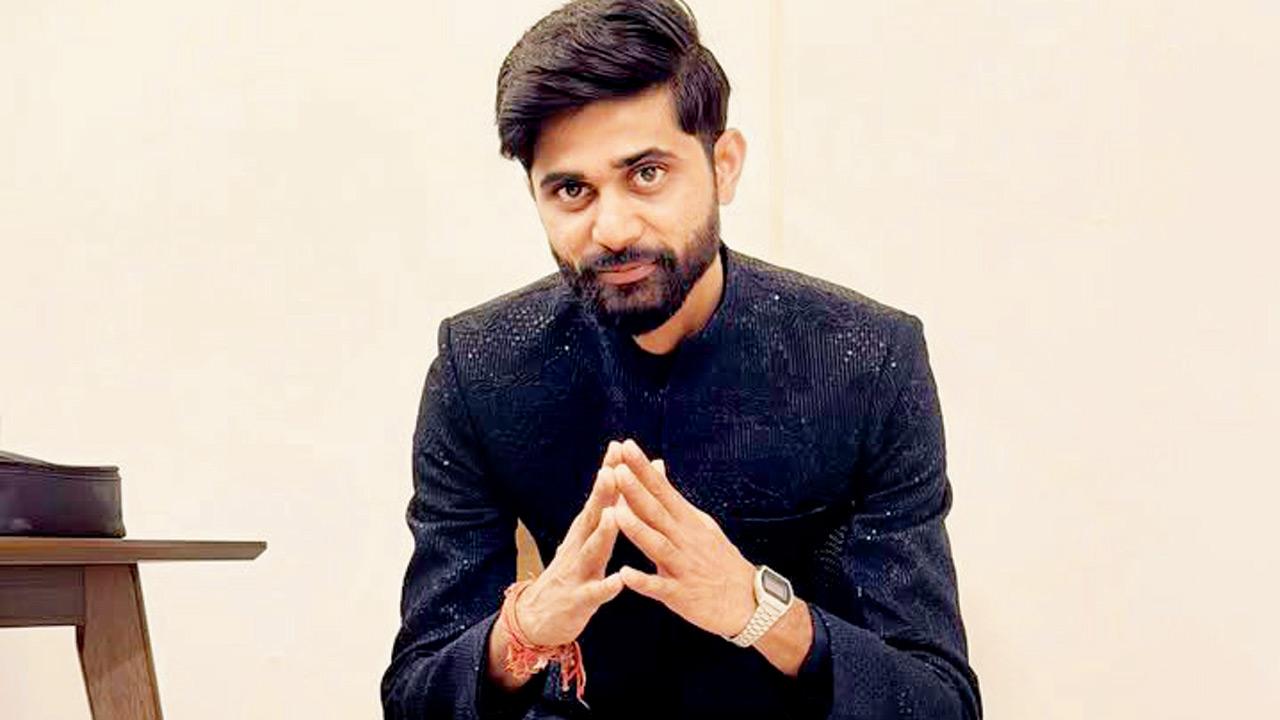
Ankit Sakhiya’s Laalo (left, Shruhad Goswami in a still from the film), the biggest Gujarati blockbuster, by far, that drops on Sony LIV, March 6. Pics/By Special Arrangement
 Frankly, I haven’t seen a more dramatic interval block for a movie than Laalo – Krishna Sadaa Sahaayate (2025); by far the highest grossing Gujarati film, ever (that drops on Sony LIV, March 6).
Forget hook/cliffhanger, the movie altogether transitions to an unrelated genre at its mid-point!
Up until then, Laalo’s a darkish, sole-character-driven survival drama, about an alcoholic autorickshaw driver, stuck for days without food and water, inside an isolated farmhouse that there’s somehow no way to escape from. Think of it as a semi-rural version of Vikramaditya Motwane’s Rajkummar Rao starrer, Trapped (2016), if you may. It’s believable. Contrary to popular perception — while India is indeed the world’s most populous nation — in terms of density of population, it doesn’t even figure in the world’s top ten.
There are enough stretches of uninhabited land, even right outside cities that if you’re holed up in a box — you may never find help to get out of! However, as the timeline hits 1:14 in this two-hours, 15 minutes’ film, Lord Krishna manifests himself on earth — quite simply switching Laalo into a full-on devotional drama, already packed with bhajans, love ballads, and a raas-leela song/sequence, when the said flip occurs.
“I never thought of it this way,” Ankit Rekhaben Sakhiya, 29, director of Laalo tells me, when I bring this up. For this debut feature, all that Ahmedabad-based Ankit was seeking was a location, camera, and an actor, that could sufficiently serve as audition tape for his subsequent script, that required a heavier budget. “Conversations with God came [into Laalo] only much later,” he says.
The first thing you notice about the film is the sheer number of blessings/thanks in its longest opening credits, making me wonder if it’s crowd-funded.
“These are mainly friends, relatives, yes. You take a single name out, and Laalo won’t be possible,” Ankit reveals, of how one of them offered a couple of lakhs, without any possibility of return, and yet another passed on their Enfield Bullet to use as prop.
This is common for an amateur first film. Only, that’s not how it turned out for Laalo that entered theatres as any other nondescript, low-budget pic, playing in Gujarat, in October, 2025. Few bothered. By week four, there was a widespread mass movement around it.
While Ankit had held screenings for select (“300-500”) audience members to spread the word before release — the turning point, as he recalls it, was a lady, who posted on social media that if you don’t catch Laalo, you’ll upset Lord Krishna himself. Watch it, literally, for God’s sake! There was a scram to post similar reviews online. By the end of its run in early 2026, Laalo, produced at an approximate budget of Rs 50 lakh, had registered footfalls so huge (worth over Rs 120 crore) — first Gujarati film to breach R100 crore at the box office — the Mumbai movie industry and the mainstream press began to deem it as the rise of Gujarati cinema itself.
Top Bollywood producers extended invitations to meet Ankit. He recalls, “Karan Johar, Jeetendra, Nikkhil Advani, Siddharth Roy Kapur…”
I first heard of Laalo from Subhash Ghai, who later had Ankit over to talk at his film school, Whistling Woods. What did these biggies tell him? “They congratulated, and asked me to remain as I am.” Which is what Ankit intends to do: “Stay true to my maati (soil), and culture.”
I’ve watched Laalo in Hindi. That’s what I prefer for Indian movies. You’re welcome to feel offended by this unpopular opinion — somehow Hindi, dubbed well, doesn’t sound odd, even in a Tamil picture; unlike, say an Italian, Korean, or Hollywood production.
Also, Gujarati itself is not as different from Hindi. That could be why there hasn’t been a Gujarati movie industry to rival the likes of Bengali, or Marathi, for that matter. Obviously, money can’t be an issue in Gujarat.
The only Gujarati films I’ve watched, lately, are the early works of actor Pratik Gandhi: Abhishek Jain’s bro-com, Be Yaar (2014), and Mikhil Musale’s mystery-thriller, Wrong Side Raju (2016). The former was locally gamechanger enough to land Gandhi the latter, produced by Phantom (Anurag Kashyap, et al), in Mumbai.
Laalo is warmly set in Junagadh, close to the village Mehtakhambhariya, where Ankit was born. He schooled in Surat, before reading civil engineering in Anand. He’s been dabbling in short films, even a web-series since, from Ahmedabad, along with similar aspirants.
One of whom is debutant actor, Karan Joshi, who plays the eponymous lead — the autorickshaw driver, who takes a passenger (Shruhad Goswami), also named Laalo, on a day-trip of his hometown. “Laalo is what you generally call babies/kids in Gujarati, like ‘Laddoo Gopal’ for Lord Krishna,” Ankit says.
For the most part, I saw the multi-genre Laalo as a swiftly narrated film about a troubled romance between the protagonist and his wife (Reeva Racch). At its core, though, it’s on the ills of daily drinking. I guess, that’s kinda appropriate for the prohibition state of Gujarat!
Mayank Shekhar attempts to make sense of mass culture. He tweets @mayankw14
Send your feedback to mailbag@mid-day.com
The views expressed in this column are the individual’s and don’t represent those of the paper.
 Subscribe today by clicking the link and stay updated with the latest news!" Click here!