shot-button
BMC Elections 2026 BMC Elections 2026
Home > News > Opinion News > Article > Rebuilding the lifeline of a city that never stops

Rebuilding the lifeline of a city that never stops

Updated on: 03 January,2026 07:45 PM IST  |  Mumbai
Vivek Kumar Gupta | Vivekkumargupta@mid-day.com

Railways remains committed to keeping Mumbai’s complex local train network safe, reliable, and capable of handling rising demand

Rebuilding the lifeline of a city that never stops

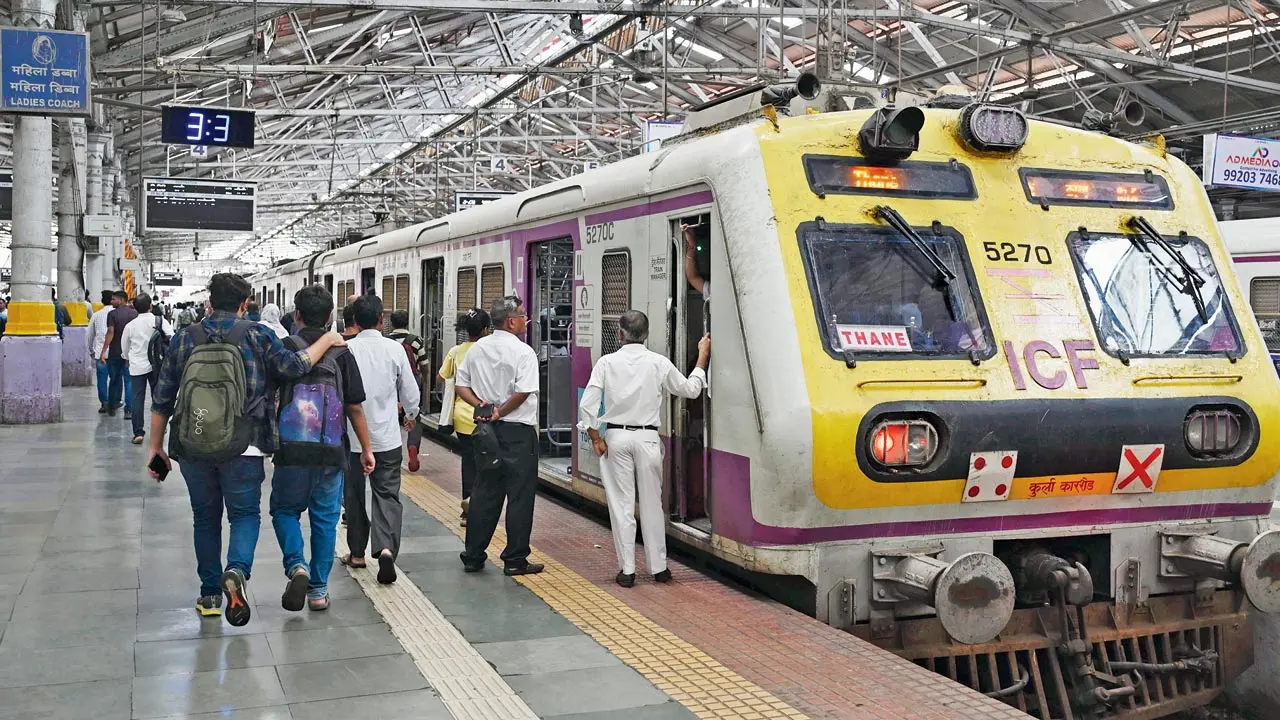
Central Railway operates around 1810 services across its Main Line, Harbour Line, and Trans-Harbour corridors daily. File Pic/Ashish Raje

Vivek Kumar Gupta

For over twenty million Mumbaikars, the local train is not just transport — it is routine, resilience, and reliability. The suburban railway network here is more than infrastructure; it is the city’s pulse. Every morning before dawn, platforms fill with people chasing livelihoods and aspirations. Every night, the last local carries home a city that refuses to slow down.


Keeping this vast system safe, reliable, and capable of handling rising demand is one of the most complex urban mobility challenges anywhere in the world. As the city grows denser and faster, Western and Central Railway are undertaking a quiet but determined transformation to expand capacity, modernise stations, improve safety, and make everyday commuting more humane. Over the last few years, we have undertaken one of the most intensive phases of upgradation in Mumbai’s suburban rail history — not through isolated projects, but through a coordinated, system-wide approach.


Mumbai’s suburban railway operates at one of the highest densities globally. Western Railway (WR) runs over 1400 suburban services daily, while Central Railway (CR) operates around 1810 services across its Main Line, Harbour Line, and Trans-Harbour corridors. With limited land and ever-growing demand, capacity expansion requires precision planning.

Expanding capacity

Working towards realising the vision of the Prime Minister’s Viksit Bharat, all efforts are being undertaken to develop railway infrastructure in Mumbai. Multiple projects worth more than Rs 8,000 crore are currently underway to transform the way our esteemed commuters travel in our suburban system by adding critical capacity and extending reach across congested corridors. The Borivli-Virar and Virar-Dahanu Road expansions will segregate suburban and mainline traffic on WR’s northern stretches, enabling significantly more local services. The Panvel-Karjat corridor will create a vital link, reducing travel time by nearly 30 minutes while easing pressure on the main Central line. The Kalyan-Asangaon and Kalyan-Badlapur projects address critical bottlenecks where existing tracks operate beyond 150 per cent capacity. These multiple new infrastructure and network expansion projects are expected to create more than 30 per cent new capacity for our suburban commuters over the next four to five years.

Stations that work

Tracks and trains alone cannot solve congestion unless stations are redesigned for current realities. Many of Mumbai’s stations were built decades ago and today handle footfall far beyond their original capacity. Under MUTP-3A and the Amrit Bharat Station Scheme, major stations across both railway zones are being comprehensively upgraded. The focus is on wide elevated decks, additional foot overbridges, escalators, lifts, better lighting, clearer signage, and smoother passenger circulation. Moreover, in 2024-25 alone, more than R500 crore was invested in enhancing and upgrading passenger amenities facilities across Mumbai divisions of CR and WR, with special emphasis on platform raising and extension, provision of lifts and escalators and other key facilities.

Khar Road station on the WR has emerged as a benchmark, with its large elevated deck easing platform congestion. Similar upgrades are underway at Kandivli, Mira Road, Bhayandar, Vasai, Nallasopara, and Santacruz. On CR, stations such as Dombivli, Ghatkopar, Mulund, Bhandup, Chembur, Govandi, and Mankhurd are witnessing visible improvements.

At Virar, a new home platform is being constructed to accommodate 15-coach trains, while stations along the Virar-Dahanu corridor are being upgraded with improved booking offices, foot overbridges, lighting, and amenities.

Accessibility is essential

Accessibility has become a central pillar of station development. Hundreds of lifts and escalators have been installed across suburban stations, making daily travel easier for senior citizens, persons with disabilities, pregnant women, and families. Over 748 lifts and escalators are now digitally monitored through a centralised system, allowing real-time tracking and quicker restoration in case of faults. This shift from reactive to proactive maintenance has significantly improved reliability.

Infrastructure improvements include the installation of ramps, tactile tiles at platform edges to prevent Divyangjan passengers from falling onto tracks, and dedicated Divyangjan and senior citizen compartments with signage painted on coach interfaces for easy identification. Recent station upgrades prioritise accessibility with features like disability-friendly counters and tactile pathways for seamless movement, representing ongoing efforts to transform one of the world’s busiest commuter networks into a more accessible system for all passengers.

Over the last seven to eight years, there has been a renewed focus on building new as well as renovating old road overbridges (ROBs) and foot overbridges (FOBs) to provide more freedom and convenience of travel. In recent years, in collaboration with local authorities, we have dismantled and reconstructed 29 ROBs and 111 FOBs, and more are underway.

Modern rolling stock

Passenger safety remains paramount. The transition towards automatic doors on suburban trains, along with the induction of new-generation rakes, marks a significant step in reducing accidents caused by overcrowding and unsafe boarding.  

Mumbai's closed-door AC local trains represent a transformative upgrade for the city's 80 lakh daily commuters. The automatic door system dramatically enhances safety by preventing passengers from hanging on footboards or boarding moving trains — dangerous practices. Beyond safety, AC coaches offer superior travel comfort with regulated temperature, reduced noise, and protected interiors that shield passengers from extreme heat and monsoon conditions.

The daily average AC local ridership in Mumbai more than doubled from 99,000 in 2022-23 to 2,48,000 in 2025-26, clearly underscoring the increasing patronisation by our esteemed commuters. The closed environment ensures cleaner air circulation and dignity during crowded peak hours. Given Mumbai’s growing population and commuter expectations, transitioning to a fully AC suburban system in a phased manner is considered to be an essentiality. It would standardise safety protocols across all services, provide consistent comfort regardless of ticket type, and position Mumbai’s railway network as a world-class transport system befitting India's financial capital. At the same time, non-AC services continue to be strengthened to ensure affordability and inclusivity.

Digital tools

Technology is quietly reshaping how commuters interact with the railway system. UPI and QR-code payments are now available at booking counters, ATVMs, and POS machines.

The UTS on Mobile app has reduced queues and simplified ticketing during peak hours, and is now being integrated with the Rail One App. The Mumbai One app and Mumbai 1 Smart Card have taken integration a step further, allowing seamless travel across suburban rail, Metro, Monorail, and city buses. Real-time train indicators, improved public announcement systems, and centralised monitoring of amenities ensure commuters are better informed and issues are addressed faster.

Ticket checking has also been reimagined. Initiatives such as the NAMASTE Abhiyan focus on combining firmness with dignity. Ticket-checking staff are equipped with hand-held terminals, while body-worn cameras and CCTV-monitored areas enhance transparency and safety, reducing friction between staff and passengers. Dedicated squads are ensuring that ticketless travel is discouraged both in AC and Non-AC services.

Natural partner

Mumbai’s expanding Metro network, particularly the fully operational Aqua Line 3, has emerged as a strong complementary mode. By absorbing short- and medium-distance trips through dense commercial corridors, Metro services help reduce pressure on suburban trains. Integrated ticketing ensures commuters experience public transport as one connected system.

Road ahead

Mumbai’s suburban railway system must continuously evolve to match the city it serves. Capacity expansion, modern stations, passenger amenities, digital convenience, safety upgrades, and Metro integration are not isolated initiatives — they are parts of one long-term vision, and we will strive to achieve them. It is always heartening to see the immense support we get from our passengers, and we expect this to continue. As users, we have a collective responsibility to maintain the cleanliness of our railway stations. Simple acts like disposing of waste in dustbins, not spitting on platforms, avoiding littering, and reporting unhygienic conditions can transform our stations into cleaner, healthier spaces. When we treat our railway stations with the same care we show our homes, we not only create a more pleasant commuting experience for ourselves but also demonstrate respect for fellow passengers, railway staff, and our city.

Mumbai moves because its local trains move. Strengthening this lifeline remains our unwavering commitment — today and for the decades to come.

Vivek Kumar Gupta is the General Manager, Western and Central Railway

Send your feedback to mailbag@mid-day.com

"Exciting news! Mid-day is now on WhatsApp Channels Subscribe today by clicking the link and stay updated with the latest news!" Click here!

Did you find this article helpful?

Yes
No

Help us improve further by providing more detailed feedback and stand a chance to win a 3-month e-paper subscription! Click Here

Note: Winners will be selected via a lucky draw.

Help us improve further by providing more detailed feedback and stand a chance to win a 3-month e-paper subscription! Click Here

Note: Winners will be selected via a lucky draw.

western railway central railway borivali virar Railways news columnists

Mid-Day Web Stories

Mid-Day Web Stories

This website uses cookie or similar technologies, to enhance your browsing experience and provide personalised recommendations. By continuing to use our website, you agree to our Privacy Policy and Cookie Policy. OK