shot-button
E-paper E-paper
Home > News > Opinion News > Article > State policy of shock and harass

State policy of shock and harass

Updated on: 14 July,2025 08:37 AM IST  |  Mumbai
Ajaz Ashraf |

The revision of electoral rolls in Bihar is but a recent example of the cruel surprises sprung on the toiling masses by the powers that be, who deeply distrust the very people in whom sovereignty rests

State policy of shock and harass

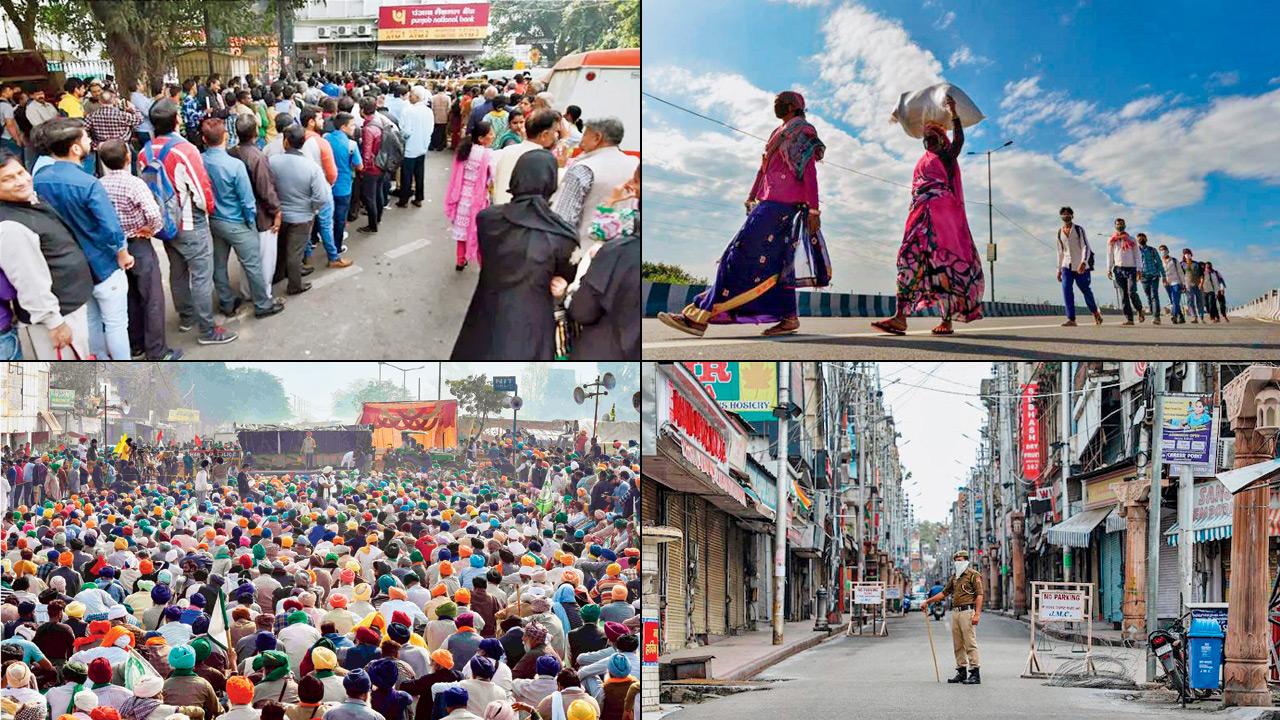
(Clockwise from top left) Queues outside a bank after the government announced demonetisation of high denomination currency notes in 2016; thousands of migrant workers take to a highway to return to their villages in UP and Bihar; the lockdown imposed in Kashmir following the abrogation of Article 370; farmers stage a protest at the Delhi-Haryana border against the Centre’s farm laws in late 2020. Pics/PTI

Ajaz AshrafBihar’s experience shows that administering periodic shocks to people, regardless of the harassment inflicted upon them, has now become an established State policy under Prime Minister Narendra Modi. The ostensible purpose of this policy is to build a more moral, secure, prosperous India under the overarching ideology of Hindutva. Its outcomes have decidedly favoured the wealthier classes, rather than the toiling masses.

It's because of the State’s shock and harass policy that the people of Bihar have been suddenly asked to provide proof of their citizenship for registering as voters. Tormented by the nightmare of being disenfranchised, they desperately scramble around to procure one of the 11 citizenship documents the Election Commission of India has listed.


The State’s shock and harass policy began to evolve from November 8, 2016, when high-denomination currency notes were demonetised on four hours’ notice, leading to interminable queues at banks to exchange them for the new banknotes. The paucity of cash deprived the unorganised sector of its lifeblood — jobs disappeared and agriculture languished.


The policy took a giant leap on March 24, 2020, when the country was put under a complete lockdown to tackle the COVID-19 pandemic. As workplaces and modes of transportation shut down, and with no incom COVID-19 pandemic e or savings to survive on, crores of migrant labourers in cities took to walking hundreds of kilometres to return to their villages, experiencing untold misery.

In all three instances, the State cited a noble or moral reason for prescribing mass shock therapies, so to speak. In Bihar, the State claims it’s important to delete non-citizens, aka illegal immigrants, from the electoral rolls, lest they vitiate the democratic process. The justification for demonetisation was to root out corruption and discourage the use of black money. The lockdown was aimed at saving people from death, for they couldn’t be trusted to maintain social distancing to prevent the spread of the virus.

The mass shock therapies demonstrate the deep distrust the State has of people. It considers them too debased or ignorant to undertake the morally right or rational course. The State, therefore, springs surprises on them, believing they must be denied the time and opportunity to deceive it.

The people of Bihar, thus, have been disallowed to file the Aadhaar card to enrol as voters precisely because it is widely possessed. The State’s implicit assumption is that the Aadhaar could have been obtained fraudulently. Demonetisation was shrouded in secrecy to deny hoarders the chance to dispose of their illegal stash of money. The lockdown had to be severely policed as a patriarchal State viewed the people as recalcitrant children.

The harassment the State has subjected people to through its shock therapies hasn’t been equitably spread. In Bihar, it’s the subalterns who fear disenfranchisement, not the elite, for the latter are sure to possess at least one of the ECI’s 11 citizenship documents.

Nor has the State succeeded in building a better India. With nearly all demonetised currency notes being returned to banks, black money wasn’t removed from the economy. This implies the wealthy were not adversely affected, in sharp contrast to the crippling impact it had on those who were part of the unorganised sector. The latter’s woes were compounded by the lockdown. Significantly, the demand that the unorganised could no longer meet, economist Arun Kumar has pointed out, shifted to the organised sector.

Facilitating the entry of large private corporations into the agriculture sector was the motivation behind the State administering a shock to the farming community, through the three farm laws enacted in 2020. It was a shock to them because they hadn’t been consulted before the laws that threatened to make sweeping changes in their lives were passed.

Those who control the levers of the State seemed to suggest that there was no need to consult farmers because they were bumbling fools who wouldn’t know what was good for them. Worse, the State thought the pandemic-induced restrictions on public activities would deter farmers from protesting. But protest they did, sitting outside Delhi for a year — with over 700 of them dying — before the State retreated.

The method of administering a shock to the Kashmiris was remarkably different from that followed in other cases. The State pumped military boots into Kashmir before abrogating Article 370, following it up with an imposition of more than a month-long curfew in the Union Territory and detaining over 4000 people. The internet was shut down for 175 days.

It was almost as if all of Kashmir had to be rendered comatose so that it didn’t writhe in pain because of the high-voltage shock given to it. The justification for the shock? Rooting out militancy in Kashmir and integrating it with India. The Pahalgam massacre in April demonstrated that these goals remain elusive.

The notions of morality and ideological obstinacy have driven the State to harass the people, in whom, ironically, the sovereignty rests. Perhaps the captains of the State are too ignorant to fathom the consequences of the actions they take in its name. Or perhaps they believe that an omelette can’t be made without breaking eggs. The ultimate misfortune is that only a few get to savour the omelette the State cooks.

The writer is a senior journalist and author of Bhima Koregaon: Challenging Caste
Send your feedback to mailbag@mid-day.com
The views expressed in this column are the individual’s and don’t represent those of the paper.

"Exciting news! Mid-day is now on WhatsApp Channels Subscribe today by clicking the link and stay updated with the latest news!" Click here!

Did you find this article helpful?

Yes
No

Help us improve further by providing more detailed feedback and stand a chance to win a 3-month e-paper subscription! Click Here

Note: Winners will be selected via a lucky draw.

Help us improve further by providing more detailed feedback and stand a chance to win a 3-month e-paper subscription! Click Here

Note: Winners will be selected via a lucky draw.

mumbai columnists Ajaz Ashraf mumbai news

Mid-Day Web Stories

Mid-Day Web Stories

This website uses cookie or similar technologies, to enhance your browsing experience and provide personalised recommendations. By continuing to use our website, you agree to our Privacy Policy and Cookie Policy. OK