Tying the knot
Updated On: 22 August, 2021 07:08 AM IST | Mumbai | Devdutt Pattanaik
This idea takes ritual shape in many Hindu ceremonies, where knotting draws attention to social responsibilities, desires and demands, while unknotting is an indicator of renunciation





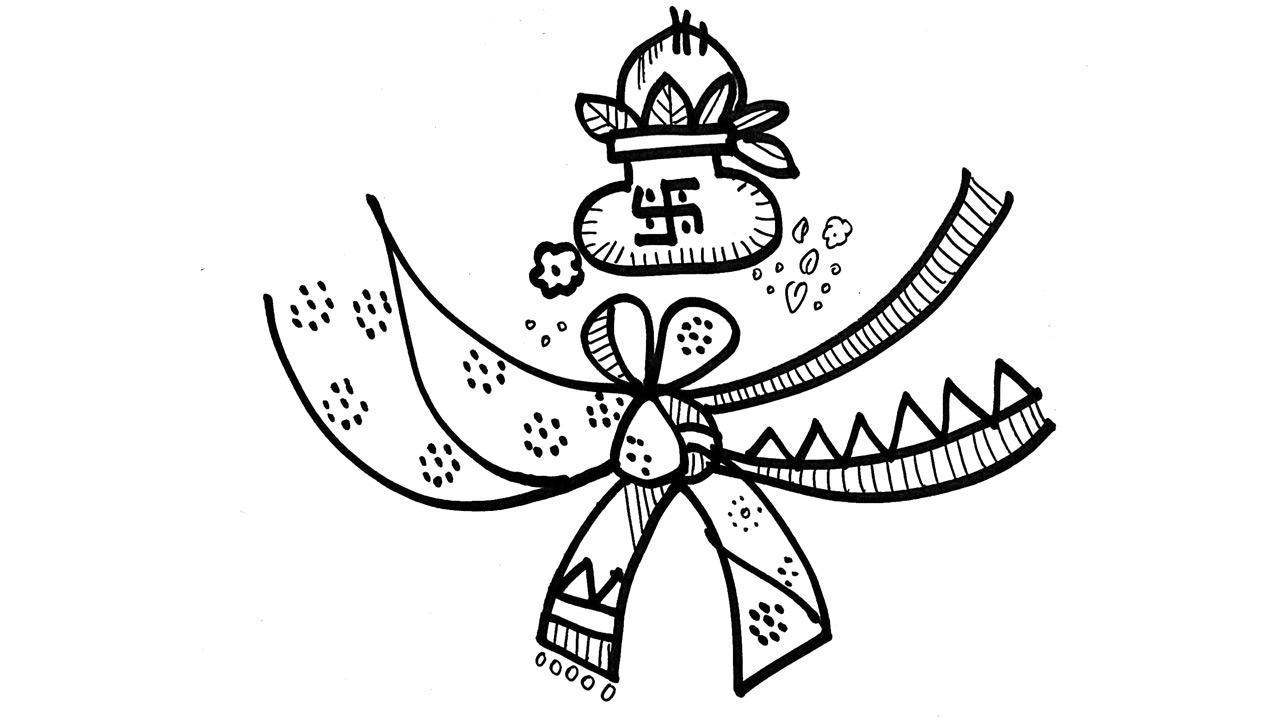
Illustration/Devdutt Pattanaik
 In Hindu metaphysics, yoga is the practice of untying mental knots. Bhoga is the experience of life that creates these mental knots. When we consume life, we experience hunger, fear, delight, jealousy, attachment, rage, greed, frustration, hatred, joy, and these various emotions and stimulations cause our mind to be knotted. These mental knots can be removed through introspection and intellectual analysis (gyan yoga), devotion and emotional surrender (bhakti yoga) and ritual activity and social responsibility (karma yoga).
This idea takes ritual shape in many Hindu ceremonies, where knotting draws attention to social responsibilities, desires and demands, while unknotting is an indicator of renunciation. In tantra, the untied hair is a mark of freedom. The tied knotted hair is a mark of domestication. In Vedic rituals, the sacred grass is tied with a knot around the finger, and the sacred thread is tied with a knot over the left shoulder, to transform the body into an ‘auspicious’ body, abode of divinity.
Trending Stories
Latest Photos
Latest Videos
Latest Web Stories
ADVERTISEMENT
Mid-Day Fast
ADVERTISEMENT