War magic of wild tantra
Updated On: 10 November, 2024 07:26 AM IST | Mumbai | Devdutt Pattanaik
Tantra is closely linked to the body (tanu) and the act of weaving (tanti). It argued that while an individual thread (sutra) has value, it cannot become cloth





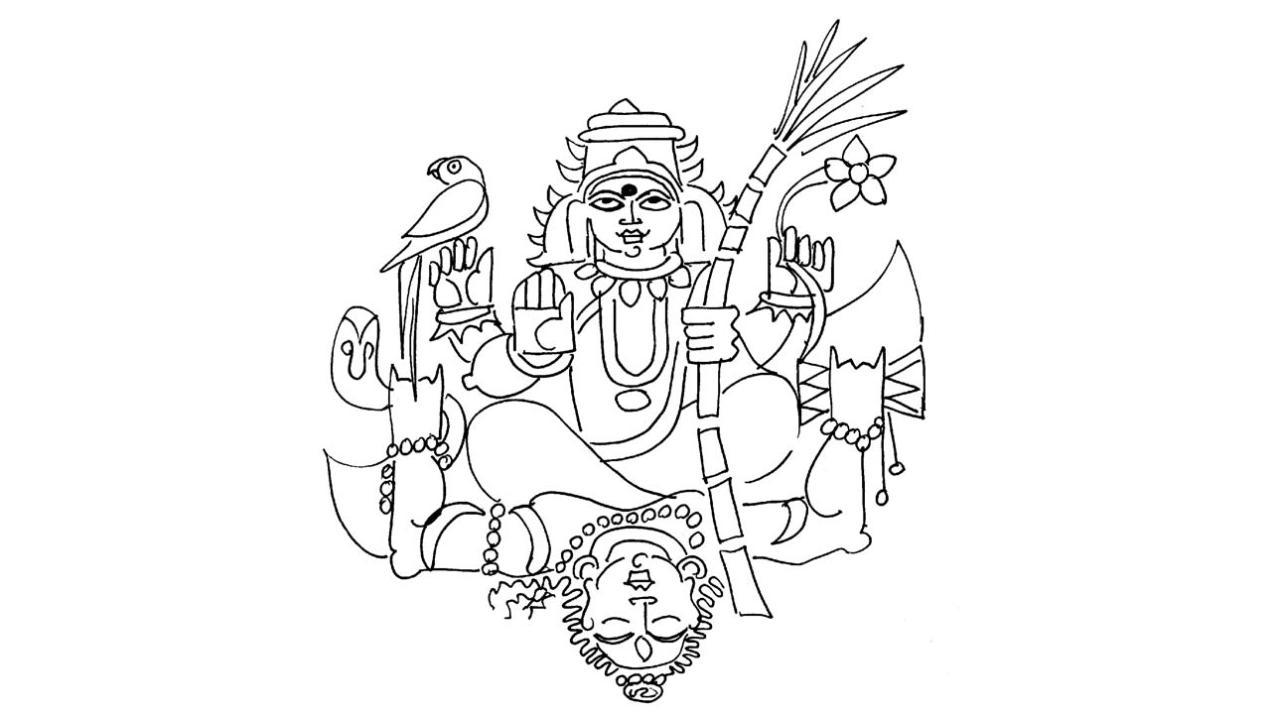
Illustration/Devdutt Pattanaik
 In the east, Diwali is linked to the worship of ghosts, ancestors and the goddess Kali. This has its roots in Tantra, which in many ways a counterpoint to India’s masculine Vedic traditions that were gradually turning ascetic and creating the divide between purity and pollution.
Tantra celebrated the “impure” worlds of unrestrained and unregulated sex and violence and death, and bodily fluids. It saw the material world not as mirage (maya), but as a source of power (shakti). Those who knew the secrets of material reality could easily manipulate it: create magic to help kings win wars, drive rival armies mad, infest enemy territory with disease. Some of these ideas can be traced to the Atharva Veda (1,000 BC), but these rose to prominence in the centuries of chaos that followed the fall of the Gupta empire (500 AD). It is only in the Age of Tantra that Buddhism mainstreamed the goddess Tara and the female Yakshis were seen bearing the image of the Jain Tirthankaras on the head.
Trending Stories
Latest Photos
Latest Videos
Latest Web Stories
ADVERTISEMENT
Mid-Day Fast
ADVERTISEMENT