When Savitribai urged women to learn English
Updated On: 20 March, 2023 01:21 PM IST | Mumbai | Sumedha Raikar Mhatre
A new translation of feminist Savitribai Phule’s 1848 Marathi poems reflects on the pace of social change in Maharashtra and beyond





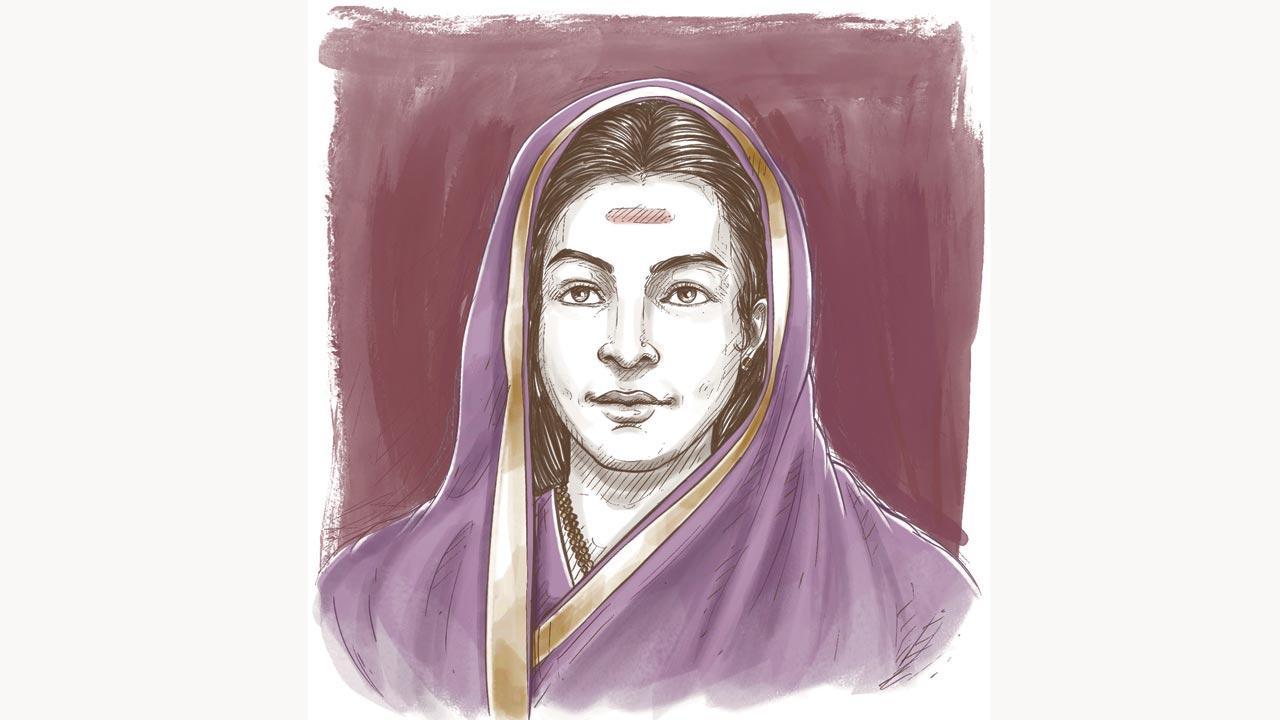
Illustration/Uday Mohite
 Learn to read and write/Good times are here, our English mother is here.” The excerpt from Savitribai Phule’s first anthology of poems, Kaavya Phule, is to be appreciated in the social context of late 19th century India, where women and other suppressed sections of society did not have access to education. Savitribai and husband Jyotiba Phule, who founded the first school for girls in Pune’s Bhide wada in January 1848, saw English education as a ray of hope for inclusion of women and others, who were denied social mobility in the traditional caste-driven educational institutions, both in the Mughal and Peshwa periods.
This columnist wondered how the poem could be easily misconstrued in today’s political context where the demand for the use of Marathi is widespread during election campaigns. Thankfully, the English translator of Kaavya Phule, Priyamwada Redican Chakne, 33, introduces Savitribai to the uninitiated in uncomplicated terms—the gutsy Shudra woman, impacted and inspired by her husband’s idea of holistic social reform, who saw English education as an escape from caste discrimination. That’s precisely why Savitribai concentrates on the strategic significance of English, which “ends cruelty and brings humanity to the shudras”. In fact, the Marathi original poem sounds even more scathing as Savitribai terms “Moglaai, Peshwai, Moorkhashahi” as systems which were too idiotically unfair for the oppressed classes.
Trending Stories
Latest Photos
Latest Videos
Latest Web Stories
ADVERTISEMENT

Ganeshotsav 2026

ADVERTISEMENT