Five-time world champion Viswanathan Anand believes Divya’s win has not only helped the women’s game share centrestage with the men, led by world champion D Gukesh, but has also added to the growing stature of women’s chess in India

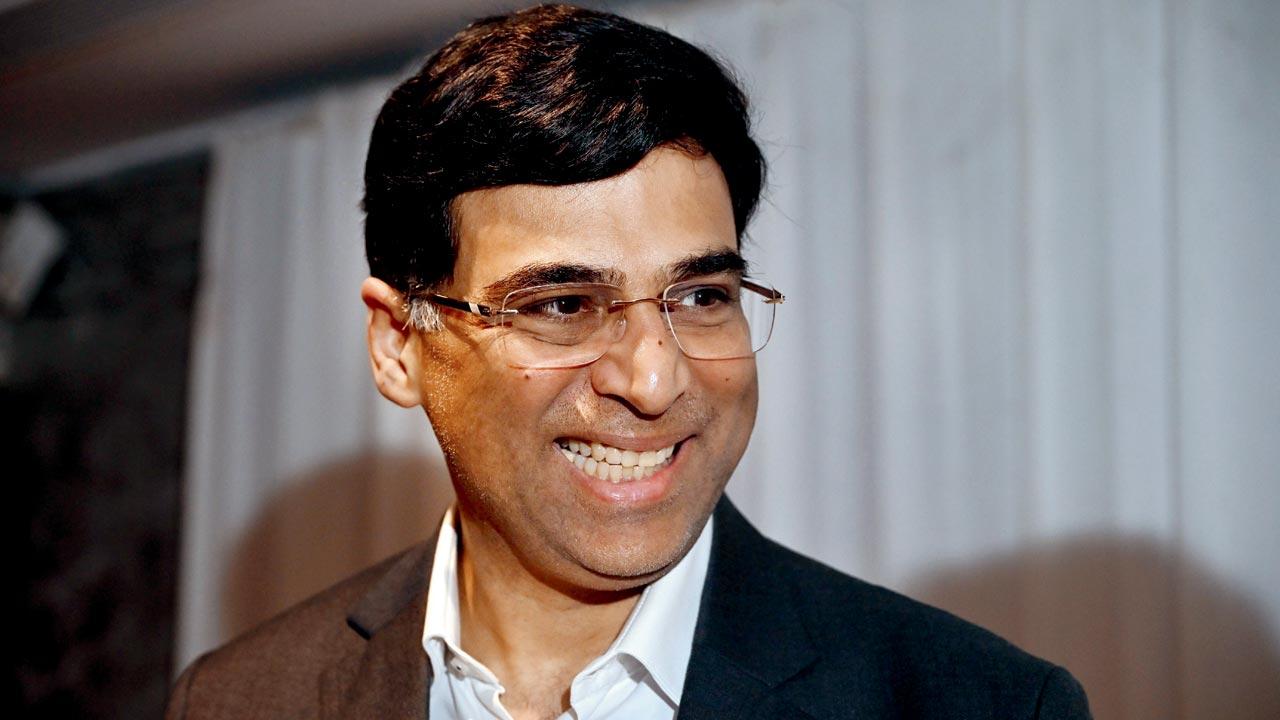
Viswanathan Anand. Pic/Atul Kamble
India’s moves on the chess board continue to script a story that the game’s young achievers can narrate to their grandkids as tales of valour in mental combat. On Monday, teenager Divya Deshmukh, 19, added another chapter to this with her World Cup win, outwitting the seasoned Koneru Humpy in a tie-breaker in the final at Batumi, Georgia, to emerge as the new queen of Indian chess.
Five-time world champion Viswanathan Anand believes Divya’s win has not only helped the women’s game share centrestage with the men, led by world champion D Gukesh, but has also added to the growing stature of women’s chess in India, championed by Humpy’s success over the years and the Olympiad gold last year.
In an interview with mid-day on Wednesday, Anand doffed his hat to Deshmukh, Humpy and the rising stature of Indian women’s chess.
Edited excerpts from the interview
An all-India final at the women’s World Cup. How special is that?
It’s definitely a nice thing. It’s great that our veterans like Humpy can still play so well to reach the final. It’s also nice that a youngster won the World Cup.
India’s Divya Deshmukh with the winner’s trophy and medal in Batumi, Georgia, on Monday. Pic/FIDE
Divya’s win made her a GM as well, only the 4th Indian woman to achieve this.
We have seen [India’s] men having spectacular results for two-three years now. Gukesh, Praggnanandhaa everyone has had their breakthroughs. The women, in a sense, didn’t have that. But now, after the Olympiad [gold] last year and this result with both Divya and Humpy qualifying for the Candidates, Divya becoming a Grand Master, it will hopefully get India talking about women’s chess.
Was the Olympiad win a catalyst for women’s chess in India?
Humpy has been playing at the top of women’s chess for quite some time. She played the World Championship a couple of times, but the Olympiad was the first team achievement and coincidentally, both our men and women won in the same city, Budapest. Subsequently, Humpy has had great results and now for Divya this is, I think, the best result she has had since the Olympiad.
To what would you attribute so many major title wins for India in such a short period?
I think it’s a combination of factors that all parts of the Indian chess community, the federation, fans, media and the academies [have come together]. I have done my bit through WACA [WestBridge Anand Chess Academy]. Most of our youngsters have excellent access to coaches, sponsorship. Divya attended a lot of classes at WACA. We have worked a lot with Gukesh and Pragg. Hopefully, that’s benefitted them all.
How do you analyse Divya’s run at the World Cup, considering she was not the favourite at the outset?
That’s one of the things about knockouts. You don’t really know how it’s going to go. But Divya managed to upset [Chinese GM] Zhu Jiner [in the pre-quarters]. She then beat Harika [Dronavalli in the quarter-finals], Tan Zhongyi in the semis, then defeated Humpy. That cannot be a coincidence. Four strong opponents in a row also suggests that Divya has made a leap and performed to her full potential.
What do you feel are Divya’s strengths?
I think recently she has improved her opening preparation that kind of showed in this tournament, and she is more level-headed. You could see that a lot of the games were decided by blunders, on the participants. But Divya committed the fewest [mistakes], so she was also consistent there.
Did Divya also handle the tie-breaker pressure better?
It’s difficult from the outside to isolate one factor. I think it’s a bit of everything. Divya played a lot of good moves. So, there’s that consistency she brought [to her game]. She was calmer. Humpy had a very normal position at move 40. She could have made a draw, and it could have gone to Game Three, but suddenly she did something which suggested she had lost her bearings, and it was game over.
Do you feel women’s chess has found the consistency it has been striving for?
Obviously, I’m very happy for the women. I have always felt India can succeed [globally] in both the men and women’s game. I’m happy that the women’s game in India is now getting some momentum and I hope it continues. For me, the dream scenario will be that after this result and the Olympiad [success], a lot more young girls take to chess.
How is the chess world reacting to India’s dominance?
The world has noticed and considers India as one of the leading chess countries. I think it’s broadly accepted now. In fact, by many measures, we are the strongest. In the men’s game, I can say that we have top players and are one of the top teams, but we are one of the youngest teams as well. In the women’s game, I think now India is starting to challenge [top-ranked] China, though China still has a stronger women’s team than us. The women’s world champion is Chinese [Ju Wenjun], so there’s a very interesting rivalry that could come out of this.
Subscribe today by clicking the link and stay updated with the latest news!" Click here!