The recently-introduced National Sports Governance Bill is set to change the structure of sports administration in the country; here’s a layman’s guide to how it will alter the sporting scene

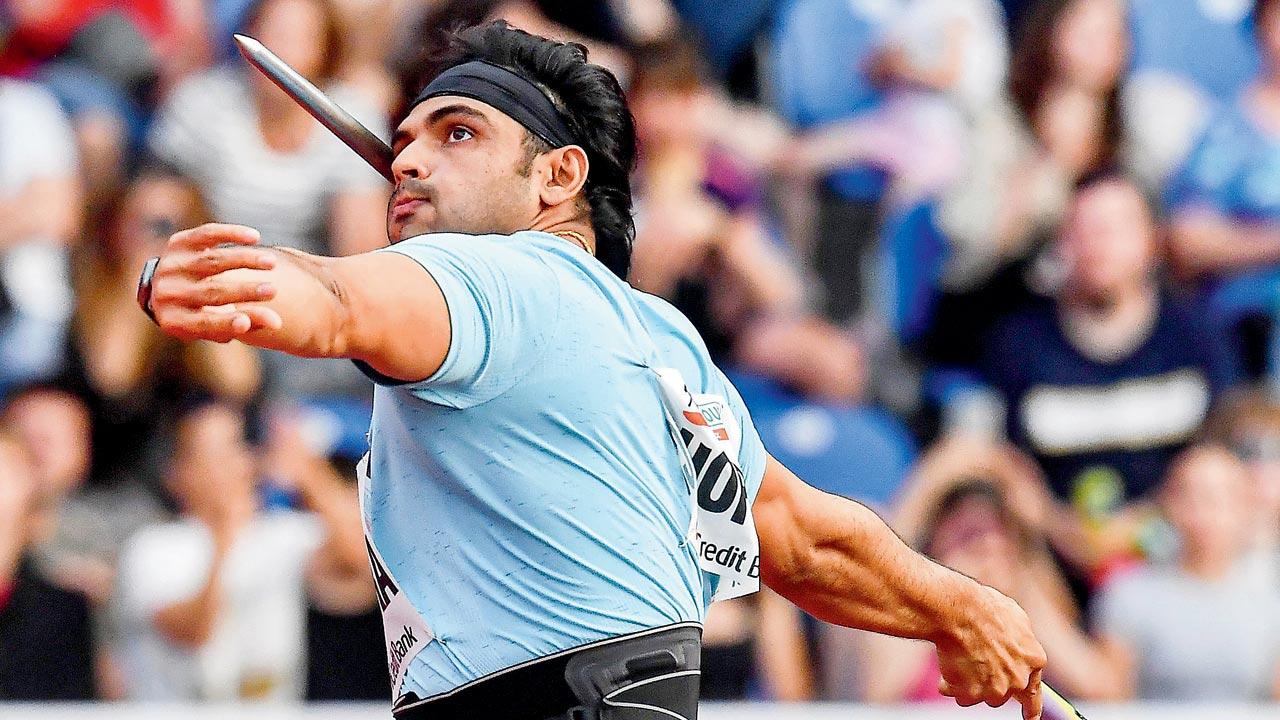
Star javelin thrower Neeraj Chopra. Pics/AFP, Getty Images
India has never had a sports law in force, but the recently-introduced Sports Bill, officially called the National Sports Governance Bill (NSGB), 2025, is set to change the structure of sports governance in the country.
Minister of Youth Affairs and Sports, Mansukh Mandaviya, introduced the Bill in the Lok Sabha on Wednesday, with the leading bullet point being the formation of a National Sports Board (NSB), which will be an independent regulatory body assuming responsibilities that previously came directly under the sports ministry.
No statutory sports Act yet
Reforms like the National Sports Code 2011 and the National Sports Policy 2025 have drawn up the guidelines of sports administration in the country until now. There has never been a statutory structure or an Act. As far as the legislative process of a Bill turning into an Act, the NSGB getting introduced in the Lok Sabha is only the initial stage, followed by publication in the official gazette and rounds of hearing before a vote of consent. It will then be presented in the other House (Rajya Sabha) for readings and voting. Consent of both the Houses is mandatory before the Bill goes to the office of the President of India for a final approval in order to get officially notified and become an Act.
Ace shuttler PV Sindhu
It is a widely-accepted view that India’s aspiration to host the 2036 Olympics and reports of International Olympic Committee (IOC) urging the Indian Olympic Association (IOA) to get sports governance in order is why the government has sprung into action.
With India joining countries like the USA, UK, China and other sporting powers having proper laws governing sports, it will also help the judiciary in swiftly resolving cases related to administration of the National Sports Federations (NSF) and the National Olympic Committee (NOC), i.e. to restore ethical governance in aspects like the election of office-bearers, selection criteria, funding, etc.
“There are all positives in it [the Bill],” said Lieutenant General Harpal Singh, who is IOA’s executive council member, while talking to mid-day. “It is giving certain responsibilities from the grassroots right up to the top… At the same time, the independence of the NOC and the federations is being taken care of,” he added.
Besides the formation of the National Sports Board, the other key features of the NSGB include constituting the National Sports Tribunal in order to resolve disputes efficiently and a National Sports Election Panel that ensures transparent election of office-bearers for various NSFs.
Men’s hockey team skipper Harmanpreet Singh
A noteworthy change proposed is that the Bill allows officials to stand for elections till the age of 75, instead of the previous age-cap of 70 — provided it is permitted by the laws governing the international bodies.
Other attributes of NSGB include mandating the national Olympic and Paralympic committees as well as the NSF’s to have Athletes Commissions.
“Some of these [features of the Sports Bill] were there before, but in bits and pieces — not in one single place. One could interpret things the way one wanted,” Lt Gen Harpal continued.
“There has been no Sports Bill in the past. There have been codes, rules, policies. So when the Bill comes [becomes an Act], then at least everyone will be aligned to one single document,” he added.
In addition to the NSGB, the National Anti-Doping (Amendment) Bill 2025 has also been presented in the House. It was originally passed in 2022, but couldn’t be implemented after the World Anti-Doping Agency’s objection, due to the government’s excessive control over the National Anti-Doping Agency. The 2025 Amendment includes a modification to address that issue, possibly allowing NADA to function more as an independent body.
BCCI included
The Bill brings all sports federations, including the Board of Control for Cricket in India (BCCI), under one umbrella — even though it doesn’t depend on the government for funding. That effectively means the BCCI will also have to honour the Right to Information Act (RTI) — a bone of contention in the past. Cricket has also been included in the LA 2028 Olympics, which groups it with other Olympic sports in the country.
A breakdown of the nsgb
. Formation of National Sports Board: Assumes responsibilities that were directly under sports ministry
. NSB’s recognition necessary for NSFs to avail govt funding
. BCCI to come under National Sports Board
. Formation of National Sports Tribunal: Exclusive body to resolve disputes with powers of a civil court
. Formation of National Sports Election Panel: To ensure free & fair elections
. Like other NSFs, BCCI to also become public authority under RTI Act
. NSF, NOC office-bearer age-cap extendable to 75 in special cases
. Athletes Commissions mandatory for NSFs and national Olympic & Paralympic committees
Subscribe today by clicking the link and stay updated with the latest news!" Click here!