










Here’s how two Mumbai boys took the humble vada pav global, long before it became trendy
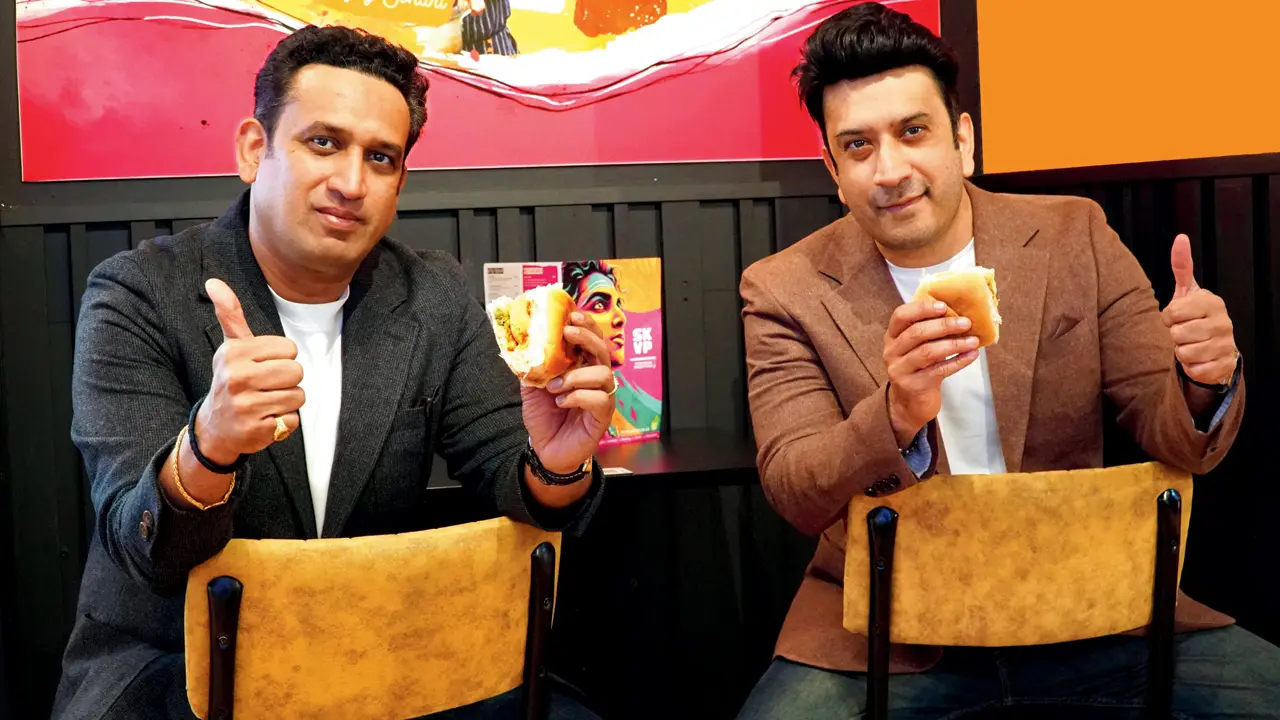
Mumbai boys Sujay Sohani and Subodh Joshi started Shri Krishna Vada Pav in 2010, starting with a simple Mumbai local menu. Today, they are at over 20 locations across the UK, including one at Oxford Street
When Sujay Sohani and Subodh Joshi first met at Rizvi College of Hotel Management in 1999, the plan was simple: study hospitality, do a Master’s abroad, get a job, and build a stable career in the hospitality industry. What neither of them imagined then was that a decade later they would leave secure managerial roles in London to start selling vada pav and cutting chai from a tiny corner inside an ice cream cafe.
Today, their brand has grown to over 20 outlets across the UK, with ambitious expansion plans ahead. Their journey was serendipitous. “We met at Rizvi and instantly became friends,” recalls Sohani. “By the time college ended, we were already best friends.” Both pursued postgraduate studies in hospitality in the UK, enrolling at the same college. Soon after, they landed campus placements at the Hilton at Heathrow Terminal.

“We started at the very bottom,” Joshi says. “From waiter roles to operations management; it was the full ladder.”
Sohani spent a few years at Hilton before moving to a boutique hotel as manager. At the same time, Joshi moved jobs too, first into a back-of-house managerial role and later earning multiple promotions.
Over seven years, both steadily climbed through the ranks of the hospitality industry. But somewhere along the way, the idea of building something of their own began to take shape.
A craving for home, Joshi shares, “In hospitality, unless you reach very senior cluster-level positions, it’s difficult to make real money working for someone else. We always knew we wanted to do something of our own.”
Ironically, the idea arrived during an ordinary walk in a neighbourhood park.
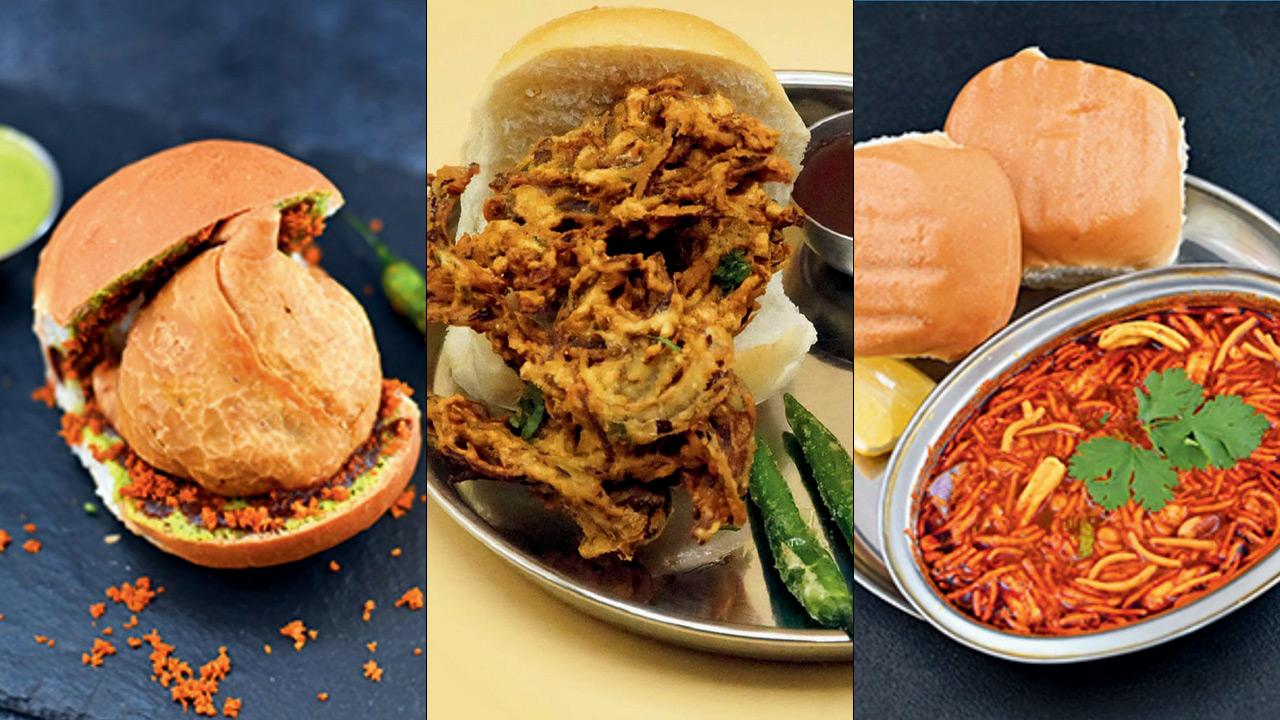
Samosa Pav, Bhajiya Pav and Misal Pav
“On our way back, we saw a Gujarati guy selling something like a vada pav, albeit with burger buns,” Sohani says. “That’s when it struck us.”
For two boys who had grown up in Mumbai, living on vada pav through school and college, the absence of authentic Mumbai street food in the UK felt glaring. “We realised no one was doing proper Mumbai street food there,” Joshi says. “That’s when we thought: why not us?”
The idea was simple. The reality was harder.
The duo had no financial backing and limited savings. For months, they searched for an affordable space to start small. Eventually, they found one inside a Polish ice-cream cafe. “There was a tiny pantry that we converted into our kitchen,” Sohani remembers. “And in the cafe area, we were given just two tables. The rest still belonged to the ice cream shop.”
On August 15, 2010, more by coincidence than design, they opened their doors.
The menu was minimal: vada pav, dabeli and chai.
“That was literally it,” Sohani says. Six months after the launch, they the demand was such that they had to expand. They called Shri Krishna Vada Pav (SKVP). The early days demanded relentless hustle. Joshi, his wife, and Sohani ran the operation themselves, often working nearly around the clock.
“At one point, we were even carrying kettles and walking around nearby streets selling cutting chai,” Joshi smiles. “Those were hard but good days,” he adds.
The humility of those beginnings, they believe, was shaped long before London. Back in Mumbai, they recall how their college drilled discipline into its students from day one. “We were told clearly: in hospitality, you must be ready to do anything,” Joshi says. “Wash dishes, clean toilets — whatever it takes.”
That mindset stayed with them.
“Nothing felt beneath us,” he says. “So when we had to go out and sell chai on the street in London, we had no hesitation.”
Beyond the classroom, Mumbai itself shaped their ambition. In those college years, Sohani, who grew up in Thane, and Joshi, from Dadar often rode around the city on a bike, passing the sea-facing apartments along Carter Road.
“We used to look at those buildings and dream,” Sohani laughs.
That spirit of aspiration, they say, travelled with them overseas.
“Mumbai gave us the fighting spirit,” Joshi says.
London, meanwhile, added structure.
Running a food business in the UK meant adapting to strict regulatory systems. “You can do jugaad there, but only to a certain extent,” Sohani says. “The council regulations are extremely strict.”
Hygiene inspections, food safety ratings, and compliance standards are closely monitored. Customers often check a restaurant’s hygiene rating before deciding to visit. “If the council tells you to fix something, you fix it,” he says. “There’s no workaround.”
The result was a hybrid approach: Mumbai’s resilience combined with London’s operational discipline.
“To put it simply,” Joshi says, “Mumbai gave us the daring to start. The UK taught us how to run it properly.”
What began with two cafe tables has grown to 23 outlets across the UK, with expansion firmly on the horizon. The next milestone is scale. “We want to reach at least 100 outlets,” says Joshi.
The brand has attracted franchise interest from markets such as the US and Canada, but the founders are increasingly leaning towards building equity-owned stores. Their ambitions stretch well beyond a single brand. “SKVP is just the beginning,” Joshi says. “Eventually, we want a company with 20 or 30 brands under one umbrella.”
Future ventures could include more street-food concepts and perhaps even a five-star hotel.
For now, however, the mission remains unfinished.
“Our dream is to take vada pav global,” says Sohani, transforming it from a Mumbai staple into a mainstream international food.
“And on the tougher days,” Joshi adds, “that dream is what keeps us going.”
Yet even as the business expands across borders, the flavours of Mumbai remain their emotional anchor.
The formula that worked
The duo says there’s no formula, but three principles come close. First, persistence. Whatever you decide to do, don’t give up. Second, quality. In food, you cannot compromise. Third, consistency. Once you set a standard, you must maintain it every single day. Those lessons are still guiding the business 15 years later.
The pav problem
Even after more than a decade, one element of their menu remains a constant challenge: the pav. “No one outside Mumbai has truly mastered it,” Sohani admits. Determined to get as close as possible, the founders once flew their British baker to Mumbai to study traditional baking methods. “He visited local bakeries, studied the yeast, flour, everything,” Sujay says. Even then, something remained elusive.“The weather, the water, the air: it all makes a difference,” Joshi says. “We’re about 95 per cent there. That last 5 per cent is still missing.”
First thing you order when in Mumbai
Subodh Joshi: Misal pav at Anand Bhuvan in Lalbaug
Sujay Sohani: Pav bhaji at Shivsagar; misal from Mamledar, Thane
 Subscribe today by clicking the link and stay updated with the latest news!" Click here!