









IIT Kharagpur’s Campus Mothers initiative has been criticised as a gendered programme. But why are campuses focusing on supplementary initiatives rather than improving the campus counsellor ratio?

PIC/ISTOCK
When 20-year-old Kanishk Ranaut (name changed) moved from Dehradun to Mumbai to pursue his education, he found more than just confusing traffic and crumbling space. Adjusting to matchbox housing in Mumbai was not easy, and not seeing familiar faces around made it harder. Student life, especially for those who move to big, bad Mumbai, is not easy. Naturally, twenty-somethings require emotional support to tough it out.
This is also the reason why IIT Kharagpur announced a Campus Mothers initiative. This is part of the institute’s five-pronged mental health framework, SETU (Support, Empathy, Transformation, and Upliftment). Under this framework, the Campus Mothers plan is an initiative to add a “motherly touch” to student welfare. The plan encourages female campus residents, staff, faculty wives, and female residents to volunteer their time to offer emotional support to students.
As it’s voluntary, it’s unpaid. But this also means it adds to the institute’s mental welfare programmes without increasing costs. While the idea aims to fill a gap in support and supplement the counselling services on campus, it has been met with criticism on the Internet, with many questioning why the university is outsourcing emotional labour to women alone.

The University Grants Commission (UGC) in India has guidelines to address mental health issues among students in higher education institutions. There is no mandate on the counsellor-to-student ratio at colleges. This also means that while counselling cells exist, it is likely that some institutions have visiting or part-time counsellors only. PIC/ISTOCK
Director of IIT Kharagpur, Dr Suman Chakraborty, addressed the online allegations. He said, “This is not a gendered programme. Rather, this is a gender balancing programme to engage more women in student welfare initiatives. Ninety per cent of the committees and programmes are already dominated by men.”
IIT Kharagpur has 15 professional counsellors on campus. So, access is limited due to high student-to-counsellor ratios. The University Grants Commission (UGC) in India has guidelines to address mental health issues among students in higher education institutions. These guidelines mandate the creation of dedicated cells in colleges and universities, staffed with mental health counsellors to support students facing academic and peer pressure, stress, and depression. The UGC also suggests providing resources like standardised support systems, counselling, and assessment tools to help students manage stress and emotional adjustment.
However, there is no mandate on the counsellor-to-student ratio. This also means that while counselling cells exist, it is likely that some institutions have visiting or part-time counsellors only. Like IIT Kharagpur, several colleges do offer mentoring services in the form of staff or peer-to-peer counselling. But whether these programmes are successful has never been determined.
Experts, however, say that there are long-term risks to such programmes. “You have to think of the ethics of this. There is no counsellor-patient confidentiality. Anyone can slip up and disclose something personal on campus.
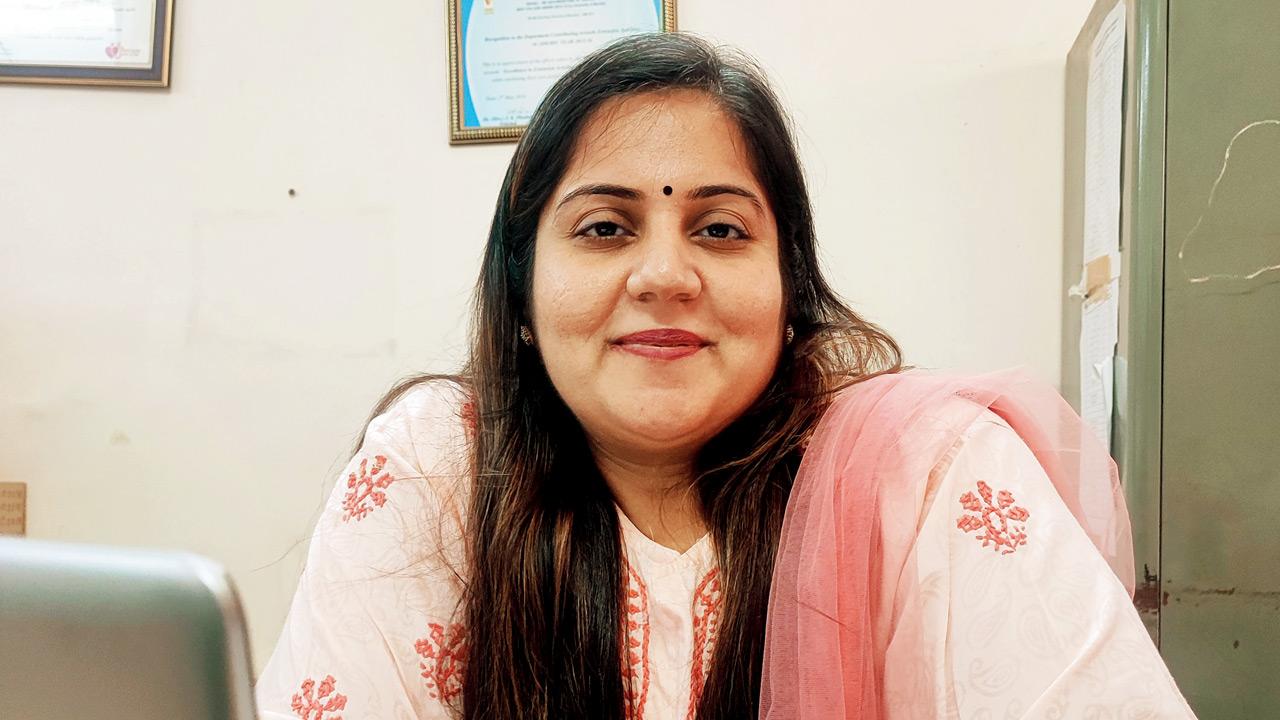
Mahek Sukhani
These colleges also see a lot of substance abuse. If the person you have sought emotional support from is young or a fellow student or hostel-mate, they could slip up under the influence,” says Dr Dayal Mirchandani, an independently practising psychiatrist.
Commenting on the Campus Mothers programme in particular, he says, “This idea that only women can provide emotional support is not true. I think the name ‘Campus Mothers’ itself is a problem. They should include male volunteers too, and make the name more equal,” he says.
Living in Mumbai, Dehradun-born Ranaut describes being painfully under-supported. He didn’t seek professional help, and he is also unclear whether his college offers counselling services. “I think my friends and family connect with me on a more personal level, rather than someone that I’m paying to have that same connection with,” he says.
Faculty members in Mumbai say this is typical: moving to a large, competitive city often strains students structurally. “A bunch of students also struggle with the basics. Initially, they come to ask what to do in the city on weekends, where to buy eggs, and such small questions. Gradually, they confide that they haven’t been sleeping enough because they are anxious,” says Utkarsha K, a faculty member at a private college in Mumbai. She adds that students speak to any professor they find approachable, regardless of gender.
Educators seem unfazed by this and say that providing emotional support is part of the job. “It’s common to play the role of an informal counsellor at times. Students often face a variety of challenges: academic stress, personal issues, career uncertainty, or even just adjusting to life changes. In those moments, students approach me not just for academic advice but also for guidance on how to manage these pressures,” says Mahek Sukhani, head of department BAMMC at Don Bosco College, Kurla.
Utkarsha has noted an increase in the number of students who seek support from professors in the last five years. “The course may have changed, but the course load is the same. But students can’t seem to cope with it. They are more anxious and stressed compared to five years ago, I have noticed this post the pandemic,” she says.
But is being an emotional support to students draining, especially when one lacks the necessary training? “It is emotionally draining,” admits Utkasrsha. “You are constantly an unofficial sounding board. But it’s the humane thing to do. As faculty, we don’t want students to bottle up anything. You want your students to talk to you.”
At Don Bosco College, counselling services are part-time and available for three days a week during working hours. Students can book an appointment via a text message and schedule an appointment with the counsellor. Or they can reach the counsellor through their HOD or designated professor. This designated professor is available to support students in the absence of a counsellor. Students who feel hesitant to approach can connect with the counsellor through the professor first.
“But it also depends on the person whether they agree to seek help. Students often don’t seek help when they need it. It could be because they are worried about their privacy,” says Dr Mirchandani.
The load then, naturally, falls on faculty members who are rarely trained. “There is no formal training. At an institutional level, we have sensitisation programmes. Counsellors tell us what signs to observe, behavioural patterns to notice, and then how to address them. In my capacity, I can offer additional support by being lenient with deadlines or giving students extra help. But things like exam dates can’t be moved. In other cases, we can refer students to the counsellor,” says Utkarsha.
Sukhani agrees that there is no formal training provided to professors. Instead, there are other resources, such as initiatives like peer-to-peer counselling or a mentor-mentee program. She says, “Institutions across India have taken strides toward recognising student mental health, but several key gaps persist. In my opinion, there is still stigma, cultural barriers, an insufficient counselling infrastructure, and a neglect of digital mental health tools.” To tackle stigma and to encourage hesitant students to seek help when they need it, Don Bosco College works on normalising mental health support through talks and awareness events.
Utkarsha opines that students don’t have the stigma that they did years ago. “They know when and how to seek help. But there may be some resistance in speaking to counsellors on campus. They would be more willing to speak to counsellors off-campus,” she says.
One can’t say that educational institutions are not taking student mental health seriously. But there are still large gaps to be filled. Dr Mirachandani says, “A lot of the counsellors appointed at colleges are new graduates. They may have textbook knowledge, but they lack practical experience. Additionally, there is still stigma around mental health, lack of funding and infrastructure, and the number of psychiatrists in the country is also less.”
As per reports from 2020, India has 9000 psychiatrists in total in combination with 700 psychiatrists graduating every year. This brings the number to 0.75 psychiatrists per 100,000 people in India, which is far below the WHO’s recommended level of at least three psychiatrists per 100,000 people.
“Accessibility to mental health services is still a huge problem. Besides, some people believe that yoga and meditation can solve everything,” says Dr Mirchandani. So, what kind of policy-level support is required at campuses across India? “For lasting change in how mental health is addressed in educational spaces, systemic and policy-level reforms are essential, targeting both students and faculty,” says Sukhani.
0.75
No of psychiatrists per 100,000 people in India
*Source: World Health Organisation
With inputs by Saesha Deviprasad
 Subscribe today by clicking the link and stay updated with the latest news!" Click here!


