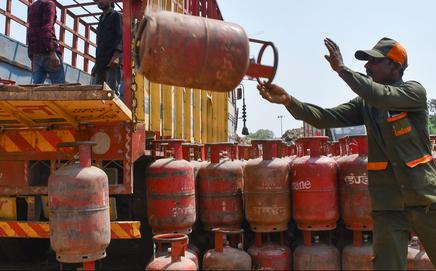
The Centre on Saturday increased the allocation of commercial LPG to states and Union Territories to 50 per cent, aiming to ease supply pressures amid improving demand conditions and a decline in panic bookings, reported news agency PTI. Additional allocation to support key sectors The Ministry of Petroleum and Natural Gas said an additional 20 per cent allocation has been approved, taking the total to 50 per cent, which also includes an earlier 10 per cent allocation linked to reforms promoting piped natural gas (PNG), reported IANS. The increased supply will be prioritised for essential sectors such as restaurants, dhabas, hotels, industrial canteens, food processing units, dairy operations, and community kitchens. Smaller 5 kg free trade LPG cylinders for migrant workers will also be included. Gradual restoration of supply The government had earlier restored 20 per cent of commercial LPG supply and subsequently added another 10 per cent allocation based on states’ performance in PNG expansion reforms, reported IANS. Officials said 20 states and Union Territories have already issued orders to distribute non-domestic LPG in line with central guidelines, while public sector oil companies are supplying the remaining regions. Strong uptake across states According to the ministry, around 13,479 metric tonnes of commercial LPG has been lifted by businesses across states and UTs over the past week, reported IANS. Educational institutions and hospitals are being given priority, with nearly 50 per cent of the allocation directed towards these critical sectors. Panic bookings decline, supply stabilises The government said panic-driven LPG bookings have reduced significantly, while domestic LPG production at refineries has increased to support demand, reported IANS. Most deliveries are now being processed through Delivery Authentication Code (DAC) systems, improving transparency and efficiency. No fuel shortages reported Officials reiterated that there have been no reports of fuel shortages at petrol pumps, with adequate stocks of petrol and diesel available across the country, reported IANS. “All refineries are operating at high capacity, and sufficient crude inventories are in place,” the ministry said. Advisory to public The government urged citizens not to resort to panic buying, assuring that supplies are stable despite global uncertainties linked to geopolitical tensions. The enhanced allocation is part of broader efforts to maintain uninterrupted fuel supply and support essential services during a period of global energy disruptions. (With inputs from IANS)
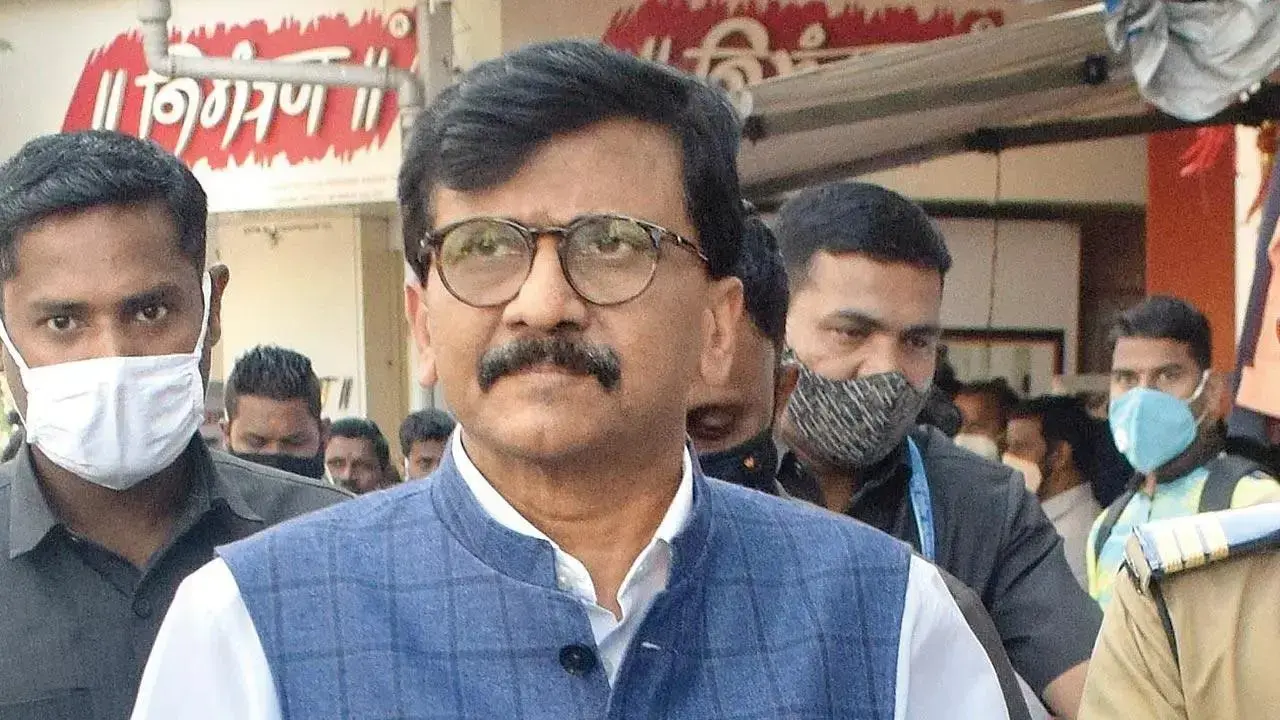
21 March,2026 07:25 PM IST | New Delhi | mid-day online correspondentShiv Sena (UBT) MP Sanjay Raut on Saturday levelled serious allegations against the electoral process in India, claiming that elections are being “manipulated, hijacked and pressured,” and questioned the neutrality of the Election Commission, particularly in West Bengal, reported news agency ANI. ‘Elections not being conducted fairly’ Speaking to reporters, Raut alleged that electoral processes across the country are no longer free and fair. He claimed that since Prime Minister Narendra Modi and Union Home Minister Amit Shah assumed power, elections at all levels — from local bodies to the Lok Sabha — have been influenced through various means, reported ANI. “Elections are being manipulated and pressured. Let the world see how they are conducted,” he said. Calls for international scrutiny Raut also called for international oversight, urging the United Nations to send observers to India to assess the conduct of elections. He questioned the government’s claims about the strength of India’s democracy on global platforms and said ground realities should be independently verified, reported ANI. Allegations of bias in West Bengal The Rajya Sabha MP specifically raised concerns about developments in West Bengal, alleging large-scale administrative changes and claiming that officials were being replaced in a manner that raises questions about neutrality, reported ANI. He further alleged that the situation in the state resembles an “undeclared emergency.” Political remarks on BJP strategy Raut accused the BJP of attempting to expand its political influence through non-democratic means and said the party was determined to gain control in states where it is not in power. He also expressed support for West Bengal Chief Minister Mamata Banerjee, stating that her party has resisted such efforts. Criticism of institutions In his remarks, Raut also criticised institutions, alleging that there is little distinction between key constitutional bodies and the ruling party. He referred to past political developments, including party splits, to question the functioning of democratic mechanisms, reported ANI. No official response yet There has been no immediate response from the Election Commission or the BJP to Raut’s allegations. The remarks come amid heightened political activity and debates over electoral transparency and governance in several states. (With inputs from ANI)
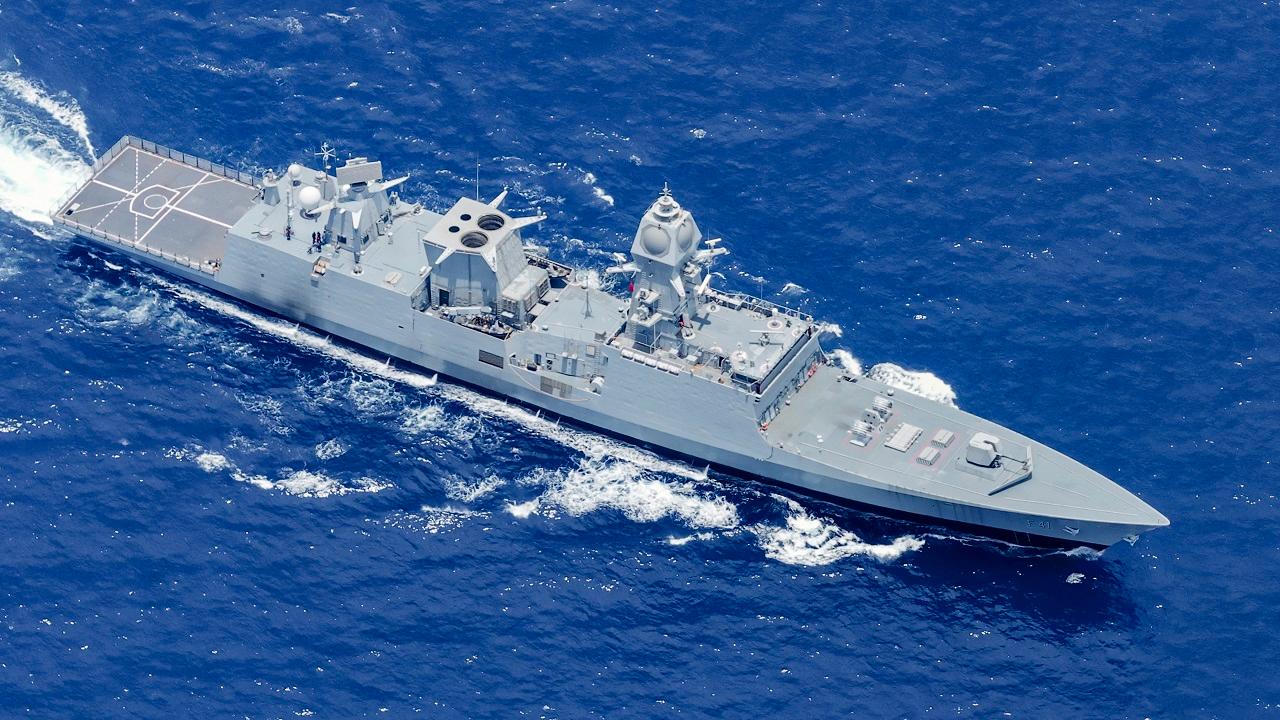
21 March,2026 06:14 PM IST | New Delhi | mid-day online correspondentThe Indian Navy is set to commission its indigenous stealth frigate Taragiri on April 3 at Visakhapatnam, marking a significant milestone in India’s push towards self-reliance in defence manufacturing, reported news agency PTI. The commissioning ceremony will be presided over by Defence Minister Rajnath Singh. Part of advanced Project 17A warship programme Taragiri is the fourth ship under the Nilgiri-class (Project 17A) and the third vessel built by Mazagon Dock Shipbuilding Ltd (MDL) in Mumbai, reported PTI. The warship was delivered to the Navy in November last year and represents a major step forward in indigenous warship design and construction. Equipped with advanced weapons and stealth features The 6,670-tonne frigate is equipped with a modern suite of weapons, including supersonic surface-to-surface missiles, medium-range surface-to-air missiles and advanced anti-submarine warfare systems, reported PTI. Officials said these systems are integrated through a state-of-the-art combat management system, enabling rapid and precise response to threats. The vessel also features a significantly reduced radar cross-section, enhancing its stealth capabilities during operations. Designed for multi-dimensional operations Powered by a Combined Diesel or Gas (CODOG) propulsion system, Taragiri is capable of high-speed and long-endurance missions. The ship is designed for a wide range of roles, including combat operations, maritime surveillance, and humanitarian assistance and disaster relief missions, reported PTI. Strong focus on indigenous manufacturing With over 75 per cent indigenous content, the warship reflects the growing strength of India’s domestic defence ecosystem. Officials said more than 200 micro, small and medium enterprises (MSMEs) have contributed to the project, supporting employment and boosting local industry under the Aatmanirbhar Bharat initiative, reported PTI. Symbol of next-generation naval capability The Navy described Taragiri as a “quantum leap” in design, automation, survivability and firepower compared to earlier warships. It is expected to enhance India’s maritime capabilities and strengthen its presence in strategically important waters. Boost to maritime security and diplomacy Beyond combat roles, the frigate is also designed to support humanitarian missions and disaster response, making it a versatile asset in both military and civilian operations, reported PTI. The commissioning of Taragiri is being seen as a key step in strengthening India’s maritime security and its ambition to emerge as a major naval power. (With inputs from PTI)
21 March,2026 06:01 PM IST | New Delhi | mid-day online correspondentReliance Group Chairman Anil Ambani was interrogated by the CBI for seven hours on Friday in Delhi, marking the second consecutive day of questioning in connection with the alleged Rs 2,929.05 crore SBI fraud case. CBI had registered an FIR on August 21, 2025, following a complaint filed by SBI three days earlier over allegations of fraud to the tune of Rs 2,929.05 crore against the public sector bank, in which Reliance Communications Limited, Anil D Ambani and others, including unknown public servants, are accused. “During the investigation of this case, earlier the CBI had summoned accused Anil Ambani for interrogation on Thursday at the Head Office in Delhi,” a senior officer said. He added, “Since the interrogation remained incomplete on Thursday, Anil Ambani was summoned again to the CBI office on Friday.” Complaint against Anil Ambani The complaint is based on a forensic audit report that alleges large-scale diversion and misutilisation of loan funds through interlinked and circuitous transactions among group entities during the period 2013-17. The diversions of funds, as per the complaint, resulted in wrongful loss of Rs 2,929.05 crore to SBI out of a total exposure of Rs 19,694.33 crore involving 17 public sector banks, according to an official statement. SBI is the lead bank in the consortium of 11 banks, including Bank of India, Central Bank of India, UCO Bank, Union Bank of India, and all the other banks that had extended loans to the Anil Ambani group. Subsequent to the registration of the case, separate complaints were received from Punjab National Bank, Bank of India, Union Bank of India, UCO Bank, Central Bank of India, IDBI Bank and Bank of Maharashtra. Following a series of complaints against Ambani, the CBI obtained search warrants from the court of the Special Judge for the CBI, Mumbai, and conducted searches at two official premises of Reliance Communications Limited on August 23, 2025. Various other cases filed against Anil Ambani Another case has been registered against Ambani and others, including some public servants, on February 25, 2026. The case was filed on the basis of a complaint filed on February 24, by Bank of Baroda, which includes the exposure of e-Dena Bank and e-Vijaya Bank. (With inputs from IANS)
21 March,2026 05:04 PM IST | New Delhi | mid-day online correspondentThe BJP on Saturday announced two more candidates for the April 9 Assembly elections in Assam, fielding Krishna Saha from Dalgaon and Jiban Gogoi from Sissibargaon, party sources told PTI. On Thursday, the BJP had released its first list of 88 candidates for Assam, fielding Chief Minister Himanta Biswa Sarma from Jalukbari and sitting BJP MP Hitendra Nath Goswami against state Congress chief Gaurav Gogoi from Jorhat. The Cabinet ministers renominated from their seats include Ajanta Neog from Golaghat, Ranoj Pegu from Dhemaji (ST), Rupesh Gowala from Doomdooma, Binal Borah from Tingkhon, Pijush Hazarika from Jagiroad (SC), Jayanta Malla Baruah from Nalbari, Ashok Singhal from Dhekiajuli, Krishendu Paul from Patharkandi, and Kaushik Rai from Lakhipur, reported PTI. Congress leaders Pradyut Bordoloi and Bhupen Borah, who recently joined the BJP, will contest from Dispur and Bihpuria, respectively. Among the other recent entrants from the Congress, Sashi Kanta Das has been fielded from Raha (SC), while Kamalakhya Purkayastha has been shifted from Karimganj (North) to Katigorah. Former AGP MLA Bhupen Roy, who recently joined the BJP, will contest from Abhayapuri. The 126-member Assam Assembly will go to the polls on April 9, with results scheduled to be announced on May 4. Puducherry Assembly polls 2026: PML Kalyanasundaram, GNS Rajasekaran among BJP’s picks for April 9 elections The BJP on Saturday announced nine candidates for the April 9 Puducherry Assembly polls, including P. M. L. Kalyanasundaram from Kalapet and G. N. S. Rajasekaran from Thirunallar. According to the list, A. Namassivayam will contest from Mannadipet, V. P. Ramalingame from Rajbhavan, and A. Johnkumar from Mudaliarpet. Embalam R. Selvam will enter the fray from Manavely, T. K. S. M. Meenatchisundaram from Neravy T. R. Pattinam, and A. Dineshan from Mahe. E. Theeppainthan will seek election from Oussudu, a Scheduled Caste–reserved seat, PTI reported. The ruling AINRC and the BJP-AIADMK combine on Friday reached an agreement for the Assembly polls in the Union Territory, under which the AINRC will contest 16 seats and the BJP will contest the remaining 14. As per PTI, the arrangements were finalised after Puducherry Chief Minister and AINRC leader N. Rangasamy held talks on Friday with BJP leader and Union minister Mansukh Mandaviya at a private hotel. From its share, the BJP has allocated two seats each to the AIADMK and the Lakshia Jananayaga Katchi (LJK), AINRC sources said. Although Rangasamy had maintained that the LJK, headed by Jose Charles Matin, should not be accommodated in the NDA led by the AINRC, talks with the Central minister ended with the chief minister agreeing to include the LJK in the front. In the 2021 Assembly elections, the AINRC contested 16 seats and won 10, the BJP contested nine seats and won six, while the AIADMK contested five seats and drew a blank. The single-phase polling for 30 seats will be held on April 9, with results declared on May 4. (With PTI inputs)
21 March,2026 03:05 PM IST | New Delhi | mid-day online correspondentThe BJP on Saturday announced nine candidates for the April 9 Puducherry Assembly polls, including P. M. L. Kalyanasundaram from Kalapet and G. N. S. Rajasekaran from Thirunallar. According to the list, A. Namassivayam will contest from Mannadipet, V. P. Ramalingame from Rajbhavan, and A. Johnkumar from Mudaliarpet. Embalam R. Selvam will enter the fray from Manavely, T. K. S. M. Meenatchisundaram from Neravy T. R. Pattinam, and A. Dineshan from Mahe. E. Theeppainthan will seek election from Oussudu, a Scheduled Caste–reserved seat, PTI reported. The ruling AINRC and the BJP-AIADMK combine on Friday reached an agreement for the Assembly polls in the Union Territory, under which the AINRC will contest 16 seats and the BJP will contest the remaining 14. As per PTI, the arrangements were finalised after Puducherry Chief Minister and AINRC leader N. Rangasamy held talks on Friday with BJP leader and Union minister Mansukh Mandaviya at a private hotel. From its share, the BJP has allocated two seats each to the AIADMK and the Lakshia Jananayaga Katchi (LJK), AINRC sources said. Although Rangasamy had maintained that the LJK, headed by Jose Charles Matin, should not be accommodated in the NDA led by the AINRC, talks with the Central minister ended with the chief minister agreeing to include the LJK in the front. In the 2021 Assembly elections, the AINRC contested 16 seats and won 10, the BJP contested nine seats and won six, while the AIADMK contested five seats and drew a blank. The single-phase polling for 30 seats will be held on April 9, with results declared on May 4. BJP announces two more candidates for Assam Assembly polls The BJP on Saturday announced two more candidates for the April 9 Assembly elections in Assam, fielding Krishna Saha from Dalgaon and Jiban Gogoi from Sissibargaon, party sources told PTI. On Thursday, the BJP had released its first list of 88 candidates for Assam, fielding Chief Minister Himanta Biswa Sarma from Jalukbari and sitting BJP MP Hitendra Nath Goswami against state Congress chief Gaurav Gogoi from Jorhat. The Cabinet ministers renominated from their seats include Ajanta Neog from Golaghat, Ranoj Pegu from Dhemaji (ST), Rupesh Gowala from Doomdooma, Binal Borah from Tingkhon, Pijush Hazarika from Jagiroad (SC), Jayanta Malla Baruah from Nalbari, Ashok Singhal from Dhekiajuli, Krishendu Paul from Patharkandi, and Kaushik Rai from Lakhipur, reported PTI. Congress leaders Pradyut Bordoloi and Bhupen Borah, who recently joined the BJP, will contest from Dispur and Bihpuria, respectively. Among the other recent entrants from the Congress, Sashi Kanta Das has been fielded from Raha (SC), while Kamalakhya Purkayastha has been shifted from Karimganj (North) to Katigorah. Former AGP MLA Bhupen Roy, who recently joined the BJP, will contest from Abhayapuri. The 126-member Assam Assembly will go to the polls on April 9, with results scheduled to be announced on May 4. (With PTI inputs)
21 March,2026 02:56 PM IST | New Delhi | mid-day online correspondentDespite lacking a majority, the BJP secured the Satara Zilla Parishad (ZP) president post in Maharashtra, prompting the Shiv Sena to accuse the party of "murdering democracy" and warn of serious repercussions in the upcoming larger elections, reported PTI. The election for the Satara Zilla Parishad president’s post was held on Friday. BJP’s Priya Shinde was elected president, surpassing the Shiv Sena-NCP combine’s candidate, despite the latter having the majority. The BJP narrowly outpaced the Sena-NCP alliance to claim the top post. Speaking to PTI on Friday, Sena minister Shamhuraj Desai, who is also the guardian minister of Satara, said, “They (the BJP) took two members each from the Shiv Sena and the NCP. We will initiate disqualification proceedings against them.” “The BJP may be happy about this victory for the moment, but bigger polls are ahead. At that time, the Shiv Sena and NCP will take their respective stands,” he warned. “This election is condemnable and an act of murdering democracy. The consequences of this will be severe in the Satara district. Even as a minister in the Mahayuti government, I have my party and the right to work for it,” Desai added, the news agency reported. He further stated that while the BJP may celebrate, the moral victory belongs to the Shiv Sena-NCP alliance. The BJP, the Eknath Shinde-led Shiv Sena, and the NCP, headed by Sunetra Pawar, share power in Maharashtra as part of the Mahayuti government. Desai also alleged that he was manhandled by the police during the election process on Friday and vowed to raise the issue in the cabinet meeting next week. “If ministers are being manhandled by the Satara police, we strongly condemn this. The police also acted as domestic help for the BJP,” he said. Mahayuti sweeps Maharashtra ZP polls, wins 552 of 731 seats; BJP leads with 225 Earlier last month, the BJP-led Mahayuti dominated the Maharashtra Zilla Parishad polls, securing 552 out of 731 seats. In the ruling alliance, the BJP led with 225 seats, followed by the Nationalist Congress Party (NCP) with 165 and the Shiv Sena with 162. In the opposition Maha Vikas Aghadi, the Congress emerged on top with 55 seats, followed by 43 for the Uddhav Thackeray-led Shiv Sena (UBT) and 26 for Sharad Pawar's NCP (SP). The Maharashtra Navnirman Sena won one seat each in Latur and Ratnagiri. Independents won 20 seats, unrecognised parties registered with the SEC got 14, and other parties registered with the SEC won seven seats. (With PTI inputs)
21 March,2026 01:47 PM IST | Satara | mid-day online correspondentVice President C.P. Radhakrishnan on Saturday warned that the world is facing the threat of escalating conflicts and emphasised that dialogue remains the only path to lasting solutions, reported news agency PTI. He was addressing participants at the 29th National Youth Parliament held at the Dr Hedgewar Smruti Mandir complex in Nagpur. ‘Dialogue is key in a conflict-prone world’ Highlighting global tensions, the Vice President said meaningful conversations and mutual understanding are essential to resolve disputes. “When the whole world is under the threat of war, only dialogue can lead to solutions,” he said, stressing the importance of respectful debate and listening to diverse perspectives, reported PTI. He added that forums like the Youth Parliament help inculcate democratic values and encourage constructive engagement. Emphasis on role of Indian languages Speaking on the theme “Indian Languages and Developed India-2047,” Radhakrishnan underlined the significance of linguistic diversity in shaping national identity, reported PTI. He said speaking in one’s mother tongue is not about being regional but about being authentic, adding that all languages collectively contribute to India’s cultural harmony. Promotion of Constitution in regional languages The Vice President noted that the Constitution is now being made available in multiple Indian languages, including several regional and tribal languages, to improve accessibility, reported PTI. He praised efforts to preserve linguistic diversity and ensure wider reach of constitutional values among citizens. Constructive debates essential for democracy Referring to the ongoing Budget Session of Parliament, Radhakrishnan said he was encouraged by the quality of discussions in the House, reported PTI. He stressed that differences of opinion should not lead to conflict but should help in arriving at meaningful conclusions through dialogue. Youth key to ‘Viksit Bharat’ vision Addressing students participating in the Youth Parliament, he described them as the generation that will witness India’s transformation into a developed nation by 2047, reported PTI. He urged them to think independently, innovate from their roots and contribute to nation-building with confidence. Nagpur’s historical significance highlighted Radhakrishnan also spoke about Nagpur’s importance in India’s national consciousness and its association with major socio-cultural movements, reported PTI. He said the values of service, discipline and commitment to the nation remain central to India’s progress. The Vice President concluded by reiterating that dialogue-driven democracy and respect for diversity will be crucial in achieving the vision of a developed India. (With inputs from PTI)
21 March,2026 01:43 PM IST | Nagpur | mid-day online correspondentThe India Meteorological Department (IMD) on Saturday issued a nationwide alert, predicting widespread thunderstorms, rainfall, lightning, and gusty winds across several regions in the coming days. In its latest bulletin, the agency highlighted intensified weather activity over eastern, central, and northeastern India, warning of heavy rain, thundersqualls, and possible hailstorms, reported ANI. According to the IMD, Sub-Himalayan West Bengal and Sikkim are likely to witness widespread rainfall between March 21 and 24, with isolated heavy to very heavy rainfall on March 21. Thundersqualls with wind speeds reaching up to 80 kmph are expected in parts of Gangetic West Bengal, while Odisha may experience winds gusting up to 70 kmph along with possible hailstorm activity. In Northeast India, fairly widespread rainfall with thunderstorms and gusty winds is expected over Manipur, Mizoram, and Tripura, while isolated heavy rainfall is likely over Assam, Meghalaya, and Arunachal Pradesh on March 24. East and Central India, including Bihar, Jharkhand, Chhattisgarh, and Madhya Pradesh, are also expected to receive scattered rainfall accompanied by strong winds over the next few days. Northwest India is set to experience a fresh wet spell, with light to moderate rainfall and snowfall forecast over Himachal Pradesh and Uttarakhand on March 23. East Uttar Pradesh may witness fairly widespread rainfall, with gusty winds reaching up to 40 kmph. Intermittent rainfall likely in Delhi this evening, says IMD Speaking to ANI on Friday, IMD scientist Akhil Shrivastava said, “Large-scale thunderstorm activity is currently being witnessed across India. In Delhi, rainfall occurred yesterday, resulting in a significant drop in maximum temperatures. Our forecast indicates that similar intermittent rainfall is likely during the evening hours today. However, this activity is expected to subside in Delhi from tomorrow, with the probability of rain decreasing thereafter.” “While conditions are mainly cloudy today, they are expected to become partly cloudy tomorrow. Compared to yesterday, a slight further decline of about 2–3 degrees Celsius may be observed in maximum temperatures today. Nevertheless, temperatures are expected to begin rising again after tomorrow,” he added. Shrivastava further noted that an ‘Orange Alert’ has been issued for regions including eastern Uttar Pradesh, Bihar, Jharkhand, Chhattisgarh, Odisha, and parts of West Bengal due to expected thunderstorms, gusty winds, and possible hailstorms. “Wind speeds in eastern India may reach 60 to 70 kmph, posing potential risks,” he said. Meanwhile, southern states and parts of Maharashtra are also expected to receive scattered rainfall, even as hot and humid conditions may prevail over Kerala, coastal Karnataka, and Goa. (With ANI inputs)
21 March,2026 12:39 PM IST | New Delhi | mid-day online correspondentThe Centre on Saturday dismissed as “baseless” claims circulating on social media that the United States had sought India’s permission under the Logistics Exchange Memorandum of Agreement (LEMOA) to use Indian territory for launching strikes on Iran. The Ministry of External Affairs (MEA) urged citizens to remain cautious and avoid sharing unverified information amid sensitive geopolitical developments. MEA warns against misinformation In an official statement, the MEA said such claims have no factual basis and are misleading. “Please stay alert against such false and baseless claims and posts on social media,” the ministry said, cautioning users against amplifying rumours. Fake News Alert!Please stay alert against such false and baseless claims and posts on social media! pic.twitter.com/oKRc2kefAo — MEA FactCheck (@MEAFactCheck) March 21, 2026 No provision for offensive operations under LEMOA Officials clarified that LEMOA, signed between India and the United States in 2016, is strictly a logistics-sharing agreement and does not allow offensive military operations from each other’s territory. Under the pact, both countries can access each other’s military facilities for support such as refuelling, repair and supplies.However, it does not permit the establishment of bases or the use of territory for combat missions, and each request requires case-by-case approval. Rumours linked to recent geopolitical tensions The misinformation appears to have gained traction following reports of heightened US military activity in the region, including strikes linked to the ongoing Iran conflict. The government has categorically denied any involvement, stating that Indian ports, airspace or facilities were not used for such operations. India reiterates neutral and independent stance Officials reiterated that India maintains an independent foreign policy and does not allow its territory to be used for offensive actions by other countries. They also stressed that earlier instances of similar claims had been debunked as false. Advisory to public The government has urged people to verify information before sharing it online, especially on issues related to national security and international relations. Authorities warned that spreading misinformation could create unnecessary panic and confusion during an already volatile global situation. The clarification comes amid heightened tensions in West Asia, with India continuing to call for restraint and diplomatic solutions. US deploys more troops to Mideast as Trump considers 'winding down' military operations Meanwhile, US President Donald Trump said his administration was considering "winding down" military operations in the Middle East even as the United States announced it was sending more warships and Marines to the region and Iran threatened to attack tourist sites worldwide. The mixed US messages came after another climb in oil prices plunged the US stock market, and was followed by a Trump administration announcement that it will lift sanctions on Iranian oil loaded on ships, a move aimed at wrangling soaring fuel prices. (With inputs from IANS)
21 March,2026 12:38 PM IST | New Delhi | mid-day online correspondentSeveral devotees converged at the Jama Masjid in the national capital on Saturday morning to perform the special prayers of Eid-ul-Fitr. The atmosphere remained vibrant as families exchanged greetings, signalling the start of day-long festivities across the city. Following the sighting of the Shawwal crescent, the mosque premises and surrounding streets of Old Delhi were filled with worshippers, marking the conclusion of the holy month of Ramzan. A massive crowd of devotees and shoppers on Friday gathered at the Jama Masjid and its surrounding markets to make final purchases for Eid al-Fitr. Meanwhile, on Friday night, the Delhi Police strengthened the security measures in and around Jama Masjid in view of Eid al-Fitr. People also offered 'Alvida Namaz' in Delhi's Jama Masjid, ahead of Eid al-Fitr. The market around Jama Masjid is in full fervour as people shop for clothes and food items. Security was also heightened near the Uttam Nagar East metro station. The development comes after the Delhi High Court directed the Delhi Police to make adequate arrangements in the area in apprehension of violence during Eid. The Delhi High Court issued a notice to the Delhi Police and sought a response. The court also directed to keep the Police arrangement till the festival of Ram Navami. The matter is listed for further hearing on April 6. The Muslim community around the country is gearing up for the celebration of Eid al-Fitr tomorrow. People in large numbers offered namaz on the last Friday of the holy month of Ramazan in the Jama Masjid in Johari Bazar in Jaipur. On the other hand, President Droupadi Murmu on Friday extended heartfelt greetings to fellow citizens on the eve of Eid-ul-Fitr, according to a press release. In her message, the President has said, "On the auspicious occasion of Eid-ul-Fitr, I extend my heartfelt greetings and best wishes to all fellow citizens, especially to Muslim sisters and brothers living in India and abroad. Celebrated after the end of the holy month of Ramadan, this festival gives the message of self-control, charity and compassion for the underprivileged. It also conveys the message of love, brotherhood, peace, and mutual harmony." Meanwhile, Ramazan, the ninth month of the Muslim calendar, is one of the most sacred times as it is believed that the Quran came down to the earth from heaven for the very first time. The holy Quran is regarded as "a guidance for men and women, a declaration of direction, and a means of salvation."For an entire month, Muslims follow a schedule of waking up early, which they call 'Sheheri', and by 4:45 am have food, then after fasting for the whole day, not even drinking a drop of water. They perform Namaz five times a day. The early morning prayer is known as Fazar followed by Zohar in second, Ashar in third, Maghrib in fourth and the final one: Isha. The day-long fast (Roza) ends after Magrit which usually falls after 6 pm or later in the evening. At the end of Ramazan, Eid al-Fitr celebrates the breaking of the fast. Friends and families gather for festive meals and exchange gifts. Special gifts are also given to the poor. It is also believed that fasting during the month of Ramazan is one of the Five Pillars of Islam. This story has been sourced from a third party syndicated feed, agencies. Mid-day accepts no responsibility or liability for its dependability, trustworthiness, reliability and data of the text. Mid-day management/mid-day.com reserves the sole right to alter, delete or remove (without notice) the content in its absolute discretion for any reason whatsoever
21 March,2026 10:04 AM IST | New Delhi | ANIADVERTISEMENT







-1774025742203_d.png "Anil Ambani appeared before the CBI on Friday. File pic")