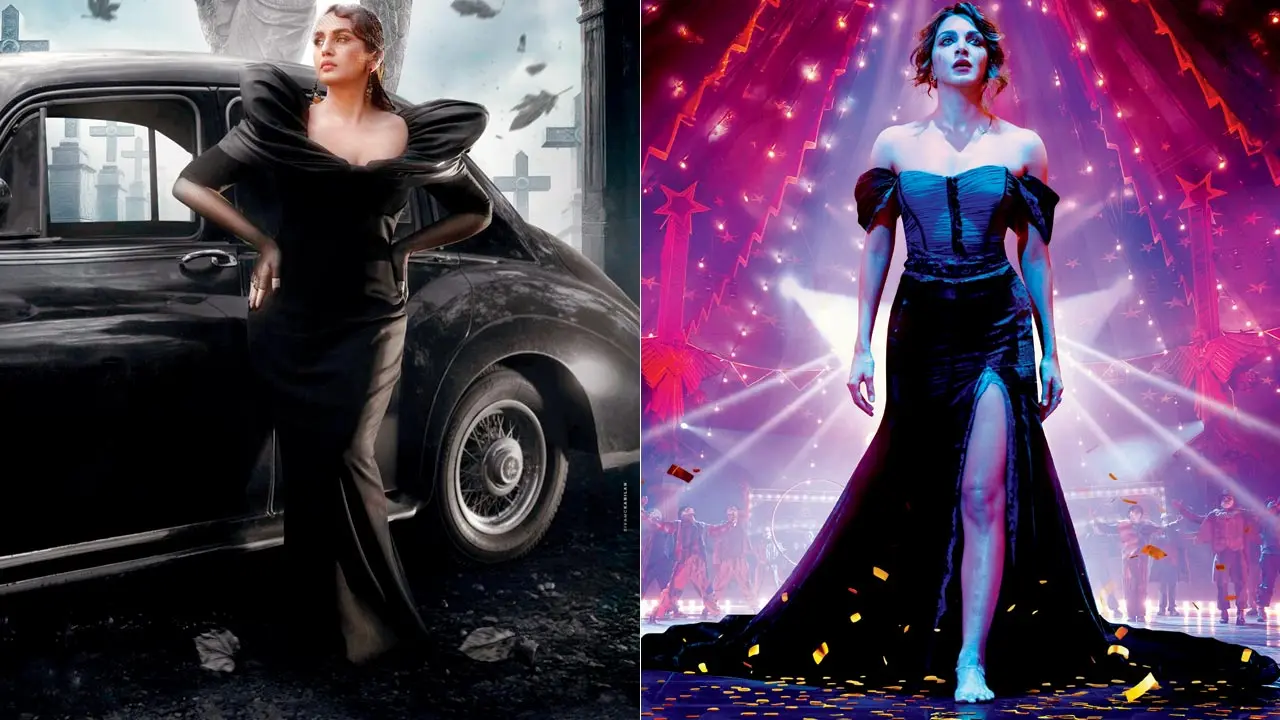
Costume designer Neha R Bajaj says Toxic’s fashion is inseparable from storytelling. From Kiara Advani to Huma Qureshi, every look is stylised, sculpted and detailed to reflect authority, emotion and the film’s bold, non-realistic visual world

Huma Qureshi as the antagonist in ‘Toxic’; (right) Kiara Advani in ‘Toxic’
For costume designer Neha R Bajaj, the mandate was clear when the makers of the upcoming multi-lingual film Toxic: A Fairy Tale for Grown-Ups approached her to style the actors — character-driven styling where design is inseparable from storytelling. And that’s exactly what she delivered. Proof: the much-talked-about looks of Kiara Advani and Huma Qureshi in the Yash-starrer.
“Given the scale of the cast, each character has a distinct stylistic language. The costumes [had to] communicate their authority, emotional state, and the dynamics they bring into the story,” begins Bajaj.
Yash in ‘Toxic’
The gangster actioner demanded a highly stylised, meticulously crafted visual aesthetic — one that stays far removed from realism-driven narratives, stressed the costume designer. “Overall the looks — [clothes, hair, makeup, body language] — in Toxic lean into a sculpted, style forward sensibility — distinct silhouettes, controlled glamour, and a very deliberate visual language,” she explains. The first looks of Advani and Qureshi were glamorous, heavy, dreamy yet intense. Bajaj emphasises that the film is built on a “very strong visual narrative,” where nothing exists in isolation. “Every character, outfit, and set is designed with a lot of detailing. It’s a film with a lot of badass characters,” she sums up.
She reiterates that Toxic occupies a completely different creative universe from her OTT work. “And in that sense, it's a world apart from The Family Man.” Elaborating on director Geetu Mohandas’ brief, Bajaj adds, “It's a very strong visual narrative.” Summing up the film’s tone succinctly, she says, “It's a film with a lot of badass characters.”
That sharp distinction becomes evident when the conversation shifts to The Family Man, where Bajaj’s approach was rooted in realism and continuity. “With a show like Family Man and with directors like Raj and DK, what happens is the brief is to firstly keep it real, relatable.” Costumes here were never meant to dominate. “It's never a costume story. It's always the character leading the narrative and the costumes always support it.”
While Manoj Bajpayee’s Srikant Tiwari offered limited scope for dramatic reinvention, subtle shifts — greying hair, better fabrics, distressed clothing — reflected narrative progression. The true creative freedom, Bajaj notes, came with new antagonists Nimrat Kaur and Jaideep Ahlawat, whom she describes as “a playground” because they arrived without pre-established histories.
Neha R Bajaj
She also designed for
2017
‘Omertà’
2023
‘Guns & Gulaabs’ and ‘Farzi’
On designing for ‘The Family Man’ franchise
Neha R Bajaj, who was working on ‘Toxic’ before Raj-DK’s espionage thriller, says, “It’s a world apart from ‘The Family Man’. Their brief was to keep it real, relatable.”
Subscribe today by clicking the link and stay updated with the latest news!" Click here!