Goa’s favourite homegrown spirit got a shot in the arm recently when a brand from a quiet village became the first-ever Geographical Indication (GI) tagged feni in the country

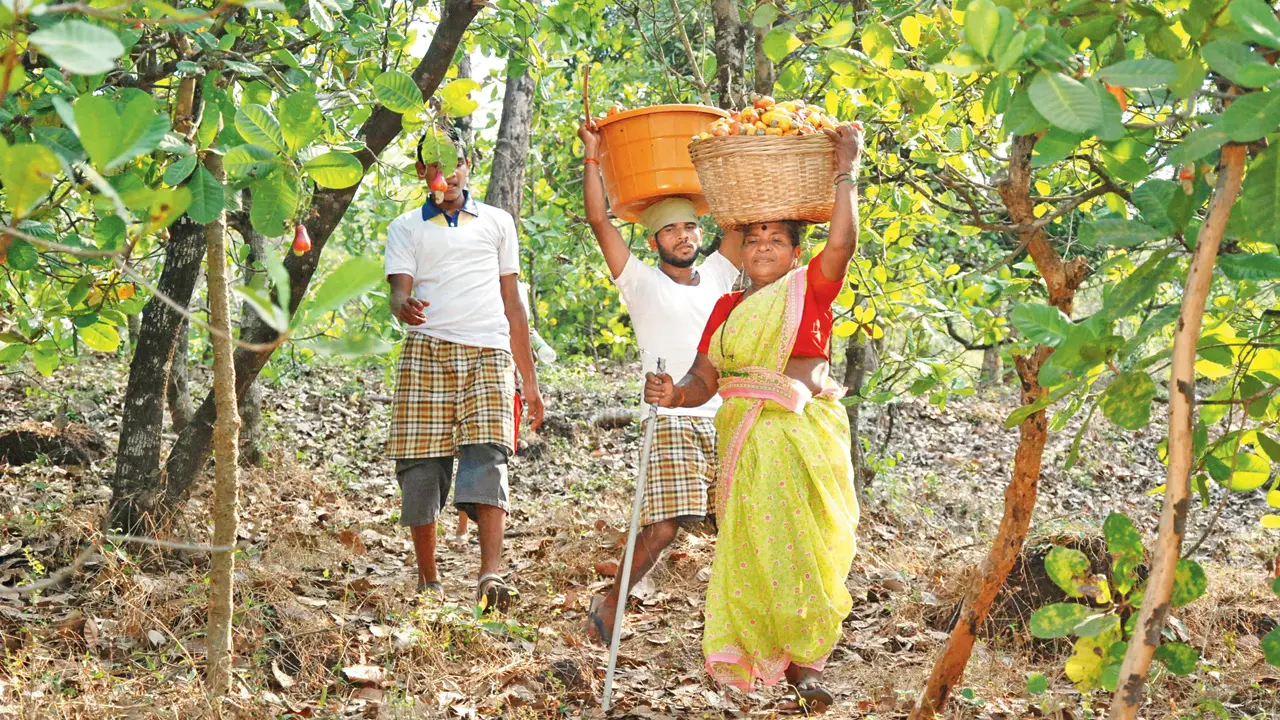
(Left) Cashew plant. REPRESENTATION PIC/ISTOCK; (above) workers collecting apples. Pics courtesy/Cazcar
Nestled in Nanora village, 35 kilometres north of Panaji, Goa Heritage Distillery is having its moment in the spotlight. Ozzo Feni (pronounced uzo, which means fire in Konkani under brand Cazcar has just received the first-ever Geographical Indication (GI) tag for feni in the country.

Second-generation owner of the distillery and founding member of Goa Cashew Feni Distillers and Bottlers Association (GCFDBA), Gurudatta Bhakta, reveals, “It is a proud moment for us, and the state of Goa. The Government of India has made a GI policy that puts the onus on the Department of Tourism to promote the produce nationally and internationally. This is the beginning of feni’s journey on the global map,” he believes.

The apples being deseeded for processing
The brand has been made following stringent regulations of GI certification — the cashew apples are sourced from Goa and all utensils used are stainless steel, copper or glass. The condensation of feni takes place in earthen mud clays called launi.

Gurudatta Bhakta
“The recent launch of Ozzo Feni by Cazcar marks a pivotal moment in feni’s history. As Goa’s first GI-tagged cashew feni, it also becomes India’s inaugural GI-certified alcohol brand. This designation elevates GI Feni to a status comparable to Scotch in Scotland or Champagne in France, positioning it as India’s first officially recognised geographical indication alcoholic beverage,” reasons Hanzel Vaz, GCFDBA secretary.

Helpers crush the apples
History of feni
The Portuguese missionaries, who brought the cashew plant trees to Goa, had introduced the cashew apple to the region. They started distilling feni and passed on the art to the locals. Feni-making became a cottage industry. Bhatikars, as people who made the feni were called, fired the bhatis or earthen pots. Today, it is made in copper pots under the coil method. “In those days, the juice used to be extracted by feet,” Bhakta tells us, adding, “Now, every process is mechanised. The juice is fermented naturally for 72 hours, and then distilled. The first distillate is called urak, and the second distillate along with a portion of the juice is feni. This double-distilled spirit is distilled at strength at bottling, which means it is not watered down. The ABV (alcohol by volume) is between 40 to 43 per cent.”

The juices of the crushed apples being collected
A peasant’s drink, feni was never meant for the dinner table. Deviya Rane, chairman, Goa Forest Department Corporation, started a cashew festival in Goa in the month of April or May; raising the status of feni. It is slowly coming into the top bars and restaurants of Goa. The only challenge is that feni is an acquired taste, Bhakta tells us.

The furnaces used to distill the juices for feni
The Feni Distillers and Bottlers Association was formed in 2007. “The State Government, under the wing of Science and Technology, decided that feni is a heritage spirit of Goa; it was previously regarded as country liquor. Cashew apples are grown in many parts of India, but feni is made only in Goa,” informs Bhakta, who is the founding member of the association.

The finished product of Ozzo
He signs off with an anecdote: “Mothers in Goa would give their children some feni to carry when they moved to colder regions of the world. They advised them to consume two spoons if it got too cold. There is a related quote as well in Konkani: ‘Goencho soro jeevak boro’, which translates to: Goan feni is good for health.”
Log on to: www.cazcars.com
Subscribe today by clicking the link and stay updated with the latest news!" Click here!