shot-button
E-paper E-paper
Home > Mumbai Guide News > Things To Do News > Article > Rujuta Diwekars new book highlights the uniqueness of seasonal cooking in India

Rujuta Diwekar's new book highlights the uniqueness of seasonal cooking in India

Updated on: 02 July,2025 09:17 AM IST  |  Mumbai
Dhara Vora Sabhnani |

Celebrity nutritionist Rujuta Diwekar celebrates the beauty of seasonal Indian cooking in her new book


Rujuta Diwekar's new book highlights the uniqueness of seasonal cooking in India

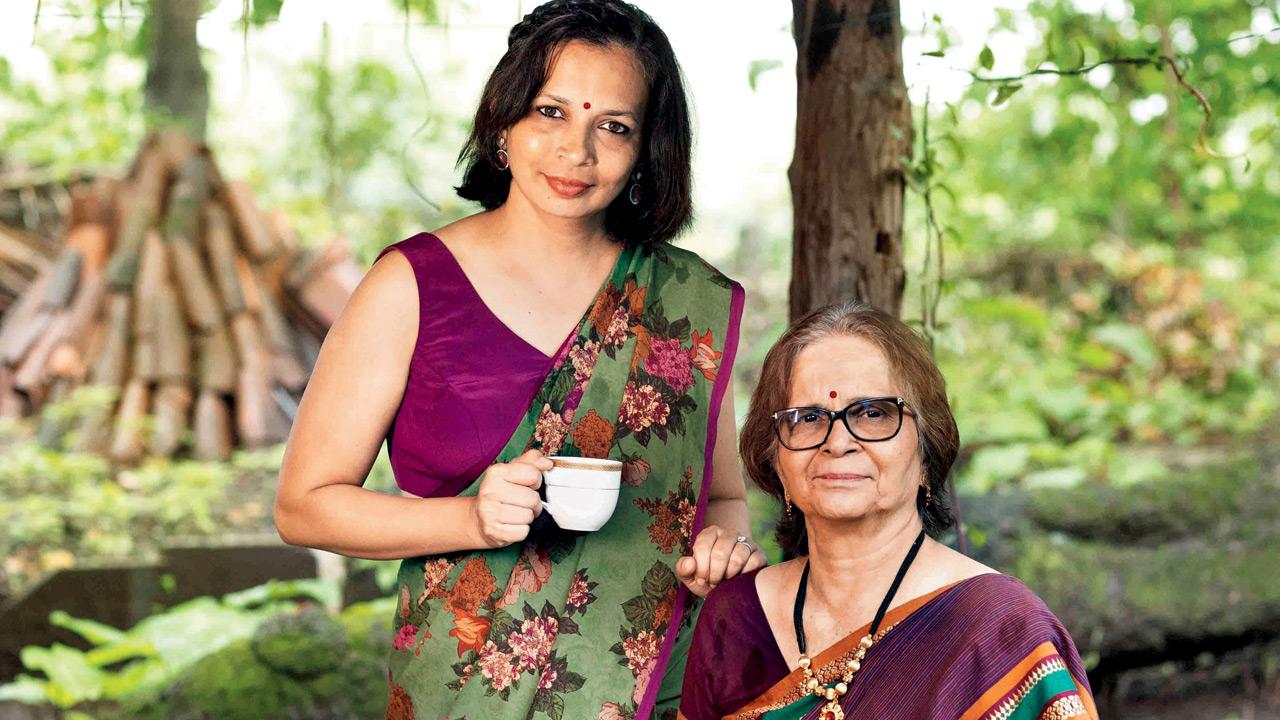
Rujuta Diwekar with her mother, Rekha Diwekar

With a foreword by actor Varun Dhawan, one might expect celebrity nutritionist and author Rujuta Diwekar’s latest book, her first with recipes, to be about what her famous clients (including Kareena Kapoor Khan) eat. Instead, the recipe book, with personal anecdotes and notes from her kitchen, steers clear of celebrity endorsement clichés, offering a grounded approach to savour local produce, and let the simple dishes nourish you.

The test of good home-set dahi is that the spoon placed on it should not sink. PICS COURTESY/RUJUTA DIWEKAR; Dorling Kindersley limited


With Mitahara: Food Wisdom From My Indian Kitchen (Dorling Kindersley), Diwekar invites readers to recalibrate their relationship with food — not through fad diets, but via timeless eating principles rooted in ancient Indian kitchen wisdom. Building on the concept of mitahara — the balanced consumption of food as a cornerstone of mental and physical well-being — Diwekar offers a practical roadmap for eating in sync with seasonal rhythms.


Narali Bhaat
Narali Bhaat

These recipes involve no elaborate culinary techniques; Diwekar herself picked up cooking only during the pandemic. The book includes flavour-accessible, culturally anchored recipes spanning a year’s harvest cycles, and yoga-derived principles. The 47-year-old discusses her book, and how following traditional Indian cooking is an easy way to eat mindfully without counting every calorie and micronutrient. Excerpts from a Zoom interview.

The book includes recipes many Indians have grown up eating, who is it for?
These are recipes that remind people of important flavours and familiar tastes of using their own local native ingredients. The book really is for me (laughs), and if a few people read it, they’re just partaking in the joy that I have felt while cooking and writing. It is for everyone who would explore their kitchen and their creativity. It is also for the working woman who likes to back herself with good taste and good nutrition.

Lauki ki Sabzi (bottle gourd curry) with sorghum chapati and a side of chutney — a complete, satisfying meal that takes very little time to prepare

From a nutritionist’s perspective, how does Indian cooking make eating in balance easy? 
It’s genius in design, it is highly localised to the region that you live in; and is further customised to your genetics and to the different people who live with you. It has an inherent aspect of sharing with everyone around you; it’s not just a culture of nurture and nourishment but also love. Had it been a flyover or some coastal road or some railway pass, people would have sung praises. But because the upholders of this system are women, it doesn’t get the accolades that it deserves. It has the versatility to let you mix and match, and customise as per what you do, how you feel, for an occasion, or even for last-minute guests.

Rujuta Diwekar at her ancestral farm in Sonave

One of the many highlights is the inclusion of wild and uncultivated foods in our regular cooking. Dishes like Ambadi bhaji, which you now eat in the monsoon or shevla are uncultivated vegetables that you don’t need to sow. And vegetarians, fish and meat eaters consume them in India. I think getting them in these times is a sign of our soil health still being good. We are looking after the planet just by not meddling with it too much. I also like how the culture regulates what you eat in which season, and how many times, and you are not worrying about sugar and carbs all the time, modaks during Ganpati for example or bhajiyas in the rains. And it’s not just about celebratory food, routine meals too. For example, curd rice or khichdi can be made different for everyone, with an addition of different side dishes too like achar, papad or wadas, routine meals are celebrated too. 

How does the modern Indian approach traditional Indian cooking?
Mumbai is the city of Dabbawalas. Mumbai inherently has acceptance for home-cooked meals so I hope that continues. Mumbai is able to keep up with its cosmopolitan culture also because we have so many cuisines and we should continue to eat and learn from the variety (we have lesser lafdas and lochas in general, which comes with the food). We also need to bring back the chana-singwala. We no longer snack on chana, singdana or sukha bhel in the evening; we prefer biscotti and coffee. And then we overeat at night. Every Mumbaikar must learn to cook, irrespective of gender; men already have too many local coaches dedicated to them. We feel that we can afford deliveries, but our health can’t.

The minute we have people we live with, to contribute in the kitchen, Indian cooking becomes easy and is not time consuming. Cooking is important and non-negotiable for staying healthy; you shouldn’t pick it up only after you develop diabetes or heart disease. I come from a family of working women, and have chosen recipes that are a joy to cook and don’t involve a lot of work, which is often assumed for Indian cooking.

Lauki sabzi, jowar roti with ghee, and peanut chutney

Ingredients

For peanut chutney

·  2 tsp oil
·  150g (51⁄4oz) peanuts
·  5–6 garlic cloves, peeled
·  1/2 tsp jeera (cumin seeds)
·  1 tsp Kashmiri lal mirch (Kashmiri red chilli powder)
·  Salt, to taste

For lauki sabzi

·  1 tbsp ghee
·  1 tsp jeera (cumin seeds)
·  1/4 tsp hing (asafoetida)
·  3 green chillies, chopped
·  1/2 lauki (bottle gourd), peeled and cut into square pieces 
·  1 tbsp peanuts, powdered
·  1 tbsp grated fresh coconut
·  1/2 tsp sugar
·  Salt, to taste 
·  Fresh coriander leaves, for garnish

For jowar roti

1 tbsp oil
140g (5oz) jowar flour, of which 1 tbsp is for sprinkling 
1 tbsp ghee
 
Method

Make the peanut chutney first, as it can be stored for a few days. Then make the lauki sabzi. Save the jowar roti for last as it tastes best when hot. For the peanut chutney, heat oil in a pan on medium heat for a few seconds. Add peanuts and sauté them, stirring constantly, until they turn a light golden-brown. Be sure to keep stirring as peanuts can burn very quickly. Once roasted, remove from heat and transfer to a bowl to cool completely. 

In a mortar, combine the roasted peanuts, peeled garlic cloves, jeera, Kashmiri lal mirch, and salt. Kashmiri lal mirch gives the chutney a vibrant colour without making it too spicy. Grind the mixture with the pestle. Since this is a dry chutney, it is important to use the mortar and pestle for the right texture – the ingredients should be pressed together, not just broken up as they would be in a mixer.

Once the mixture is ground, transfer it to a bowl. Sometimes, I eat this chutney with just a millet or rice bhakri for lunch. To make the lauki sabzi, in a pan, heat ghee on medium heat for a few seconds. Once the ghee is hot, add jeera and let the seeds splutter. Then, add hing and chopped green chillies. Sauté for a minute, until fragrant.

Next, add the chopped lauki and give a good stir so that the lauki pieces are well coated with ghee and spices. Cover the pan with a lid and cook until the lauki is tender, stirring occasionally to prevent sticking. Once the lauki is cooked, add the peanut powder, grated fresh coconut, sugar, and salt. Stir everything together until well combined. Garnish with fresh coriander leaves.

To make jowar roti, boil 120ml (4fl oz) of water in a saucepan. Once the water comes to the boil, add oil, stir it well, and remove the saucepan from the heat. Add the jowar flour to the hot water, cover the saucepan with a lid, and allow it to cool. Once the mixture has cooled enough to handle, transfer it to a plate and knead it into a smooth, pliable dough.

Divide the dough into small balls by rolling them between your palms. On a clean, flat surface, sprinkle jowar flour and gently flatten each dough ball into thin circles using your hands. It is fine if they are not perfectly round. Heat a tawa on medium heat. Once it is hot, place the rolled dough onto the tawa and lightly sprinkle water on the top side. Cook until the water has completely evaporated, then flip the roti and cook for another minute.

Next, remove the roti from the tawa and place the un-watered side directly on heat. Cook it until it is golden brown. Repeat this with all the rolled out rotis. Brush them with ghee for eating. You can enjoy this meal with a side of home-set dahi (curd).

RELEASE DATE July 16
AVAILABLE Leading bookstores and e-stores
COST Rs 1199

"Exciting news! Mid-day is now on WhatsApp Channels Subscribe today by clicking the link and stay updated with the latest news!" Click here!

Did you find this article helpful?

Yes
No

Help us improve further by providing more detailed feedback and stand a chance to win a 3-month e-paper subscription! Click Here

Note: Winners will be selected via a lucky draw.

Help us improve further by providing more detailed feedback and stand a chance to win a 3-month e-paper subscription! Click Here

Note: Winners will be selected via a lucky draw.

indian food mumbai food Food Recipes instant food Food guide mumbai mumbai guide weekend guide

Mid-Day Web Stories

Mid-Day Web Stories

This website uses cookie or similar technologies, to enhance your browsing experience and provide personalised recommendations. By continuing to use our website, you agree to our Privacy Policy and Cookie Policy. OK