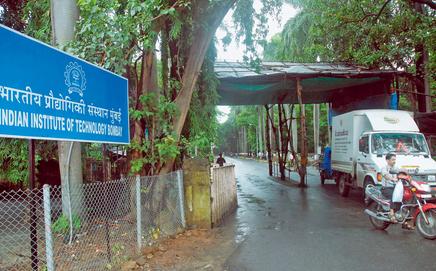
A 21-year-old undergraduate student of the Indian Institute of Technology (IIT) Bombay was found dead on the Powai campus in the early hours of Wednesday, February 4. Police have launched an inquiry to ascertain the circumstances surrounding the incident. According to officials, the student was found in an injured condition near a hostel building around 1.30 am and was rushed to a nearby hospital, where he was declared dead on arrival. Preliminary investigations suggest that the student may have fallen from the terrace of a hostel building. The exact sequence of events, however, is yet to be determined. The deceased hailed from Pilani, Rajasthan. The Powai police have registered an Accidental Death Report (ADR) and are recording statements from hostel residents, security personnel, and the student’s friends. No suicide note has been recovered so far, police said. Further clarity is expected after the post-mortem examination and analysis of other evidence. “The autopsy has been scheduled for Thursday, February 5, as the family is expected to arrive. Forensic surgeons at the Rajawadi postmortem centre have been requested to defer the procedure until then,” a hospital source said. The incident has cast a pall of gloom over the campus, with students expressing shock over the sudden loss. “It is deeply disturbing and heartbreaking to lose one of our peers. We are trying to support each other during this difficult time,” said a postgraduate student. The institute has not issued an official statement yet. Past tragedy In another incident, on August 2, a Delhi-based master’s student had allegedly died by suicide on the institute’s premises. Help available Samaritans Mumbai (Mon-Fri, 10 am-4 pm)8422984527 Connecting NGO (10 am-8 pm)9922004305 9922001122 Snehi (10 am-10 pm)9376804102 Ankahee (4 pm-10 pm)8655486966 iCALL (Mon-Sat, 10 am-8 pm)9152987821 Hitguj (24x7)022 24131212 1 Life7893078930 Aasra9820466726 With inputs by Aditi Alurkar
05 February,2026 09:03 AM IST | Mumbai | Aishwarya IyerIn a ruling hailed by legal experts as a landmark, the Maharashtra Real Estate Appellate Tribunal (MahaREAT) has dismissed an appeal filed by a homebuyer against Kanakia Spaces Realty Pvt Ltd, holding that an unsigned and unnotarized appeal uploaded online cannot be treated as a valid filing for the purpose of statutory limitation. The bench relied on forensic analysis of server records and defence evidence to pass the order. The ruling, delivered on January 29, 2026, in Miscellaneous Application No 751 of 2025 (Anubhav Virmani v. Kanakia Spaces Realty Pvt Ltd), is being viewed as a significant precedent on the use and misuse of digital filing systems in real estate disputes. Background of the dispute The case arose from a complaint filed by flat purchaser Anubhav Virmani before the Maharashtra Real Estate Regulatory Authority (MahaRERA), which was dismissed as premature on January 30, 2025. Under the Real Estate (Regulation and Development) Act, 2016, the statutory deadline to challenge the order before MahaREAT expired on March 30, 2025. Virmani claimed that he filed his appeal online on April 8, 2025, attributing the eight-day delay to frequent professional travel between Mumbai, Gurugram, Jaipur, and Indore. He accordingly sought condonation of this limited delay. Serious filing irregularities During the proceedings, MahaREAT found that the appeal uploaded on April 8, 2025, was unsigned, unverified, and unnotarized. Tribunal records revealed that the appeal was actually notarised and formally executed only on August 4, 2025, resulting in a delay of 125 days, not eight as claimed by the appellant. Significantly, during oral arguments, the appellant’s counsel admitted on record that an incomplete and unsigned appeal had been uploaded earlier. This admission proved decisive. Developer’s defence Kanakia Spaces Realty Pvt Ltd, represented by Advocate Vinod Talreja, filed a detailed reply contending that the April upload was a “shell document” intended solely to generate a misleading filing date. The developer challenged the credibility of the travel-based explanation, pointing to long and unexplained periods of inactivity, including: January 30 to February 7, 2025 (nine days), and February 26 to March 30, 2025 (33 days). It was further argued that digital tools such as e-signatures, email, and video conferencing were readily available. The defence also noted that the appellant’s office in BKC and his lawyer’s chamber in Andheri fell along his regular commute, rendering the travel excuse implausible. The defence relied on multiple Supreme Court judgments, including State of Madhya Pradesh v. Ramkumar Choudhary (2024), Union of India v. Jahangir Jeejeebhoy (2024), and Basawaraj v. Special Land Acquisition Officer (2013), to establish that negligence, lack of bona fides, or deliberate concealment cannot be condoned. Tribunal’s findings Despite MahaREAT’s reputation for being purchaser-friendly, the bench conducted a forensic examination of server logs, notarization dates, payment receipts, and uploaded documents. It concluded that a legally valid filing occurred only on August 4, 2025, Advocate Talreja pointed out. Advocate Vinod Talreja. Pic/By Special Arrangement In unusually strong language, the Tribunal held that the appellant “did not come before this Tribunal with clean hands,” attempted to mislead the court, and that condoning such conduct would create a “dangerous precedent.” Rejecting reliance on a blanket liberal approach to condonation of delay, the bench clarified that judicial discretion cannot override statutory limitation where bad faith and procedural abuse are evident. It warned that permitting unsigned appeals to be regularised months later would encourage litigants to upload incomplete documents merely to secure earlier filing dates. Final order The Tribunal dismissed the application for condonation of delay and rejected the appeal as time-barred, holding that the actual delay was 125 days. Broader implications Legal experts say the ruling will have wide-ranging consequences for real estate litigation and digital court processes: >> Integrity of e-filing systems: Unsigned or unnotarized documents cannot be used to backdate filings.>> Limitation law reaffirmed: Statutory deadlines remain binding, even in consumer disputes.>> Balanced adjudication: The order underscores judicial neutrality in builder–buyer cases.>> Professional accountability: The ruling highlights the consequences of procedural misconduct.>> Public confidence: The judgment reassures litigants that digital filings will face strict scrutiny. The MahaREAT ruling in Virmani v. Kanakia Spaces Realty is expected to serve as a national reference point on limitation, digital filing discipline, and ethical litigation. Legal commentators describe it as a defining judgment in the era of electronic court processes, signalling that attempts to manipulate digital filings will not be tolerated. Advocate Vinod Talreja said the decision reinforces the principle that consumer protection must operate alongside procedural and ethical rigour, ensuring that digital tools strengthen rather than undermine the justice delivery system.
05 February,2026 09:01 AM IST | Mumbai | Vinod Kumar MenonEnvironmentalist Stalin D from NGO Vanashakti has issued a legal notice to the Mangrove Cell and the Brihanmumbai Municipal Corporation (BMC) over permissions granted for mangrove cutting for the Versova-Bhayandar Coastal Road project. The project work, he claims, was allowed despite the absence of mandatory clearances. Stalin D issued a legal notice on February 3, claiming the sanction violates Section 2 of the Forest (Conservation) Act, 1980, and the Bombay High Court order dated December 12, 2025. Stalin D has sent the email to the Principal Secretary Forest, Mangrove Cell, Principal Secretary of the Environment Department, municipal commissioner, and Secretary of the Ministry of Environment, Forest and Climate Change, requesting work be stopped and issues with the mitigation measures be rectified. The activist alleged work is being done without necessary permissions “All of you are parties to the permissions and work undertaken for the coastal road project. There are news reports that state permission for tree felling has been given. We wish to inform you about the irregularities/illegalities,” read Stalin D’s notice. He alleged that work within mangrove areas has progressed substantially on the ground. “I visited the site at Malad Creek in Malwani and was shocked to see a kilometre-long road already made. This work cannot and could not have been done after the order of the Bombay High Court passed in December. It is very evident that the court orders were taken for granted and work undertaken without permissions,” said Stalin D. Further, he alleged that Phase 2 permissions for the project have not been obtained to date. “Even if one were to consider the fact that an exception has been made for a linear project, work of construction cannot commence without the final clearance. Why was the high court not informed that the project lacked necessary clearances and also fulfilment of the conditions under the Forest Conservation Act while seeking permission from the court? Further, the conditions for linear projects also mention that land admeasuring three times the size of the land being diverted for the project must be afforested and transferred in the name of the forest department and given ‘reserve forests’ status,” Stalin D said. The dug-up area near Malad Creek at Malvani According to Stalin D, the land being shown as compensation happens to be in Survey No. 342 in Vihirgaon near Tadoba in Chandrapur district. In his email to authorities, he also attached the 7x12 extract of the site and alleged that the said land is already in the forest department’s name, earmarked for firewood and grazing. “How will the saplings survive, and how will the trees on the land be protected? Isn’t this an abuse of the process of law?” he questioned. The other site in Bhayandar, where one lakh saplings are to be planted, also bears Survey No. 342. “The site at Bhayandar has been afforested by the Mangrove cell in 2022. Satellite imagery confirms this. There is hardly any space left for plantation. Further, land records show the site is jointly owned by the salt department, state forest department, and the Mira-Bhayander Municipal Corporation (MBMC). Areas under MBMC seem to be marshes/inter-tidal mudflats next to the creek. This area is available for plantation, but the land is also sought by MBMC to develop a of a waterfront. How will mangroves be protected? The mitigation steps are an eyewash,” Stalin D said. Points raised by Stalin D Stalin D, environmentalist >> Mangroves are coastal forests; how does their ecosystem get compensated for by planting trees in Chandrapur in mountainous regions?>> Is there no land available along the Mumbai or Mumbai Metropolitan Region coast that can compensate for the loss of the coastal forests?>> Why is there such a lack of application of mind and scientific approach in the process of undertaking these projects?>> Please share details of the land parcels surveyed along the Mumbai shoreline before a decision was taken to move to Palghar and Chandrapur ‘Making false claims’ “The forest department claims work at Malwani is only for a sewage treatment plant, but the photographs from the site clearly suggest otherwise. In any case, the forest department could not have given any approval for cutting mangroves without Stage-II clearance. The BMC alone is responsible for the loss of nearly 1.6 lakh mangroves, and the pace at which mangroves are being destroyed, Mumbai should be worried that little will be left of its coastal forests,” said Stalin D.
05 February,2026 08:36 AM IST | Mumbai | Ranjeet JadhavStudents residing at the Nair Hospital Dental College hostel have raised serious concerns over unhygienic living conditions, alleging that the situation has continued for over eight days without effective intervention. “For more than a week, no staff came to clean our rooms, the premises, or collect garbage. The stench became unbearable. Despite repeatedly approaching the dean, it was only after a week, on Wednesday, February 4, that staff came and merely collected the garbage bags we had kept outside our rooms,” said a student. Another student added that the rooms are still unclean. “We are unaware of the exact reason why cleaning was not carried out for so many days.” Calling the situation distressing, a student said that living amid filth in a medical institution is unacceptable and adversely affects physical health, mental well-being, and academic performance. Responding to the allegations, hospital authorities said the issue arose due to a strike by contract-based cleaning staff. “For the past few days, contract cleaning staff have been on strike. When we asked hospital cleaning staff to clean the hostel, they were threatened by contract workers and prevented from doing so. As a result, we approached the BMC headquarters today and explained the situation. Senior officials have assured us they will visit the hostel and resolve the issue concerning the contract staff,” said Dr Mala Dixit, dean, Nair Dental Medical College.
05 February,2026 08:31 AM IST | Mumbai | Ritika GondhalekarWorth the salt A Great Egret fishes for worms in the saltpans of Bhayander as the setting sun paints the waters a dark shade of orange Pink carpet ride Cyclists under the Pink Trumpet trees. PIC COURTESY/CHIRAG SHAH The Pink Trumpet flowers along the Eastern Express Highway are drawing in some unlikely visitors to local cyclists’ usual route. Chirag Shah (below), who led his group Wheels & Barrels on a ride early morning on Wednesday shared, “We were surprised to see children, families and photographers by the dozen along the route. The cherry on top was a couple who showed up for a pre-wedding shoot under the picturesque trees. The craze is unprecedented. We’re hoping at least some of them return in running gear or on wheels soon. The Vikhroli stretch of the highway is an excellent running track. One of the best you’ll see in Mumbai.” Pardon meow French Cats at the Versova café; a message is placed in the litterbox scoop; the note is tossed in the bin. PICS COURTESY/CAT CAFE STUDIO Revenge will be served cold (and stinky) this Valentine’s Day, thanks to the cats of Versova. A unique initiative by the Cat Café Studio is looking for heartbroken lovers who have unvoiced hate messages for their toxic ex-lovers. Team member Pooja Iyer (above) revealed that the messages will be written down on notes, and carefully placed on freshly collected piles of cat poop from the litterbox, before being ceremoniously tossed in the trash. “We have received some hilarious messages from across age groups. ‘To the epic sh*t we did together’, ‘Rot in the bin, a**hole’, ‘For your disappearing act’, ‘Thank you for leaving. It’s the best thing that’s happened to me’, ‘Wish you a very stinky Valentine’s Day’ are some of the more memorable ones,” she revealed. The cat-hartic release comes at a cost: A R100 fee that will go towards the welfare of the cats. Those keen to participate can log on to @catcafestudio. “We’ll send you a video of the complete act so you can rewatch it on bad days,” Iyer assured us. Lost your horse, sir? Amit Kumar Sharma promotes his film onboard the local train This diarist had to rub his eyes in disbelief when a bridegroom dressed in full desi wedding attire, complete with a garland of currency notes, politely asked to sit next to us on a local train. Were we witnessing a runaway groom on the loose? Or had we inadvertently become part of a Bollywood rom-com shoot? Our fellow commuters seemed equally perplexed. The suspense finally broke when he pulled out a signboard — a plea to watch his new film 1982 A Love Marriage. Turns out it was actor Amit Kumar Sharma promoting his new independent budget flick. Come to think of it, we wouldn’t be surprised if grooms started ditching horses for fast locals, given the state of Mumbai’s roads and streets. When the master artist was in Mumbai (From left) Sunil Chauhan gives Gurcharan Singh a walkthrough at the Kala Ghoda gallery. PIC COURTESY/SUAN ARTLAND GALLERY It is a special day when a modern master casually walks through the lanes of Kala Ghoda. For gallerist Sunil Chauhan, it was such a moment when artist Gurcharan Singh walked through the doors of Suan Artland located in the art district on Monday. “I had invited him to the opening day of the exhibition, Nature Scapes by Bengaluru-based artist Vaman Pai. Unfortunately, he could not make it, and dropped by when he passed by the gallery on Monday,” Chauhan shared. The courtesy call aside, the 77-year-old master might have his own reasons. “He mentioned in passing that he is planning a large-scale exhibition in Mumbai later this year,” the gallerist revealed. Suffice to say, we shall be ready for it.
05 February,2026 08:27 AM IST | Mumbai | Team mid-dayThe ongoing high-profile Kala Ghoda Arts Festival (KGAF) has been hit by a controversial curveball. Festival organisers have cancelled an event/discussion titled ‘Incarcerated: Tales from Behind Bars.’ This discussion was scheduled for today (Thursday) evening and featured journalist and writer Neeta Kolhatkar, author of the book The Feared: Conversations with Eleven Political Prisoners, and activist Anand Teltumde. The event has been reportedly cancelled on orders of the Mumbai Police. Teltumde was implicated in the Bhima Koregaon case in 2018 and spent over 2.5 years in prison. He has a recently published book called The Cell and the Soul: Prison Memoir (2025). Teltumde and Kolhatkar were supposed to be speaking to editor and writer Naresh Fernandes, who was the event moderator. Kolhatkar said, “The commonality between both speakers was the prison experience, incarceration. I cannot fathom how we can cancel events like this and be called a democracy. All social media posts related to the event are also ordered to be taken down. There have been so many accounts published on incarceration. Right-wing trolls on social media have been branding me an 'Urban Naxal'. You may differ from my views, but how dare you call me names? How dare you label me?” A festival spokesperson said, “The safety of Kala Ghoda is of utmost importance. I would not like to comment on this.” Fernandes reacted, “I am surprised at this decision by the police. Especially since Teltumde has spoken out on different platforms about his book. He writes three columns a month in different papers. He is a public intellectual with an equal emphasis on both words and certainly not a Naxalite or Maoist. He has spoken often that he has never been for violence.” The festival, which began on January 31, will run till February 8.
05 February,2026 08:22 AM IST | Mumbai | Hemal AsharAfter a long-standing battle, the people affected by the Elphinstone Bridge demolition finally received allotment letters to their new homes from the Mumbai Metropolitan Region Development Authority (MMRDA) on January 22, but only to face more troubles. As many as 13 of 23 families of Haji Noorani, one of the two buildings from where residents were supposed to be displaced, have raised various concerns regarding the houses provided to them. From faraway locations to wrong names on allotment letters, the residents have been put in difficult situations. Shutting down business Of the 23 affected families, seven have shops in the building while 15 have houses, with one family owning two houses. However, those with commercial properties have been allotted residential units, taking away their sole source of income. Suhas Badade sits at his soon-to-be demolished shop “What will we do with this house? Already, I had to give up my sugarcane juice business after footfall reduced post demolition of the bridge. I would earn at least Rs 70,000 per month. But after the footfall reduced, I was unable to earn even Rs 10,000. I was forced to rent out the space to a scrap dealer who pays me R15,000 per month. Now, once they demolish this building and this shop goes down, even the Rs 15,000 I earn will be lost. This shop is the sole source of income for my family of nine,” said Suhas Badade. Facing similar troubles is Mala Gupta, who runs a chaat centre in the same building. “Our third generation was also born here, and we have been running this business for the last 20 years. They have given us a house in Wadala in exchange for this shop. This shop is our only source of income. That house is of no use to us. They are taking away our source of income. How do they expect us to survive? How do we get food when we go to live in that house?” questioned Gupta. This apart, the shop owners have also stated that selling these rehabilitation houses isn’t an option as they will not fetch a good amount. “If I sell my shop, it will easily fetch me around Rs 1 crore. The house that they have provided us would fetch barely R50-R60 lakh, considering the location and the fact that these are MHADA or SRA houses. So, our source of income is also lost. We aren’t getting market value monetary compensation for it, and we have ended up with a house that can’t get us enough,” said Badade. ‘Further than promised’ While the residents were promised rehabilitation within a 2.5 km radius, these families have been given houses at quite faraway locations. “I have two rooms beside each other in Haaji Noorani. However, one house allotted to us is at Antop Hill and another one is at Hindmata, about 5 km apart. The Hindmata house is 4 km away from our original location, and Antop Hill is almost 7 km away. How are we supposed to manage?” questioned Manish Shirodkar. Sharing how she would face problems in reaching her college, another resident, Ashwini Wagh, told mid-day, “At present, I spend just Rs 30 one way by cab. I can even walk if I wish to. But if I shift to the new home, I will have to spend double the amount of time and money.” The 13 families facing issues have formally approached MMRDA, seeking alternative accommodations that meet the conditions promised prior to the demolition. However, officials have reportedly stated that no other transit homes are available and that residents must accept the allotted flats. “When we first went, they misbehaved and rudely told us that we had to accept what we had been allotted. Then, when we approached officials in Mantralaya, they just gave verbal assurances. Later, MMRDA officials asked us to come for a meeting on Friday. We don’t know what the outcome of that meeting will be,” said Badade. So far, none of the 23 families has taken possession of the new houses. Voices Suhas Badade, shop ownerI would earn at least Rs 70,000 per month. But after the footfall reduced, I was unable to earn even Rs 10,000. I was forced to rent out the space to a scrap dealer who pays me Rs 15,000 per month. Now, once they demolish this building and this shop goes down, even the Rs 15,000 I earn will be lost. Mala Gupta, shop ownerThey have given us a house in Wadala in exchange for this shop. This shop is our only source of income. That house is of no use to us. They are taking away our source of income. How do they expect us to survive? How do we get food when we move into that house? Ashwini Wagh, college studentAt present, I spend just Rs 30 one way by cab. I can even walk if I wish to. But if I shift to the new home, I will have to spend double the amount of time and money.
05 February,2026 07:57 AM IST | Mumbai | Ritika GondhalekarThere’s good news for birdwatchers visiting Nandur Madhmeshwar Bird Sanctuary, an important Ramsar wetland in Nashik, with visitors spotting a smooth-coated otter in the area. Such sightings are rare, making it a special and encouraging moment for wildlife enthusiasts. The smooth-coated otter is protected under Schedule I of the Wildlife Protection Act, which gives it the highest level of legal protection, similar to that of the tiger. The 800.96 ha sanctuary is of ecological importance, a Ramsar site located near Niphad in the Nashik district. Known for hosting a wide variety of migratory birds during winter. A Ramsar site is a wetland site designated to be of international importance under the Ramsar Convention. Range Forest Officer (RFO) Hiralal Chaudhari from the sanctuary told mid-day that finding a smooth-coated otter (Lutrogale perspicillata) at the site is a fantastic sign of a healthy wetland ecosystem. “These elusive mammals, locally known as Pan-manjar, are the secret stars of the Godavari-Kadwa confluence. In late December 2025, tourists and forest officials reported multiple sightings of otters active in the sanctuary during the winter chill, and later I was also lucky to spot the otter a few weeks back,” said RFO Chaudhari.
05 February,2026 07:49 AM IST | Mumbai | Ranjeet JadhavIn a bid to deter dangerous trespassing and reduce accidents, the Western Railway has begun applying industrial grease along trackside fences across the entire 60 km suburban stretch between Churchgate and Virar. The measure covers all 29 stations on the busy corridor, where unauthorised track crossings and jumping over divider fences have remained a persistent safety concern, particularly during peak hours. Mumbai’s suburban railway network recorded 1298 cases of track crossing in 2025, leading to 1063 commuter deaths and 235 injuries. “The grease coating makes it difficult to climb or grip the fences, acting as a physical deterrent without obstructing train operations. This is part of a broader safety push, and will be supplemented by increased vigilance, warning signage and public announcements,” a Western Railway spokesperson said. Western Railway staff apply industrial grease on platform fencing to deter commuters from trespassing onto tracks, as part of a new safety measure on the suburban network “The idea is to discourage people from jumping onto tracks. Apart from causing accidents, such incidents force trains to slow down, triggering multiple operational disruptions across the system,” the spokesperson added. Commuter groups have welcomed the step, saying any intervention that restricts access to tracks can help reduce fatalities if supported by better crowd management and station access. “We welcome the move. It will help cut down fence-jumping at busy stations. People will think twice when it soils clothes and dirties hands, which itself can be a deterrent,” said Ravindra Rajan, a member of a passenger association. Will grease dry up? Railway officials said the grease does not dry quickly and will remain effective for extended periods. “It takes time to dry. Maintenance teams will reapply grease regularly wherever required,” an official said. Tried before This is not the first time railways have experimented with unconventional deterrents. In November 2023, the Central Railway’s Mumbai division applied grease at platform ends and cut down slopes to make climbing and descending difficult, encouraging commuters to use foot overbridges and subways. The move drew mixed reactions. In June 2024, Central Railway installed “red safety boxes” at platform ends at key Mumbai stations by digging deeper pits at common jumping points. Officials said the boxes have shown encouraging results so far. What else is being done? Western Railway has rolled out a multi-layered safety framework combining engineering, technology, and enforcement to reduce deaths from trespassing and falls from trains. To curb illegal track crossings, WR has focused on physical barriers and accessibility:Boundary walls: 105.7 km constructed across the suburban section, with another 7.5 km under progressPlatform fencing: Iron fencing at major stations to prevent mid-platform crossingsBlack spot elimination: 59 trespassing-prone locations removed in 2023-24, with 25 more identified this year Better vertical movement>> 147-foot over bridges operational>> 110 escalators and 54 lifts commissioned to aid senior citizens and the differently-abled Preventing falls from trains>> All 302 suburban platforms raised to height of 900 mm>> Introduction of AC local trains with automatic door-closing systems to curb footboard travel>> Conversion of 12-coach services to 15-coach rakes to reduce crowding, with 211 services already upgraded Improved surveillance>> High-definition CCTV cameras under Integrated Security Systems>> Regular RPF drives under Section 147 of the Railways Act, prosecuting thousands of trespassers annually>> Blue light warning systems above doors in select rakes>> Public awareness campaigns under “Mission Zero Death,” including FM radio messaging and street plays at high-risk stations>> Golden Hour emergency medical posts at major stations for prompt trauma care
05 February,2026 07:44 AM IST | Mumbai | Rajendra B. AklekarFor three days in a row, Mumbai has reported Air Quality Index (AQI) figures that are worse than those recorded during December and January. The AQI on Monday, Tuesday, and Wednesday was 141, 140, and 134, respectively, which fall in the ‘moderate’ (yellow) category, as per the Central Pollution Control Board (CPCB). PM10, from construction dust and vehicular emissions, has been the worst pollutant. The Brihanmumbai Municipal Corporation (BMC), however, thinks ‘wind speed’ is to blame for the alarming AQI. The wind speed during these days was in the range of 10 kmph to 13 kmph. This week marks a sharp increase from Sunday, when AQI was at 105, in the ‘moderate’ category. On January 4, Mumbai's AQI was 140 in the ‘moderate’ category, but on November 27 it was 167. A mist cannon is used to prevent dust pollution at the Elphinstone bridge construction site in Parel on Wednesday. Wednesday. The new connector is being built by the Mumbai Metropolitan Region Development Authority. PIC/ASHISH RAJE As citizens have urged the civic body to up the measures taken to curb pollution from its own road concreting works, BMC has attributed the AQI levels to various factors, including very low wind speed. The civic body has also said that the enforceable guidelines that apply to private construction sites in the city, including misting, washing of the wheels of vehicles linked to construction sites, and covering such vehicles that carry construction materials, also apply to contractors responsible for carrying out BMC’s road work. City or construction site? At present, according to a senior official from the BMC’s roads department, 918 roads are being concreted across the city, as part of the BMC R17,000-crore road concreting project, being implemented over at least three years and involving over 2200 streets across the city. Between October 2025 and January 2026, 160 concreting activities were completed across the city. Right after the monsoon season ended, the BMC resumed work on over 570 incomplete road works that had been stopped in May 2025. Since then, some road work has been completed, while new stretches have been added to the list and dug up. Community-based activists and residents have alleged that the civic body does not walk the talk when it comes to precautions to be taken for curbing construction dust pollution. Footpath work undertaken by the civic body outside the Goregaon Metro station. PIC/BY SPECIAL ARRANGEMENT Residents have alleged that the BMC's road work projects are not covered with protective material while digging is going on throughout the day. They also claimed that while BMC-appointed contractors carry out misting and spray water around roads, this only happens in the morning hours and winds up by noon, resulting in dust plumes in the vicinity throughout the day. On the other hand, the BMC has maintained that the increase in dust pollution is due to various factors such as wind speed, and climatic conditions, including humidity and temperature factors, and vehicular combustion, and it is incorrect to attribute it to civic construction work alone. Activists speak Rishi Aggarwal, a city-based environmentalist, said, “Even now, I see trucks from construction sites leaving behind trails of muck for 500 metres in Lokhandwala, Andheri. For me, the simplest metric is the lived experiences of people in the vicinity. I don’t have the resources to hire scientists or buy equipment to counter the BMC’s data. But look at photographs of dust in the air. Dust is a contributor to AQI, so, logically, we must address the low-hanging fruit and curb construction dust to prevent air quality from worsening.” Activists have pointed out the direct correlation between BMC work and dust pollution, with examples such as the footpath work undertaken by BMC outside the Goregaon Metro station, where heaps of dust are visible. Aggarwal alleged, “It’s very evident that BMC sites across the city are the worst offenders.” Sumaira Abdulali from the Awaaz Foundation said, “Nothing is directly correlated unless you are actually near a construction site. The AQI measures that BMC gives us cover a large radius. It doesn’t give micro-level street readings. In that case, definitely every construction work in the city contributes to the bad air quality we have. The comparison between last year and this year’s AQI data can have a lot to do with wind patterns, and those are variable factors we cannot control. But we can and must control the measures we take as precautions.” Nikhil Desai, a resident of Matunga, said, “It is not just the civic body's callousness with its construction work, it's also a complete disregard for numbers. We are repeatedly told that the pollution levels are low, but we can clearly see plumes of dust in the air and find it difficult to breathe while travelling through a road construction site. These experiences cannot be denied.” Authorities speak A senior official said, “We have noted that Mumbai’s AQI has worsened in two days [Monday and Tuesday]. But we must also look at wind speed and other climatic conditions. Regarding road works, the same measures in place for private construction sites are also in place for BMC works. I myself intervened and halted a civic infrastructure project in Worli-Mahalaxmi area in the island city until the contractor complied with AQI guidelines.” Asked why some of the BMC's road work sites weren’t covered with sheets, an official said, “Several road works are in various stages of construction. It is not that a bunch of road works were started in the past three or four days alone. Dust arises from road construction during the initial stages of excavation, which lasts for a short period of time.” Another senior official said, “Road works across the city are monitored and held against the same rules that apply to construction sites.” The official added, “There are multiple factors involved here. Dust accumulates under parked vehicles on the street. When the vehicles are moved by their owners, dust is kicked up. A holistic approach to the problem is needed.” Tuesday meet According to an official, Municipal Commissioner Bhushan Gagrani held a meeting regarding all BMC projects on Tuesday and sought an update on the amount of excavation that will take place across the city over the next few months. An official said, “The municipal commissioner’s opinion was that we must be careful not to make a mess.” An official said, “Major excavation work is planned for the island city. Work is in advanced stages in the suburbs. Due to the elections, several road works were slowed down for a month when rallies were taking place. Now work has picked up again and is likely to peak in April and May. However, we take precautions and green nets are installed around all road construction sites.” ‘Works are for city’s benefit’ Speaking to mid-day, Gagrani said, “Wherever there is excavation, dust is likely to be present. Excavation is a brief part of the process of road concreting. These works are [ultimately] benefiting Mumbai.” He added that dust contributes to PM2.5 and PM10 pollutants in the air, saying, “Infrastructure work as well as other [private] construction work has been stopped by BMC before, if we found the project was generating an unacceptable amount of dust.” Green nets up to four feet in height are installed around concreting work sites, in contrast to construction sites, which are required to be fully covered. Gagrani said, “This is sufficient for the work carried out during concreting. Dust pollution is a temporary effect of the work BMC has undertaken.” He added, “BMC’s 28-point guidelines for all construction sites are applicable to civic construction sites as well.” Officials confirmed that... 1 Misting and spraying of water around the road construction site is mandatory for the contractor2 Not all 918 roads in the city are being excavated at the same time
05 February,2026 07:39 AM IST | Mumbai | Eeshanpriya MSDo you know what the stars hold for you in terms of love life, career, business and personal wellness today? Well, read on to know your astrological predictions as per your zodiac sign for February 5. Aries March 21 – April 20A positive karmic cycle begins for freelancers as work comes in very regularly. Some decide to take up a creative hobby. Cosmic tip: Live with awareness as this helps respond with intellect and not emotions. TaurusApril 21 – May 20It’s quite understandable that focus and concentration tend to waver, especially if in a new relationship; and to cap it all, it’s a long working day.Cosmic tip: Don’t be impulsive or impatient. GeminiMay 21 – June 21Be prepared to deal with 10 different issues at work, dealing with them simultaneously; then a sudden lull at 1 pm.Cosmic tip: Live with awareness in today, even if the past keeps skulking back. Cancer June 22 – July 23Let go of a situation when you know it’s stressful. Be careful with expenses, unless you don’t mind footing the bill for so many people. Cosmic tip: Maintain composure when faced with an unusual issue. Leo July 24 - Aug 23Ensure all paperwork is complete before applying for government permissions. Remember to buy a gift for a visiting friend.Cosmic tip: Accept, when someone offers to help you. Virgo Aug 24 – Sept 23Diplomacy works best when there’s an argument at work. Some decide to enjoy a vacation in the mountains.Cosmic tip: Expect delays due to a block or an obstruction, so just wait it out. Libra Sept 24 – Oct 22There’s a big sigh of relief when troubles vanish. Visiting a city of historical importance is interesting.Cosmic tip: Use your experience and sagacity to advise a younger family member. Scorpio Oct 23 – Nov 22This is a turning point due to awareness which manifests increased income/ better health.Cosmic tip: Take a difficult decision with awareness of being held responsible for it later. Sagittarius Nov 23 – Dec 22Family property issues have entered the last round of talks, which is a relief.Cosmic tip: Listen to family carefully if you want to keep peace and tranquility as permanent residents. Capricorn Dec 23 – Jan 20Sharing responsibility at home is one of the ways in which to maintain mutual respect. Your commonsense advice draws many people to you for clarity. Cosmic tip: Make time for rest and relaxation. Aquarius Jan 21 – Feb 19Reaching targets is easier this year, which is a relief. Relatives come visiting, to stay for a few days. Cosmic tip: Remember, unhappiness doesn’t enter noisily; it enters through disorder and unnatural silence. Pisces Feb 20 – March 20Travel, embarking on a new adventure and going to a distant location is revealed for some. Discuss this if you have commitment issues.Cosmic tip: Live in the moment peacefully and happily.
05 February,2026 04:11 AM IST | Mumbai | Shirley BoseADVERTISEMENT