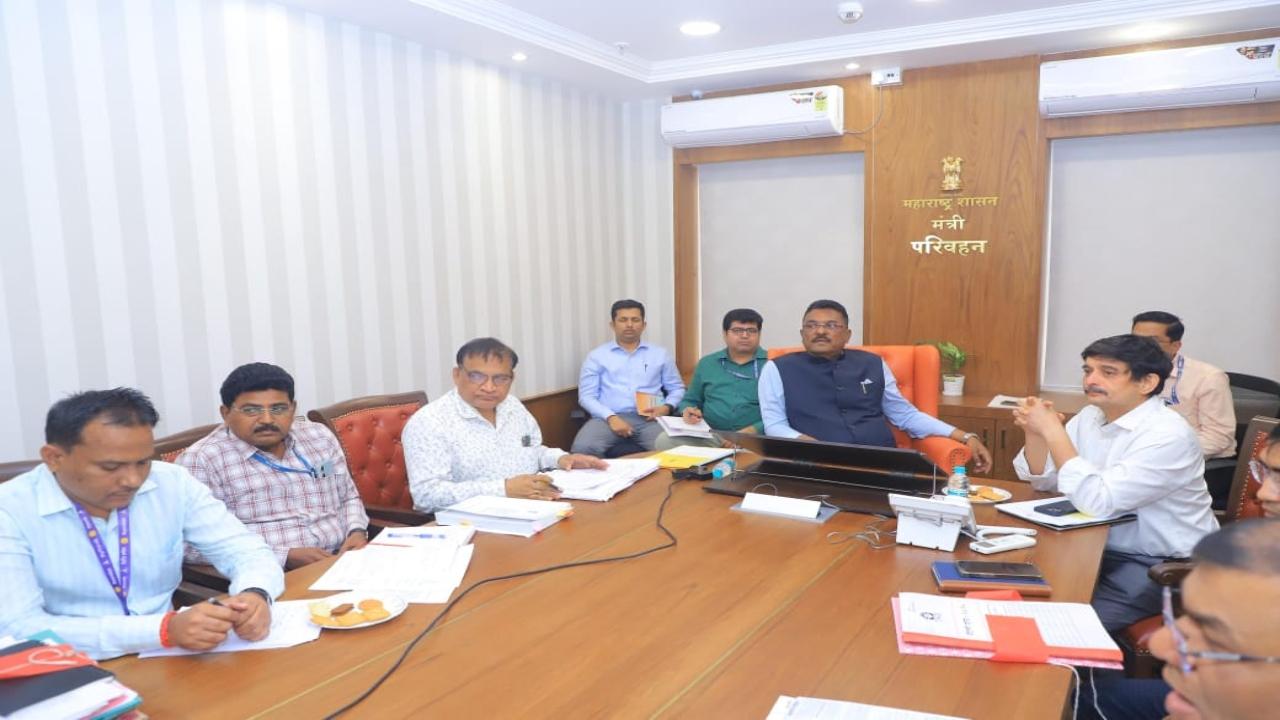
Maharashtra Transport Minister Pratap Sarnaik said the state urban development department has been directed to urgently send the revised proposal to Deputy Chief Minister Eknath Shinde for approval

Minister Pratap Sarnaik directed officials to prepare the revised proposal immediately and send it to the Deputy CM Eknath Shinde.
The redevelopment of dangerous and old buildings in Mira-Bhayandar is set to gain momentum, with the civic body moving towards recognising groups of at least five buildings—or plots with a specified minimum built-up area—as ‘mini clusters’ under the cluster redevelopment scheme.
Maharashtra Transport Minister Pratap Sarnaik said the state urban development department has been directed to urgently send the revised proposal to Deputy Chief Minister Eknath Shinde for approval.
He was speaking at a review meeting held at Mantralaya. The meeting was attended by Additional Chief Secretary (Urban Development) Asim Kumar Gupta, Mira-Bhayandar Municipal Commissioner Radha Binod Sharma, Deputy Secretary (UD) Nirmalkumar Chaudhary, Section Officer Vinod More, Assistant Director (Town Planning – Mira-Bhayandar) Purushottam Shinde, former corporator Rajesh Vetoskar, and several citizens and architects, including Shivkumar Sharma, Premsingh Rajput, Gaurang Rathod, Nitin Mistry, and Jitendra Shah.
Sarnaik said groups of at least five buildings in Mira-Bhayandar—or plots meeting the minimum area criteria—will be eligible for benefits under the cluster redevelopment model as per Unified Development Control and Promotion Regulations (UDCPR) norms. He has directed officials to prepare the revised proposal immediately and send it to the Maharashtra Deputy Chief Minister.
A ‘mini cluster’ policy is being framed for buildings that are over 30 years old, unsafe and densely populated. Many residents currently face relocation challenges due to a lack of temporary staging areas. Officials said that expanding the cluster model will help address these issues in phases.
Push for redevelopment of old buildings
On the lines of the Thane Municipal Corporation’s model, buildings older than 30 years from the erstwhile gram panchayat areas will also be taken up for redevelopment. Under UDCPR provisions, these structures will receive incentives based on assessments of existing built-up area, enabling them to qualify for more than 6 FSI under a performance-based formula.
Sarnaik said these initiatives will speed up the redevelopment of unsafe, ageing structures while supporting the long-term vision of creating a slum-free, safe and sustainable city.
Maharashtra Cabinet approves policy for collective redevelopment of MHADA projects in Mumbai
The state cabinet on Tuesday approved a comprehensive policy for the collective redevelopment of Maharashtra Housing and Area Development Authority (MHADA) projects covering 20 acres or more in Mumbai and its suburbs.
Chief Minister Devendra Fadnavis gave his approval as the decision is expected to create a large stock of affordable homes in Mumbai, with the redevelopment offering modern amenities and improved living conditions.
According to the statement issued by the CM’s office, over 60 years ago, MHADA constructed 56 colonies for low- and middle-income families which has around 5,000 cooperative housing societies now.
Over a period of time, these buildings have become dilapidated and the housing authority plans to redevelop these old structures with new modern flats having amenities such as lifts, spacious parking, gardens, playgrounds, gymnasiums, swimming pools, and CCTV security.
According to the release in the new policy, developers will not require consent of all residents to start the redevelopment, but will need approval from the housing societies.
The Maharashtra Cabinet even gave its nod for appointing a committee headed by the additional chief secretary (ACS) of the housing department to monitor and implement the ambitious plans and projects.
Subscribe today by clicking the link and stay updated with the latest news!" Click here!