Mumbai City was placed in the ‘rising’ category for Std III students, while it ranked among the ‘excelling’ districts for Std VI and IX. In contrast, Mumbai Suburban was classified in the ‘early stages of growth’ across all three grade levels

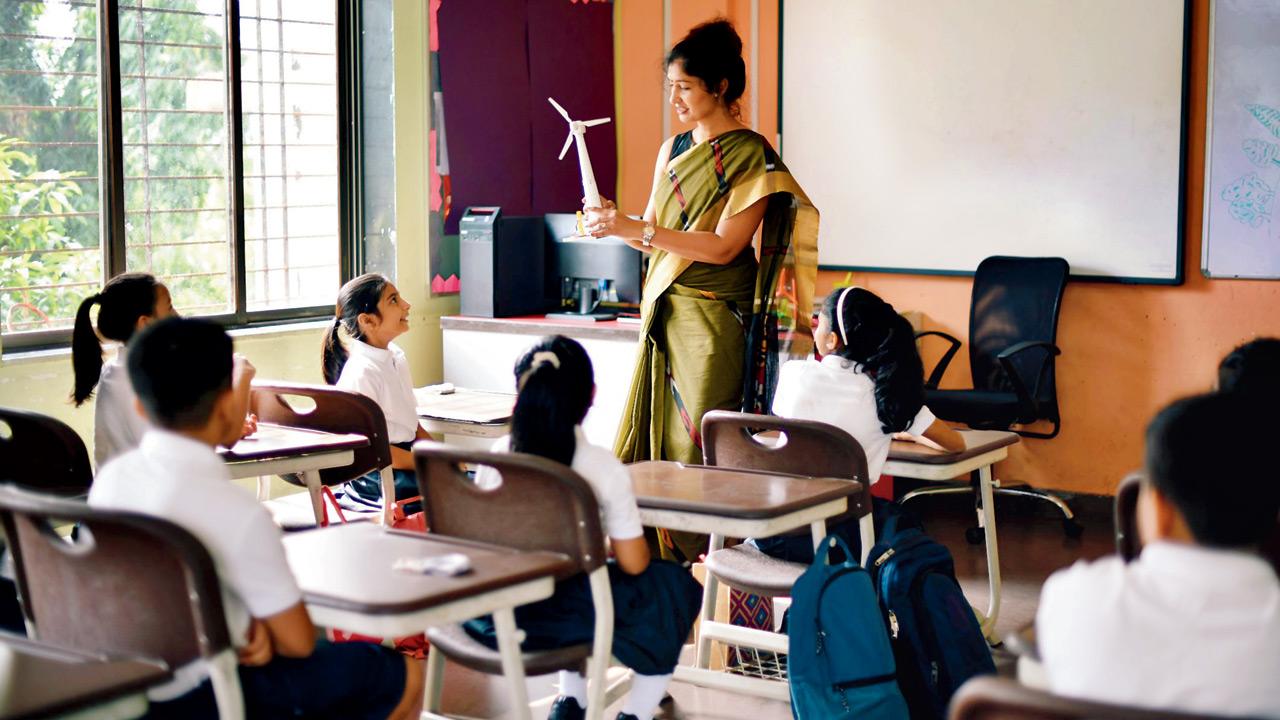
Assessing students across Std III, VI, and IX, the survey centred its questionnaire around language skills, mathematics, science, and social sciences. REPRESENTATION PIC/ISTOCK
Districts such as Kolhapur, Sindhudurg, and Mumbai City recorded strong performances, whereas Mumbai Suburban trailed behind, in the recently released PARAKH Rashtriya Sarvekshan survey. The survey, conducted by the National Council of Educational Research and Training (NCERT) and the Department of School Education and Literacy, aims to assess the effectiveness of school education across all boards. Assessing students across Std III, VI, and IX, the survey centred its questionnaire around language skills, mathematics, science and social sciences.
“Districts like Sindhudurg have always had a high literacy rate, so it’s no surprise that they are leading the charts,” said Farida Lambay, an educationist and co-founder of Pratham. “We also see a dip in the performance of Std VI students all across; these may be the ones who had their early education years interrupted by the pandemic,” she added.
Mumbai City was placed in the ‘rising’ category for Std III students, while it ranked among the ‘excelling’ districts for Std VI and IX. In contrast, Mumbai Suburban was classified in the ‘early stages of growth’ across all three grade levels.
“Many of the students entering Std III from Mumbai City usually converse in English at home. This makes it easy for them to understand other subjects and they get a head start. However, this disparity mitigates in the coming years. Mumbai City students may also have access to one-on-one tuitions that allow them a better grasp of concepts. However, suburban schools largely match up to the standards, since we have toppers every year, and the surveying authorities must take a second look,” said a principal of a school in Bhandup.
As many as 4314 schools from Maharashtra participated in the survey, which was conducted in December 2024, where 29 per cent were government schools, 32 per cent were aided, 33 per cent were private, and 7 per cent were central. Maharashtra’s state government schools demonstrated better outcomes in Std III, while private schools showed better performance across Std VI and IX.
Additionally, PARAKH explored holistic parameters that add to a holistic school education. As many as 11 per cent of students taking the survey from Maharashtra reported not feeling safe at school, while 18 per cent of schools reported not having an anti-bullying policy.
“Such incidents can be traumatising at times and must be addressed with care. Although a smaller percentage reported not feeling safe, these instances still raise concerns. Few schools also reported not having a proper policy on various issues like bullying, discipline, sexual harassment, etc,” stated the report.
Laying focus on inclusivity, PARAKH reported that as many as 53 per cent of children with special needs (CWSN) were receiving support they need from their school teachers while only 34 per cent reported having access to the assistive devices (hearing aid, mobility aids, specially designed learning tools, Braille/special books, ramp/lift etc.) at schools.
PARAKH or Performance Assessment, Review, and Analysis of Knowledge for Holistic Development was also conducted on the national level. The state of Maharashtra bagged the 6th rank for Std II schooling, 7th for Std VI, and 10th for Std IX, while states like Kerala and Punjab bagged the top ranks.
Subscribe today by clicking the link and stay updated with the latest news!" Click here!