shot-button
E-paper E-paper
Home > Mumbai > Mumbai News > Article > Mumbai Monitor lizard eggs found in Mulund incubated and released safely

Mumbai: Monitor lizard eggs found in Mulund; incubated and released safely

Updated on: 29 May,2025 08:49 AM IST  |  Mumbai
Ranjeet Jadhav | ranjeet.jadhav@mid-day.com

Forest officials and RAWW successfully hatched and released the reptiles after a 114 day incubation period. After 114 days of careful monitoring, five Indian monitor lizards successfully hatched and were released back into their natural habitat. he incubation process was overseen by zoologist Chinmay Joshi

Mumbai: Monitor lizard eggs found in Mulund; incubated and released safely

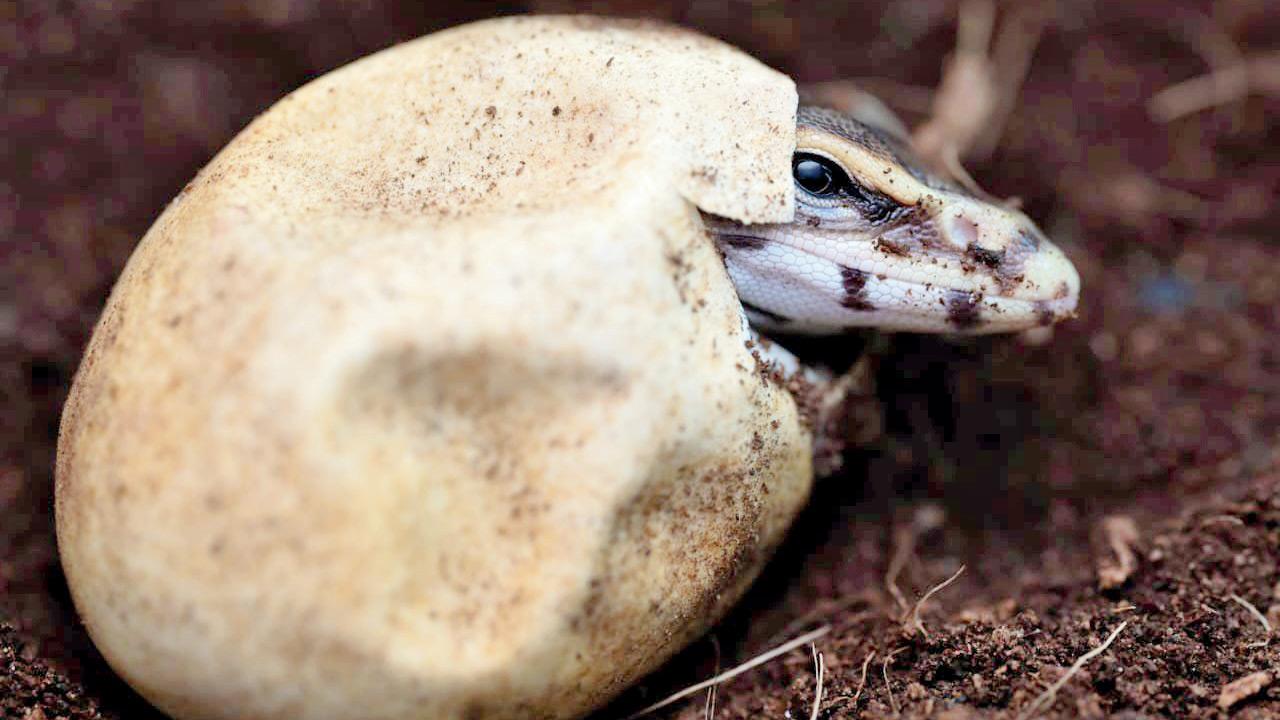
A monitor lizard hatchling breaks free from the egg. Pics/By Special Arrangement

Listen to this article
Mumbai: Monitor lizard eggs found in Mulund; incubated and released safely
x
00:00

The collaborative efforts of the Maharashtra Forest Department and Mumbai-based NGO RAWW have brought new hope for the conservation of Indian monitor lizards. A few months ago, during a drainage line clean-up near a forest patch in Mulund, civic workers discovered 10 eggs. The forest department handed these over to RAWW for incubation under controlled conditions.

The hatchlings in the controlled environment


After 114 days of careful monitoring, five Indian monitor lizards successfully hatched and were released back into their natural habitat. The remaining five eggs were found to be infertile and were disposed of as per protocol. Pawan Sharma, honorary wildlife warden of Thane and president of RAWW, told mid-day, “Since we live in urban landscapes that often overlap with wildlife habitats, such incidents occur occasionally.”


“Mulund has rich biodiversity, and several wildlife species thrive in this suburb. The five monitor lizards were successfully released into the wild in coordination with the forest department,” Sharma said.

How incubation was done

The incubation process was overseen by zoologist Chinmay Joshi, who evaluated the eggs and created artificial conditions to ensure successful hatching. Joshi explained, “For incubation, we used a plastic container with holes in the lid to ensure ventilation. A mixture of soil and cocopeat — chosen for its anti-fungal and anti-bacterial properties — served as the substrate to replicate natural conditions. A digital thermometer helped maintain the temperature between 27–29°C with high humidity levels. Egg development was monitored weekly using a flashlight through a process called candling.”

The Indian monitor lizard is protected under Schedule I of the Wildlife Protection Act, 1972. Any trade involving the species or its body parts is a punishable offence under the Act. These lizards are often hunted for meat and leather, and there’s a common but false belief that oil extracted from their bodies can treat skin injuries.

"Exciting news! Mid-day is now on WhatsApp Channels Subscribe today by clicking the link and stay updated with the latest news!" Click here!

Did you find this article helpful?

Yes
No

Help us improve further by providing more detailed feedback and stand a chance to win a 3-month e-paper subscription! Click Here

Note: Winners will be selected via a lucky draw.

Help us improve further by providing more detailed feedback and stand a chance to win a 3-month e-paper subscription! Click Here

Note: Winners will be selected via a lucky draw.

mulund mumbai news mumbai World Wildlife Day environment

Mid-Day Web Stories

Mid-Day Web Stories

This website uses cookie or similar technologies, to enhance your browsing experience and provide personalised recommendations. By continuing to use our website, you agree to our Privacy Policy and Cookie Policy. OK