Wildlife experts warn proposal by Minister Mangal Prabhat Lodha may trigger disease spread, ecological disruption in city’s green lungs; Conservationists argue that such a move, especially at ecologically sensitive locations like Aarey and SGNP, could lead to disease transmission and increased competition for resources among wild species

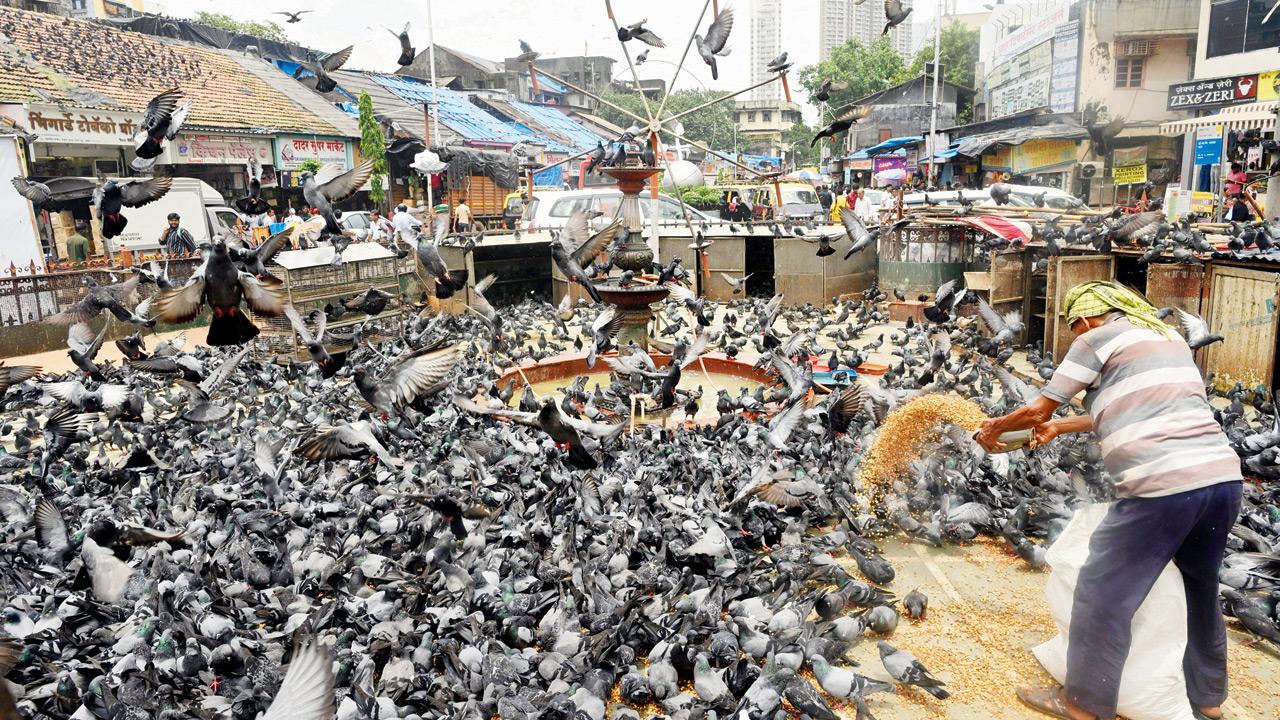
A man feeds pigeons at the kabutarkhana in Dadar West on July 17. FILE PIC/SATEJ SHINDE
A proposal by Mangal Prabhat Lodha, Minister of Skill, Employment, Entrepreneurship and Innovation, suggesting that designated open spaces such as BKC, the Mahalaxmi Racecourse, Aarey Colony, or Sanjay Gandhi National Park (SGNP) be identified as temporary zones for safe and supervised pigeon feeding has drawn strong opposition from wildlife experts and environmentalists. Conservationists argue that such a move, especially at ecologically sensitive locations like Aarey and SGNP, could lead to disease transmission and increased competition for resources among wild species.
In a letter addressed to the municipal commissioner, Minister Lodha called for reconsideration of the city’s approach to pigeon feeding. He pointed out that following restrictions on the practice, numerous reports have emerged of pigeons suffering from starvation, leading to bird deaths on roads and raising additional public health and animal welfare concerns.
Are these rules absolute?
“Is pigeon feeding the sole cause of the related health issues, or is environmental pollution a larger contributing factor? Was it appropriate for the MCGM to abruptly halt a long-standing cultural and religious practice without consulting stakeholders or exploring viable alternatives? Are any regulated feeding arrangements being considered, or will the restrictions remain absolute?”
Lodha also proposed forming a committee of experts under the supervision of the hon’ble court to examine the issue and suggest sustainable, long-term solutions. “In the interim, can designated open spaces such as BKC, racecourse, Aarey Colony, or SGNP be used as temporary zones for safe and supervised pigeon feeding? I am confident that the MCGM, as a responsible civic body, will strive to find a balanced and humane solution — one that ensures public health and safety while also safeguarding the lives and wellbeing of birds,” Lodha said.
Vet Speak
Dr Rina Dev, avian and wildlife veterinarian, highlighted the risks associated with unregulated pigeon feeding, “Diseases like salmonella can be transmitted to wild birds such as finches and sparrows through contaminated food and water. Predatory birds may also be infected by consuming contaminated prey, which can lead to emaciation and death. Pigeons themselves can be carriers or become infected with salmonella.” She added, “Pigeon droppings can spread psittacosis (parrot fever), which poses a high risk of transmission to other wild birds sharing the same environment.”
Animal welfare
Advocate Pawan S Sharma, a member of the Committee to Monitor Animal Welfare Laws in Maharashtra, constituted by the Bombay High Court and the state government, said, “With due respect to public and religious sentiments, animal welfare is often misunderstood. True welfare means understanding the actual needs of animals and acting accordingly, not what is convenient for us.”
“Feeding pigeons in public places causes more harm than good. Overfeeding has led to both physical and psychological health issues among pigeons. Birds are meant to soar freely, not crowd streets and footpaths around feeding zones. They should fly, forage, and nest in keeping with nature’s law, survival of the fittest,” he added.
Damage to eco zones
“Spaces like SGNP and Aarey are crucial wildlife habitats and must be kept free of such activities. Feeding pigeons in these areas can create severe ecological imbalances. Instead, the public should support animal rescue and rehabilitation organisations with food and resources. This approach fulfils the intent of compassion without disturbing the ecosystem.”
Quoting Article 51A(g) of the Indian Constitution, Sharma reminded, “Our fundamental duty is to protect and improve the natural environment and to have compassion for all living beings. But compassion doesn’t just mean feeding, it must translate into responsible action.”
Conservationist speaks
Wildlife conservationist Kedar Gore of The Corbett Foundation, said, “The Maharashtra government’s decision to ban pigeon feeding in public places is commendable and timely. The unchecked growth of feral pigeon populations poses serious health and ecological risks.”
“It is shocking that Minister Lodha is requesting the BMC Commissioner to explore ways to revoke the ban. This not only contradicts the state government’s stance of which he is a part, but also goes against Bombay High Court orders,” Gore said.
“Religious sentiments cannot override environmental and public health concerns. Pigeon feeding, under the guise of compassion and culture, has gone unchecked for years. It's time we acknowledge its negative impacts and adopt science-backed, compassionate alternatives,” Gore added.
Subscribe today by clicking the link and stay updated with the latest news!" Click here!