


ZOO officials told mid-day that the gharials were recently brought from Bhagwan Birsa Biological Park in Ranchi under an animal exchange programme. In return, Byculla zoo sent four white cockatiels and four grey cockatiels
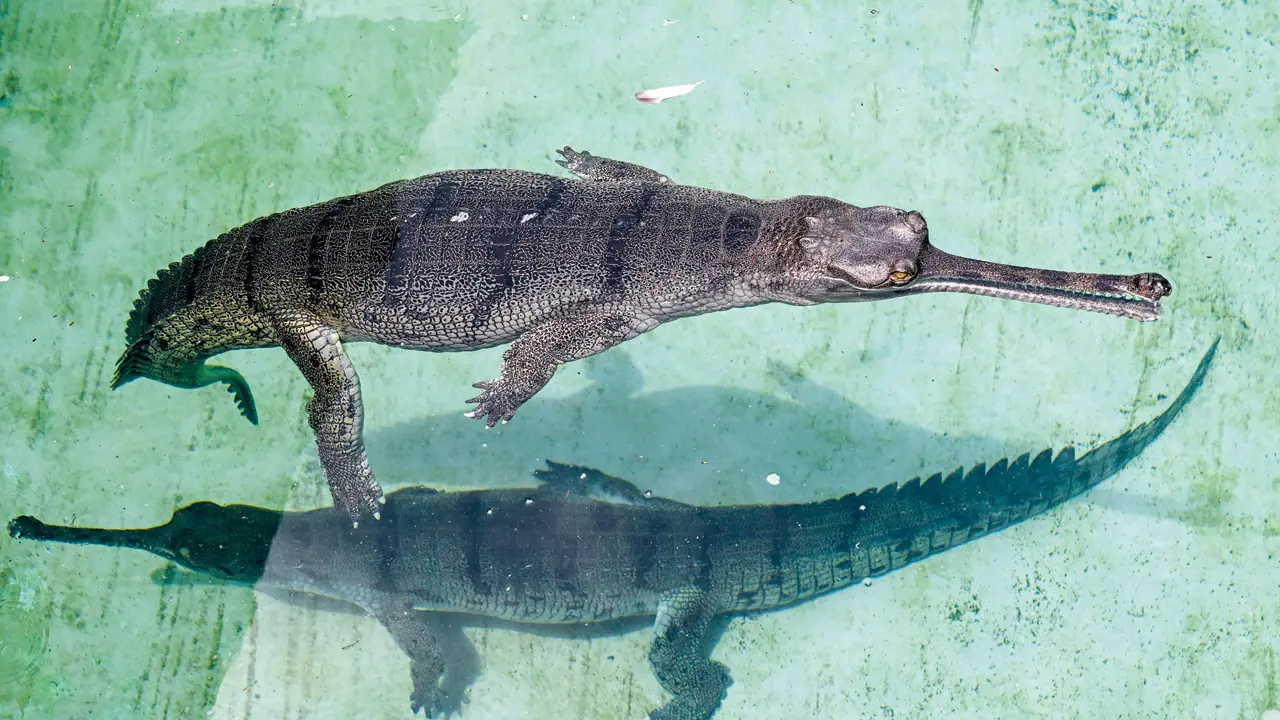
Two of the gharials in the pond enclosure at Byculla zoo. Pic/By Special Arrangement
Four new gharials have been added to the collection at Veermata Jijabai Bhosale Botanical Udyan and Zoo. The zoo is home to India’s first glass exhibit for crocodiles and alligators. These enclosures allow visitors and nature enthusiasts to observe the reptiles’ underwater movements through clear glass panels. The feature has proven to be a major attraction.
ZOO officials told mid-day that the gharials were recently brought from Bhagwan Birsa Biological Park in Ranchi under an animal exchange programme. In return, Byculla zoo sent four white cockatiels and four grey cockatiels. The newly arrived gharials are between six and eight years old. Authorities are encouraging visitors and wildlife lovers to visit the zoo for a unique underwater viewing experience.
Once found in rivers
According to the Wildlife Institute of India (WII), “Gharials were once widely distributed in the large rivers that flow in the northern part of the Indian subcontinent. These included the Indus, Ganga, Brahmaputra and the Mahanadi-Brahmani-Baitrani river systems of India, Bhutan, Bangladesh, Nepal and Pakistan. They are also thought to have been found in the Irrawady River of Myanmar.
Today, their major populations occur in three tributaries of the Ganga River: the Chambal and the Girwa Rivers in India, and the Rapti-Naryani River in Nepal. The Gharial reserves of India are located in three states — Uttar Pradesh, Madhya Pradesh and Rajasthan.” The species is currently listed as critically endangered on the IUCN Red List.
 Subscribe today by clicking the link and stay updated with the latest news!" Click here!