shot-button
E-paper E-paper
Home > Mumbai > Mumbai News > Article > Does NEP really account for visually impaired college students in Mumbai

Does NEP really account for visually impaired college students in Mumbai?

Updated on: 11 July,2025 08:33 AM IST  |  Mumbai
Aditi Alurkar | aditi.alurkar@mid-day.com

The NEP’s new interdisciplinary structure means humanities students might now have to study science subjects like physics or math, while science students could be required to take up additional languages

Does NEP really account for visually impaired college students in Mumbai?

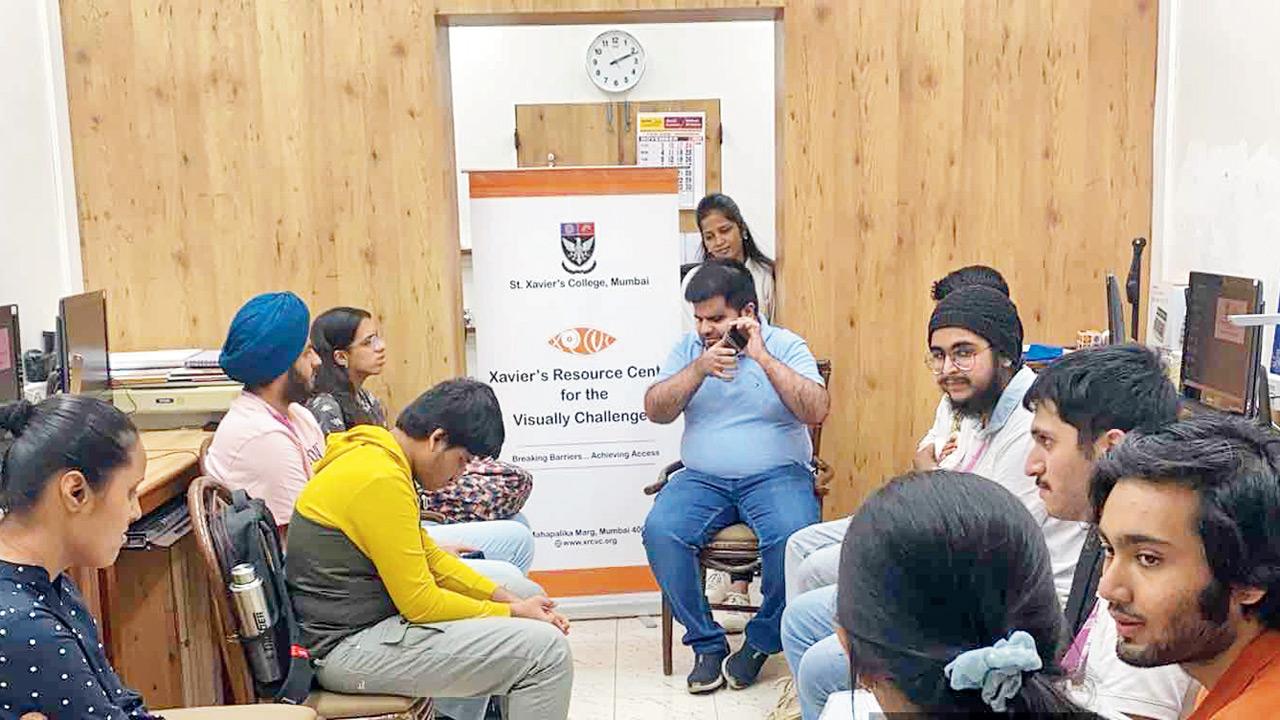
A session underway at XRCVC for the visually challenged. PIC/XRCVC

Listen to this article
Does NEP really account for visually impaired college students in Mumbai?
x
00:00

While the recently implemented National Education Policy (NEP) prioritises inclusivity, students with disabilities still face challenges in city colleges. Introduced in 2020 and rolled out for current undergraduate batches, the NEP dedicates an entire chapter to ‘equitable and inclusive education.’ However, the policy also mandates cross-faculty courses, internships, and research work requirements that may not be practical for all students, according to special education experts. The NEP’s new interdisciplinary structure means humanities students might now have to study science subjects like physics or math, while science students could be required to take up additional languages.

“Without offering alternative subjects, the new structure makes learning tougher for many students,” said Poonam Deokar, lead consultant for inclusive education at the Xavier’s Resource Centre for the Visually Challenged (XRCVC). At St. Xavier’s College, Fort, alternatives like IT and library sciences are available for visually impaired students. The NEP also pushes for research-based credits, written assignments, and online learning — all of which demand accessible content, trained staff, and assistive support, pointed out XRCVC’s Managing Consultant Ketan Kothari.


Students, teachers speak


While many students agree that the increased flexibility has made their college experience more engaging, the transition has not been without its challenges. “The NEP has introduced greater flexibility and interdisciplinary options, which is a positive step. However, some of the new subject combinations and formats can feel a bit overwhelming, especially while still adjusting to the system,” said Ashish Alva, a third-year student with learning disabilities and hearing impairment.

Reflecting on his undergraduate experience, Alva added, “Accessibility remains a concern in many areas, whether it’s physical infrastructure, access to reading materials in inclusive formats, or simply sensitisation among faculty and peers. The system is evolving, but there’s still a long way to go before it becomes truly inclusive.”

Similar challenges were faced by a media student with dyslexia and dyscalculia, who had chosen BSc IT as her minor and found herself struggling with mathematics. “My professors were kind, understanding, and did their best to help me grasp the subject. But the way they explained things just didn’t work for me. Tools like YouTube and ChatGPT were a huge help at such times,” she said.

Kundalik Bandgar, a special educator who teaches Mathematics and Science to school students, also assists his former students now pursuing undergraduate courses. Having lost his vision at the age of 45, Kundalik believes that teachers must undergo training in special education. “Even if there are just one or two blind students in a classroom, teachers should be equipped to support them. These steps are essential to making colleges inclusive,” he said.

While NEP implementation has been rocky in humanities colleges, a BS student at IIT Bombay also believes that campus inclusivity requires more attention. “The general sentiment on campus is one of being unbothered. While the flexibility in courses is good, the actual facilities still need improvement,” the student said. To address these challenges, experts suggest that special education should be a part of teacher training and even included in the general college curriculum.

“Students with disabilities cannot be an afterthought. The non-disabled community should also be exposed to disability education to make things truly inclusive,” said Ketan Kothari. Prof Ravindra Kulkarni, pro vice-chancellor of Mumbai University and chairperson of the Maharashtra State Academic and Research Council (MahaSARC), said, “If a certain college is unable to provide support, students can laterally transfer to other institutions that are better equipped. Colleges should also initiate faculty recruitment and support, in line with the chief minister’s recent announcement.”

Kulkarni added, “For internships, children with special needs may undertake research projects or connect with government facilities that have infrastructure and reservations in place. We are learning through each phase of implementation and, soon, we will draft clear do’s and don’ts for the NEP.”

"Exciting news! Mid-day is now on WhatsApp Channels Subscribe today by clicking the link and stay updated with the latest news!" Click here!

Did you find this article helpful?

Yes
No

Help us improve further by providing more detailed feedback and stand a chance to win a 3-month e-paper subscription! Click Here

Note: Winners will be selected via a lucky draw.

Help us improve further by providing more detailed feedback and stand a chance to win a 3-month e-paper subscription! Click Here

Note: Winners will be selected via a lucky draw.

Education Education System Right To Education mumbai mumbai news

Mid-Day Web Stories

Mid-Day Web Stories

This website uses cookie or similar technologies, to enhance your browsing experience and provide personalised recommendations. By continuing to use our website, you agree to our Privacy Policy and Cookie Policy. OK