
Amid the West Asia conflict, Reliance Industries Limited (RIL) on Thursday refuted reports that it has purchased Iranian crude, calling these reports "baseless". As reported by news agency IANS, reports earlier claimed that RIL had purchased 5 million barrels of Iranian crude after the US administration temporarily removed sanctions on Iranian oil at sea. According to the report, RIL bought the oil from the National Iranian Oil Co. However, clarifying the rumours, RIL, while issuing an official statement, wrote, "Reliance Industries Limited categorically rejects recent media reports that the company has purchased crude oil of Iranian origin. These reports are baseless, leading to misleading and incorrect claims," as cited by IANS. RIL further urged the media outlets concerned to verify facts before publication. US Treasury Secretary on oil crisis Last week, the US issued a short-term authorisation allowing the sale of Iranian oil already stranded at sea, a move the Donald Trump administration says will quickly boost global supply while maintaining pressure on Tehran, according to the Treasury Department and reports. Treasury Secretary Scott Bessent said the step is designed to stabilise energy markets amid ongoing conflict and supply disruptions. Bessent asserted, "Today, the Department of the Treasury is issuing a narrowly tailored, short-term authorisation permitting the sale of Iranian oil currently stranded at sea," as per IANS. The authorisation applies only to crude already loaded on vessels as of March 20 and remains in force until April 19, according to a Treasury general license. Bessent further added, "Approximately 140 million barrels of oil to global markets," helping to ease pressure caused by recent disruptions. "By temporarily unlocking this existing supply for the world, the United States will quickly bring approximately 140 million barrels of oil to global markets, expanding the amount of worldwide energy and helping to relieve the temporary pressures on supply caused by Iran," the US Treasury Secretary further added. At present, much of the sanctioned Iranian oil is believed to be held offshore or routed through indirect channels. Bessent said some of it has been "hoarded by China on the cheap" and that releasing it would help undercut Tehran’s leverage. (With inputs from IANS)
26 March,2026 07:39 PM IST | Mumbai | mid-day online correspondentThe Centre on Thursday said fuel supplies across India remain stable, with petrol pumps and LPG distributorships functioning normally, while additional liquefied petroleum gas (LPG) has been released for priority sectors to meet rising demand, reported news agency IANS. The government also reiterated that all oil refineries are operating at high capacity with adequate crude oil inventories, ensuring uninterrupted availability of petrol and diesel across the country. Fuel Outlets Operating Smoothly, No Shortage Reported According to the official update, all fuel retail outlets are functioning without disruption, and no instances of supply shortages have been reported at petrol pumps or LPG distribution centres, reported IANS. Authorities urged citizens not to believe rumours regarding fuel scarcity, noting that supply chains remain robust and well-managed. Domestic LPG cylinder deliveries are continuing as scheduled, with the system operating normally across urban and rural areas. Increased LPG Allocation for Priority Groups To support essential consumption, the government has enhanced LPG allocation for priority sectors, including migrant workers. On Wednesday alone, more than 37,000 small 5 kg LPG cylinders were distributed, reported IANS. Additionally, partial restoration of commercial LPG supply—up to 20 per cent—has been implemented for businesses. The Centre has also announced an extra 10 per cent allocation of commercial LPG to states and Union Territories, linked to their progress in expanding Piped Natural Gas (PNG) infrastructure. Strict Action Against Hoarding and Black Marketing The government has directed states and Union Territories to intensify action against hoarding and illegal sale of LPG cylinders. Enforcement agencies have carried out over 2,600 raids across multiple states, including Maharashtra, Karnataka, and Rajasthan. During these operations, hundreds of LPG cylinders were seized. Authorities have also registered more than 680 cases and arrested nearly 200 individuals in connection with such violations. Inspections Conducted to Ensure Supply Integrity Officials from public sector oil companies conducted surprise inspections at over 1,700 fuel retail outlets and LPG distributorships across the country, reported IANS. These checks were aimed at ensuring smooth distribution, preventing irregularities, and maintaining transparency in supply systems. Priority Supply for Domestic and Transport Needs The government confirmed that 100 per cent supply is being maintained for domestic PNG used for cooking and compressed natural gas (CNG) used in vehicles. At the same time, supply to industrial and commercial users connected to the gas grid is being maintained at around 80 per cent of average consumption to balance demand. City Gas Distribution companies such as Indraprastha Gas Limited, Mahanagar Gas Limited, GAIL Gas, and Bharat Petroleum Corporation Limited are offering incentives to accelerate PNG connections for both domestic and commercial users. Additional Kerosene Allocation to Ease Demand To further reduce pressure on LPG consumption, the Centre has allocated an additional 48,000 kilolitres of kerosene to all states and Union Territories. State governments have been advised to identify distribution points at the district level to ensure efficient supply of kerosene to consumers. The government maintained that it is closely monitoring the situation and will continue to take necessary steps to ensure uninterrupted fuel availability and prevent any disruptions in essential energy supplies across the country. (With inputs from IANS)
26 March,2026 06:43 PM IST | New Delhi | mid-day online correspondentThe Bharatiya Janata Party (BJP) leaders, on Thursday, ahead of the Bengal elections 2026, defended their decision to field the mother of the junior doctor of R.G. Kar Medical College and Hospital in Kolkata, who was raped and murdered within the hospital premises in August 2024. The BJP has given the ticket to the victim’s mother from the Panihati Assembly constituency in North 24 Parganas district. The victim's mother, Ratna Debnath, featured in the party's third list of 19 candidates, announced on Wednesday, for the forthcoming two-phase Assembly elections in the state next month, as reported by IANS. BJP National General Secretary Tarun Chugh, while talking to the media on Thursday, said, "The BJP has ensured that the victim’s voice is heard in Bengal’s largest panchayat, enabling her to receive justice. The BJP has shown the victim's mother the way to the Bengal Assembly," as cited by IANS. BJP accuses TMC of sheltering culprits BJP General Secretary further accused the West Bengal Chief Minister Mamata Banerjee-led Trinamool Congress government of sheltering the culprits in the case. Chugh further added, "The cruel Trinamool government of Mamata Banerjee in Bengal had committed injustice against the victim of the R.G. Kar Medical College (case). Mamata Banerjee’s government made every possible effort to protect the culprits and employed every tactic to suppress the case." Bihar BJP President Sanjay Saraogi praises the decision Sanjay Saraogi, while praising the BJP's decision, said, "She should definitely be given (the ticket). This is a matter of women's respect and empowerment. She (the victim) had to go through such brutal things; if the BJP had given her (the victim's mother) a ticket (to contest the Assembly polls), this would be a mark of respect to women's rights. She will win in Bengal and raise her voice in the Assembly. The BJP has done a great job." Notably, Ratna Debnath is also a voter from the Panihati constituency It may be recalled that on March 23, Leader of Opposition in the West Bengal Assembly, Suvendu Adhikari, had informed media persons that the parents of the R.G. Kar victim had taken primary membership of the BJP. However, Adhikari had then said that whether any of them would be fielded as a candidate from Panihati would be decided by the party’s central leadership. On Wednesday, the party announced the name of the victim’s mother as its candidate from the constituency. (With inputs from IANS)
26 March,2026 05:41 PM IST | Kolkata | mid-day online correspondentPrime Minister Narendra Modi will on Friday interact with Chief Ministers through video conferencing on the West Asia conflict to review preparedness and plans of states, said an official. The meeting will focus on ensuring synergy of efforts in the spirit of 'Team India', said the official. With geopolitical tensions escalating and their global fallout becoming more pronounced, the meeting is likely to serve as a platform for PM Modi to brief Chief Ministers and seek broader consensus on India’s approach to the crisis. “Chief Ministers of election-bound states shall not be a part of this meeting due to the model code of conduct,” said the official. There will be a separate meeting for Chief Secretaries of election-bound states which will be held through the Cabinet Secretariat, he said. Earlier, the government convened an all-party meeting on the West Asia situation at the Parliament House complex in New Delhi on Wednesday evening. The meeting followed PM Modi's address to Parliament on the West Asia situation. In his statement, PM Modi said the government has constituted seven empowered groups to develop strategies on fuel, supply chains, fertilisers, and other areas to mitigate the impact of the Iran-Israel-US conflict. The all-party meeting on Wednesday was chaired by Defence Minister Rajnath Singh. The meeting was attended by Home Minister Amit Shah, External Affairs Minister S. Jaishankar, Petroleum Minister Hardeep Puri, Parliamentary Affairs Minister Kiren Rijiju, JD-U Working President Sanjay Jha, Rajiv Ranjan (Lalan) Singh, and other leaders. Talking to the media after the meeting, Kiren Rijiju thanked members of all parties who participated, stating that all questions and concerns raised by opposition leaders were addressed by the government. He added that all opposition parties have assured their support for the government in the measures it takes in response to the situation. Congress leaders Mukul Wasnik and Tariq Anwar, CPI-M MP John Brittas, Samajwadi Party MP Dharmendra Yadav, and other Opposition leaders were also present. The meeting came amid escalating tensions in West Asia, which have disrupted critical maritime corridors and raised concerns about the safety of Indian nationals in Gulf countries. This story has been sourced from a third party syndicated feed, agencies. Mid-day accepts no responsibility or liability for its dependability, trustworthiness, reliability and data of the text. Mid-day management/mid-day.com reserves the sole right to alter, delete or remove (without notice) the content in its absolute discretion for any reason whatsoever.
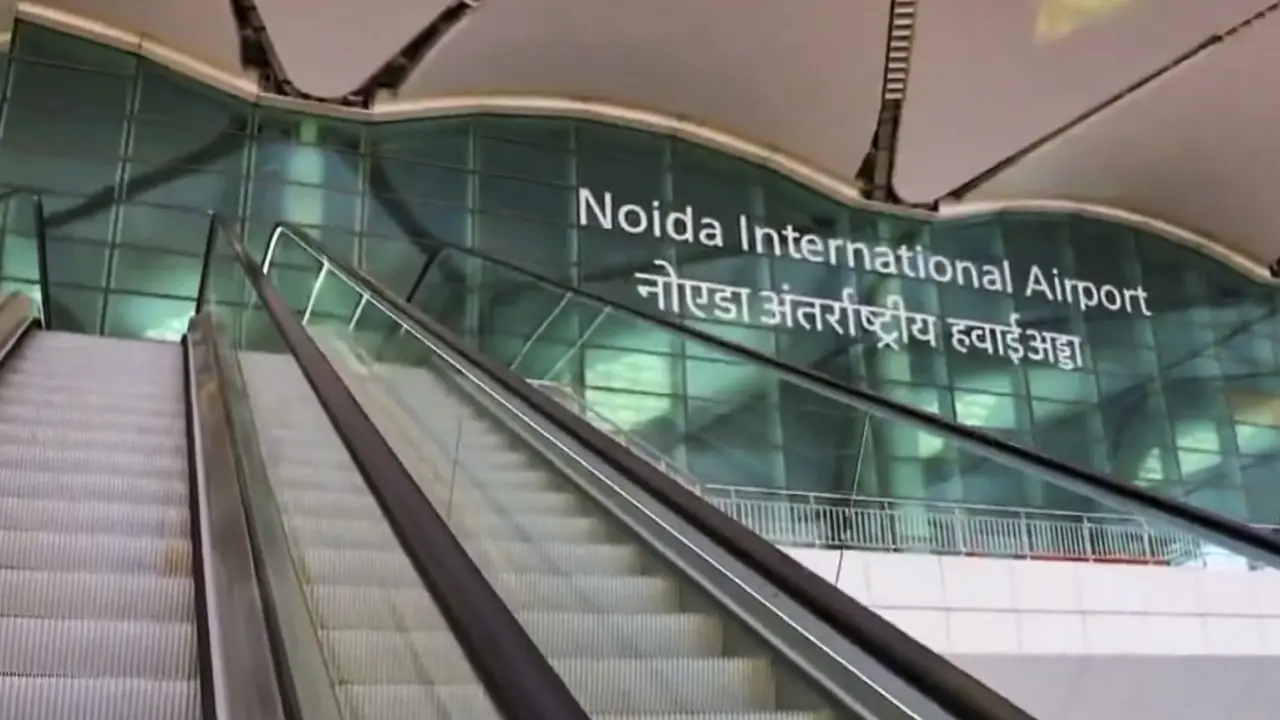
26 March,2026 05:41 PM IST | New Delhi [India] | IANSPrime Minister Narendra Modi is set to visit Uttar Pradesh on March 28 to inaugurate Phase 1 of the Noida International Airport in Jewar. The airport, located in Jewar in Gautam Buddha Nagar, has been developed as a major infrastructure project as reported by IANS. According to the schedule, the Prime Minister will reach the site at around 11:30 am and take a walkthrough of the terminal building. The formal inauguration will take place at around noon, after which he will address a public gathering. A major boost to NCR connectivity The Noida International Airport is expected to play a key role in improving air connectivity in the Delhi-NCR region. It will serve as the second international airport for the region, alongside the existing Indira Gandhi International Airport in Delhi. Together, both airports are expected to ease congestion, increase passenger capacity and help position the region as a global aviation hub. The project is seen as an important step in strengthening India’s aviation network. Key features of Phase 1 Phase 1 of the airport has been developed at an estimated cost of Rs 11,200 crore under a Public-Private Partnership (PPP) model. Initially, the airport will be able to handle 12 million passengers per year, with plans to expand capacity to 70 million passengers annually in the future. The airport includes a 3,900-metre-long runway capable of handling large, wide-body aircraft. It is equipped with modern navigation systems such as the Instrument Landing System (ILS) and advanced lighting, allowing safe and efficient operations even in poor weather conditions and at night as per IANS. Cargo and logistics hub Apart from passenger services, the airport will also have strong cargo facilities. It includes a multi-modal cargo hub with an integrated terminal and dedicated logistics zones. Initially, it can handle over 2.5 lakh metric tonnes of cargo each year, with the potential to expand to 18 lakh metric tonnes. A 40-acre Maintenance, Repair and Overhaul (MRO) facility is also part of the project, supporting aviation services and operations. Sustainable and well-connected project The airport has been designed as a sustainable, future-ready project with a focus on achieving net-zero emissions. It incorporates energy-efficient systems and environmentally friendly practices. Its design reflects Indian heritage, taking inspiration from traditional ghats and havelis while combining modern infrastructure. Located along the Yamuna Expressway, the airport will function as a multi-modal transport hub. It will be well connected through road, rail, metro and regional transport systems, making travel easier for passengers and improving cargo movement. (With IANS Inputs)
26 March,2026 04:24 PM IST | Mumbai | mid-day online correspondentDelhi Chief Minister Rekha Gupta on Thursday performed 'Kanya Pujan' in Pitampura and distributed bicycles to around 1,000 girl students from nine schools, reiterating her government's commitment to ensuring uninterrupted education for girls in the national capital. Addressing reporters, CM Gupta said the initiative aims to remove barriers that often prevent girls from continuing their studies. "Every daughter in Delhi can complete her education without any hindrance, complete her schooling, graduate, and become what she wants to be. The government will work to remove all obstacles in her way," she said, reported IANS. Highlighting mobility challenges faced by schoolgirls, she added, "Many girls face challenges while travelling to and from school. Through this 'Vidya Vahini' initiative, we will provide bicycles to girls entering Class 9 so that they can commute easily during their school years." Delhi CM praises girls as divine strength, expressing confidence in future contributions According to IANS, the Chief Minister also lauded girls as embodiments of divine strength, comparing them to forms of Durga and Saraswati, and expressed confidence in their future contributions. "They will honour this city and our nation in the future. On behalf of the government, I commend each of my daughters and extend my heartfelt blessings to them. May she advance and thrive significantly, and may she become the person she aspires to be. The government will ensure she has all the support and resources necessary to finish her education," she said. During the interaction, CM Gupta also launched a sharp attack on former Chief Minister Arvind Kejriwal over allegations related to the construction of a so-called 'Sheesh Mahal' using public funds, reported IANS. "You all have been anticipating the 'Sheesh Mahal' for quite a while; you can all view it (referring to a video shared by Delhi BJP), the wrongdoings of Kejriwal, as he constructed this 'Sheesh Mahal' using public funds and exceeded all bounds of corruption," she alleged. Rekha Gupta shares message on social media describing daughters as strength and divine blessings As per IANS, earlier in the day, the Chief Minister shared a message on social media on the occasion of Kanya Pujan, describing daughters as symbols of strength and divine blessings. In her post, she wrote, "Daughters are symbols of good fortune, embodiments of strength, and the sacred blessings of a mother. On this sacred occasion of Kanya Pujan today, worshipping daughters filled my heart with profound emotion. Durga Ashtami teaches us that every daughter embodies the radiant form of the primordial divine energy. Their affection and honour infuse life with purity and auspiciousness." "May she continue to shower her grace upon all, may the light of happiness and prosperity spread in every home, and may the love of daughters forever illuminate our lives. Millions of salutations at the feet of the Mother," the post added, reported IANS. (Inputs from IANS)
26 March,2026 04:19 PM IST | New Delhi | mid-day online correspondentThe government on Thursday categorically stated that India's petroleum and LPG supply situation is fully secure and under control, calling upon citizens not to be misled by a "deliberately mischievous, coordinated campaign of misinformation" that is being carried out to spread unjustified panic. India has 74 days of total reserve capacity, and actual stock cover is around 60 days right now (including crude stocks, products stocks and the dedicated strategic storage in caverns), even as "we are on the 27th day of the Middle East crisis", the Petroleum Ministry said, adding that all retail fuel outlets have enough supplies. "There is no shortage of petrol, diesel, or LPG anywhere in the country," it said in a statement, adding that nearly two months of steady supply is available for every Indian citizen, regardless of what happens globally, reported IANS. "Next 2 months of crude procurement has also been secured. India is completely secure for the next many months, and the quantity in strategic cavern storage becomes secondary in such a supply situation. Therefore, any representation that India's reserves are depleted or insufficient should be dismissed with the disdain it deserves," the ministry highlighted. Some countries have taken measures; India does not feel the need for it According to IANS, across the world, countries are dealing with price increases, rationing, odd-even vehicle restrictions, and forced station closures. Few have declared a "National Energy Emergency". "India DOES NOT FEEL THE NEED FOR ANY SUCH MEASURES. While other nations are rationing, there is no shortage of supplies in India. Where isolated instances of panic buying occurred at select pumps, they were driven by deliberate misinformation spread by certain videos on social media," the ministry emphasised. Despite the surge in demand at such pumps, fuel was dispensed to all the consumers, and oil company depots have been operational through the night to ramp up supplies. The ministry further stated that steps have also been taken by oil companies to increase credit to petrol pumps to over 3 days from the earlier allowed 1 day in order to ensure that there is no shortage of petrol and diesel at any pump due to working capital issues of pump owners, reported IANS. Notably, despite the situation at the Strait of Hormuz, India is today receiving more crude oil from its 41-plus suppliers across the world than what was previously arriving through the Straits. "Every Indian refinery is running at over 100 per cent utilisation. Crude oil supplies for next 60 days have already been tied up by Indian Oil companies. There is NO supply gap," the ministry said. There is no LPG shortage; India is producing more than it needs to import According to IANS, there is also no LPG shortage. Following the LPG Control Order issued by this Ministry, domestic refinery production has been ramped up by 40 per cent, bringing daily LPG output to 50 TMT (more than 60 per cent of our requirement) against a total daily requirement of around 80 TMT. The net daily import requirement has consequently come down to only 30 TMT — meaning India is now producing much more than it needs to import. "Over and above domestic production, 800 TMT of assured inbound LPG cargoes are already secured and en route from the United States, Russia, Australia, and other countries, arriving across India's 22 LPG import terminals — double the 11 terminals that existed in 2014," the ministry said. “Approximately one full month of supply is firmly arranged, with additional procurement being finalised continuously,” it added, reported IANS. Oil companies are successfully delivering over 50 lakh cylinders every day. Commercial cylinder allocations have been raised to 50 per cent in consultation with state governments to avoid hoarding or black marketing. Government promotes PNG as cleaner, cheaper fuel; assures LPG supply is secure Moreover, piped natural gas is being promoted — in full coordination with state governments — because it is cheaper, cleaner, and safer for Indian households. As per IANS, India already produces 92 MMSCMD of natural gas domestically, out of a total daily requirement of 191 MMSCMD, making India far less import-dependent on gas than on LPG. City gas distribution has expanded from 57 geographical areas in 2014 to over 300 today. Domestic PNG connections have grown from 25 lakh to over 1.5 crore. This transition was well underway before the current situation arose and reflects India's long-term energy strategy. "The claim that PNG is being pushed because LPG is running out is misinformation. LPG supply is secure. PNG is simply a better, more affordable and highly convenient fuel for India's households," said the ministry. The ministry urged all citizens to rely only on official government communications for information regarding fuel and gas availability, reported IANS. (Inputs from IANS)
26 March,2026 04:19 PM IST | New Delhi [India] | mid-day online correspondentThe Supreme Court on Wednesday declined to overturn the Delhi High Court’s order permitting the Union government and the Central Board of Indirect Taxes and Customs (CBIC) to move forward with disciplinary proceedings against IRS officer and former Mumbai NCB Zonal Director Sameer Wankhede. The proceedings are linked to the 2021 Cordelia cruise drug seizure case, during his tenure as Zonal Director with the Narcotics Control Bureau (NCB), the ANI reported. Noting that authorities had appointed an Inquiry Officer and a Presenting Officer for the inquiry against Wankhede without giving him sufficient time to respond to the chargesheet, the apex court bench of Justices PS Narasimha and Alok Aradhe allowed Wankhede to file his response within two weeks. The Court also directed the authorities to reconsider the appointment of the inquiry officers after taking his reply into account. No interference with HC order, says SC "While we are not inclined to interfere with the order passed by the High Court, we are of the opinion that the appointment of the Inquiry Officer as well as the Presenting Officer on March 7, 2026, was made without affording sufficient opportunity to the petitioner to file a reply to the chargesheet. For this reason, we permit the petitioner to represent himself and file a reply within two weeks. The respondents will take the decision after considering the reply, whether or not to appoint an Inquiry Officer and a Presenting Officer within two weeks thereafter," the Court noted, according to the ANI. The apex court clarified that it has not expressed any opinion on the merits of the matter while refusing to interfere with the Delhi High Court order that had quashed the relief to Wankhede. Delhi High Court overturns CAT order on Wankhede The Delhi High Court, on February 27, had overturned a decision of the Central Administrative Tribunal (CAT) that had quashed disciplinary proceedings against Wankhede. A bench of Justices Anil Kshetarpal and Amit Mahajan held that the CAT should not have interfered at the stage when only a charge memorandum had been issued. The High Court observed that a charge memo marks merely the beginning of disciplinary proceedings and does not constitute a finding of guilt. It noted that judicial intervention at such an early stage should be rare and limited to exceptional cases. The disciplinary action against Wankhede stems from developments arising out of the 2021 Cordelia cruise drug seizure case, during his tenure as Zonal Director with the NCB. The case had attracted nationwide attention after the arrest of Aryan Khan, son of actor Shah Rukh Khan, in connection with the cruise drug seizure. (With ANI inputs)
26 March,2026 02:55 PM IST | New Delhi | mid-day online correspondentAir India's A350 aircraft enroute to London Heathrow returned to the national capital due to a technical issue on Thursday afternoon after being airborne for nearly seven hours. The same A350-900 aircraft VT-JRF had faced a technical issue on March 15, following which the plane operating the flight from New York to Delhi was diverted to the Irish town of Shannon, sources said. An Air India spokesperson said its flight AI111, operating from Delhi to London on Thursday, made a precautionary air-return to the national capital following a suspected technical issue. "The aircraft landed safely and consistent with Air India's high safety standards, it is currently subject to extensive technical evaluations, which will require additional time to complete," the spokesperson said in a statement. According to the sources, noises were heard in the aircraft following which it was diverted. The spokesperson also regretted the inconvenience caused to the passengers due to the unforeseen situation and said the airline was making every effort to ensure passengers are able to continue their journey to London at the earliest. Details about the number of passengers onboard could not be ascertained. The aircraft operating the flight AI111 was airborne for around four hours before the decision was taken to divert the plane when it was in the Saudi Arabia airspace. In total, the plane was airborne for nearly seven hours before landing back in the national capital, as per information available on flight tracking website Flightradar24.com. The flight had taken off from Delhi around 6 am on Thursday and landed back at about 12.30 pm. Air India started operating A350-900 planes from January 2024. This story has been sourced from a third party syndicated feed, agencies. Mid-day accepts no responsibility or liability for its dependability, trustworthiness, reliability and data of the text. Mid-day management/mid-day.com reserves the sole right to alter, delete or remove (without notice) the content in its absolute discretion for any reason whatsoever.
26 March,2026 02:53 PM IST | New Delhi [India] | PTIPrime Minister Narendra Modi on Thursday greeted citizens on the occasion of Ram Navami and prayed for the well-being of all, expressing hope that the blessings of Lord Ram would guide the nation towards the goal of a 'Viksit' and 'Aatmanirbhar Bharat'. Ram Navami marks the birth of Lord Ram, worshipped as the seventh avatar of Lord Vishnu in Hinduism. The festival falls during the nine-day Chaitra Navratri period and is observed as a time for reflection on values such as truth, compassion and righteousness, reported IANS. In a message posted on X, the Prime Minister said, "My fellow countrymen across the nation, unlimited best wishes on the occasion of Ram Navami. From the life of Maryada Purushottam, filled with sacrifice, austerity, and restraint, we draw inspiration to confront every situation with our full strength." "His ideals will continue to guide not only the people of India but all of humanity for eternity. My wish is that by the grace of Lord Ram, the welfare of all may be ensured, paving the way for the fulfilment of our resolve for a Viksit and Aatmanirbhar Bharat," he added, reported IANS. Nation marks Ram Navami with devotion, temples see large gatherings Lord Ram is widely regarded as a symbol of righteousness, truth and duty, and his life continues to inspire millions to follow the path of ethical conduct and moral values. He is often seen as the ideal ruler and human being, embodying virtue, discipline and justice. According to IANS, on the occasion, temples across the country witnessed large gatherings of devotees offering prayers and participating in rituals. Observances typically include fasting, devotional singing, recitations from the Ramayana and religious processions. Earlier in the day, the Prime Minister also extended greetings on the eighth day of Chaitra Navratri, dedicated to Goddess Mahagauri. "Millions of salutations at the feet of Mother Mahagauri! May her divine aura bring happiness, prosperity, and good health into everyone's life," he posted on X. Mahagauri, the eighth form of Goddess Durga worshipped on Maha Ashtami during Navratri, symbolises purity, serenity and grace. She is traditionally depicted with a radiant white complexion, riding a bull, and is believed to cleanse sins while blessing devotees with peace, prosperity and well-being, reported IANS. (Inputs from IANS)
26 March,2026 02:46 PM IST | New Delhi | mid-day online correspondentChaitra Navratri has drawn a huge rush of pilgrims to the Mata Vaishno Devi shrine in Jammu and Kashmir's Reasi district, with over 2.69 lakh devotees offering prayers at the cave shrine during the ongoing festival. "The yatra is going on smoothly. There is a huge rush. As many as 2,69,716 pilgrims have paid obeisance at the temple till March 25," a senior official of the Mata Vaishno Devi Shrine Board told PTI. Hundreds of devotees, chanting 'Jai Mata Di', are trekking along the serpentine pathway to the Mata Vaishno Devi temple to pay obeisance. Chaitra Navratri, being observed from March 19 to March 27, is dedicated to the worship of Goddess Navdurga and holds special significance at the Mata Vaishno Devi shrine, which records one of its highest pilgrim footfalls during this period. Massive devotee turnout at Vaishno Devi shrine as Navratri celebrations begin According to the data, 31,815 pilgrims paid obeisance at the temple on the first day of Navratri on March 19, while 34,805 devotees visited the shrine on March 20, 41,078 on March 21, 43,482 on March 22, 45,478 on March 23, 38,158 on March 24 and 34,900 on March 25. According to PTI, the registration of pilgrims was suspended twice for brief periods to manage the heavy rush of pilgrims, they said. Katra, the twin routes and the Bhawan temple area, dazzling with lights and flower-decked decorations, resonate with spiritual fervour and traditional gaiety as the nine-day-long festival of Chaitra Navratri began amid multi-tier security. Authorities have put in place multi-tier security arrangements at the Katra base camp and en route to the shrine to ensure a safe yatra. Enhanced security, wireless systems in place for smooth Vaishno Devi yatra during Navratri The Board has deployed volunteers to guide pilgrims, manage the anticipated rush and ensure smooth movement along the 13-km yatra route, the official said. This year, the Shrine Board introduced wireless communication to enhance coordination and communication along the yatra route. A multi-tier security grid involving the police, CRPF, other paramilitary forces and quick-response teams (QRTs) is in place throughout the festival, officials said, reported PTI. As per PTI, the sacred Shat Chandi Maha Yagya commenced at the revered Mata Vaishno Devi shrine on March 19, heralding the auspicious beginning of Chaitra Navratri, officials said. The divine vibrations of Vedic chants and rituals at the holy cave are invoking blessings of peace, prosperity and well-being for all humanity, they said. (Inputs from PTI)
26 March,2026 02:46 PM IST | Jammu | mid-day online correspondentADVERTISEMENT








-1774525211623_d.png "Prime Minister Narendra Modi. Pic/PTI")
-1774520280465_d.png "Delhi's future will shine bright through the flight of these daughters say CM Rekha. Pic/X")
-1774520154348_d.png "File pic")

-1774516352950_d.png "File Photo")
-1774511943434_d.png "PM Narendra Modi at Ram Mandir Ayodhya to seek blessings on the ocassion of Ram Navami. File Pic")
-1774514057314_d.png "Viaishno Devi Temple. File Pic")